Addressing Long-Standing Challenges in Frozen Block Processing
Yield optimization remains a key objective for frozen seafood and protein processors. Conventional block sawing technology, widely used for producing portioned products such as fish fingers, fillets, and other convenience foods, inevitably generates material losses in the form of sawdust and trimming waste. Depending on product specifications and process conditions, these losses can typically range from 2% to 5%.
As processors face increasing pressure from raw material costs, sustainability targets, and evolving consumer expectations, technologies that improve material utilization while maintaining product quality are attracting growing interest.
One emerging approach is Flake Shaping, a processing method that enables the production of shaped products from frozen protein blocks while utilizing the entire raw material input.
The Flake Shaping Process
The technology uses a three-stage process to convert frozen whole-muscle protein blocks into defined three-dimensional products.
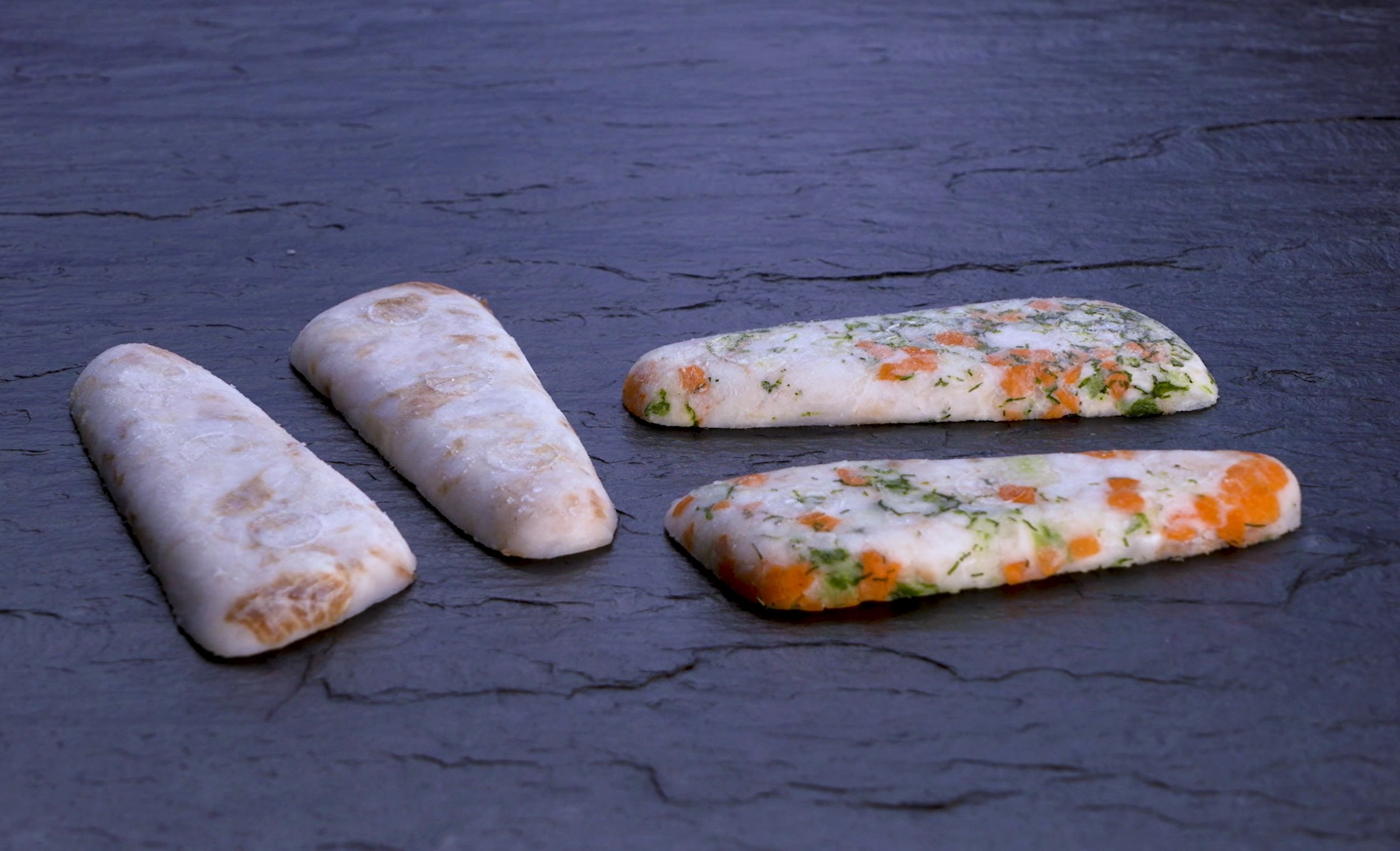
First, frozen blocks are transformed into flakes while preserving the structure of the muscle fibres. The flakes are then accurately weighed into uniform portions before being shaped into the desired final form.
The process can accommodate various raw material formats, including standard frozen blocks, lower-grade frozen blocks, and individually quick frozen (IQF) products. It is applicable to a range of protein sources, including fish, poultry, and plant-based ingredients.
Unlike traditional sawing processes, which remove material to create the desired shape, Flake Shaping redistributes the original material into a controlled portion size and geometry, enabling full utilization of the input material.
Potential Operational Benefits
For processors, the most immediate benefit is yield improvement. Eliminating sawing-related losses can contribute directly to improved raw material utilization and reduced waste generation.
A second advantage is increased flexibility in raw material selection. By enabling the use of different grades of frozen blocks and mixed ingredient formulations, processors may gain additional opportunities to optimize manufacturing costs while maintaining product specifications.
The technology also offers greater freedom in product development. Different fish species can be combined within a single product formulation to achieve specific texture, flavour, or nutritional characteristics. Vegetable ingredients and other plant-based components can likewise be incorporated into shaped products, creating opportunities for hybrid and value-added convenience foods.
Supporting Sustainability Objectives
Improved raw material utilization has implications beyond production economics. Reducing process waste contributes to overall resource efficiency and supports industry efforts to maximize the value obtained from harvested or cultivated protein sources.
As sustainability reporting becomes increasingly important across the food sector, technologies that reduce avoidable product losses may help processors improve both environmental performance and operational efficiency.
Building on Established Processing Methods
Frozen block sawing has been a cornerstone of industrial seafood processing for decades and remains highly effective for many applications. However, changing market demands are encouraging manufacturers to explore alternative processing approaches that offer greater flexibility, improved yield, and enhanced product innovation opportunities.
Flake Shaping represents one example of how processing technology is evolving to address these challenges, providing processors with new options for maximizing raw material utilization while supporting the development of next-generation convenience food products.


 + 44 (0) 1400 283090


 July 27th, 2026.





























 + 44 (0) 1400 283090