What if the next big source of carbon for industry isn’t a fossil fuel plant, but an anaerobic digester?
For years, the climate conversation has been simple: CO₂ is the problem. Reduce it. Capture it. Avoid it. But there is a part of the story we sometimes overlook.
We still need carbon.
Industry needs it to make chemicals, fuels, materials, food and countless everyday products. The question is not whether we will use carbon. The question is:
Where will that carbon come from?
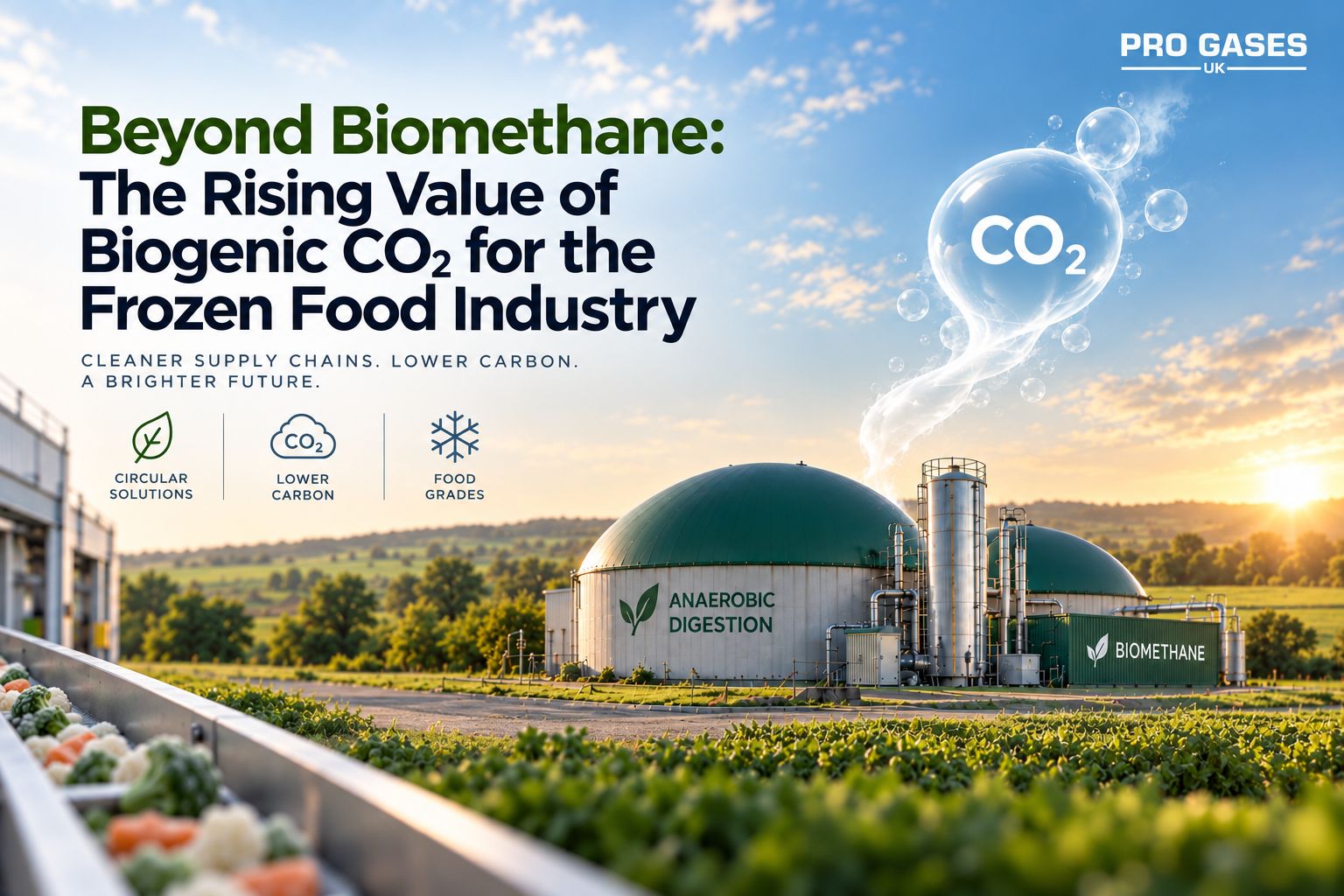
And this is where anaerobic digestion could become much more interesting than simply a source of renewable gas. AD plants are already producing CO₂. When biogas is upgraded to biomethane, the methane is separated from the CO₂. For many years, that CO₂ has been viewed primarily as a by-product, something to manage or dispose of. But there is another way of looking at it. It is a source of renewable, biogenic carbon.
The carbon in a crop feedstock has recently been part of the biological carbon cycle. Instead of extracting new carbon from fossil reserves, we can recover carbon that is already moving through our farmland, crops and food systems.
That changes the conversation. The question becomes less “How do we get rid of this CO₂?” and more: “What could we do with it?”
Replacing fossil carbon
We have become very good at replacing fossil energy.
Coal with renewables.
Natural gas with biomethane, hydrogen or electrification.
Petrol and diesel with electric vehicles.
But replacing fossil carbon is a different challenge. A chemical plant cannot simply electrify its way out of needing carbon. Nor can every industrial product be made without carbon as a feedstock. That means industries will increasingly need alternatives to fossil carbon. And biogenic CO₂ could be one of them.
What could this mean for frozen food?
For the UK frozen food industry, the opportunity is particularly interesting.
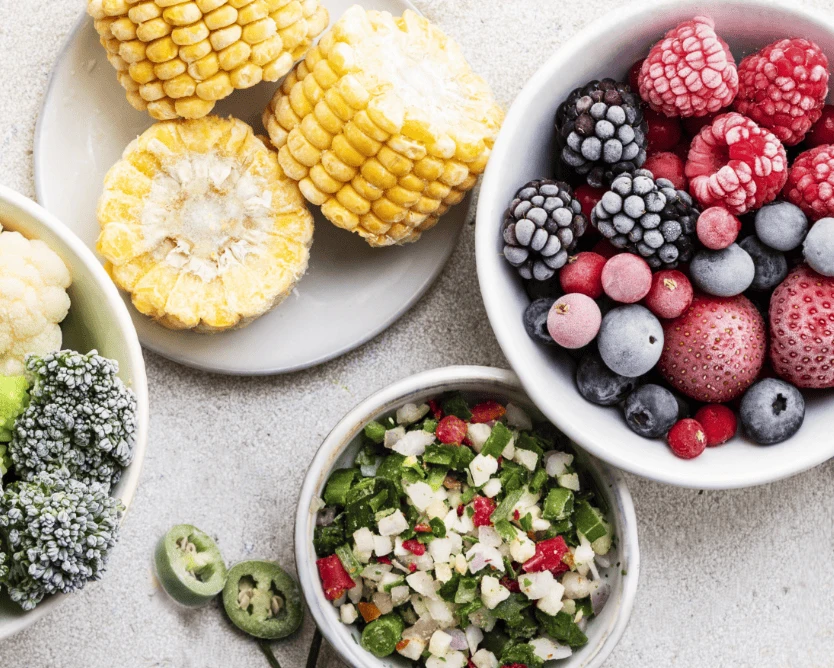
Food processing inevitably creates organic residuals, from crop trimming and grading through to off-specification or rejected product. For frozen vegetable producers, these crop residues and other organic streams could potentially become feedstock for anaerobic digestion, creating both renewable biomethane and a source of biogenic CO₂. Rather than viewing these streams simply as residual material, could they become part of a wider renewable energy and renewable carbon supply chain?
For frozen vegetable producers in particular, this raises an interesting question:
Could the organic feedstock leaving the factory today potentially be part of tomorrow’s renewable gas and renewable carbon supply chain?
The answer will depend on the individual waste stream, its composition, logistics and what happens to it today. But the principle is compelling. A food manufacturer could potentially see value created at several points in the chain, turning unavoidable organic residuals into renewable energy, while creating a potentially valuable source of biogenic CO₂. For an industry already focused on reducing food waste, energy use and carbon emissions, that is a conversation worth having.
From feedstock to valuable product
Imagine an AD plant where the output is no longer simply:
Waste → biogas → biomethane.
but:
Energy crops / food feedstocks → biogas → biomethane + renewable CO₂ + nutrients.
That is a very different proposition. The CO₂ could be used in applications such as food and beverage, horticulture, chemicals and synthetic fuels. Where appropriate infrastructure exists, it could also be permanently stored.
In other words, the CO₂ stream itself could become part of the business case. The European Biogas Association estimates that European biomethane plants could capture up to 89 million tonnes of biogenic CO₂ annually by 2040.
That is not a small side stream. It is potentially a major source of non-fossil carbon. But let’s not call every tonne “green”. CO₂ recovered from a plant running on purpose-grown energy crops is a different product, with a different traceability and consistency profile, from CO₂ recovered from mixed food waste. Energy consumption matters. Transport matters. What the CO₂ replaces matters. And what ultimately happens to the carbon matters most of all. Using biogenic CO₂ to replace fossil CO₂ in an industrial process can be valuable. Permanently storing it can offer a different climate benefit. Using it in a product that releases the carbon shortly afterwards is another story. The opportunity is real, but so is the need for a credible lifecycle assessment.
The bigger opportunity for AD
This is why I think we should stop looking at AD plants simply as renewable gas factories. They are potentially carbon recovery plants. They take crops and organic feedstocks and create several valuable outputs: renewable gas, digestate and, increasingly, a potentially valuable stream of biogenic CO₂. For the food industry, that creates an interesting circular opportunity: the organic residuals generated through food production could potentially become part of a system that produces renewable energy and renewable carbon. We are moving from a fossil-carbon economy towards a circular-carbon economy. And AD has a seat at that table.
The question worth asking now
The most interesting part of this development may not be whether AD can capture CO₂. We already know it can. The more interesting question is whether CO₂ becomes an increasingly important product of the AD business, rather than something sitting on the sidelines. Because the future energy system will need renewable molecules. The future industrial system will need renewable carbon. And perhaps, in the middle of all this, one of the most valuable things an AD plant produces will be something we have spent decades trying to reduce: CO₂. Just not the CO₂ we used to get from fossil fuels.
Could your feedstock be part of this opportunity?
If you’re a frozen food producer interested in the potential supply of crop biogenic CO₂, exploring what biomethane could mean for your business, or looking at what could be done with your organic residuals generated through food production, get in touch here or email Mark at mark.dziuba@progasesuk.com to start the conversation.


 + 44 (0) 1400 283090


 September 30th, 2026.

























 + 44 (0) 1400 283090