The new president of the British Frozen Food Federation (BFFF) has called for frozen food to be recognised as a key part of the UK’s national food resilience strategy, highlighting its contribution to affordable nutrition and the security of the food supply.
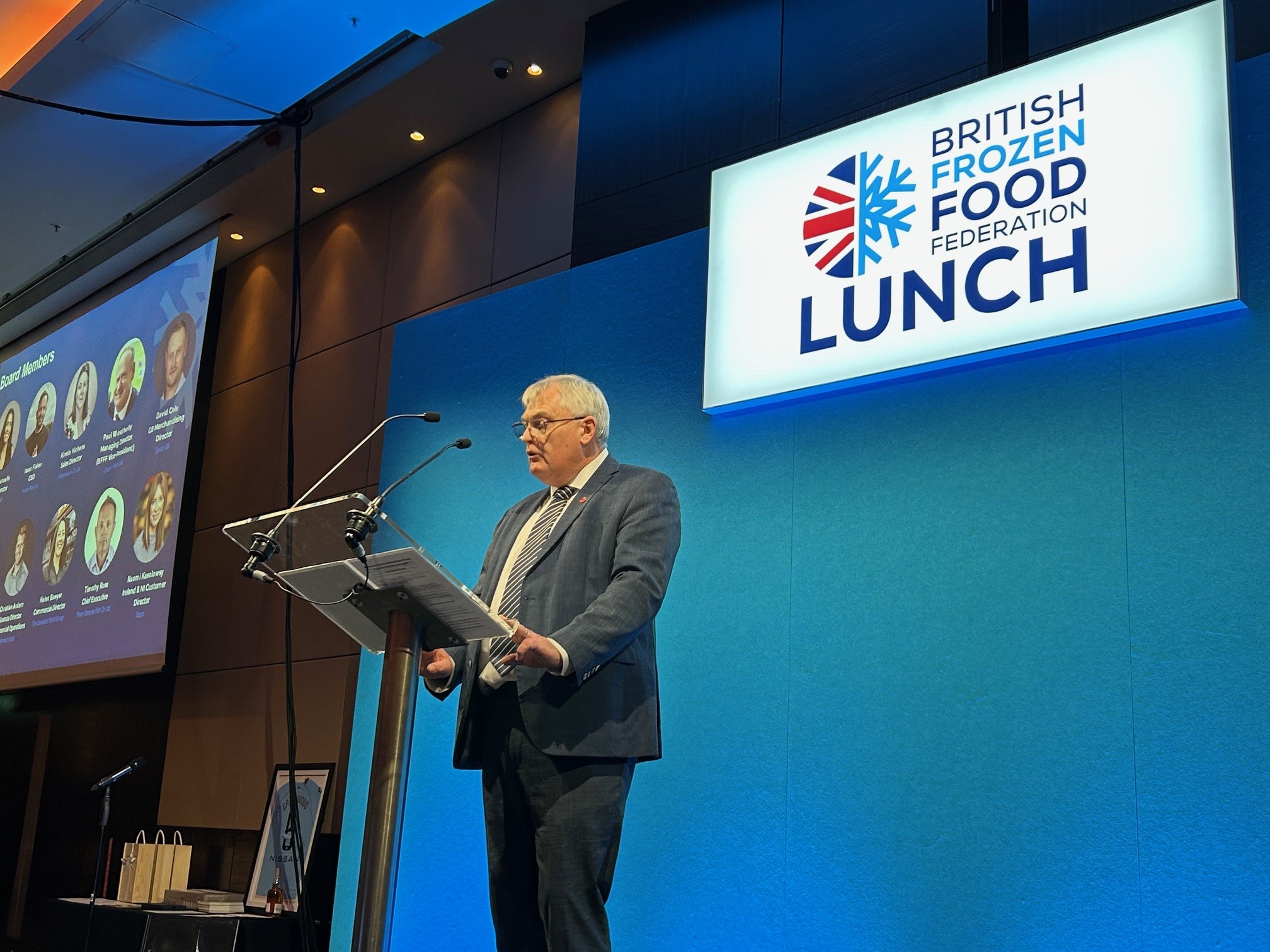
Addressing the Federation’s annual luncheon on 17 November, Martin McIlroy, managing director of Daregal Gourmet, said the industry had an increasingly important role to play as geopolitical instability, extreme weather and rising energy and fuel costs put pressure on food supply chains.
McIlroy, who succeeds Karen McQuade as BFFF president, said the Government must give greater consideration to the role frozen food can play in ensuring consumers have access to affordable, nutritious food.
He highlighted research undertaken by the BFFF as part of its Frozen Food Revolution campaign, which found that families could save more than £1,300 a year on a nutritious diet by choosing frozen fruit and vegetables. The latest figures show frozen fruit and vegetables are around 36% cheaper than their fresh equivalents.
Martin McIlroy said: “We are an island, but we operate within a global geopolitical and climatic landscape. We are facing conflict in Europe and the Middle East, alongside global warming and increasingly extreme weather events. All of this affects us through its impact on fuel, energy and supply chains, and raises important questions about their resilience.
“Frozen food can help. Our industry has a crucial role to play in ensuring a reliable supply of affordable and nutritious food. The Government’s planned food strategy recognises that access to affordable, nutritious food underpins public health and national resilience. It must therefore be a core part of national preparedness.”
McIlroy also highlighted the growing threat posed by cyber-attacks targeting retailers’ refrigeration systems, which can result in food being exposed to unsafe temperatures and significant waste.
Following a recent meeting with the National Cyber Security Centre, the BFFF is continuing to work with stakeholders on practical measures to strengthen the security of refrigeration equipment and protect the wider food supply chain.
The new president also reaffirmed the Federation’s support for the Move to -15°C Coalition, which is working internationally to build the scientific evidence needed to support changes to frozen food temperature standards.
He concluded by calling on members to support the next generation of industry talent through the BFFF’s Young Leaders programme, encouraging businesses to invest in the people who will shape the future of the sector.
McIlroy said: “My plea to every manager and leader in this room is to encourage and support young people. They are the future of this industry. We need to support those already working in it and attract more people to join us, so that our industry remains strong and resilient.”


 + 44 (0) 1400 283090


 November 17th, 2026.































 + 44 (0) 1400 283090