Become a member

DAWN FOODS GETS FRUITY WITH NEW FUDGE ICINGS

Dawn Foods has expanded its range of easy-to-use fudge icings with two vegan-suitable fudge icings, both made with natural fruit flavours and colours.

A vibrant purple colour, Dawn’s new Blackcurrant Fudge Icing can be used to create stunning Instagram-worthy bakes. The Blackcurrant Fudge Icing has a deep fruity flavour and pairs well with chocolate and vanilla as well as citrus flavours such as lime and lemon or other sweeter fruits such as apple and plum. A popular and ‘on trend’ flavour across bakery and desserts, blackcurrant is regarded as a ‘superfruit’, full of vitamin C with a slightly ‘tart’ taste profile appealing to health-conscious consumers with a less sweet palate.

Also new from Dawn is a Banana Fudge Icing. With a rich colour for excellent shelf appeal, this classic and versatile all-natural flavour and colour fudge icing can be paired with many popular flavours such as sticky toffee and caramel, as well as popular speculoos biscuit. Banana works well with fruits too such as blueberry or cherry and of course, the familiar partnerships of nuts, ginger and honey. Dawn’s recipe suggestions using its new Banana Fudge Icing include Banana and Caramel cupcakes or Pecan and Banana Cookies.

Both the Blackcurrant and the Banana Fudge Icings are ready-to-use from the 10kg pail. They need to be warmed to 40-50°C for easy topping, filling, drizzling and piping across many types of products from large whole cakes to traybakes, muffins, cookies and cupcakes.

TRADITION REIMAGINED – BRAKES LAUNCHES RANGE OF VEGAN DESSERTS

Vegan range includes traditional favourites Sticky Toffee Pudding and Raspberry Jam Pudding

Brakes, the UK’s leading foodservice supplier, has launched a new range of ‘traditional’ vegan desserts aimed at helping operators capitalise on increasing demand for vegan products out of home.

The desserts were launched following research which showed that, while consumers increasingly want vegan products, they also want familiar, nostalgic comfort food, a trend which has been driven by the COVID-19 pandemic.

The new range of British-made classic hot pudding desserts, including Syrup Sponge Pudding, Raspberry Jam Pudding and Sticky Toffee Pudding, has been reimagined to be suitable for vegans.  The desserts are pre-cut rather than from an individual mould to achieve a more rustic, homemade appearance.

Matt Lake, Brakes’ Senior Product Development Manager – Innovation Lead, said: “We’ve developed a fantastic range of puddings, which taste out of this world.  While we recognise the huge, and increasing, importance of the vegan sector, first and foremost our products must be at least as good as traditional alternatives.  These puddings do not disappoint.

“The growth in vegan products has been exponential and it shows no signs of stopping.  It’s important, particularly in these difficult times, that we help our customers to capitalise on as many opportunities as possible and having a range that exceeds expectations of vegans and non-vegans alike is an important part of that.

“We know that 15% of vegans struggle when eating out and one in five miss non-vegan foods*.  So, this range is perfect addition to the menu, offering desserts that generations of people have loved and now everyone, including vegans, can continue to enjoy!”

With Veganuary upon us, Brakes has also launched a free webinar and made it easy to access inspirational recipe ideas with a new vegan inspirations webpage, which is ideal for operators looking to capitalise on the increasing popularity of vegan food not only in January, but also throughout the year.  The webinar is part of the Virtual Winter Food Festival available at: www.brake.co.uk/virtual-food-event


The Personal Protective Equipment at Work (Amendment) Regulations 2022

The Personal Protective Equipment at Work (Amendment) Regulations 2022 (“the PPER 2022”) were laid before Parliament on 10 January 2022.

Employers’ responsibilities to workers regarding the provision of Personal Protective Equipment (PPE) at Work are changing from 6 April 2022.

The Regulations extend employers and employees duties in respect of personal protective equipment to workers.

What is PPE?

PPE is defined in the regulations as “all equipment (including clothing affording protection against the weather) which is intended to be worn or held by a person at work and which protects the person against one or more risks to that person’s health or safety, and any addition or accessory designed to meet that objective.”

What does this mean for employers? 

The Personal Protective Equipment at Work Regulations 1992 place a duty on every employer in Great Britain to ensure that suitable personal protective equipment (PPE) is provided to ‘employees’ who may be exposed to a risk to their health or safety while at work.

The PPER 2022 extends this duty to workers and comes into force on 6 April 2022. Employers need to carefully consider whether the changes to UK law apply to them and their workforce and make the necessary preparations to comply.

What does this mean for workers?

If a risk assessment indicates a worker requires PPE to carry out their work activities, the employer must carry out a PPE suitability assessment and provide the PPE free of charge as they do for employees.

The employer will be responsible for the maintenance, storage and replacement of any PPE they provide, and as a worker, you will be required to report loss and defects in the PPE which they are provided, use the PPE in accordance with the training and instruction provided, and to ensure PPE is returned to the accommodation provided by the employer.

The Personal Protective Equipment at Work (Amendment) Regulations 2022 interim guidance

HSE has prepared interim PPER 2022 guidance to help employers identify whether they and their workforce may be impacted by the changes and explains what employers may need to do to prepare for the changes.

HSE Bulletin

Issued: 11 January 2022

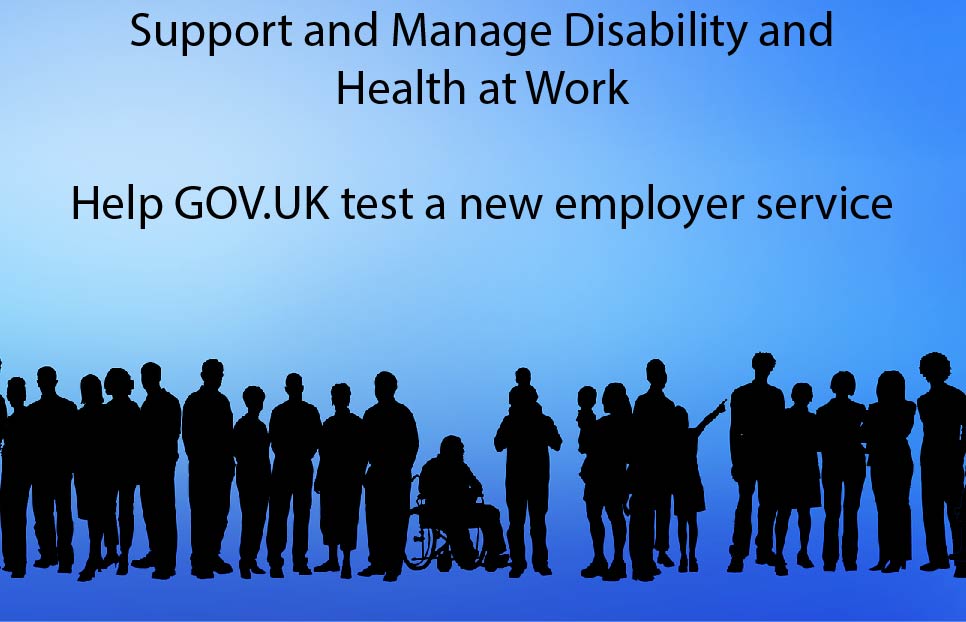
Online Employer Service Aimed at Providing Advice and Guidance on Managing Health and Disability in the Workplace

Can you help HSE test a new online employer service aimed at providing advice and guidance on managing health and disability in the workplace?

Many employers are currently facing challenges in recruiting the people they need to help their business thrive. It has never been more important for those employers to keep and develop the people they already have.

It’s therefore crucial that businesses have the tools they need to prevent long-term absence and avoidable job loss because of ill health or disability.

The government is testing a new online service for employers which provides advice and guidance on managing health and disability in the workplace. This explains your legal obligations and good practice

This may be particularly helpful for smaller businesses without an in-house HR function or access to an occupational health service.

HSE are supporting the development of this service and we’d like your help to test it.

By taking part, you’ll receive free information and guidance on disability and health-related employment issues. You could use it to help manage a current case, or simply take a look around the site to see what’s useful and Identify improvements.

However you choose to take part, your feedback will be vital in the future development of the service. You will make a real difference, ensuring the new service is user-friendly and meets the needs of your business and your employees. To make your feedback count, please make sure to complete the user survey.

How to take part

HSE Health and safety statistics 2020/ 2021

HSE recently published statistics that cover work-related ill health and non-fatal workplace injuries in the 2020/21 period.

Key figures for Great Britain (2020/21)

  • 1.7 million working people suffering from a work-related illness, of which
    • 822,000 workers suffering work-related stress, depression or anxiety
    • 470,000 workers suffering from a work-related musculoskeletal disorder
    • 93,000 workers suffering from COVID-19 which they believe may have been from exposure to coronavirus at work
  • 2,369 mesothelioma deaths due to past asbestos exposures (2019)
  • 142 workers killed at work
  • 441,000 working people sustained an injury at work according to the Labour Force Survey
  • 51,211 injuries to employees reported under RIDDOR

HSE have published the latest statistics on work-related health and safety in Great Britain, including the following key annual figures (2020/21):

  • 1.7 million working people suffering from work-related ill health
  • 93,000 workers suffering from COVID-19 which they believe may have been due to coronavirus exposure at work
  • 645,000 workers suffering from a work-related illness caused or made worse by the effect of the pandemic
  • 2,369 mesothelioma deaths due to past asbestos exposures (2019)
  • 142 workers killed at work
  • 441,000 injuries occurred at work according to the Labour Force Survey
  • 51,211 injuries to employees reported under RIDDOR

The release provides detailed commentary on these figures and is supported by:

  • The Statistics webpages, with a range of information e.g. on different types of work-related ill-health and different industry sectors
  • a comprehensive set of tables, designed to make the data accessible to users
  • our annual infographic-style summary booklet


BFFF are still collecting your accident stats data for 2020.

Please email carlabrown@bfff.co.uk for access to upload your data

F-GASES WHY THEY ARE IMPORTANT & REPORTING REQUIREMENTS

Introduction to F-Gases

Fluorinated gases, or ‘f-gases’, are a family of man-made gaseous compounds that contain fluorine. They are used in a range of different applications including cleaning products, aerosols, air-conditioning and, specifically relevant to the frozen food industry, refrigeration and chilling.

F-gases are comprised of:

  • Hydrofluorocarbons (HFCs)
  • Perfluorocabons (PFCs)
  • Sulphur hexafluoride (SF6)

HFCs are the main gases used today in refrigeration. They are a substitution for hydrochlorofluorocarbons (HCFCs), which were historically used as refrigerants before the Montreal Protocol. HCFCs are powerful greenhouse gases that are classified as ‘ozone-depleting substances’ (ODS). The Montreal Protocol is an environmental agreement set up to phase out the production and consumption of these ODS, to prevent further destruction to the ozone and protect the environment from harmful ultraviolet rays.

HFCs were introduced as an alternative to HCFCs because they are non-ODS however, they are also greenhouse gases with a high global warming potential (GWP). GWP is a unit of measure that was created to allow direct comparison of global warming impacts between different gases. It quantifies how much energy one unit of a specific GHG will absorb relative to one unit of carbon dioxide, over a certain period of time. The universal unit of measurement to indicate GWP is therefore called carbon dioxide equivalents (CO2e).

Having a high GWP means that even a small amount of HFC emissions will contribute towards global warming. Therefore, it is important that HFC emissions are properly recorded and reported to enable companies to monitor and reduce HFC releases.

Reporting Fugitive Emissions

Fugitive emissions is the term used to describe both intentional and unintentional greenhouse gas releases. This includes HFC emissions as a result of leakage over the operational life of a refrigerator and from disposal at the end of a refrigerators lifecycle.

According to the GHG Protocol, fugitive emissions should be included within a company’s GHG Inventory and can be applicable to Scope 1 (direct) and Scope 3 (indirect) emissions. Scope 1 includes emissions from sources a company owns, or controls and Scope 3 covers emissions from the value chain, outside of the ownership or control of a company.

For example, a supermarket ‘Alpha’ owns a number of freezers to store frozen food. Leakage from these units would fall within their Scope 1 reporting. Alpha purchases this food from a third-party supplier that freezes the food then delivers it, using a refrigerated vehicle, to the shop. The leakage associated with freezing and transporting the food would be included in Alpha’s Scope 3 reporting. Alpha would also be required to report f-gases contained within any freezers they dispose of during their reporting year, under Scope 1.

F-Gas Data

To report f-gas leakage, companies need to calculate the total amount of gas (kg) replaced in their equipment over the reporting year, per gas type. This is assumed to be equal to the quantity of leaked gas. The relevant data can be found in records or invoices from the HVAC or chiller maintenance company, which should contain the amount and type of f-gas used.

It is important to record gas types separately, as they each have different global warming impacts. The Intergovernmental Panel on Climate Change (IPCC) Climate Change document contains the full list of f-gases and their GWPs, which can be used to convert the quantity of gas into CO2e. These are the conversion factors accepted by the GHG Protocol for GHG reporting and are the same figures used by their own GHG Emissions Calculation Tool (based on a GWP 100-year time horizon).

Any equipment that is disposed of during the reporting year should also be taken into consideration as part of the GHG inventory. F-gases from retired equipment must be recovered either by a qualified technician or licensed waste facility. The recovered gas is then reclaimed, recycled or destroyed, depending on economic viability and government requirements. Records should be available from the technician or waste facility, to enable companies to record the quantity of f-gas recovered and how it has been disposed of.

Government Record-Keeping Requirements

The GHG Protocol requires that all f-gases released into the atmosphere are reported, under fugitive emissions. Many companies should already have records of their f-gas emissions, as a result of the UK government record-keeping requirements.

The EA and DEFRA guidance states that anyone who operates or services specific equipment containing f-gases needs to keep records about the quantity and type of gas at the beginning, during and end of the equipment’s life, as well as relevant inspection dates.

It is important to note that government record-keeping requirements do not extend to all f-gas equipment; smaller units do not require the same rigorous documentation as those that contain f-gas equivalent to 5 tCO2e or more. However, to ensure complete GHG reporting it is recommended that companies record all fugitive emissions, even for smaller equipment.


Member Benefits

Exclusive Partnership deals on key products and services:

  • BFFF energy deals and rates
  • Vypr member deals and introduction
  • Defib Plus deals
  • Company Shop – membership
  • Mentor – MHE training health check

Exclusive access to networking opportunities and events:

  • Meet the Buyer events (retail & foodservice)
  • Annual Business Conference with networking dinner
  • Specialist H&S and Technical Conferences
  • Special interest groups (packaging, frozen food temperatures)
  • Annual Lunch
  • Awards Night
Upcoming Events More Events
Sponsorship Packages

We offer a range of sponsorship opportunities to BFFF members across our events throughout the year, with flexible packages that can be tailored to suit your business objectives.

Contact Us
British Frozen Food Federation Members Logo
what our members say...
  • Wakefield Council

    “What an amazing piece of work and indicative of how BFFF respond to the concerns of their members and make an impact on the whole industry sector.”

    See Full Quote

  • Sysco

    “You guys really ‘Do The Right Thing’ for the good of the industry”

    See Full Quote

  • Darta

    “The BFFF awards night is becoming an “appointment not to miss” on our calendar and we again enjoyed it immensely together with lots of well-known people from our industry. The…

    See Full Quote

  • Kantar Worldpanel

    “The Business Conference was an excellent day that was very well organised and allowed so many likeminded individuals in the room to learn so much more around the Frozen industry….

    See Full Quote

  • Lakeside Food Group Ltd

    “This Not For EU labelling situation alarmed us and quickly became a major worry to our business. These are times when you really rely on some support and from previous…

    See Full Quote

  • Meadow Vale Foods Limited

    “We had a few questions with respect to the new EPR waste packaging legislative changes. I know some of my colleagues have been assisted by BFFF in the past so…

    See Full Quote

  • Newberry International Produce Ltd

    “I am writing to express my heartfelt gratitude for the outstanding event you organised. I have only worked in this sector for the past nineteen months coming from twenty-five years…

    See Full Quote

  • Place UK Ltd

    “The BFFF 2024 Conference was compelling and thought provoking, with a many relevant and interesting topics covered at great pace and some depth by excellent speakers – will certainly attend…

    See Full Quote

  • Roswel Spedition GMBH

    “Thank you and the team for rushing around so brilliantly before, during and after the conference. It was pleasure to be part of the conference.”

    See Full Quote

  • Seara

    “The event was great, in my opinion. Not only it was very well organised, but the venue and the catering were excellent too. Furthermore, the content of the presentations was…

    See Full Quote

Website Designed & Built by we are CODA