Become a member

CONSUMERS WANT LABELS ON MEAT AND DAIRY PRODUTS DETAILING ANIMAL WELFARE

New research, commissioned by Compassion in World Farming, has found that consumers would like to see labels on meat and dairy products in supermarkets indicating how the animals were reared and slaughtered.

According to the survey of 2,000 people, 68% of them would welcome animal welfare labels. Currently the only animal product for which it is compulsory to have a label indicating animal welfare is eggs. All egg packaging must show whether or not the hens were kept in cages.

Another survey of 2,000 people run by the National Secular Society (NSS), found that 72% of shoppers want labels on food to reveal how animals were slaughtered.

Stephen Evans, the NSS chief executive, said: “The public overwhelmingly considers non-stun slaughter to be less ethical, and wants labelling so they can avoid meat from animals killed by such methods.

“The government should implement clear labelling to ensure consumers have this choice.”

Defra have just run a consultation for ‘Labelling for Animal Welfare: Call for Evidence’ to seek evidence on the impacts of potential animal welfare labelling.

The aim of the consultation was to give Defra an understanding of how the labelling might impact businesses, farmers, and consumers. They wanted to hear people’s views on which welfare standards could form the basis of a possible label and what the label might look like.


A NEW PARTNERSHIP FOR LAMB WESTON!

Lamb Weston is very excited to announce it’s now officially a corporate partner of the Master Chefs of Great Britain!

Andrea Deutschmanek, Lamb Weston’s International Marketing Lead Northern Europe, said: “From farm to fry, Lamb Weston, just like the Master Chefs of Great Britain, is driven and bound by a shared goal.  Each of us is dedicated to working hard, behind the scenes, day after day, night after night, to ensure our fries meet their standards of excellence.”

The Master Chefs of Great Britain is a not-for-profit organisation whose members are at the pinnacle of their profession.  Their principal goals are to support the young chefs who will be Master Chefs of the future and to champion great British producers, growers and manufacturers.  Their members and corporate partners support them in achieving these goals.

Andrea adds; “We are very much looking forward to supporting the MCGB, working with its members and inspiring some of the young chefs with our knowledge of potatoes.”

For innovative ideas, recipes and potato inspiration, head over to www.lambweston.eu/uk, call 0800 963962 or email us at salesUK@lambweston.eu

Annual Luncheon Charity Partner Nottinghamshire Mind

Our chosen charity partner for this years’ Annual Luncheon was Nottinghamshire Mind. During the luncheon, guests were encouraged to show their support in the form of donations to this very important charity.

There is still time to donate by scanning the QR code or by clicking the link www.justgiving.com/notts-mind 

Our mental health is as important as our physical health, but sometimes a lot harder to spot. Over the past 21 months we have had to ensure the most unprecedented circumstances, and this has had a massive impact on our mental health.

  • In 2019/2020 over 6200 committed suicide
  • 828,000 workers suffered from work related stress, depression, or anxiety
  • 9 million working days were lost to work related stress, depression, or anxiety

As a Local Mind Charity Mind provide local mental health support services, away from a clinical setting, tailored to the communities they serve.

Nottinghamshire Mind was formed in 2019 by merging Bassetlaw Mind and Central Notts Mind, with a view to extending service across the whole county by 2024 and reinstating the previously closed office in Newark. The last 12 months has seen rapid growth in the organisation, with community services now in 5 of the 7 Nottinghamshire districts.

The focus is on supporting people in times of mental health crisis and providing the tools needed to become more resilient. Mind work with Community Partners: local community groups and organisations where activities have an element of mental health support. Involving people in their own local community helps to build self-esteem, self-worth and a sense of belonging which leads to stronger, more resilient communities.

Community services are free and available, without referral, to all adults across the county.

These include immediate telephone support and signposting, supportive listening run by volunteers, text chat rooms hosted by people with lived experience, community cafes, walking groups and one-to-one sessions with our Community Recovery Coaches.

Mind also offer subsidised counselling sessions and workplace mental health training.

Although Nottinghamshire Mind are affiliated with Mind, they are a small, independent charity, with their own board of trustees and depend heavily on fundraising and donations. Your donations today will go directly to maintaining and growing community support services, training volunteers and subsidising counselling sessions, ensuring everyone across Nottinghamshire can get the help and support they need, at the time they need it.

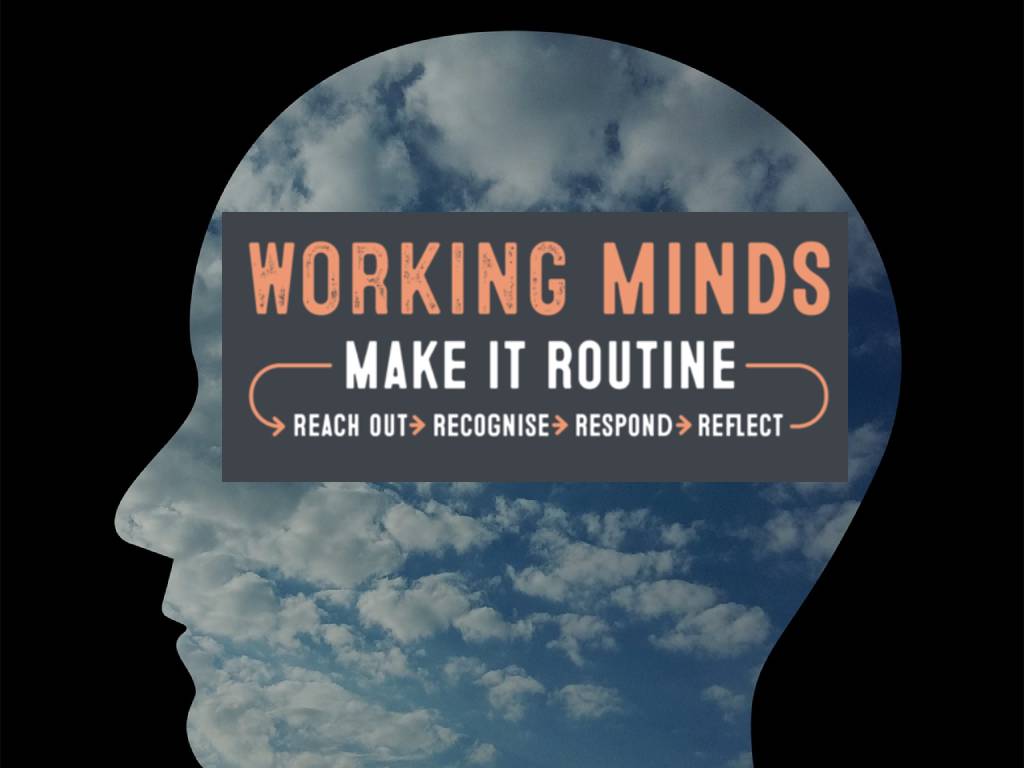
HSE Working Minds Mental Health Campaign Launched

Launched by Sarah Albon, chief executive of HSE, at the HSE Health and Work Conference earlier this month, Working Minds raises awareness about how to recognise and respond to the signs of stress to protect workers and support good mental health to help people to stay well.

Work-related stress is now the number one cause of employee sickness absence, with major factors causing work-related stress including workload pressures – tight timescales, too much responsibility and a lack of managerial support.

We’re calling for a culture change across British manufacturing where recognising and responding to the signs of work-related stress becomes as routine as managing safety.

Campaign partners
Working with partner organisations including Composites UK, Engineering Contractors Association, Mind, Acas and Mates in Mind, we will provide businesses with relevant information and practical tools.

Operations Manager at Composites UK Dr Sue Halliwell said: “A physically fit and mentally healthy workforce can deliver increased productivity, increased staff retention, and ensure employees are more fully engaged in their work.

“The manufacturing sector has traditionally focused on physical health and safety, but mental health and wellbeing is now rightfully demanding increased attention. Work related stress can be a significant cause of illness leading to absence, staff turnover and other issues such as increased capacity for error; the pandemic has only added to already increasing pressures across all businesses.

“Composites UK is proud to be working with HSE and through the SIMPLC (Safety in manufacturing of plastics and composites) initiative to raise awareness of the importance of good mental health practices at work, ensuring our members have access to the right information and tools to enable them to continue to operate safely and effectively.”

Make it Routine
Working Minds is aimed specifically at supporting small businesses by providing employers and workers with easy to implement advice that directs employers to Make it Routine by Reaching out, Recognising, Responding and Reflecting.

Sharing personal experience is a powerful way of helping others to understand the real-life impacts of these issues. If you have an experience of work-related stress – either personally or managing stress as an employer – we’d love to hear from you. Please email campaigns@hse.gov.uk and a member of the team will be in touch.

Find out more about the Working Minds campaign


FSA LAUNCHES CONSULTATION ON PRECAUTIONARY ALLERGEN LABELLING

The Food Standards Agency (FSA) has launched a consultation to gather views on precautionary allergen labelling (PAL) and the provision of precautionary allergen information on many types of food sold in England, Northern Ireland, and Wales.

The consultation is open to all stakeholders, from food businesses to schools, to trade bodies and consumers and covers topics including:

  • The provision of precautionary allergen information to consumers
  • Improving guidance and advice for businesses on how and when to use the labelling
  • Ensuring compliance with regulations; and standardising risk-analysis for allergen cross-contamination.

The feedback received will assist the FSA in considering potential approaches for precautionary allergen labelling for prepacked foods and precautionary allergen information for non-prepacked foods, so that the information is:

  • Communicated more clearly and consistently, in an understandable and meaningful way to consumers, in terms of the form and content of the information
  • Based on a proportionate and standardised processes for assessing, managing, and communicating the risk of allergen cross-contamination by food businesses

More detailed information can be found on the Precautionary Allergen Labelling consultation page.


The consultation will be open until 14th March 2022 and the FSA aims to publish a summary of responses within 3 months after this date.

FOOD AND YOU 2: WALES – KEY FINDINGS REPORT PUBLISHED

The Food Standards Agency (FSA) has published the Wales Key Findings Report for wave one and two of the Food and You 2 survey. The survey measures self-reported consumer knowledge, attitudes and behaviours related to food safety and other food issues amongst adults in Wales, England and Northern Ireland.


The survey was conducted during the Covid-19 pandemic and so It reports the reported attitudes and behaviours under unusual circumstances, which have a significant impact on how and where people buy and eat food, and on levels of household food insecurity.


The report covers topics such as food safety in the home, food shopping, eating out, food security, concerns about food, and trust in the FSA and food supply chain.


The key findings are:

  • Confidence in food safety and authenticity
    • More than 9 in 10 (94%) respondents reported that they were confident that the food they buy is safe to eat.
    • Almost 9 in 10 (89%) respondents were confident that the information on food labels is accurate.
  • Confidence in the food supply chain:
    • Over three quarters of respondents (79%) reported that they had confidence in the food supply chain.
    • Respondents were more likely to report confidence in farmers (92%), shops and supermarkets (89%) than in takeaways (74%), and food delivery services (57%).
  • Awareness, trust and confidence in the FSA:
    • Over 9 in 10 respondents (93%) had heard of the FSA.
    • Over 8 in 10 (81%) respondents who had at least some knowledge of the FSA reported that they trusted the FSA to make sure food is safe and what it says it is
  • Concerns about food
    • Respondents were asked to briefly explain what their concerns were about the food they eat. The most common concerns related to food safety and hygiene (18%), and food production methods (18%).
    • Respondents were asked to indicate if they had concerns about a number of food-related issues, from a list of given options. The most common concerns related to the amount of sugar in food (58%), food waste (57%) and animal welfare (57%).
  • Food security
    • Food security levels were comparable across Wales, adjusted-England*, and Northern Ireland. Over three quarters of respondents were food secure (i.e. had high or marginal food security) in Wales (82%), adjusted -England (86%) and Northern Ireland (84%). Approximately 1 in 6 respondents were food insecure (i.e. had low or very low food security) in Wales (18%), adjusted-England (14%), and Northern Ireland (16%).
  • Confidence in allergen labelling
    • Most respondents (80%) who go food shopping and take into consideration a person who has a food allergy or intolerance were confident that the information provided on food labelling allows them to identify foods that will cause a bad or unpleasant physical reaction.
    • Respondents who bought food loose were more confident in identifying these foods in-store at a supermarket (74%), when buying food from a supermarket online (69%) and when shopping at independent food shops (68%). However, respondents were less confident when buying food from food markets or stalls (54%).
  • Eating out and takeaways
    • Most respondents (92%) reported that they had heard of the Food Hygiene Rating Scheme (FHRS). Almost two thirds (65%) of respondents reported that they had heard of the FHRS and had at least some knowledge of the FHRS.
  • Food allergy, intolerance, and other hypersensitivities
    • Most respondents (86%) reported that they did not have a food hypersensitivity. Fewer than 1 in 10 (9%) respondents reported that they had a food intolerance, 3% had a food allergy, 1% had coeliac disease and 1% had multiple food hypersensitivities.


To read the full report or find out more about the survey results, please click here.

Member Benefits

Exclusive Partnership deals on key products and services:

  • BFFF energy deals and rates
  • Vypr member deals and introduction
  • Defib Plus deals
  • Company Shop – membership
  • Mentor – MHE training health check

Exclusive access to networking opportunities and events:

  • Meet the Buyer events (retail & foodservice)
  • Annual Business Conference with networking dinner
  • Specialist H&S and Technical Conferences
  • Special interest groups (packaging, frozen food temperatures)
  • Annual Lunch
  • Awards Night
Upcoming Events More Events
Sponsorship Packages

We offer a range of sponsorship opportunities to BFFF members across our events throughout the year, with flexible packages that can be tailored to suit your business objectives.

Contact Us
British Frozen Food Federation Members Logo
what our members say...
  • Wakefield Council

    “What an amazing piece of work and indicative of how BFFF respond to the concerns of their members and make an impact on the whole industry sector.”

    See Full Quote

  • Sysco

    “You guys really ‘Do The Right Thing’ for the good of the industry”

    See Full Quote

  • Darta

    “The BFFF awards night is becoming an “appointment not to miss” on our calendar and we again enjoyed it immensely together with lots of well-known people from our industry. The…

    See Full Quote

  • Kantar Worldpanel

    “The Business Conference was an excellent day that was very well organised and allowed so many likeminded individuals in the room to learn so much more around the Frozen industry….

    See Full Quote

  • Lakeside Food Group Ltd

    “This Not For EU labelling situation alarmed us and quickly became a major worry to our business. These are times when you really rely on some support and from previous…

    See Full Quote

  • Meadow Vale Foods Limited

    “We had a few questions with respect to the new EPR waste packaging legislative changes. I know some of my colleagues have been assisted by BFFF in the past so…

    See Full Quote

  • Newberry International Produce Ltd

    “I am writing to express my heartfelt gratitude for the outstanding event you organised. I have only worked in this sector for the past nineteen months coming from twenty-five years…

    See Full Quote

  • Place UK Ltd

    “The BFFF 2024 Conference was compelling and thought provoking, with a many relevant and interesting topics covered at great pace and some depth by excellent speakers – will certainly attend…

    See Full Quote

  • Roswel Spedition GMBH

    “Thank you and the team for rushing around so brilliantly before, during and after the conference. It was pleasure to be part of the conference.”

    See Full Quote

  • Seara

    “The event was great, in my opinion. Not only it was very well organised, but the venue and the catering were excellent too. Furthermore, the content of the presentations was…

    See Full Quote

Website Designed & Built by we are CODA