Become a member

Gender identity issues in the workplace

Gender identity is a divisive issue with strong and polarised views on each side of the debate, as can be seen from the UK government’s recent blocking of the Gender Recognition Reform (Scotland) Bill.

Dealing with gender identity in the workplace can be a delicate issue and one where employers have to consider the needs of, and legal protection afforded to, two different groups of individuals:

  • those protected from discrimination under the Equality Act 2010 (EqA) on the basis of gender reassignment; and
  • those with gender-critical beliefs.

Gender-critical beliefs 

Gender-critical beliefs include the belief that someone’s sex – i.e. whether they are male or female – is biological and unchangeable and that sex is distinct from gender-identity. Whether gender-critical beliefs are protected under the EqA has been the subject of an increasing number of tribunal claims.

What is a protected belief?

It is unlawful to discriminate against someone because of religion or belief. A belief is defined as any religious or philosophical belief (or lack of belief) but the EqA does not define these concepts further.

However, guidance given by the Employment Appeal Tribunal (EAT) in Grainger plc v Nicholson identified five criteria, which must be met if a belief is to qualify as a philosophical belief and therefore gain protection under the EqA:

  • The belief must be genuinely held.
  • It must be a belief and not, simply, an opinion or viewpoint based on the present state of information available.
  • It must be a belief as to a weighty and substantial aspect of human life and behaviour.
  • It must attain a certain level of cogency, seriousness, cohesion and importance.
  • It must be worthy of respect in a democratic society, be not incompatible with human dignity and not conflict with the fundamental rights of others.

The decision in Forstater v CDG Europe considered whether gender-critical beliefs met these criteria.

Forstater v CDG Europe

Maya Forstater had posted several tweets and had had discussions with another member of staff where she expressed her belief that sex is immutable and not to be conflated with gender identity. Ms Forstater also expressed her opposition to the changes being made to the Gender Recognition Act 2004 (GRA) that would allow trans people to achieve legal recognition of their acquired gender based only on self-identification. As a result, her employer did not renew her contract.

Ms Forstater brought claims for discrimination and victimisation, which initially failed on the basis that her beliefs did not satisfy the fifth of the Grainger criteria.

On appeal, the EAT held that Ms Forstater’s beliefs were in fact “worthy of respect in a democratic society” and were therefore protected by the EqA.

However, importantly, the EAT also made clear that this “does not mean that those with gender-critical beliefs can ‘misgender’ trans persons with impunity” and noted that acts of harassment and discrimination against trans people in the workplace are also prohibited by the EqA.

Gender reassignment

It is also unlawful to discriminate against someone because of gender reassignment.

Section 7 of the EqA provides that:

“A person has the protected characteristic of gender reassignment if the person is proposing to undergo, is undergoing, or has undergone a process (or part of a process) for the purpose of reassigning the person’s sex by changing physiological or other attributes of sex.”

The reference to ‘process’ is not limited to the medical process of reassigning one’s gender, however the individual needs to have made a concerted decision to live their life as the other gender.

The scope of protection was considered in Taylor v Jaguar Land Rover Ltd.

Taylor v Jaguar Land Rover Ltd.

The claimant, Rose Taylor, worked in Jaguar Land Rover’s plant. In 2017, the claimant informed their employer that they were transgender and self-identified as both gender fluid and non-binary. The claimant would be transitioning from male to female identity, and had not undergone any surgical reassignment. The claimant subsequently began wearing female clothes, leading to them being insulted by colleagues. When the claimant raised these concerns with HR and management, their concerns were often dismissed.

The employment tribunal held that, regardless of the fact that the claimant had not undergone any surgical reassignment, they were protected by the EqA.

Although this decision was only at tribunal level, and therefore not binding, it does indicate the potential scope of protection under the EqA.  Whether an individual is protected will be fact-specific and this will sometimes be difficult to know with any certainty. The safest option for an employer would be to assume the EqA applies and act accordingly.

Best practice for employers

Employers should take a proactive and sensitive approach to managing gender identity issues, remembering that they must not discriminate against staff either because of their gender-critical beliefs or on the basis of gender reassignment.

Difficulties could arise where employees have conflicting views over sex and gender and where, for example, one raises a grievance against the other because of gender-critical views expressed in the workplace or on social media.

The employer will need to investigate the grievance and, in deciding whether any action is appropriate, may need to distinguish between taking action because of the employee’s belief (which could fall foul of the EqA) and because of the way that the employee manifested or expressed that belief, if they have done so in an offensive way, for example.

In the latter circumstances, the employer may be able to justify taking disciplinary action against them, but it will be a fine line to tread.

As ever, prevention is better than cure and employers should set clear expectations for their staff, using the following as a starting point:

  1. Update internal policies

Employers should review and update their equal opportunities, anti-harassment and bullying policies to ensure that they are up-to-date and set out the behavioural standards required of staff. In particular, policies should highlight discrimination towards an individual’s gender (including gender reassignment) will not be tolerated, and should set out any applicable sanctions.

  1. Provide Training

Employers should provide gender recognition and diversity training to all employees across their business. The aim of such training should be to improve employees’ understanding of gender identity, as well as making them aware of acceptable terminology to use in the workplace. Training should also include how to handle any grievances, so that managers and members of HR will also have the confidence to deal with issues that arise.

  1. Encourage communication between employees

Some employees may not feel confident in having discussions relating to their gender with their managers or other colleagues at work. Employers should reassure their staff that they are able to have such conversations in a safe environment, and managers will be available to have any such discussions at the employee’s pace.

We’re here to help

If you have any questions about these issues, or would like us to review your internal policies and procedures, please get in touch with a member of our employment team.

Employment

Contact: Matt McDonald  matt.mcdonald@shma.co.uk

Philip Pepper philip.petter@shma.co.uk

NEW ENERGY BILLS DISCOUNT SCHEME ANNOUNCED

Following the conclusion of the review into the current ‘Energy Bill Relief Scheme’ (EBRS) for non-domestic customers, the Chancellor of the Exchequer has announced a new ‘Energy Bills Discount Scheme’ (EBDS).

The new scheme aims to strike a balance between supporting businesses over the course of the next twelve months and limiting taxpayer’s exposure to volatile energy markets.

The Chancellor has also written to Ofgem asking it to provide an update on the progress of the review into the non-domestic market in time for the Budget. This is to ascertain whether further action is needed on issues such as: the pricing and availability of tariffs, standing charges and renewal terms, and the ability of certain sectors to secure contracts.

The Government has published an explainer, fact sheet and ETII list on Gov.uk. Further information can be found in the press notice.

In addition, the Digital team at HM Treasury has also tweeted a series of useful explainers.

EU AND UK REACH AGREEMENT ON WAY FORWARD REGARDING TRADE DATA SHARING

As a result of a meeting on 9th January, between Vice President Šefčovič, Foreign Secretary Cleverly and the Northern Ireland Secretary Heaton-Harris, an agreement has been reached which allows the EU access to UK IT systems.

The meeting was said to be “cordial and constructive” and looked to find joint solutions to the concerns raised by businesses and communities in Northern Ireland as well protecting the Good Friday (Belfast) Agreement in all its parts and the integrity of both the EU Single Market and UK internal market.

In a joint statement they noted this work was a critical prerequisite to building trust and providing assurance, and provided a new basis for EU-UK discussions.

EU and UK technical teams will now work to scope the potential for solutions in different areas based on this renewed understanding.

The next meeting is due to take place on 16th January.

YOUR FAVOURITE KNOBBLY CRISP BRAND IS BACK – WITH A TWIST

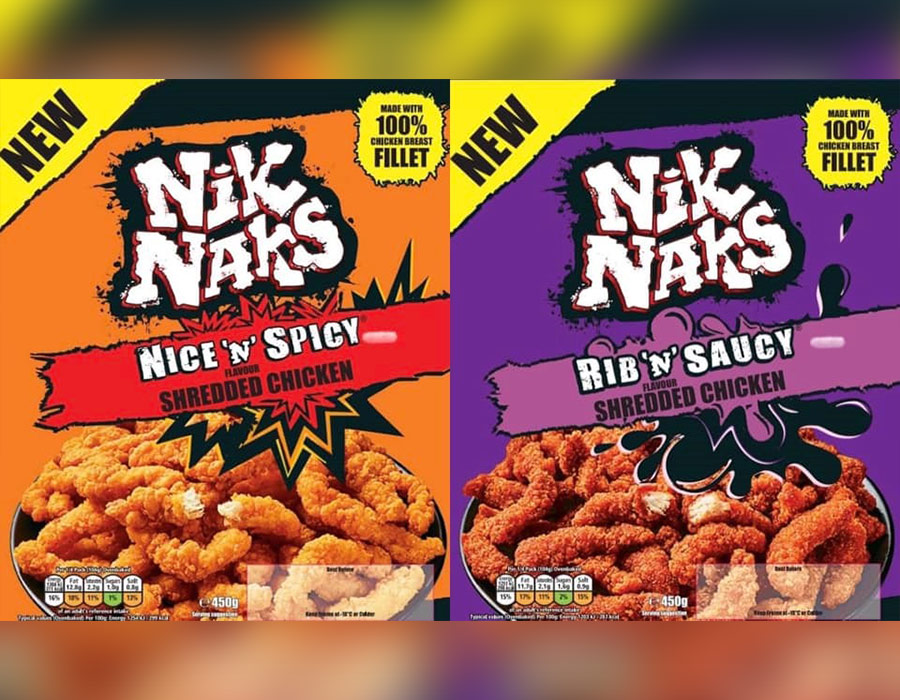
Iceland is launching Nik Nak Shredded Chicken in the classic crisp flavours – Nice ‘n’ Spicy and Rib ‘n’ Saucy. The crunchy, cult, crisp has been given a 2023 upgrade just for Iceland shoppers.

The range, which allows Nik Naks lovers to feast on their favourite flavours at lunch or dinner as well as in snack form throughout the day, is due to grace Iceland’s supermarket freezer capsules soon with variations including the cult classics, Nice ‘n’ Spicy (£4.00, 450g) and Rib ‘n’ Saucy (£4.00, 450g), and it’s fair to say people are getting a tad excited.

Comments on a NewFoodsUK post about the release read: “Rib n saucy chicken yessss can’t wait to try this”, “mate I’m hibernating for the rest of the year with these” and “there goes my diet”. Some fans are even begging for more flavours already, with one asking: “Where’s the Scampi ‘n’ Lemon?!”.

In fact, the post which went live yesterday has already racked up nearly 11K comments, 3K reactions and 4K shares.

The range will be available exclusively at Iceland from Monday 30th January 2023.

IP policies – Universities need to be aware of broad claims over student inventions

University IP policies are an unusual subject matter for the English courts, so it was a rare occurrence that the English Patent Court had to grapple with the terms of a university intellectual property policy to decide whether the university could validly claim rights under its IP policy.

The case – Oxford University Innovation Ltd v Oxford Nanoimaging Ltd [2022] EWHC 3200 (Pat)

This case was brought by Oxford University for outstanding royalties of over £700,000payable by Oxford Nanoimaging Limited, a spin out company of the university. The defence to payment of these royalties was that the terms of the university’s IP policy were too broad, as the university could claim patent rights in respect of inventions created by a DPhil student “in the course of or incidentally to” their studies, and as such the IP policy was unfairly balanced in favour of the university and therefore void and unenforceable.

While the court rejected the university’s arguments that the DPhil student contracts were not subject to consumer protection legislation (they were and so the Unfair Terms in Consumer Contracts Regulations 1999 applied), the court then went on to assess whether the terms of the IP policy were significantly imbalanced in favour of the university and whether they were made in good faith.

Court findings of the IP policy

The court found the terms of the IP policy did not cause a significant imbalance between students and the university, and were made in good faith, it did comment on the IP policy generally, particularly as there were two versions at issue: one that was incorporated into the DPhil student’s contract and the subsequent amendments that had been made by the university following concerns expressed by students as to the scope of student-created IP.

The court found that in the previous version of the IP policy (which was incorporated into the DPhil student’s contract) there was a “potential imbalance” between students and the university for claims of IP made or created “in the course of or incidentally to their studies”, for the following reasons:

  1. Such terms would deprive the student of their IP rights in circumstances where the university’s contribution was negligible.
  2. Students were not paid to invent (unlike employees), but generally pay to receive an education.
  3. Such terms went beyond national law.
  4. Such terms were out of line with other universities’ IP policies (the court in fact consulted 10 other university IP policies in assessing the claim and preparing its judgment).
  5. Such imbalance had been acknowledged and debated by the university itself (which led to an amendment and removal of such term in the amended IP policy).

The court did acknowledge there were some circumstances where such a position would be reasonable i.e. where inventions were created jointly with university employees, where students further developed existing inventions owned by the university, created using University facilities, etc.

However, the court did not believe the IP policy created a significant imbalance to the detriment of the DPhil student and found it not to be unfair. There was no significant impact on students generally as the university was found to only apply for 100 patents through World Intellectual Property Office per year, and there was no evidence that the university had in fact enforced its rights under the IP policy to apply for patents so as to claim rights from students. When the wording of the IP policy was brought to the University’s attention, they changed the wording to address the potential imbalance and unfairness this could cause. The University justified the amendments as not intending to alter the meaning of the University’s policy or practice, as reflecting the position more accurately.

A first for English courts

The court itself acknowledged this is the first case heard in the English courts which dealt with issues of applicability and impact of consumer protection legislation of terms relating to the intellectual property rights of students and terms relating to employed academics.

It is a stark reminder for universities not to overreach in their claims over IP rights created or developed by students. IP policies should include appropriate sections which set out the position on IP ownership between academics, undergraduates, postgraduate research students, and employees.

Contracts/agreements

Contact:  Carys Thompson  carys.thompson@shma.co.uk

What does 2023 look like for the hospitality sector?

With reduced customers due to the cost of living crises, staff shortages and soaring energy prices, added to the effects that the Covid-19 pandemic has had over the past two years, the hospitality industry is facing extreme pressure.

Although the promise of support by the government to help businesses in the sector has been made nothing has yet materialised, leaving businesses feeling uncertain and being forced to decide if they can continue to trade.

How has the Covid-19 pandemic affected the sector?

There is a misconception that the hospitality sector recovered during 2022, however briefly, however this was most certainly not the case. With the sector being one of the industries hit hardest by the pandemic, it has taken far longer to recover. The restrictions imposed on businesses during Covid-19 led to many workers leaving the sector to look for alternative employment. Added to the Brexit immigration measures that were implemented around the same time, staff shortages are rife, further dissuading talent from staying in the sector.

With so many other important areas to support, such as the NHS and the social care industry, the government has almost overlooked hospitality and has provided no specific measures to help struggling businesses in this sector recover long-term.

Cost of living crisis

There’s no doubt that the cost of living crisis is deterring people from spending money on non-essentials, such as eating and drinking outside of their homes. Even those who can afford to spend are tightening their purse strings as a precautionary measure.

This means the hospitality sector is once again trying to navigate a near impossible situation, and it is no wonder that venues up and down the UK are beginning 2023 with caution. January, February and March are notoriously the most difficult months for the industry and with surging energy prices, many venues are already resorting to opening reduced hours or even forced closures the first part of the year due to the limited bookings in preparation to ensure some balance for the year.

How businesses is the hospitality sector are supporting each other

Whilst government support is conspicuous by its absence, the sector is pulling together to support itself wherever possible. For example, Boxpark uses its experience with flexible and accessible retail locations to hire out venue space to smaller, independent restaurants, bars or cafes, which may otherwise not be able to afford a bricks and mortar presence. This model helps smaller businesses by keeping the cost of rent and utilities down, whilst potentially increasing footfall to what can be marketed as a destination venue.

As similar groups, like First Table, provide opportunities for restaurants to offer reduced priced tables between specific times in the day (for example 3pm-6pm), this is largely utilised by businesses who use the time to have meetings with clients and contacts. This is fantastically beneficial to restaurants, as those are particularly quiet times to fill a restaurant.

Additionally other hospitality businesses providers have reached out to businesses with larger workplaces in order to run onsite cafés, or provide their products to an existing one to diversify their offering and provide additional income streams.

These examples demonstrate that if hospitality businesses start to think laterally, flexibly and creatively with regard to diversifying income streams, they can put themselves in the best possible financial position for the year ahead.

Government support

Although many providers are coming up with their solutions and working collaboratively with others, the government still needs to provide specific targeted support for the sector in order for it to survive, and grow.

While the past few years have been tough for the industry, and 2023 currently appears as if it will be no different, the hospitality sector is resilient and innovative, and fully capable of overcoming the challenges on the horizon. It will continue to find ways to keep going from strength to strength.

Food safety, licensing and regulatory compliance

Contact: Melissa  Toney   melissa.toney@shma.co.uk

Member Benefits

Exclusive Partnership deals on key products and services:

  • BFFF energy deals and rates
  • Vypr member deals and introduction
  • Defib Plus deals
  • Company Shop – membership
  • Mentor – MHE training health check

Exclusive access to networking opportunities and events:

  • Meet the Buyer events (retail & foodservice)
  • Annual Business Conference with networking dinner
  • Specialist H&S and Technical Conferences
  • Special interest groups (packaging, frozen food temperatures)
  • Annual Lunch
  • Awards Night
Upcoming Events More Events
Sponsorship Packages

We offer a range of sponsorship opportunities to BFFF members across our events throughout the year, with flexible packages that can be tailored to suit your business objectives.

Contact Us
British Frozen Food Federation Members Logo
what our members say...
  • Wakefield Council

    “What an amazing piece of work and indicative of how BFFF respond to the concerns of their members and make an impact on the whole industry sector.”

    See Full Quote

  • Sysco

    “You guys really ‘Do The Right Thing’ for the good of the industry”

    See Full Quote

  • Darta

    “The BFFF awards night is becoming an “appointment not to miss” on our calendar and we again enjoyed it immensely together with lots of well-known people from our industry. The…

    See Full Quote

  • Kantar Worldpanel

    “The Business Conference was an excellent day that was very well organised and allowed so many likeminded individuals in the room to learn so much more around the Frozen industry….

    See Full Quote

  • Lakeside Food Group Ltd

    “This Not For EU labelling situation alarmed us and quickly became a major worry to our business. These are times when you really rely on some support and from previous…

    See Full Quote

  • Meadow Vale Foods Limited

    “We had a few questions with respect to the new EPR waste packaging legislative changes. I know some of my colleagues have been assisted by BFFF in the past so…

    See Full Quote

  • Newberry International Produce Ltd

    “I am writing to express my heartfelt gratitude for the outstanding event you organised. I have only worked in this sector for the past nineteen months coming from twenty-five years…

    See Full Quote

  • Place UK Ltd

    “The BFFF 2024 Conference was compelling and thought provoking, with a many relevant and interesting topics covered at great pace and some depth by excellent speakers – will certainly attend…

    See Full Quote

  • Roswel Spedition GMBH

    “Thank you and the team for rushing around so brilliantly before, during and after the conference. It was pleasure to be part of the conference.”

    See Full Quote

  • Seara

    “The event was great, in my opinion. Not only it was very well organised, but the venue and the catering were excellent too. Furthermore, the content of the presentations was…

    See Full Quote

Website Designed & Built by we are CODA