Become a member

IP policies – Universities need to be aware of broad claims over student inventions

University IP policies are an unusual subject matter for the English courts, so it was a rare occurrence that the English Patent Court had to grapple with the terms of a university intellectual property policy to decide whether the university could validly claim rights under its IP policy.

The case – Oxford University Innovation Ltd v Oxford Nanoimaging Ltd [2022] EWHC 3200 (Pat)

This case was brought by Oxford University for outstanding royalties of over £700,000payable by Oxford Nanoimaging Limited, a spin out company of the university. The defence to payment of these royalties was that the terms of the university’s IP policy were too broad, as the university could claim patent rights in respect of inventions created by a DPhil student “in the course of or incidentally to” their studies, and as such the IP policy was unfairly balanced in favour of the university and therefore void and unenforceable.

While the court rejected the university’s arguments that the DPhil student contracts were not subject to consumer protection legislation (they were and so the Unfair Terms in Consumer Contracts Regulations 1999 applied), the court then went on to assess whether the terms of the IP policy were significantly imbalanced in favour of the university and whether they were made in good faith.

Court findings of the IP policy

The court found the terms of the IP policy did not cause a significant imbalance between students and the university, and were made in good faith, it did comment on the IP policy generally, particularly as there were two versions at issue: one that was incorporated into the DPhil student’s contract and the subsequent amendments that had been made by the university following concerns expressed by students as to the scope of student-created IP.

The court found that in the previous version of the IP policy (which was incorporated into the DPhil student’s contract) there was a “potential imbalance” between students and the university for claims of IP made or created “in the course of or incidentally to their studies”, for the following reasons:

  1. Such terms would deprive the student of their IP rights in circumstances where the university’s contribution was negligible.
  2. Students were not paid to invent (unlike employees), but generally pay to receive an education.
  3. Such terms went beyond national law.
  4. Such terms were out of line with other universities’ IP policies (the court in fact consulted 10 other university IP policies in assessing the claim and preparing its judgment).
  5. Such imbalance had been acknowledged and debated by the university itself (which led to an amendment and removal of such term in the amended IP policy).

The court did acknowledge there were some circumstances where such a position would be reasonable i.e. where inventions were created jointly with university employees, where students further developed existing inventions owned by the university, created using University facilities, etc.

However, the court did not believe the IP policy created a significant imbalance to the detriment of the DPhil student and found it not to be unfair. There was no significant impact on students generally as the university was found to only apply for 100 patents through World Intellectual Property Office per year, and there was no evidence that the university had in fact enforced its rights under the IP policy to apply for patents so as to claim rights from students. When the wording of the IP policy was brought to the University’s attention, they changed the wording to address the potential imbalance and unfairness this could cause. The University justified the amendments as not intending to alter the meaning of the University’s policy or practice, as reflecting the position more accurately.

A first for English courts

The court itself acknowledged this is the first case heard in the English courts which dealt with issues of applicability and impact of consumer protection legislation of terms relating to the intellectual property rights of students and terms relating to employed academics.

It is a stark reminder for universities not to overreach in their claims over IP rights created or developed by students. IP policies should include appropriate sections which set out the position on IP ownership between academics, undergraduates, postgraduate research students, and employees.

Contracts/agreements

Contact:  Carys Thompson  carys.thompson@shma.co.uk

What does 2023 look like for the hospitality sector?

With reduced customers due to the cost of living crises, staff shortages and soaring energy prices, added to the effects that the Covid-19 pandemic has had over the past two years, the hospitality industry is facing extreme pressure.

Although the promise of support by the government to help businesses in the sector has been made nothing has yet materialised, leaving businesses feeling uncertain and being forced to decide if they can continue to trade.

How has the Covid-19 pandemic affected the sector?

There is a misconception that the hospitality sector recovered during 2022, however briefly, however this was most certainly not the case. With the sector being one of the industries hit hardest by the pandemic, it has taken far longer to recover. The restrictions imposed on businesses during Covid-19 led to many workers leaving the sector to look for alternative employment. Added to the Brexit immigration measures that were implemented around the same time, staff shortages are rife, further dissuading talent from staying in the sector.

With so many other important areas to support, such as the NHS and the social care industry, the government has almost overlooked hospitality and has provided no specific measures to help struggling businesses in this sector recover long-term.

Cost of living crisis

There’s no doubt that the cost of living crisis is deterring people from spending money on non-essentials, such as eating and drinking outside of their homes. Even those who can afford to spend are tightening their purse strings as a precautionary measure.

This means the hospitality sector is once again trying to navigate a near impossible situation, and it is no wonder that venues up and down the UK are beginning 2023 with caution. January, February and March are notoriously the most difficult months for the industry and with surging energy prices, many venues are already resorting to opening reduced hours or even forced closures the first part of the year due to the limited bookings in preparation to ensure some balance for the year.

How businesses is the hospitality sector are supporting each other

Whilst government support is conspicuous by its absence, the sector is pulling together to support itself wherever possible. For example, Boxpark uses its experience with flexible and accessible retail locations to hire out venue space to smaller, independent restaurants, bars or cafes, which may otherwise not be able to afford a bricks and mortar presence. This model helps smaller businesses by keeping the cost of rent and utilities down, whilst potentially increasing footfall to what can be marketed as a destination venue.

As similar groups, like First Table, provide opportunities for restaurants to offer reduced priced tables between specific times in the day (for example 3pm-6pm), this is largely utilised by businesses who use the time to have meetings with clients and contacts. This is fantastically beneficial to restaurants, as those are particularly quiet times to fill a restaurant.

Additionally other hospitality businesses providers have reached out to businesses with larger workplaces in order to run onsite cafés, or provide their products to an existing one to diversify their offering and provide additional income streams.

These examples demonstrate that if hospitality businesses start to think laterally, flexibly and creatively with regard to diversifying income streams, they can put themselves in the best possible financial position for the year ahead.

Government support

Although many providers are coming up with their solutions and working collaboratively with others, the government still needs to provide specific targeted support for the sector in order for it to survive, and grow.

While the past few years have been tough for the industry, and 2023 currently appears as if it will be no different, the hospitality sector is resilient and innovative, and fully capable of overcoming the challenges on the horizon. It will continue to find ways to keep going from strength to strength.

Food safety, licensing and regulatory compliance

Contact: Melissa  Toney   melissa.toney@shma.co.uk

FREE APP HELPS WITH 5-A-DAY

Bournemouth University have developed a new FREE app which will tell people whether the food they are eating is of the right type and portion size to meet the UK recommended five portions of fruits and vegetables per day.

The development of the app followed research which revealed that whilst most of the UK adult population were aware of ‘5 a day’, very few actually knew how to achieve it.

“It was clear that a lot of people did not know what counts towards the target, they did not know what a portion size is, and many did not realise that they needed to eat five different things.” said Katherine Appleton, Professor of Psychology at Bournemouth University, who led the studies and the development of the new app.

The “5-a-day” campaign was launched by the UK Government to encourage people to increase their consumption of fruit and vegetables to at least five portions. However, figures show that there is still a large proportion of the population who are not achieving this. Figures from Public Health England (PHE) show that just 52.4% of 15year olds and 55.4% of adults eat the recommended five portions.

You can read more about the “SMART-5-A-DAY” app here

FSA PUBLISHES LATEST CONSUMER INSIGHTS TRACKER BULLETIN

The Food Standards Agency (FSA) have now published the “Consumer Insights Tracker Bulletin” covering the period from 11th-15th November 2022.

The Consumer Insights tracker provides up-to-date findings each month on consumer behaviour and attitudes in relation to the following topics:

  • Food insecurity (including food affordability)
  • Food availability
  • Consumer concerns in relation to food
  • Confidence in the food supply chain and the Food Standards Agency (FSA) as a regulator

Some of the key findings in this latest report were:

  • 11% of participants reported that they had used a food bank or food charity at least once in the last month.
  • 23% of participants reported that they had skipped a meal or cut down the size of their meals because they did not have enough money to buy food in the last month.
  • 13% of participants turned off a fridge and/or freezer containing food
  • 21% of participants changed the settings on their fridge and/or freezer so that food is kept at a warmer temperature
  • 23% of participants lowered the cooking temperature for food
  • 23% of participants reduced the length of time that food is cooked for

You can access the full report here


FINDINGS OF NFCU EXTERNAL REVIEW PUBLISHED

Details of the external review of the National Food Crime Unit (NFCU) have now been published by the Food Standards Agency.

In June 2018, the FSA Board agreed to expand NFCU activities from having a strategic and tactical intelligence capability to a comprehensive response to criminal threats and vulnerabilities, including investigative capabilities. This expanded capability included a formal full organisational review after three years.

The review was conducted between June to October 2022 and collected evidence and insight from 28 focus groups and 40 external stakeholders, via an online survey that was sent to over 1000 food industry employees and all local authorities.

22 findings were reported, and 5 recommendations were made under the headings of Redefine Purpose, Build Capability, Enhance Impact, Nurture Culture and Project Message. These recommendations relate to:

  1. Clearer definition of the Unit’s purpose, with performance indicators aligned to its strategy.
  2. Using this enhanced clarity to assess ‘as-is’ capability, and then design and build the required ‘to-be’ position.
  3. Ensuring access to the latest tradecraft and capability within law enforcement to enhance capabilities.
  4. Nurturing of internal culture and improvements to internal career pathways.
  5. Better projection of the Unit, its food crime messaging, and its successes.

A paper of the review was presented to the FSA Business Committee at a meeting on 7th December 2022.

FOOD PARK DEVELOPMENT MANAGER APPOINTED BY OAKLAND INTERNATIONAL

Total supply chain solutions provider Oakland International has announced the appointment of James Whittall as their new Food Park Development Manager.

With an experienced background in food retail for over a decade, James has a strong managerial and project management track record holding several decision-making positions including store manager, project management, supervisory and engineering roles.

Said James: “I am delighted to join Oakland International at the start of their journey to create socially and environmentally responsible food science, technology and manufacturing parks, with my immediate focus being to research low carbon technology and to expand our existing connections and partnership network to champion green energy solutions.

“Oakland’s Food Park project has been developed conceptually over the last 10 years and is designed to bring food businesses of all sizes together to help them develop and grow and aims to benefit everyone involved with shared benefits including supply chain, labour, green credentials, energy security and waste.”

Oakland International is a double Queen’s Award for Enterprise recipient for International Trade and Sustainable Development and has taken the first step in B Corp certification.

Added James: “Oakland is a fantastic company, who have outstanding values that align with my own in terms of being environmentally responsible. The staff are incredibly warm and welcoming, and I’ve seen how they come together as a team, and I am excited to join them.”

Working to become the first business within their sector to achieve net-zero, Oakland International operates 24-hours/7 days a week and is a retail, food service and direct to consumer specialist in contract packing, storage, picking, food distribution and a brand development support provider for ambient, chilled and frozen food to the retail, convenience, discount, wholesale and food service markets in the UK and Ireland.

Oakland International’s Co-Founder and CEO Dean Attwell said: “We are fully committed to a journey which leads the way in sustainable practices, and we are delighted to welcome James as we work to develop and then deliver our planned food retail parks.”

Member Benefits

Exclusive Partnership deals on key products and services:

  • BFFF energy deals and rates
  • Vypr member deals and introduction
  • Defib Plus deals
  • Company Shop – membership
  • Mentor – MHE training health check

Exclusive access to networking opportunities and events:

  • Meet the Buyer events (retail & foodservice)
  • Annual Business Conference with networking dinner
  • Specialist H&S and Technical Conferences
  • Special interest groups (packaging, frozen food temperatures)
  • Annual Lunch
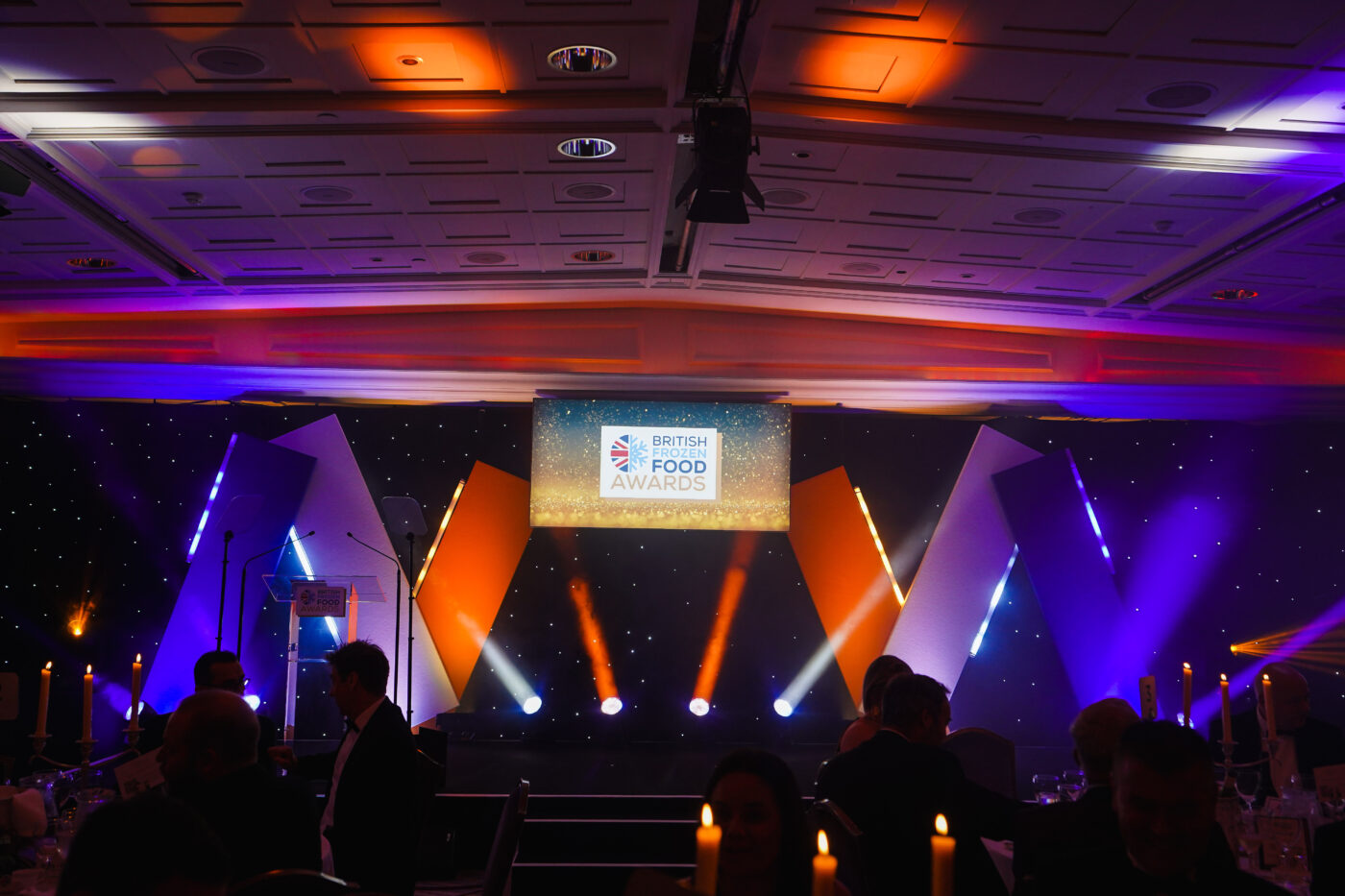
  • Awards Night
Upcoming Events More Events
Sponsorship Packages

We offer a range of sponsorship opportunities to BFFF members across our events throughout the year, with flexible packages that can be tailored to suit your business objectives.

Contact Us
British Frozen Food Federation Members Logo
what our members say...
  • Wakefield Council

    “What an amazing piece of work and indicative of how BFFF respond to the concerns of their members and make an impact on the whole industry sector.”

    See Full Quote

  • Sysco

    “You guys really ‘Do The Right Thing’ for the good of the industry”

    See Full Quote

  • Darta

    “The BFFF awards night is becoming an “appointment not to miss” on our calendar and we again enjoyed it immensely together with lots of well-known people from our industry. The…

    See Full Quote

  • Kantar Worldpanel

    “The Business Conference was an excellent day that was very well organised and allowed so many likeminded individuals in the room to learn so much more around the Frozen industry….

    See Full Quote

  • Lakeside Food Group Ltd

    “This Not For EU labelling situation alarmed us and quickly became a major worry to our business. These are times when you really rely on some support and from previous…

    See Full Quote

  • Meadow Vale Foods Limited

    “We had a few questions with respect to the new EPR waste packaging legislative changes. I know some of my colleagues have been assisted by BFFF in the past so…

    See Full Quote

  • Newberry International Produce Ltd

    “I am writing to express my heartfelt gratitude for the outstanding event you organised. I have only worked in this sector for the past nineteen months coming from twenty-five years…

    See Full Quote

  • Place UK Ltd

    “The BFFF 2024 Conference was compelling and thought provoking, with a many relevant and interesting topics covered at great pace and some depth by excellent speakers – will certainly attend…

    See Full Quote

  • Roswel Spedition GMBH

    “Thank you and the team for rushing around so brilliantly before, during and after the conference. It was pleasure to be part of the conference.”

    See Full Quote

  • Seara

    “The event was great, in my opinion. Not only it was very well organised, but the venue and the catering were excellent too. Furthermore, the content of the presentations was…

    See Full Quote

Website Designed & Built by we are CODA