Become a member

PM PLEDGES NEW SUPPORT FOR COUNTRIES ON THE FOOD SECURITY FRONTLINE

The Prime Minister has committed to a package of support to help countries hit the hardest by rising global food costs and shortages of fertiliser, including many commonwealth states.

Driven by the war in Ukraine, global food prices have hit a 50-year high. More than 275 million people worldwide were already facing acute hunger at the start of 2022 – according to the UN that is expected to increase by 47 million people if the conflict continues, with the steepest rises in sub-Saharan Africa. Price spikes are also pushing households into crippling poverty, with a further 1.4 million expected to be driven below the poverty line in Kenya, for example, as a result of the global crisis.

The Prime Minister is pledging £372 million in aid today to provide immediate and longer-term relief to countries on the frontline of this crisis.

The UK is also working with allies to break Russia’s immoral blockade of Ukraine’s grain exports and address global supply issues. The Prime Minister will commit to look at the UK’s own demands on land and use of biofuel ahead of the G7 – globally, the use of grain for biofuel is contributing to reduced availability and increased costs for human consumption.

Prime Minister Boris Johnson said:

While Vladimir Putin continues his futile and unprovoked war in Ukraine and cravenly blockades millions of tonnes of grain, the world’s poorest people are inching closer to starvation.

The Government has put in place an unprecedented package of support to help the most vulnerable households in the UK deal with the rising cost of living.

But it is also right that we step up to support countries on the frontlines of conflict and climate change, where an increase in the price of bread can mean the difference between a child living or dying.  From emergency food aid to reviewing our own biofuel use, the UK is playing its part to address this pernicious global crisis.

The package announced today includes:

  • £130 million for the World Food Programme this financial year, to fund their lifesaving work around the world including in Commonwealth countries in Africa, Asia and the Americas
  • £133 million for research and development partnerships with world-leading agricultural and scientific organisations to develop and implement cutting-edge technologies to improve food security, such as new drought-resistant crop varieties.
  • £52 million for UN’s global emergency response fund, the Central Emergency Response Fund (CERF). CERF allocated $100 million (£80m) in April for an urgent response to seven countries at risk of famine.
  • £37 million for the UN International Fund for Agricultural Development [IFAD], to work with the private sector and governments to address poverty and hunger in rural areas of developing countries.
  • £17.7 million through the FCDO’s Green Growth Centre of Expertise to improve the effective use of fertiliser and increase food production in countries including Rwanda, Kenya and Ghana.
  • £2 million for the Nutrition Match Fund, which matches governments’ national spending on addressing wasting – the most acute and deadly form of child malnutrition – pound-for-pound. The fund was launched last November and has already supported treatments in Commonwealth countries like Nigeria and Mozambique, and the UK is encouraging other donors to step up.

Foreign Secretary Liz Truss said:

At least 140 million people across Africa are already suffering from food insecurity, and millions more are facing food shortages as a result of Russia’s illegal war in Ukraine. Putin is using food as a weapon on a global scale.

The UK’s vital funding will provide humanitarian aid to increase access to food across the worst hit African countries , and help protect millions of people at risk from a growing global food disaster.

Ukraine produces as much as half the world’s sunflower seeds, a tenth of its wheat and up to a fifth of barley and rapeseed, and many African countries import a significant proportion of their fertiliser, wheat and vegetable oils from Ukraine, Russia and Belarus. Russia’s blockade of Ukraine’s Black Sea ports is preventing the export of up to 23 million metric tonnes of grain, and the conflict will significantly impact the next harvest.

The African Development Bank claims that shortfalls in fertilizer supply mean Africa could lose a fifth of its food production in the next two harvesting seasons, worsening food insecurity in developing countries already struggling to cope with climate change, the fall-out from the pandemic and domestic conflicts.

 

UK SIGNS UP TO GLOBAL COALITION ON SUSTAINABLE FOOD PRODUCTION

Defra has announced that the UK has signed up to a global coalition which works to speed up the move towards more sustainable food production, Environment Secretary George Eustice announced on 23rd June.

The UK will join the Sustainable Productivity Growth Coalition (SPG) – an international group of countries, academic and research organisations and trade bodies that aims to improve agriculture productivity in an environmentally suitable way.

The SPG Coalition was launched in 2021 at the United Nations’ Food Systems Summit and members include the USA, European Union, Australia, Brazil, Canada, New Zealand and the UN Food and Agriculture Organization. It is also supported by a raft of academic institutions and trade bodies representing industries including grain, dairy and livestock from all over the world.

Members of the Coalition share with each other information about best practice, lessons learned and innovative evidence-based way to boost productivity in a sustainable way, and promote them at public events and on public platforms.

Environment Secretary George Eustice said:

“I am pleased to announce today that the UK will join the Sustainable Productivity Growth Coalition convened by the United States. I look forward to working with our international partners in this dialogue on innovation, science and sustainable agriculture.”

MAJOR REVIEW OF UK FOOD SYSTEM LAUNCHED BY FSA FSS

The Food Standards Agency (FSA) and Food Standards Scotland (FSS) have launched a major review of the UK system.

The inaugural annual report Our Food: An annual review of food standards across the UK comes after the food system has faced two-years of major upheaval following the UK’s departure from the EU, the significant effects of the Covid-19 pandemic, and more recently the disruption caused by the war in Ukraine.

The report concludes that food standards in the UK have largely been maintained, despite the significant pressures. However, while there has been no evidence of a drop in standards, the report warns of challenges ahead.

Two of the main concerns to come from the report is the fall in the number of inspections of food businesses as a consequence of the resourcing pressures faced by local authorities. Also, the delay in establishing full UK import controls for high-risk food and feed from the EU, has reduced the ability to prevent the entry of unsafe food into the UK market.

There are a growing number of concerns that the government’s seasonal worker visa is becoming increasingly vulnerable to abuse by criminals, which leads to labour exploitation across the supply chain.

“There is infiltration into recruitment at various levels by third parties who are not involved [in the process] at all,” said David Camp, CEO of the Association of Labour Providers. “They have no connection to any recruiter, but they advertise as if they do, and they take money from individuals.”

Camp added that these third parties typically offered training courses and help with job application admin for a fee. However, such services were “complete shams where they don’t do anything, they just take the money”, he claimed.

Kate Roberts, head of policy at research organisation Focus on Labour Exploitation, said “We had been concerned there are risks of exploitation in the scheme generally but also, with the expansion of the scheme, [there had been] an increase in people being charged illegal recruitment fees”

The UK has previously recruited the majority of seasonal labour workers from Ukraine, but due to the Russian invasion of Ukraine, recruitment companies gave had to rapidly expand into new markets in Asia.

FSA chair, Professor Susan Jebb, said: “This first joint report reflects on a period during which there has been significant concern about the impact of world events on food standards and safety.

It is encouraging for UK consumers and our international trading partners that this report provides reassurance that the high food standards we enjoy in the UK have been upheld during a really tough period for the food system. However, the effects of recent momentous events are still being felt and will continue to have an impact on our food systems for many years to come”.


CONCERNS OVER CRIMINALS USING SEASONAL WORKER VISA TO EXPLOIT LABOURERS

There are a growing number of concerns that the government’s seasonal worker visa is becoming increasingly vulnerable to abuse by criminals, which leads to labour exploitation across the supply chain.

“There is infiltration into recruitment at various levels by third parties who are not involved [in the process] at all,” said David Camp, CEO of the Association of Labour Providers. “They have no connection to any recruiter, but they advertise as if they do, and they take money from individuals.”

Camp added that these third parties typically offered training courses and help with job application admin for a fee. However, such services were “complete shams where they don’t do anything, they just take the money”, he claimed.

Kate Roberts, head of policy at research organisation Focus on Labour Exploitation, said “We had been concerned there are risks of exploitation in the scheme generally but also, with the expansion of the scheme, [there had been] an increase in people being charged illegal recruitment fees”

The UK has previously recruited the majority of seasonal labour workers from Ukraine, but due to the Russian invasion of Ukraine, recruitment companies gave had to rapidly expand into new markets in Asia.

Roberts also added that “the UK’s labour enforcement agencies are not resourced to cover this significant expansion. Previously, when the scheme was operating from fewer countries, it was more feasible for them to put agreements in place”,

A recent investigation by The Guardian and the Bureau of Investigative Journalism, found that some workers were paying thousands of pounds extra to overseas agents to secure UK seasonal worker visas.

There is now work being done to improve the conditions for seasonal workers. With supermarkets, scheme operators, the Gangmasters and Labour Abuse Authority and the ALP (among others) launching the Just Good Work app, it provides advice and guidance for workers in their native language In a bid to increase transparency in the recruitment and employment process.

BFFF AND IRI LAUNCH ‘UK FIRST’ MARKET DATA PLATFORM

The British Frozen Food Federation (BFFF) has joined forces with analytics leader, IRI, to offer a new level of market insights to members.

In a first for a UK trade association, IRI is making available free, live access to extensive retail data covering the frozen food market from their IRI Unify platform via the BFFF website.

Harry Hinks BFFF digital marketing manager said: “We are the first UK food industry trade association to partner with IRI in this way. We know our members highly prize access to market data and this new service will deliver more information and insight than ever before and provide a major member benefit.”

The IRI Unify data visualisation platform, which goes live on 4 July, allows users to analyse 5 years of weekly, monthly and seasonal volume and value trends across the frozen market. An intuitive and highly visual suite of reports, created specifically for BFFF members, makes it easy to understand market performance, spot category shifts and to quickly identify business opportunities.

Kieran South, UK senior vice president at IRI said: “At a time of rapid change in the grocery market, we’re proud to provide BFFF members with always-on access to retail market trends. We’re also looking forward to working more closely with BFFF to share further insight and advice with members as part of our ongoing commitment to our partnership. Particularly given the challenging landscape we currently face, it’s vital that we work together to navigate these times.”

The new system was piloted with selected BFFF members pre-launch to ensure it met users’ needs and received positive feedback. Sally Anglesea, customer marketing executive at KK Fine Foods commented: “The IRI Unify platform is hugely insightful, valuable and well-formatted, it will be a valuable asset to BFFF members.”

Full BFFF members can log in and view the platform here

FSA LOOKS TO STANDARDISE ALLERGEN LABELLING TO IMPROVE CONSUMER CONFIDENCE

To increase consumers levels of confidence in prepacked and non-prepacked items, the Food Standards Agency (FSA), is looking to improve food hypersensitivity (FHS) labelling. The agency plans to introduce a more standardised approach for precautionary allergen labelling (PAL), offering more support for businesses to apply PAL when necessary and improving allergen cross contamination risk management.

At the recent FSA quarterly board meeting, a paper presented to the board found most people with FHS wanted to see more standardisation in menu labelling, this was broadly supported by the board.

Concerns were raised regarding the pressure this would put on businesses to deliver on this standardisation, which has led to the FSA board committing to do more work on how they can deliver the changes and provide the support that food businesses would require. The board added into the report that they would look to learn from the Irish system, where allergen labelling is already more uniformly applied.

The board paper focused on three key themes: the importance of clear, consistent and accurate information about allergens, the challenge of finding solutions which can be implanted effectively and safely across different types of business; and the FSA’s decision not to recommend legislation changes at this point in time.

A key point of concern for board members was the lack of focus on including written allergen information on menus. The report had recommended that “proactively asking consumers about allergies is best practice” despite FSA research finding that “written information supported by verbal communication” is most trusted by those with food hypersensitivity.

But board members suggested not having rules on written information could lead to mistakes made by staff and was therefore too reliant on consistent staff training, which could be difficult to ensure considering the high rates of staff turnover in the food industry.

In response to these concerns, FSA chair Susan Jebb said the FSA would carry out further research into the pros and cons of written information on menus. She said that while potentially beneficial to consumers, it came with a huge burden for businesses. She also raised that it could also lead to inaccuracies and inconsistencies in even the “best-run kitchens”.

The report also outlines plans to provide an online structured training programme for staff through the food industry to improve their behaviour and knowledge of allergens by December 2025.


Member Benefits

Exclusive Partnership deals on key products and services:

  • BFFF energy deals and rates
  • Vypr member deals and introduction
  • Defib Plus deals
  • Company Shop – membership
  • Mentor – MHE training health check

Exclusive access to networking opportunities and events:

  • Meet the Buyer events (retail & foodservice)
  • Annual Business Conference with networking dinner
  • Specialist H&S and Technical Conferences
  • Special interest groups (packaging, frozen food temperatures)
  • Annual Lunch
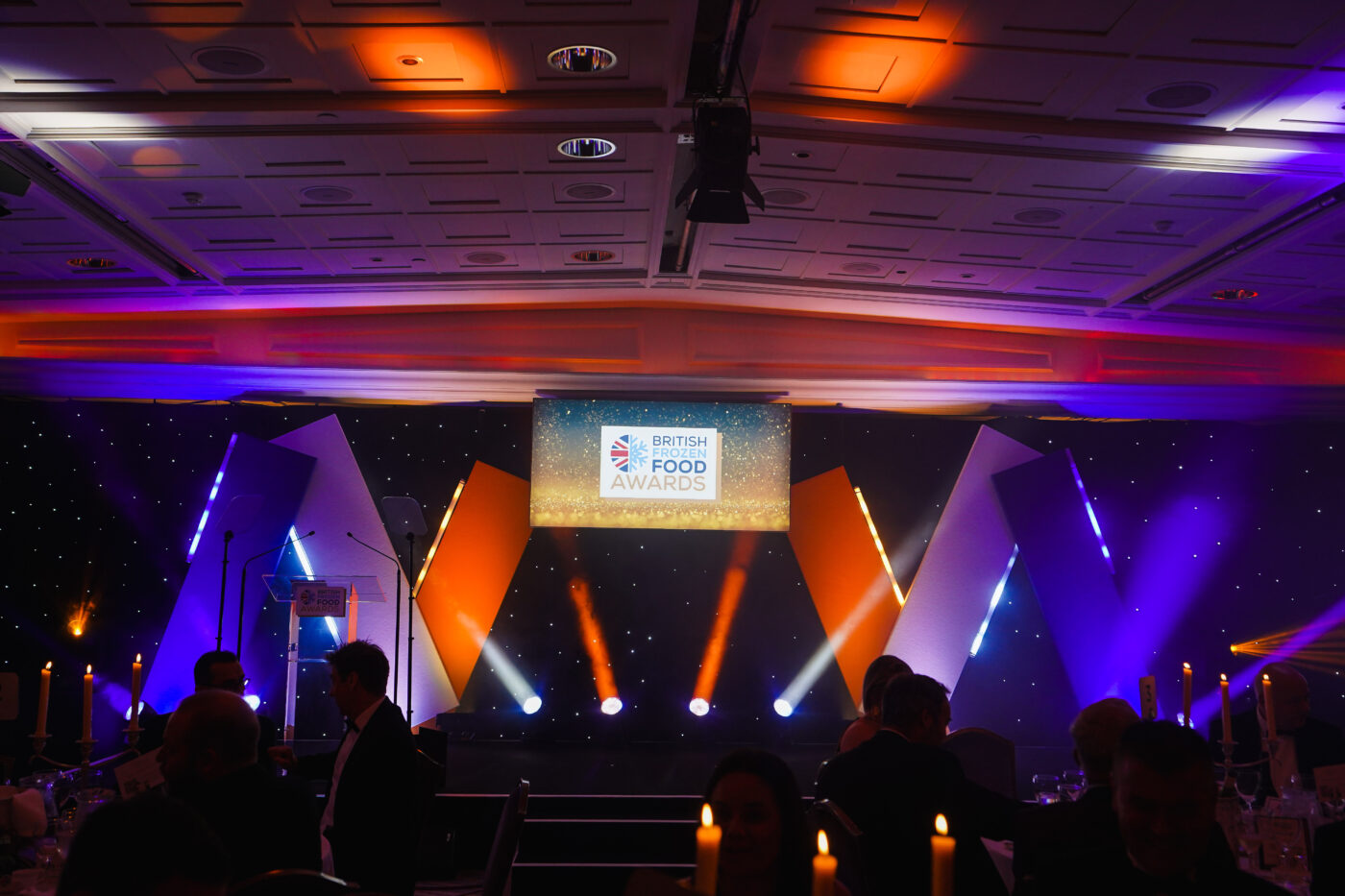
  • Awards Night
Upcoming Events More Events
Sponsorship Packages

We offer a range of sponsorship opportunities to BFFF members across our events throughout the year, with flexible packages that can be tailored to suit your business objectives.

Contact Us
British Frozen Food Federation Members Logo
what our members say...
  • Wakefield Council

    “What an amazing piece of work and indicative of how BFFF respond to the concerns of their members and make an impact on the whole industry sector.”

    See Full Quote

  • Sysco

    “You guys really ‘Do The Right Thing’ for the good of the industry”

    See Full Quote

  • Darta

    “The BFFF awards night is becoming an “appointment not to miss” on our calendar and we again enjoyed it immensely together with lots of well-known people from our industry. The…

    See Full Quote

  • Kantar Worldpanel

    “The Business Conference was an excellent day that was very well organised and allowed so many likeminded individuals in the room to learn so much more around the Frozen industry….

    See Full Quote

  • Lakeside Food Group Ltd

    “This Not For EU labelling situation alarmed us and quickly became a major worry to our business. These are times when you really rely on some support and from previous…

    See Full Quote

  • Meadow Vale Foods Limited

    “We had a few questions with respect to the new EPR waste packaging legislative changes. I know some of my colleagues have been assisted by BFFF in the past so…

    See Full Quote

  • Newberry International Produce Ltd

    “I am writing to express my heartfelt gratitude for the outstanding event you organised. I have only worked in this sector for the past nineteen months coming from twenty-five years…

    See Full Quote

  • Place UK Ltd

    “The BFFF 2024 Conference was compelling and thought provoking, with a many relevant and interesting topics covered at great pace and some depth by excellent speakers – will certainly attend…

    See Full Quote

  • Roswel Spedition GMBH

    “Thank you and the team for rushing around so brilliantly before, during and after the conference. It was pleasure to be part of the conference.”

    See Full Quote

  • Seara

    “The event was great, in my opinion. Not only it was very well organised, but the venue and the catering were excellent too. Furthermore, the content of the presentations was…

    See Full Quote

Website Designed & Built by we are CODA