Become a member

OVERCOMING PACKAGING CHALLENGES IN FROZEN FOOD: SUPPORT FOR BFFF MEMBERS

Sustainability, supply chain performance and customer experience are all important factors in a brand making its mark in the frozen food industry.  What connects them? High-performing packaging. With new regulations placing greater responsibility on brands and consumer expectations evolving quickly, packaging goes beyond keeping products protected. It’s an invaluable touchpoint that shapes the consumer’s overall experience and lasting impression of your brand.


As a proud associate member of the British Frozen Food Federation, Smurfit Westrock Mold can help members to overcome packaging challenges and access the opportunities that having the right packaging can provide.


Sustainability: Making Sense of Brand Responsibility


Sustainability is no longer just about choosing the right material and hoping for the best; it’s about accountability throughout the entire lifecycle of packaging. The introduction of new regulations, such as Extended Producer Responsibility (EPR), aims to reduce the environmental impact of products by holding producers responsible for the entire lifecycle of their packaging, from design to disposal. This moves responsibility from consumers and places it on businesses.


For frozen food producers, this means considering the impact of packaging at every stage – including sourcing, recycling, waste management and reporting – and demonstrating strict sustainability compliance. This is part of a bigger move towards a circular economy, where packaging is designed with reuse and recycling in mind.


Lianne Pemberton, UK&I Sustainability Lead at Smurfit Westrock, highlights: “With the right understanding and preparation, changing sustainability regulations are also an opportunity for brands in the frozen food industry. It’s the ideal way to reduce waste, improve transparency and encourage consumer trust.”


Innovation: Changing Consumer and Market Demands


Frozen food packaging must adapt to consumer demands for convenience and the specific needs of retail environments. This doesn’t mean simply finding a brand new type of packaging; it’s about improving existing designs to meet changing demands. By rethinking your packaging, you can ensure products stand out on shelves, reduce waste without compromising on product protection, and ensure boxes are easy for consumers to open, store and recycle. It’s about rethinking and improving existing designs to deliver better outcomes.

For example, when Smurfit Westrock proposed a top and bottom packaging solution for transporting frozen baked goods. Traditionally, these products are delivered to bakeries in a box with a separate plastic bag inside. The new approach eliminates the need for the plastic bag by introducing a bottom tray with reinforced sides for extra protection, ensuring the goods remain undamaged during transport. The tray features a protective coating that doesn’t affect recyclability, supporting both sustainability goals and regulatory requirements.

By approaching packaging with a focus on innovation, you have a better chance of staying competitive and responsive. It’s also an effective way of future-proofing packaging against regulatory changes and market shifts.


Supply Chain Optimisation: Streamlining the Frozen Food Journey


In the frozen food industry, supply chains must balance efficiency, cost-effectiveness and product production. Packaging plays a surprisingly significant role in finding this balance. For example, Smurfit Westrock Mold manufactures transit shippers using carefully optimised pallet layouts to maximise storage, transport and handling efficiency. Plus, with innovative pack designs that allow for speedier decanting, you can reduce all-important time and labour costs in store, which helps to streamline the supply chain even further.


By approaching packaging as a way to optimise a supply chain, rather than simply a way to contain frozen food, you can identify opportunities for improved speed, reduced cost and more sustainable operations.


Risk Mitigation: Securing Your Supply Chain

Disruptions in supply chains have made risk management a top priority across the frozen food industry. Packaging is no exception, and a reliable supply chain is essential to keep products moving from A to B and beyond. Reducing risk means working with suppliers who not only combine local expertise with global knowledge but also have the infrastructure to deliver continuity and confidence.

At Smurfit Westrock, we have the advantage of owning over 60 of our own paper mills, giving us control over a key raw material and ensuring continuity of resources even in times of disruption. With UK-wide sites, we provide built-in resilience and flexibility – enabling us to adapt to short-term needs, deliver limited packaging runs, and maintain the stability required for long-term supply. This approach ensures customers benefit from a packaging partner who can safeguard their supply chain against international market pressures while keeping frozen food moving securely and efficiently.

Your Exclusive BFFF Invitation:

Packaging security extends beyond using the right materials; it’s about having a reliable packaging partner to overcome challenges and provide stability. If you would like support with navigating sustainability legislation, supply chain optimisation and innovative packaging solutions – or if you would like to book a site visit to Smurfit Westrock’s newly invested facility in Mold – connect with Fiona MacDougall directly at fiona.macdougall@smurfitwestrock.co.uk

Or take the next step with a complimentary Smurfit Westrock Better Planet Packaging Audit – giving you clear, expert insight to ensure your packaging is sustainable, compliant, and ready for the future of frozen food.

“We’re here to make packaging simple, effective, and ready for the future for BFFF members. From navigating EPR and optimising supply chains to securing sustainable materials and reviewing packaging with innovation in mind, our focus is on giving members the clarity and confidence they need,” Fiona MacDougall, Business Development Manager at Smurfit Westrock Mold.

FSA PUBLISHES UPDATED FOOD LAW CODES OF PRACTICE AND GUIDANCE

The Food Standards Agency (FSA) has published the updated Food Law Codes of Practice (Codes) and Practice Guidance for England, Wales and Northern Ireland

This marks the latest phase of the FSA’s modernisation of food regulation, following a 12- week consultation which was held in 2025 and engagement with local councils (local authorities and port health authorities in England and Wales and district councils in Northern Ireland) and other key stakeholders. A summary of responses to the consultation for EnglandWales and Northern Ireland were published in August.

The changes are designed to help local councils target resources to where they make the most difference to public health outcomes.

Key updates include: 

  • A more flexible, risk-based approach to prioritising initial official controls of new food businesses, allowing the flexibility for local councils to triage businesses when they first register
  • Greater use of alternative control methods, including, in some cases, remote assessments allowing local councils more choice to support more efficient use of resource
  • Broadening the cohort of professionals who can undertake certain activities to support delivery of official controls in England and Wales to ensure that officer’s expertise is dedicated to where it can have the most impact
  • The introduction of the new Food Standards Delivery Model in Wales. This updates how local councils regulate food standards within food establishments in Wales. This was implemented in England and Northern Ireland in 2023.

The FSA has also launched a revised competency standard which may be used to ensure that officers undertaking food safety checks are appropriately trained and competent. The standard, read in conjunction with the Food and Feed Law Codes of Practice, helps local councils assess the competency of their staff for the activities they undertake in their roles and is used as part of their ongoing professional development plan.

Next Steps

The updated Codes of Practice, Practice Guidance and Competency Standard are available to view on the FSA website.  Separate versions are published and tailored to the legal and operational context in each nation.

Brexit Trade Mark Transition Ends in December 2025: What EU and UK Rights Holders Need to Know

Brexit Trade Mark Transition Ends in December 2025: What EU and UK Rights Holders Need to Know

As we approach the end of 2025, the Brexit transitional period for trade mark use requirements is drawing to a close. This has significant implications for both UK and EU trade mark owners, particularly regarding the risk of revocation for non-use.

EU and UK trade mark registrations

Prior to Brexit, an EU trade mark (EUTM) registration provided protection in all EU member states, which at the time included the UK. Use of the trade mark in any one EU member state was usually sufficient to maintain validity of the trade mark across the EU. However, as a result of Brexit, EUTMs ceased to cover the UK, meaning UK protection for trade mark registrations is now distinct.

Both the EU and UK trade mark registration systems operate on a ‘use it or lose it’ principle. Where a trade mark has not been put to genuine use for any continuous five-year period in the relevant jurisdiction, the registration will be vulnerable to revocation for non-use on the application of a third party. It may also be vulnerable to partial revocation, if used for some but not all of the goods/services which are covered by the registration.

Transition period nears its end

To ease the transition, the UK government automatically created comparable UK trade marks (UKTM) from all EUTMs in existence on 31 December 2020. A comparable UKTM was given the same priority, filing and registration dates as the parent EUTM.

A five-year grace period was introduced, to allow owners of existing EUTMs and the resultant comparable UKTMs to put their marks into use in the relevant jurisdiction. During this period, use prior to 31 December 2020 in either the EU or UK would support use of both existing EUTMs and comparable UKTMs.

However, this transition period expires on 31 December 2025. Upon expiry of the grace period, the ‘use it or lose it’ principle will be fully bifurcated between the UK and EU systems.

Marks at risk are

  • EUTMs that were registered on or before 31 December 2020 but that have not been put to genuine use in the EU after that date; and
  • Comparable UKTMs that have not been put to genuine use in the UK after 31 December 2020.

UK-based owners of EUTMs

UK-based businesses holding EUTMs should urgently assess whether their marks have been genuinely used within the EU since 31 December 2020.

Post-Brexit, use in the UK will no longer count towards maintaining EUTMs. If an EUTM has not been used in the EU for a continuous period of five years from 1 January 2021 onwards, it may be at risk of revocation for non-use.

Non-UK-based owners of comparable UKTMs

Conversely, non-UK-based businesses who inherited comparable UKTMs following Brexit must assess whether those marks have been used in the UK since 31 December 2020. Upon expiry of the grace period, owners will no longer be able to rely on use in the EU prior to 31 December 2020 to support these rights.

From 1 January 2026, only UK use will count. If a comparable UKTM has not been used in the UK for a continuous period of five years from 1 January 2021 onwards, it may be at risk of revocation for non-use.

What should rights holders do now?

With the grace period ending imminently, proactive steps now can help preserve valuable intellectual property rights.

  • Review your UK and EU trade mark portfolios: Identify marks at risk due to lack of use in the relevant jurisdiction.
  • Collect evidence: Where there has been use of the trade mark in the relevant jurisdiction in the last five years, but this isn’t entirely clear from an initial search, capture documentary evidence of the place, time, extent and nature of the use.
  • Take action: Where there has not been use of the trade mark in the relevant jurisdiction in the last five years, consider initiating use in the relevant jurisdiction (either directly or through others) or refiling for the mark, where appropriate and documenting the steps taken to commence or resume use.
  • Monitor disputes: Check whether marks relied upon by you, or your opponents are at risk, and adjust your strategy accordingly. For example, consider the impact on the merits of the dispute, whether settlement may be a preferable option, and whether it may be an option to wait until 2026 and then seek to revoke registrations on the basis of non-use.

How we can help

If you would like advice on how your trade marks may be impacted by the end of the transition period, on the possible impact on ongoing disputes, or on proactive steps to take ahead of 31 December 2025, please reach out to our expert IP team.

Landmark Win for Defamation and a Settlement Against Steve Coogan and Pathé Productions

Landmark Win for Defamation and a Settlement Against Steve Coogan and Pathé Productions

We are delighted to act for Richard Taylor, former Deputy Registrar at the University of Leicester, in his successful defamation claim against actor Steve Coogan and Pathé Productions following their portrayal of him in the 2022 film The Lost King.

The film, which tells the story of the discovery of King Richard III’s remains beneath a Leicester car park in 2012, presented events through the perspective of amateur historian Philippa Langley. Richard argued that his depiction in the film was false and damaging, wrongly suggesting that he had misrepresented facts, marginalised Ms Langley’s contribution, and behaved in a dismissive and misogynistic way.

On Monday 27 October 2025, the case concluded with a significant outcome in Richard’s favour. A statement was made in open court, the film will be amended, and the defamatory allegations will not be repeated.

A “defamation David and Goliath moment”

Daniel Jennings, who led the legal case and represented Mr Taylor, said, “This is a defamation David and Goliath moment and confirms what Mr Taylor has always believed: that his portrayal in The Lost King was damaging, harmful and untrue. Individuals often feel unable to speak up against large corporations and well-known personalities, but this win demonstrates that there is recourse when wrongs have been committed.”

He continued:

“We live in an era of documentaries, podcasts and very public investigative journalism, and there’s a growing trend for film and television productions to be labelled as ‘true accounts’ to attract audiences and generate media attention. Mr Taylor’s win should serve as a clear warning for anyone taking that approach. The law is unambiguous, and there are defined routes to compensation for individuals who find themselves misrepresented.”

“It’s been a long battle for Mr Taylor which has ended successfully, however it’s hard to ignore that the shine has been taken off what should have been a moment of celebration for one of the country’s greatest archaeological discoveries. The way Mr Taylor was portrayed was defamatory, and the court’s order recognises this in favour of the individual — in what could be the first of many defamation rulings if our appetite for ‘true accounts’ continues to grow.”

Judicial recognition

At the conclusion of the proceedings, the judge acknowledged the significance of the case, commenting that:

“These have been historical, momentous events, and being the subject of a feature film must be nerve-racking at the best of times. It is to the credit of the parties and their lawyers that the case has now been resolved in this way without going to trial.”

Protecting your reputation

At Shakespeare Martineau, we help individuals and organisations protect their reputations and respond swiftly and effectively to false or damaging allegations. Our defamation and reputation management team provides commercial, strategic advice to resolve disputes and safeguard public and professional standing.

If you believe you have been misrepresented in the media, on screen or online, our specialists can help.

Find out more about our defamation and reputation management services

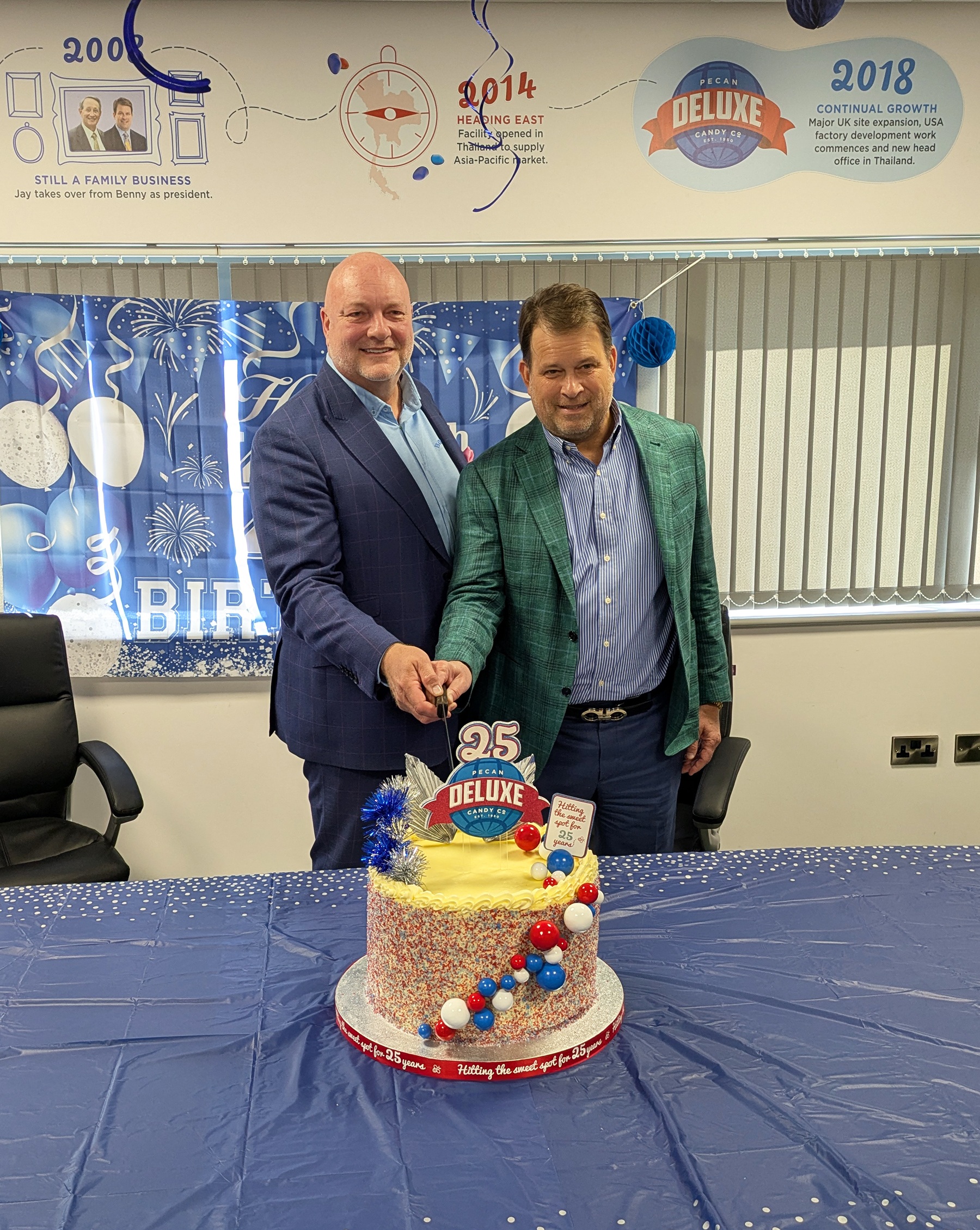
PECAN DELUXE CANDY (EUROPE) CELEBRATES 25 YEARS OF SWEET SUCCESS

Pecan Deluxe Candy (Europe) Ltd is marking a major milestone this year — its 25th anniversary — celebrating a quarter of a century of innovation, growth, and success in the European confectionery industry.

Established in 2000 as a fully owned UK subsidiary of the US-based Pecan Deluxe Candy Company, the Yorkshire manufacturer has evolved from a modest operation into one of Europe’s most dynamic and trusted suppliers of sweet inclusions and toppings for the food and beverage industry. From cookie dough, fudge and praline nuts to brownie and cookie pieces, Pecan Deluxe’s ingredients add indulgent texture and flavour to a host of household-name products enjoyed by consumers across the UK, Europe and the Middle East. The company has also become a reputable and trusted supplier to numerous retailers, Quality Service Restaurants (QSR’s), casual dining and food service chains.

Prior to its acquisition by Pecan Deluxe, the Sherburn-in-Elmet based company operated under the name Harriet Websters, specialising in the production of fudge. Since the change in ownership, substantial investments have been made in both innovation and workforce development, facilitating the company’s expansion into bakery, chocolate, and confectionery production to meet increasing market demand. A major £3 million factory extension in 2018 enhanced manufacturing, warehousing, and logistics capabilities, while the continued emphasis on innovation resulted in the successful launch of the ‘Bling’ range in 2021 — allowing Pecan Deluxe to offer its range of premium ingredients to smaller businesses and catering providers through ecommerce and wholesale distribution channels.

Managing Director Graham Kingston said:
“There are great plans afoot and many more developments in the pipeline. We operate in a fast-paced industry, and we’ll continue to stay ahead of food and beverage trends to bring innovative, high-quality products to market. Watch this space!”

The European celebrations form part of a truly global moment for the Pecan Deluxe family. Founded in 1950 by Texan ice cream retailer J.C. Brigham, Pecan Deluxe began by creating a range of candies to be used in Brigham’s own scoop shops. Over seven decades later, the family-owned company has become a global leader in inclusions, expanding its international footprint with state-of-the-art facilities in Dallas, Texas (celebrating an impressive 75 years in business in 2025), Yorkshire in the UK, and Pak Chong, Thailand (celebrating its 10th anniversary this year).

With all three Pecan Deluxe sites achieving landmark anniversaries, 2025 is truly a year to celebrate. Pecan Deluxe Europe marked its ‘official’ 25th birthday earlier this year with a visit from President Jay Brigham, a spectacular cake and celebrations for all staff.  

But while 2025 is a year for celebration, the business is already focused firmly on the future. Under third-generation President Jay, Pecan Deluxe continues to push boundaries from pioneering popping boba production outside Asia to doubling the size of its Thai operations in response to rising demand. 

A quarter of a century on, Pecan Deluxe Europe remains committed to its founding principles: quality, creativity, and a people-first culture that continues to drive its sweet success story forward.

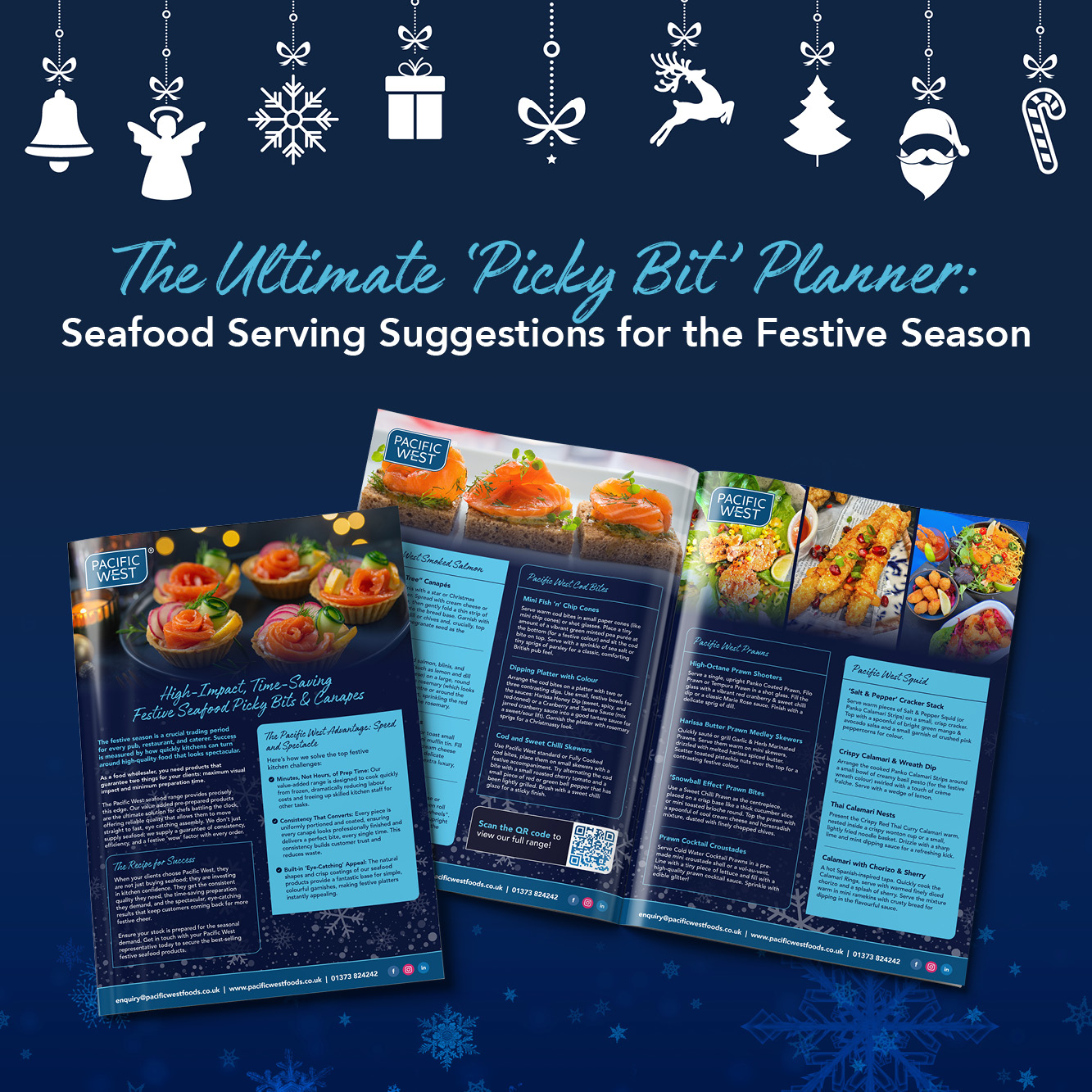
HIGH IMPACT, TIME SAVING FESTIVE SEAFOOD PICKY BITS & CANAPES FROM PACIFIC WEST!

Pacific West is supporting wholesalers and end users looking to maximise Christmas 2025 menu profitability. The latest guide, “The Ultimate Picky Bit Planner”, is the essential toolkit for elevating simple starters and canapés into showstopping seafood festive offerings.

The food-to-go and hospitality sectors demand convenience and quality, especially during peak season. That’s why Pacific West focus on leveraging their range to help operators achieve high-impact presentation with minimal kitchen labour.

Discover creative ideas, including transforming classic smoked salmon into a ‘Smoked Salmon Wreath’ and elevating prawns into ‘High Octane Prawn Shooters’. For calamari, there’s serving suggestions including ‘Crispy Calamari & Wreath Dip’, or ‘MSC Cod & Sweet Chilli Skewers’, focused on providing speed and spectacle this Christmas season!

Get in touch with the team to find out more or click on the link below to see the full range of ideas.

https://pacificwestfoods.co.uk/the-ultimate-picky-bit-planner-pacific-wests-seafood-serving-suggestions-for-the-festive-season/

Member Benefits

Exclusive Partnership deals on key products and services:

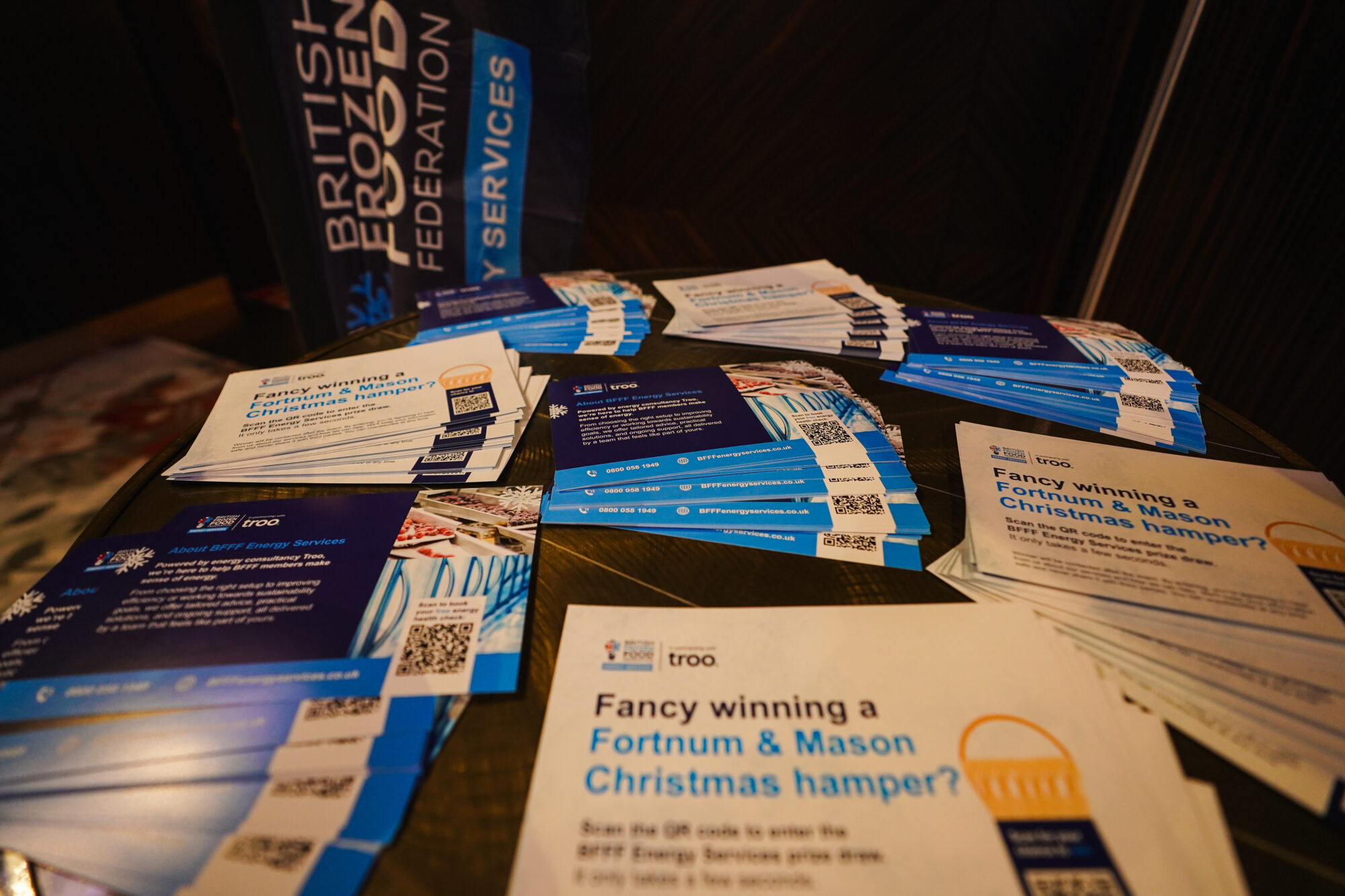
  • BFFF energy deals and rates
  • Vypr member deals and introduction
  • Defib Plus deals
  • Company Shop – membership
  • Mentor – MHE training health check

Exclusive access to networking opportunities and events:

  • Meet the Buyer events (retail & foodservice)
  • Annual Business Conference with networking dinner
  • Specialist H&S and Technical Conferences
  • Special interest groups (packaging, frozen food temperatures)
  • Annual Lunch
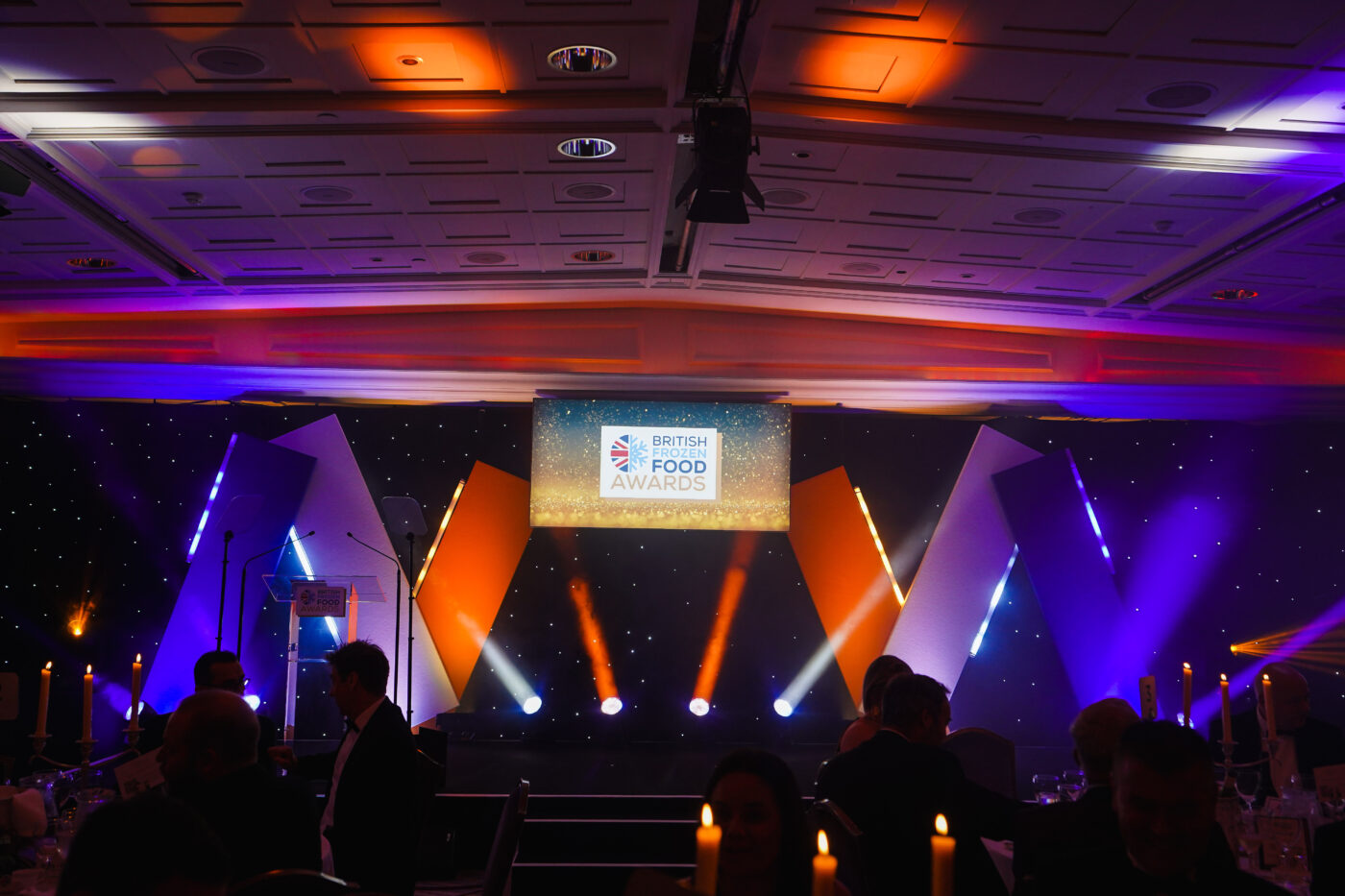
  • Awards Night
Upcoming Events More Events
Sponsorship Packages

We offer a range of sponsorship opportunities to BFFF members across our events throughout the year, with flexible packages that can be tailored to suit your business objectives.

Contact Us
British Frozen Food Federation Members Logo
what our members say...
  • Wakefield Council

    “What an amazing piece of work and indicative of how BFFF respond to the concerns of their members and make an impact on the whole industry sector.”

    See Full Quote

  • Sysco

    “You guys really ‘Do The Right Thing’ for the good of the industry”

    See Full Quote

  • Darta

    “The BFFF awards night is becoming an “appointment not to miss” on our calendar and we again enjoyed it immensely together with lots of well-known people from our industry. The…

    See Full Quote

  • Kantar Worldpanel

    “The Business Conference was an excellent day that was very well organised and allowed so many likeminded individuals in the room to learn so much more around the Frozen industry….

    See Full Quote

  • Lakeside Food Group Ltd

    “This Not For EU labelling situation alarmed us and quickly became a major worry to our business. These are times when you really rely on some support and from previous…

    See Full Quote

  • Meadow Vale Foods Limited

    “We had a few questions with respect to the new EPR waste packaging legislative changes. I know some of my colleagues have been assisted by BFFF in the past so…

    See Full Quote

  • Newberry International Produce Ltd

    “I am writing to express my heartfelt gratitude for the outstanding event you organised. I have only worked in this sector for the past nineteen months coming from twenty-five years…

    See Full Quote

  • Place UK Ltd

    “The BFFF 2024 Conference was compelling and thought provoking, with a many relevant and interesting topics covered at great pace and some depth by excellent speakers – will certainly attend…

    See Full Quote

  • Roswel Spedition GMBH

    “Thank you and the team for rushing around so brilliantly before, during and after the conference. It was pleasure to be part of the conference.”

    See Full Quote

  • Seara

    “The event was great, in my opinion. Not only it was very well organised, but the venue and the catering were excellent too. Furthermore, the content of the presentations was…

    See Full Quote

Website Designed & Built by we are CODA