Become a member

GOVERNMENT LAUNCH NEW WORKPLACE HEALTH CHECK PROGRAMME

The government has said that more than 130,000 people across the country will be better protected from diseases such as heart disease, kidney disease and diabetes, as it rolls out a life-saving health check programme to workplaces across the country for the first time.

The checks, which can be completed quickly and easily for employees at work, record a range of information about each patient, which is then used to determine their cardiovascular risk.

Employers from a range of professions will take part in the programme including those from the building, hospitality and transport sectors, and social care.

The announcement is part of the Health and Social Care Secretary’s commitment to supporting the government’s mission to boost economic growth by improving the health of the nation.

With every check providing the equivalent of an NHS appointment, these checks will save thousands of hours of valuable NHS time, helping to cut waiting lists and rebuild the NHS.

Andrew Gwynne, Minister for Public Health and Prevention, said: “We know so many deadly diseases can be avoided if we seek help in enough time. That’s why we’re working to improve access to treatment while also taking steps to address the preventable causes of cardiovascular disease.

“This innovative new programme is an important step towards community-focused healthcare and supporting economic and productivity through improving health, shifting the focus from treatment to prevention, easing the strain on the NHS and helping people to live well for longer.”

Over 16 million people are eligible for an NHS Health Check, but current data shows that only around 40% of those invited went on to complete one. This is especially true for men, who are less likely to get early help but who are more likely to develop cardiovascular disease at an earlier age than women. This new programme aims to reach more people through their place of work and make it more convenient for people to understand and improve their cardiovascular health.

NHS National Clinical Director for Stroke, David Hargroves, said: “Convenient and efficient NHS checks in the workplace could spot thousands of people at risk of a range of cardiovascular diseases, and with high blood pressure the biggest risk factor for stroke, early detection will undoubtedly save lives.

“This new programme shows the NHS is committed to preventing ill health and I would urge anyone invited for a check to come forward and get support to improve their cardiovascular health.

Councillor Louise Gittins, Chair of the Local Government Association, said: “Health checks can save lives. They can prevent people from developing largely preventable diseases, such as heart disease, cancer, type 2 diabetes and liver disease.

“Councils are exploring new ways to boost uptake, targeting individuals or communities at increased risk, and using proactive outreach programmes to get into those communities who are less likely to attend their general practice.

However, there is more that can be done, and by partnering council and employers, we can make sure more people get a health check and hopefully prevent illness later on.”

In addition, the government has also announced the development of a new digital version of the NHS Health Check which will be ready for testing early in 2025.

The service will be available through the NHS App, meaning users can undertake their health check at home and have the results automatically written back into their GP electronic health record, within a few clicks.

Local authorities in Norfolk (East of England), Medway (South East) and Lambeth (London) have been selected to pilot the new digital health checks in early 2025.

The digital programme will deliver around one million checks in its first four years. Plans are being put in place to make digital NHS Health Checks available nationally, alongside the face-to-face programme to give patients more choice.

Department of Health and Social Care, NHS England
August 2024

200 MILE CHARITY CYCLE CHALLENGE RAISES THOUSANDS

Cycling through wind, rain and glorious sunshine at times, a team of ‘Oakland and Friends’ battled to complete their 200-mile cycling challenge from Brighton to Warwick raising nearly £30,000, and as a whole group of 50-cycalists raised over £81,000 for children’s charity Molly Ollys!

Over the course of 3-days the cyclists suffered injury, blisters, punctures, and tested their endurance as they cycled up the many steep hills as the route progressed, with each stage a new cycling challenge.

Oakland and Friends team member and Molly Ollys ambassador Samuel Attwell said: “On behalf of us all we want to thank everyone for supporting us and the whole Molly Ollys 2024 cycling team as your donations will make such a huge difference to so many children living with a life-threatening illness.

“This money will now help grant 125 wishes for children with life threatening illnesses. THANK YOU!”

Molly Ollys supports children with life-threatening illnesses and their families helping with their emotional wellbeing. They fulfil wishes by providing gifts to individual children, donating their therapeutic toy ‘Olly The Brave’ and his story books, donate and support bespoke projects such as funding a Paediatric Palliative Care Consultant, and by furnishing the Magnolia House palliative care facility, at Birmingham Children’s Hospital, and so much more.

Molly Olly’s Rachel Ollerenshaw commented: “This year’s ride was certainly a challenge, but all the cyclists dug deep through difficult conditions because they wanted to make a difference. We had talked on Thursday night about the children we help and shared individual stories, this certainly helped to spur them on, knowing what these children go through on a day-to-day basis when undergoing treatment. A massive thanks to all the ‘Oakland and Friends’ team who contributed in so many ways and to all their supporters. A phenomenal achievement!”

Harlee, aged 3 was diagnosed with acute lymphoblastic leukaemia and her treatment involves numerous visits to hospital over a long period of time which means missing out on the everyday fun things. The family got in touch to request a trip to CBeebies Land to give them something to look forward to.

Harlee absolutely loved it and mum, Lisa said: “Honestly, we can’t thank you enough for Harlee’s granted wish. She was absolutely amazed by the whole weekend especially meeting the real Bing and having her own Bing room. It was truly magical for her and filled her with so much happiness. Thank you once again.”

Oakland International Group CEO Shaun Foley added: “Every member of the Team wants to express their sincere gratitude for everyone’s support.”

FRESH DIRECT PARTNERS WITH LOVE BRITISH FOOD

Fresh Direct, the UK’s leading provider of foodservice fresh produce, has announced that it has become an Official Partner of ‘Love British Food’, the organisation that supports and promotes the use of British food.


Driving the use of British produce is a key strategic goal for Fresh Direct, and it has been working with British growers and customers to increase the amount of British food that it sells as part of its ongoing commitment to focus on providing the freshest, in-season British fruit and vegetables. The link with Love British Food is a natural extension of its Best of British campaign, which has seen Fresh Direct widely promote its British supply partners through social media and advertising campaigns as well as within a dedicated section on the website.


The partnership launches ahead of British Food Fortnight, which takes place from 20 September to 6 October, and will see Fresh Direct creating a PR and social media campaign as well as working with sister company, Brakes, to provide a range of offers and information on British produce. Brakes is also an Official Partner of Love British Food.


Paul Nieduszynski, CEO at Sysco GB, said: “Over the past few years, we have made a conscious decision to focus on increasing the amount of British food that we sell across all of Sysco’s British businesses.


“We know that customers want to put great British produce on their menus when it’s available and in season, whether that’s traditional fruit and vegetables or vertically-grown herbs, so we are working hard with more than 100 growers to provide a fantastic range of high quality, home-grown food for them.”


Alexia Robinson, Founder & CEO, Love British Food, added: “We are delighted to welcome Fresh Direct into the Love British Food family.  Their lead, alongside their sister company Brakes, in having a dedicated section on their British produce is something we applaud and are calling for across the industry.  The work they are doing with their growers is a testament of support to British fruit and vegetable producers at a time when so many are united in acknowledging we need to produce more fruit and veg on home soils. Demand for British seasonal produce is increasing exponentially and I am sure all the work Fresh Direct is doing will translate into commercial success too.”

SEAFISH ASSESSMENT OF IMPACT OF VISAS ON NEPHROPS FISHERY RECOMMENDS SIGNIFICANT SCAMPI PRICE INCREASES – 16.09.2

The changes in crewing costs highlighted by a recent Seafish assessment published on 10th September impacts 75% of all of the boats landing scampi tails to Whitby Seafoods.

In the September report Seafish illustrate that the Nephrops (scampi) fleet could experience “annual operating losses of between £41.5k and £83.5k per vessel, on average unless these losses are offset by increased prices”.

Whitby Seafoods has chosen to support the boats impacted by substantially increasing the pricing paid for tails. Whitby has communicated that those boats that also support the In Transition to MSC programme (ITM) will get the highest tail prices.

This means the ITM – achieving MSC for scampi – has a financial incentive for boats. The In-Transition to MSC (ITM) fishing improvement programme is a new chapter in the sustainable management of the Nephrops fishery. All boats supplying Whitby with scampi tails will get an increase, however those boats signing up to the ITM obtain the highest level of tail price increase from the company.

In the September report Seafish goes on to state that the changes could lead to “vessel tie-ups and business closures, with a knock-on impact on scampi supply in the UK”.
This is why Whitby have acted proactively to ensure this is not the case.

The Seafish assessment of the impact of the change on Nephrops prices indicates that to meet the revised salaries on-board boats necessitated by the government the prices paid by “processors/wholesalers to vessel operators would need to increase by 33%”.

Seafish goes on to state that the price that processors would charge retailers would need to increase by 14.5% and that the price that processors would charge food service sector buyers would need to increase by 15.6%.

Whitby have asked retail and foodservice customers for price increases to cover the tail price increases. Whitby have chosen to recover only a portion of the additional costs in order to keep the scampi category competitive in a tough market place.

Whitby Seafoods Managing Director Daniel Whittle said:
“Whitby Seafoods has taken significant steps to improve the viability of UK scampi and our recent initiatives demonstrate the positive direction we are heading in. We’re proud to play a leading role in helping the sector adopt and implement measures which will ensure that the UK Fishing fleet is safe and sustainable for generations to come.

As an independent family-owned company we’re deeply committed to the sustainability of our waters, and we’re working hard to make sure that responsible fishing practices help scampi remain a firm favourite on the tables of UK families for generations to come. No one welcomes price inflation, but this should lead to an important step change in the scampi fishery”.

A link to the Seafish report mentioned is below:-

Skilled Worker Visa changes – impact on the seafood sector | Seafish

THE IMPACT OF BLOCKCHAIN ON WAREHOUSE MANAGEMENT

Blockchain technology is revolutionising warehouse management systems (WMS) and other supply chain applications. The inherently secure nature of the technology allows supply chain partners to create and share detailed information about items as they move from one location to another: in simple terms each action or movement creates a new irreversible block in the chain. Built-in safeguards prevent unauthorised transaction entries and create consistency in supply chain partners’ shared view of those transactions. Data is secure and nothing can be deleted or modified unless everyone agrees. This means that data contained in the blockchain can be used as an authoritative record of the item’s history. The technology is growing in popularity and was one of the five trends in WMS that we identified earlier this year.


There is no doubt that product traceability and provenance tracking is the major benefit of blockchain technology. This is important across almost every industry and at a basic level the technology supports the quality, consistency, assurances, and trust that underpin all good business relationships. But with supply chains becoming increasingly complex and global there are more opportunities physical interventions, disruptions, and fraudulent activities such as counterfeiting that have even more serious implications. This may be particularly true in industries or sectors covered by strict governance and regulations such as agriculture, food, pharmaceutical, chemicals, aerospace, and automotive. In these and other industries knowing that an item is what it claims to be, and being able to trace its origins, can have much wider implications for safety and health.


To illustrate how blockchain works, imagine a scenario where a warehouse receives a shipment of perishable goods, such as fresh produce or pharmaceuticals. Using a blockchain-based system, each item in the shipment is assigned a unique digital token. Throughout its journey from the supplier to the warehouse, the item’s status (e.g. temperature, humidity, handling conditions) is recorded on the blockchain. This creates a record of the item’s history, ensuring that everyone involved (suppliers, logistics providers, warehouse staff) can verify its authenticity and quality. If any discrepancies or deviations occur (e.g. temperature spikes), the blockchain can trigger alerts, allowing immediate corrective action. When the goods are dispatched from the warehouse to retailers or customers, the same process continues, providing end-to-end traceability. In case of recalls or quality issues, the blockchain enables rapid identification of affected batches, minimising risks and ensuring consumer safety. The result is enhanced supply chain transparency, reduced fraud, and improved overall trust in the quality and origin of products within the warehouse ecosystem. In some ways, none of this is new. WMS have, after all, offered benefits such as data accuracy and consistency that support and enable highly detailed and effective product traceability. Blockchain builds on these capabilities by enabling the security that adds reassurance for all supply chain stakeholders. But there are inevitably some challenges to address.


Complexity and Learning Curve: blockchain is a relatively new and complex technology. Understanding its intricacies can be challenging for warehouse operators and IT teams. This can create barriers to adoption and innovation, as well as potential for misuse and errors. Learning how to design, deploy, and maintain a blockchain network requires specialised knowledge. Much of this burden will be removed as WMS and other application suppliers embed blockchain capabilities into their products so that they work in the background.


Integration with Existing Systems: most warehouses already have established legacy systems for inventory management, order processing, and logistics. Blockchain technology is not generally compatible with existing systems and standards, which can make it difficult to integrate with legacy infrastructure and applications. This can require significant modifications and investments to adopt blockchain solutions. Nevertheless, it is still fundamentally data that is involved so there is no reason why WMS cannot work well with the technology.


Scalability and Performance: blockchain networks have limited capacity to process transactions, which can result in slow performance and high fees. As the number of users and transactions increases, the network can become congested and inefficient which will limit speed and responsiveness. Ensuring the blockchain can handle the volume of data generated by a busy warehouse operation is crucial. Most modern WMS are optimised around requirements such as interoperability and scalability and in themselves should not present a limiting factor on blockchain.


Costs and Resources: setting up and maintaining a blockchain network involves costs related to infrastructure, development, and ongoing management. Allocating resources (both financial and human) for blockchain implementation can be a challenge, especially for smaller warehouses. Again, much of this will become less of an issue when the technology is more commonplace in the applications that work with it.


Data Privacy and Security: while blockchain provides transparency, it also exposes data to all participants in the network. Ensuring that sensitive information (such as customer details or proprietary inventory data) remains secure is essential.


Regulatory Compliance: each country or trading bloc is likely to have different regulations covering data privacy, storage, and security. Complying with these regulations while using blockchain can be complex, especially when data is stored across multiple – particularly international – locations. Application developers should be abreast of the rules covering the territories where they operate.


Interoperability: warehouses collaborate with suppliers, logistics providers, and retailers. Ensuring that all parties can participate in the same blockchain network requires interoperability standards. As before, this will be less of an issue as blockchain becomes a standard (or optional) part of a WMS.


Energy Consumption: proof-of-work (PoW) blockchains (such as Bitcoin) consume significant energy because of the way the technology is applied in the so-called “mining” process. Supply chain partners will no doubt be mindful of the need to manage energy consumption but the type of blockchain they will be using will be more clearly defined and less open-ended which should prevent any major issues.


Resistance to Change: employees and stakeholders may resist adopting blockchain due to fear of disruption or unfamiliarity. Change management strategies are crucial to overcome this challenge.


Lack of Industry Standards: the lack of standardised protocols and best practices for blockchain in warehousing can hinder widespread adoption. Collaborative efforts are needed to establish industry norms. In practice, there are many forms and flavours of blockchain or at least systems based on the same concepts. Principal Logistics Technologies, for example, developed its worldwide patented Unique Referencing (UR) mechanism years before blockchain although both are based on the same concepts. Today, UR is the backbone of the ProWMS product suite. Whenever a stock item undergoes a new transaction, such as being moved or picked, ProWMS applies a new UR which is added to the chain for that particular item and provides complete forward and backward traceability at any time. A chain can comprise an unlimited number of URs. Crucially, a new UR cannot be added unless the previous UR exists and the new transaction has been confirmed.


Integrating blockchain with warehouse management systems offers the prospect of enhanced data security and accuracy covering aspects such as inventory levels, order processing, and shipment tracking. This offers immense potential for improving transparency and trust in warehousing but addressing the associated challenges is essential for successful implementation.


Principal Logistics Technologies as source of this article: http://www.principalsystems.com

FSA CALL FOR EVIDENCE: THE IMPACT OF DISCOUNTS ON CHARGES FOR OFFICIAL CONTROLS AND OTHER OFFICAL ACTIVITIES IN RELATION TO MEAT PREMISES

The FSA has launched a call for evidence to gather information on how discounts applied to charges for official controls (OC) and other official activities (OOA) for businesses in the meat sector, provide benefits to businesses and consumers.
OC and OOA are a service provided to businesses by the FSA. The FSA charges businesses for this service to cover the FSA’s costs.

To date, the FSA has provided discounts, the rate of which varies according to the number of hours of OC and OOA the FSA provides to Food Business Operators (FBOs). This subsidy to businesses can only be justified if charging the full cost of the service provided does not meet ministers’ policy objectives.
The FSA must therefore be able to justify not charging the full cost of providing the service in terms of protecting public health or protecting the interests of consumers in relation to food. The FSA must also be able to demonstrate that it manages public money carefully and offers clear value for money to the taxpayer.
Should members be interested in answering this call for evidence, responses are required by the 24th October 2024 via an online form here

The results of the call for evidence will be communicated to the FSA Board at the December public Board meeting to help inform their advice to Ministers on meat charges and discounts.
You can also read a blog on this subject, from Dr James Cooper, Deputy Director of Food Policy at the FSA here. The BFFF hold quarterly meetings with Dr Cooper so please do let us know let us know if you have any comments/concerns you wish us to raise with him directly.

Member Benefits

Exclusive Partnership deals on key products and services:

  • BFFF energy deals and rates
  • Vypr member deals and introduction
  • Defib Plus deals
  • Company Shop – membership
  • Mentor – MHE training health check

Exclusive access to networking opportunities and events:

  • Meet the Buyer events (retail & foodservice)
  • Annual Business Conference with networking dinner
  • Specialist H&S and Technical Conferences
  • Special interest groups (packaging, frozen food temperatures)
  • Annual Lunch
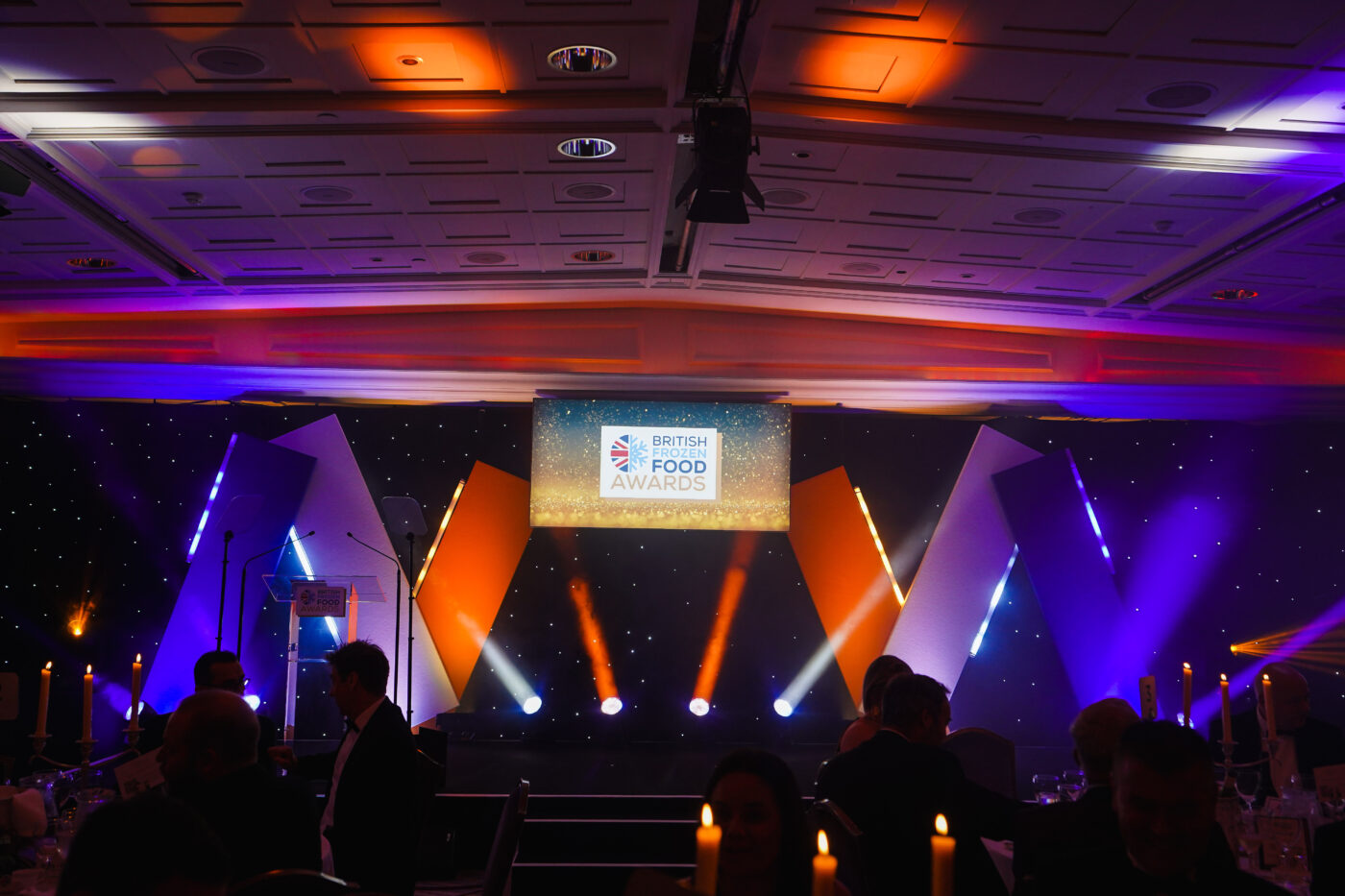
  • Awards Night
Upcoming Events More Events
Sponsorship Packages

We offer a range of sponsorship opportunities to BFFF members across our events throughout the year, with flexible packages that can be tailored to suit your business objectives.

Contact Us
British Frozen Food Federation Members Logo
what our members say...
  • Wakefield Council

    “What an amazing piece of work and indicative of how BFFF respond to the concerns of their members and make an impact on the whole industry sector.”

    See Full Quote

  • Sysco

    “You guys really ‘Do The Right Thing’ for the good of the industry”

    See Full Quote

  • Darta

    “The BFFF awards night is becoming an “appointment not to miss” on our calendar and we again enjoyed it immensely together with lots of well-known people from our industry. The…

    See Full Quote

  • Kantar Worldpanel

    “The Business Conference was an excellent day that was very well organised and allowed so many likeminded individuals in the room to learn so much more around the Frozen industry….

    See Full Quote

  • Lakeside Food Group Ltd

    “This Not For EU labelling situation alarmed us and quickly became a major worry to our business. These are times when you really rely on some support and from previous…

    See Full Quote

  • Meadow Vale Foods Limited

    “We had a few questions with respect to the new EPR waste packaging legislative changes. I know some of my colleagues have been assisted by BFFF in the past so…

    See Full Quote

  • Newberry International Produce Ltd

    “I am writing to express my heartfelt gratitude for the outstanding event you organised. I have only worked in this sector for the past nineteen months coming from twenty-five years…

    See Full Quote

  • Place UK Ltd

    “The BFFF 2024 Conference was compelling and thought provoking, with a many relevant and interesting topics covered at great pace and some depth by excellent speakers – will certainly attend…

    See Full Quote

  • Roswel Spedition GMBH

    “Thank you and the team for rushing around so brilliantly before, during and after the conference. It was pleasure to be part of the conference.”

    See Full Quote

  • Seara

    “The event was great, in my opinion. Not only it was very well organised, but the venue and the catering were excellent too. Furthermore, the content of the presentations was…

    See Full Quote

Website Designed & Built by we are CODA