Become a member

BFFF TECHNICAL EXPERT GROUP MEETS ONCE AGAIN TO REVIEW LATEST INDUSTRY DEVELOPMENTS

The BFFF Technical Expert Group met on June 7th at the Newark Showground, in Lincolnshire, to review and discuss the very latest developments in key areas affecting our members.

But before we launched into the packed agenda, we couldn’t miss the opportunity to celebrate with the group by showing off our ‘Best Trade Organisation for 2023’ trophy which we were awarded at the Food Management Today Industry Awards in London the night before. We are absolutely thrilled to have been recognised for our efforts, and a big thank you goes out to those who nominated us.

The meeting was well attended, as always, and the group managed to work its way through several ‘meaty’ subjects, sharing very relevant insight and thoughts on such things as the Border Target Operating Model, GB-NI Trade, mechanically separated meat, and the recent apparent rise in Listeria incidents.

We were then joined by the National Food Crime Unit (NFCU) who presented us with an overview of their work, investigatory powers, and advice. It was also interesting to hear about some of their case studies, where months of tireless work have resulted in exposing and successfully prosecuting serious and organised criminality.
Please do look out for updates from the NFCU on our website and appearing in the BFFF Technical and Legislative newsletters. The unit also has a quarterly industry newsletter which shares current information on food fraud and the work of the NFCU which you may wish to subscribe to NFCU.Prevention@food.gov.uk

As the meeting is conducted under Chatham House rules, we will be unable to share the full minutes outside of the group, but please feel free to contact deniserion@bfff.co.uk should you want to discuss anything further.

LPG Fork Truck Safety Alert – Update 6th June 23

BFFF contacted the Health & Safety Executive in May to raise concerns about the increased number of reports of failure of LPG vaporisers in fork trucks due to clogging resulting in fire.

HSE has now issued a safety notice after working within their own labs and across the lift truck industry to try to identify the cause.

Outline of the problem

The build-up of deposits in fuel systems, in particular, the vaporiser units of LPG-powered vehicles has led to a number of fires.

Trucks not starting due to sticking valves

Deposits in vaporiser units, flow regulators and shut-off valves cause the truck to fail to start, particularly from cold. The build-up of deposits can lead to sticking valves and the mixture supplied to the engine being too rich to be ignited.

Repeated starting attempts can release unburned LPG

Repeated starting attempts can result in the release of unburned LPG, which in extreme cases can be ignited, setting fire to the vehicle and surrounding materials.

Action required

Operators

  • review your safe system of work in relation to the use of all LPG powered lift trucks and similar vehicles
  • provide information, instruction and training for all operators about the hazards raised in this alert
  • park LPG vehicles in well ventilated areas free from flammable material, particularly when parking overnight or for longer periods

If a truck does not start within the normal few seconds

  • do NOT continue to turn (crank) the engine over using the starter
  • do NOT repeat the normal engine starting procedure
  • do NOT spray volatile agents into the air intake in an attempt to aid starting
  • get off the truck and close the shut off valve to isolate the gas bottle
  • secure the truck to prevent further starting attempts
  • ensure the area is well ventilated
  • do NOT attempt to solve or repair the problem yourself, arrange for a competent maintenance engineer to do a check of the LPG system

Service and maintenance engineers

If you are presented with an LPG powered truck with a starting problem:

  • do NOT follow the normal starting procedure
  • isolate the LPG supply by closing the shut off valve
  • ensure that the area is well ventilated
  • disconnect the battery
  • release LPG pressure trapped in the fuel supply system
  • follow the manufacturer’s guidance for inspection of the LPG system

LPG is cold, take appropriate precautions when working with it. Once released LP gas is heavier than air and can pool in low lying areas, where it can be ignited by any source of ignition, including static electricity, electrical sparks and hot surfaces.

Guidance

Relevant legal documents


The problem is not limited to a single truck manufacturer, but appears to be geographically limited to the UK.

We have also been made aware of some aftermarket suppliers of replacement hoses might not always be providing the correct LPG grade hoses. Plasticizer additives in incorrectly specified elastomer hoses, e.g. hydraulic hose, can be leached out of the hose through contact with the LPG, thus increasing the amount of contamination and leading to a failure mode difficult to distinguish from that associated with poor fuel quality. Whilst we don’t have any evidence that incorrectly specified hoses have played a part in any of the failure/incidents, it is essential that only LPG grade hoses are used in LPG systems and this can best be assured by use of original OEM parts.

It is important that such incidents are reported under the Reporting of Injuries, Diseases and Dangerous Occurrences Regulations places a clear obligation on the site to report explosion/fire which takes a piece of plant out of service for more than 24 hours under RIDDOR.

The UKMHA has released the following safety alert:

UKMHA Release LPG Safety Alert – The UK Material Handling Association

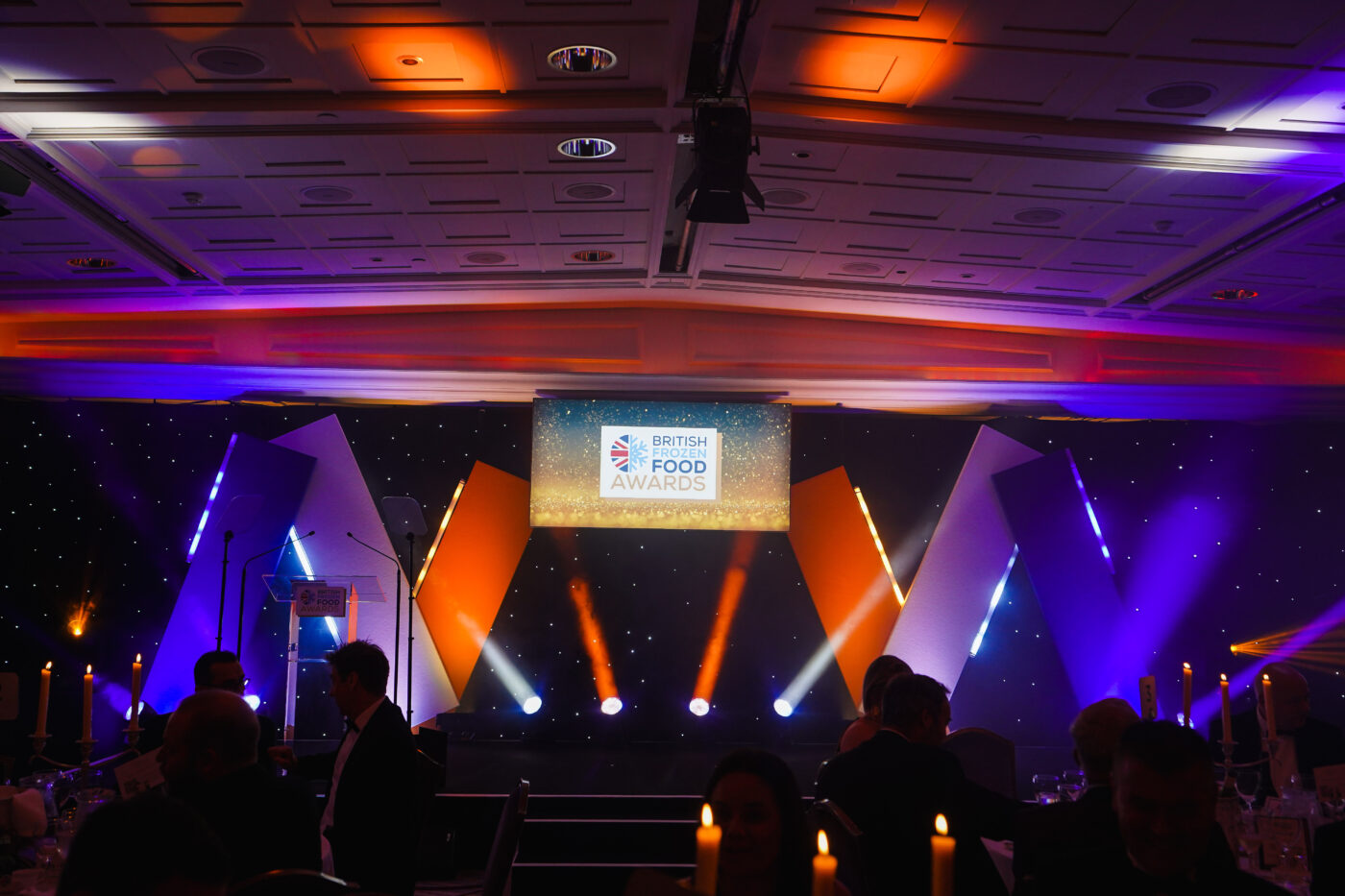
GALA DINNER DANCE AND FROZEN FOOD AWARDS SUPPORTED BY BFFF MEMBERS

With the BFFF Gala Dinner Dance and Frozen Food Awards mere days away, we would like to acknowledge the gracious support of some of our members, without whom our fantastic events would not be possible.

This year, we were pleased to have the support of Seara as our main Headline and Frozen Food Awards sponsor. Equally important were our other event sponsors which include: Birds Eye Ltd, Daregal Gourmet, Dawsongroup Temperature Control Solutions, Freiberger UK, Fullers Foods.  Our Gala Dinner Brochure, which will be handed out on the night was kindly sponsored by Inspired PLC our official logistics partner for the awards this year was Cook Trading Ltd.

Your support enables us to deliver top industry events fostering outstanding networking opportunities as well as collaboration and development of the frozen food industry.

There are still a few tickets left so book yours now. BOOK TICKETS HERE

To express an interest in supporting future BFFF events, contact our Events Manager Charley Price

WMS AND ROBOTICS

The growth in robotics and automation in the warehouse and wider supply chain is accelerating. The ever-increasing demand to make the best possible use of resources and emergence of new technologies are driving a surge in demand. What if any are the implications for warehouse management software (WMS) and associated applications?

Robotics and automation in the warehouse are not new. Conveyor and sortation systems have been around for decades. AGVs (autonomous guided vehicles) have been available for almost as long but were initially relatively expensive. Robotic arms are commonplace in manufacturing and, increasingly, logistics applications. Even humble lift trucks and order pickers have evolved to incorporate functions such as automatic lift height selection which enable a degree of “automation” and features such as wire-guidance and digital motors which help them integrate with other technologies.

The majority of this automation equipment was designed to fulfil repetitive tasks in a fixed position or a specific and well-defined area. The difference now is “autonomy” with many of the recent advances being in equipment that can operate on its own and move freely around a facility. Costs have decreased while advances in applications and supporting technologies have made it possible to integrate solutions more easily while meeting many more requirements. At the same time, with real estate prices and labour costs increasing, there is the constant pressure to make the best possible use of infrastructure and people, and maximise capacity, throughput, efficiency, and productivity. In short, the investment required can be more easily justified in a much wider range of settings.

The impact is stark. In its Intralogistics Robots 2023  study, MMH magazine found that 43% of companies who took part planned to use robots within the next three years. Only 4% said they had no plans to use robots, suggesting that over time almost every warehouse will be using them one way or another. While these figures are largely based on responses from US-based companies, the UK and Europe will not be far behind, especially as the business pressures may be even more intense here. In any case it is clearly one of the leading trends in the supply chain at the moment. MMH also reports that Gartner predicts 75% of large warehouses will be using some form of robotics by 2026 and that Mordor Intelligence predicts the market for warehouse robotics will be $23bn by 2027. Elsewhere, logistics giant DHL estimates that up to 30% of its global material-handling equipment fleet will use some form of robotic automation by 2030.  Data Bridge Market Research estimates that the value of the Global Robotic Arm Market will reach $75bn by 2029, treble the value in 2019.

Supply chain robotics and automation falls into two broad categories. The first is equipment installed in a fixed position in the warehouse. This includes, for example, conveyor, carousel, and sortation systems, as well as pallet wrappers, crane/tower systems, and pick-and-place robots. There are other examples and in most cases these systems or devices carry out their repetitive duties as part of the wider materials handling infrastructure. Many have their own control systems and applications which allow them to integrate with other systems. WMS, for example, commonly interface with these systems to oversee stock management and order picking.

The second, and one attracting all the interest at the moment, is the autonomous or free-ranging robot. These include autonomous lift trucks, AGVs, shelf-stacking lifts, and self-driving dollies for handling items such as trolleys, picking bins, and pallets. In the wider supply chain context, delivery buggies and drones fulfil a similar role and are an increasingly familiar sight in urban areas. Many of these technologies are replacing the more traditional type of warehouse operations that relied on human labour.

What does this mean for the WMS? At a simplistic level, a WMS issues an instruction to move an item from point A to point B and the “system” works out how to do it. From a WMS perspective the information required to manage the flow of items through the warehouse is more or less the same whether they are handled by conventional or automated equipment. Despite achieving often very high levels of accuracy, and no matter how well designed, systems which incorporate people-based interactions always contain a risk of human-error. Properly configured automated processes, on the other hand, should eliminate such potential errors and deliver even higher levels of accuracy and speed. However, this assumes that information is correct at all stages of the supply chain which is not always the case. Therefore, additional checks may be required before items enter the “automated” sections of the supply chain to minimise subsequent errors and WMS may need to incorporate new/different exception handling capabilities to capture the small number of errors that remain.

With fixed-position equipment the tasks involved are repetitive and relatively predictable. The control systems work with the WMS to work out what to do, in real-time and with high levels of accuracy. Things can be more complex if there is a choice or decision to be made. This might be the case, for example, if manual and automated picking are taking place simultaneously. In this example, the WMS and robotic equipment should work together to “decide” which is the most efficient way to complete the pick. Much if not all of this can itself be automated or pre-programmed with the decisions made by the systems based on predetermined rules or logic. For example, if a single item needs to be picked quickly for rapid despatch the best option could well be to instruct an operative to complete the task. Or it might not be. The point is, a well-designed and configured system will be able to make this type of decision based on its underlying programming, perhaps using a growing and evolving knowledge base of historic data. In other words, the system learns over time (sometimes a very short time) what is the best solution to any given new task. None of this is rocket science in the WMS world and many systems work this way. But the emergence of new forms of AI could take this decision making in new directions because the underlying systems will identify new patterns and be able to respond more flexibly than current systems.

Most operators with an existing facility will see the biggest benefit from automating certain aspects of their warehouse, most likely the high-volume and fast-moving areas. WMS such as ProWMS enterprise-level Advanced Warehouse Management have the inherent flexibility to support whatever processes (and changes) the operator decides. Ideally this will be achieved with minimal recoding. However, with its own modular design, ProWMS allows operators to add new functions and processes such as voice, pick-and-pack and so on whenever they choose rather than expecting them to specify a fully featured application from day one. This modular model also sits well with a rapidly evolving ecosystem such as we are currently seeing with new types of robots and automation. This is because creating a new module typically avoids the complexities of reworking a larger, non-modular code base.

References:


MMH 2023: https://www.mmh.com/article/warehouse_automation_survey_2023_more_robots_are_coming_to_a_warehouse_near_you


DHL: https://www.dhl.com/global-en/delivered/ecommerce/warehouse-robotics-and-automation.html


Databridge: https://www.databridgemarketresearch.com/reports/global-robotic-arm-market


CHILDREN’S CHARITY OAKLAND FOUNDATION WEBSITE RELAUNCHED

Children’s charity the Oakland Foundation has relaunched its website featuring a fresh design, improved functionality and easier access to essential information to help suitable applicants obtain support.

The Oakland Foundation charity, set up by total supply chain solutions provider and family business Oakland International, aims to ensure all children, and particularly those living in poverty or who are disadvantaged, can participate equally, irrespective of social background or physical ability, by offering support to children under the age of 16 and their families through programmes based around education, health and nutrition, and sport.

Oakland Foundation Trustee, Mark Williams, explains: “Our goal was to deliver our visitors with an easier way to learn about the types of support we offer and the youth targeted organisations we work with.

“Our fresh new design is now much easier to navigate, is providing an enhanced user experience and the feedback we’ve received has been extremely positive.”

Increasing their match-funding partnerships and opportunities with councils, the business community and youth groups the Foundation’s focus is to ensure availability of opportunity for all, particularly for those who would not routinely be able to take part in such programmes.

Last year alone the Oakland Foundation awarded grant funding which conservatively supported 3000+ children directly, with partnership development and collaborative funding opportunities a key focus.

Added Mark: “Working with the team from Gambit Nash, who we’ve known for several years, has made the whole process that much easier. We’re simply delighted with the result!”

To apply for Oakland Foundation funding or to donate or fundraise, please visit: www.oakland-foundation.com or call 01527 596222.

STAR REFRIGERATION’S DR. ANDY PEARSON RECEIVES SPECIAL PLAQUE FOR NEARLY TWO DECADES OF RESEARCH PAPER CONTRIBUTION AT THE 10TH IIR CONFERENCE ON AMMONIA AND CO2 REFRIGERATION TECHNOLOGIES

The highly esteemed conference on ammonia and CO2 refrigeration brings together scientists and industry thought leaders from around the world to drive advancements and knowledge in natural refrigerants.

Dr. Andy Pearson, Group Managing Director of Star Refrigeration, was recently recognised for his 18 years of contribution to Ammonia and CO2 refrigeration research at the 10th International Conference on Ammonia and CO2 Refrigeration Technologies. Organised by the International Institute of Refrigeration (IIR) and the Faculty of Mechanical Engineering of the University of Ss Cyril & Methodius –Skopje, the conference was held in Ohrid, North Macedonia.

The biannual specialist conference unites the world’s preeminent scientists and industry leaders to promote knowledge exchange and foster innovation in ammonia and CO2 refrigeration technology. This year’s event took place from 27th – 29th April 2023, with the attendance of 500 international delegates.

Dr. Pearson was presented with the special plaque by Didier Coulomb, Director of IIR, and Risto Ciconkov, President of the Organising Committee. The accolade marks Dr. Pearson’s consistent presence and seminal research papers presented at all ten editions of the Ohrid conferences.

Since its inception in 2005, the conference’s objective has been to dispel ambiguities and confusion surrounding ammonia and CO2 refrigeration technologies. Aiming to bridge the gap between industry and academia, the conference was set up to respond to the global transition towards natural refrigeration technology following global efforts to phase-down HFCs to mitigate the catastrophic implications of climate change.

This year, Dr. Pearson, who is also the Conference’s President of the Scientific Committee, initiated the conference proceedings with his research paper, ‘Energy Performance of Process Cooling Equipment,’ in which he explored the challenges in the benchmarking energy performance of cooling processes due to the great variety in system types and products processed. Pearson also called for the development of data banks for different products and processes with the assistance and input from operators, saying that the key in benchmarking is to start data collecting as soon as possible in order to build up a pattern, even if the means of processing the data is not yet established.

The conference further addressed topics such as the design of modern ammonia (NH3) and CO2 refrigeration and heat pump systems, energy efficiency, and safety and compliance issues associated with natural refrigerants.

A prominent industry expert, Dr. Pearson is known for his profound knowledge of industrial refrigeration, having published numerous research studies on energy-efficient design, compliance, and safety of ammonia and CO2 refrigeration technology over four decades. His research and pioneering work in the design and installation of refrigeration and heat pump systems such as the world’s first and largest ammonia district heat pump in Drammen, Norway, have earned him prestigious recognitions, including the International Environmental Agency’s Rittinger Medal and the J&E Hall Gold Medal from the Institute of Refrigeration.

Dr Pearson is an IOR and ASHRAE Fellow and advises on the Refrigeration Safety Technical Committees for the British Standards Institute (BSI), the European Committee for Standardisation (CEN) and the International Standards Organisation (ISO).

On receiving the award, Dr. Pearson said, “I am honoured to receive this special plaque for for having presented at all ten Ohrid conferences. At Star Refrigeration, we remain committed to sharing innovative refrigeration knowledge and best practices underpinned by the most recent industry research.”

Star Refrigeration are a leading supplier of industrial ammonia and CO2 refrigeration and heat pump systems. With over 50 years of experience, the company is a total solutions provider, working in partnership with customers in the cold storage, pharmaceutical, food and drinks manufacturing, brewing, dairies data centres, building services, ice and leisure, petrochemical and district heating industries.

The IIR International Conference in Ohrid is a pivotal industry event for knowledge exchange on Ammonia and CO2 Refrigeration Technologies. For more information, visit https://iifiir.org/en/events/10th-iir-conference-on-ammonia-and-co2-refrigeration-technologies

To find out more about Star Refrigeration’s advancements in ammonia and CO2 refrigeration and heat pump technology, as well as their recent installations, visit https://www.star-ref.co.uk

Member Benefits

Exclusive Partnership deals on key products and services:

  • BFFF energy deals and rates
  • Vypr member deals and introduction
  • Defib Plus deals
  • Company Shop – membership
  • Mentor – MHE training health check

Exclusive access to networking opportunities and events:

  • Meet the Buyer events (retail & foodservice)
  • Annual Business Conference with networking dinner
  • Specialist H&S and Technical Conferences
  • Special interest groups (packaging, frozen food temperatures)
  • Annual Lunch
  • Awards Night
Upcoming Events More Events
Sponsorship Packages

We offer a range of sponsorship opportunities to BFFF members across our events throughout the year, with flexible packages that can be tailored to suit your business objectives.

Contact Us
British Frozen Food Federation Members Logo
what our members say...
  • Wakefield Council

    “What an amazing piece of work and indicative of how BFFF respond to the concerns of their members and make an impact on the whole industry sector.”

    See Full Quote

  • Sysco

    “You guys really ‘Do The Right Thing’ for the good of the industry”

    See Full Quote

  • Darta

    “The BFFF awards night is becoming an “appointment not to miss” on our calendar and we again enjoyed it immensely together with lots of well-known people from our industry. The…

    See Full Quote

  • Kantar Worldpanel

    “The Business Conference was an excellent day that was very well organised and allowed so many likeminded individuals in the room to learn so much more around the Frozen industry….

    See Full Quote

  • Lakeside Food Group Ltd

    “This Not For EU labelling situation alarmed us and quickly became a major worry to our business. These are times when you really rely on some support and from previous…

    See Full Quote

  • Meadow Vale Foods Limited

    “We had a few questions with respect to the new EPR waste packaging legislative changes. I know some of my colleagues have been assisted by BFFF in the past so…

    See Full Quote

  • Newberry International Produce Ltd

    “I am writing to express my heartfelt gratitude for the outstanding event you organised. I have only worked in this sector for the past nineteen months coming from twenty-five years…

    See Full Quote

  • Place UK Ltd

    “The BFFF 2024 Conference was compelling and thought provoking, with a many relevant and interesting topics covered at great pace and some depth by excellent speakers – will certainly attend…

    See Full Quote

  • Roswel Spedition GMBH

    “Thank you and the team for rushing around so brilliantly before, during and after the conference. It was pleasure to be part of the conference.”

    See Full Quote

  • Seara

    “The event was great, in my opinion. Not only it was very well organised, but the venue and the catering were excellent too. Furthermore, the content of the presentations was…

    See Full Quote

Website Designed & Built by we are CODA