Become a member

No more harassment in the workplace: What the new bill means for employers

The Worker Protection (Amendment of Equality Act 2010) Bill proposes new obligations on employers to prevent harassment. Many consider the amendments proposed to be the most significant changes to discrimination law since the Equality Act 2010 (EqA).

Current law

Currently, under the EqA, anything done by an employee in the course of their employment is treated as having also been done by the employer. An employer can be liable for harassment irrespective of whether the harassment is done with the employer’s knowledge or approval. Employers do have a defence, however, if they can show that they took all reasonable steps they could to prevent it from happening.

Alongside the EqA, the Equality and Human Rights Commission (EHRC) helps employers to prevent discrimination and harassment and can use its enforcement powers when alleged incidents are reported. This includes the EHRC conducting investigations into organisations, issuing unlawful act notices and issuing action plans. Alternatively, the EHCR can give the organisation an opportunity to enter into a legally binding agreement with them, known as a section 23 agreement. In section 23 agreements, the organisation voluntarily undertakes not to commit an unlawful act, and the EHRC agrees to refrain from taking enforcement action. The EHRC then monitors compliance with the agreement and implementation of any action plan that has been agreed as part of that process.

Recent EHRC action

In March, the EHRC entered into a section 23 agreement with IKEA UK, to improve its policies and practices in relation to sexual harassment, following a complaint raised by a former employee. IKEA has committed to reviewing the way it deals with complaints and also how it meets its responsibilities under the EqA. This includes having a zero-tolerance approach, working with an external legal provider to review its policies and procedures and to improve its responses to complaints, and providing training on those new policies to HR and all line managers.

In February, shortly before this agreement, the EHRC entered into a similar agreement with McDonalds. In this agreement, McDonalds committed to similar actions to IKEA, however, they also agreed to conduct an anonymous survey of workers, deliver training for all employees with specific training for managers so they can identify areas of risk, support franchisees and monitor progress towards a safe, respectful and inclusive working environment. The additional commitments are unsurprising, since the agreement was not preceded by one complaint (as in the IKEA case), but multiple employee complaints.

Why do we need the Bill?

Nevertheless, and despite these protections against harassment, the EHRC has warned that some employers consider that a low incidence of reporting sexual harassment means that there is no issue in their workplace, or there is an assumption that policies and procedures are enough to prevent sexual harassment. However, making this assumption and not taking action can be hugely damaging to the victims, they say.

The ongoing scandal at the CBI is a prime example of this. The Guardian recently reported that CBI’s apparent failure to deal quickly and effectively with complaints of sexual harassment and violence, meant that victims felt their only option was to take their complaints to the press rather than raise them with their employer, resulting in weeks of revelations and damage to the CBI brand.

As the Financial Times put it, “… all the policies in the world won’t help you if no one uses them.” The CBI had grievance and whistleblowing policies and an anonymous complaints process in place, however, CBI has said concerns did not reach senior ranks and that it “tried to find resolution in sexual harassment cases” rather than sacking those concerned, a vicious circle that deterred others from coming forward.

Coupled with a sentiment that many perceive still exists i.e. that sexual harassment is ‘not that big a deal’ or is ‘just a bit of banter’, it may come as no surprise that in 2016 a TUC poll (aptly titled ‘Still just a bit of banter?’) showed that 52% of women had experienced harassment in the workplace. In 2021, another TUC poll told us that the percentage of those experiencing sexual harassment rose even further where the woman had another protected characteristic, with 68% of disabled women experiencing harassment in the workplace. If we add to that 36% of women in the 18 – 34 age bracket reporting that they have experienced harassment, abuse or violence perpetrated by third parties (TUC poll 2018), it starts to become clear why further legislation is still necessary.

Historically, there used to be protection against third party harassment provided by s40 of the EqA. However, that protection was limited, largely due to the ‘three strike rule’; that an employee had to show that an employer was aware of two or more incidents of third party harassment in order for them to be liable. It was, therefore, rarely used and was then repealed in October 2013. In the case of Unite the Union v Nailard [2018], the lack of protection against harassment by third parties without this provision was identified and the Court of Appeal concluded that this was a matter for Parliament.

What does the Bill say?

So is the Bill the answer to these problems and what does it mean for employers?

The Bill, if passed, will:

  • reintroduce liability for the harassment of employees by third parties, going further than the historical protection in that no previous incidents will be necessary;
  • introduce a proactive duty for employers to take all reasonable steps to prevent sexual harassment of its employees in the course of their work; and
  • give that proactive duty some real force by providing for enforcement via the EHRC and an uplift to compensation for sexual harassment of up to 25% where an employer has failed to take those reasonable steps.

There were real concerns following the initial introduction of the Bill about the impact these new protections would have on freedom of speech. In response, the government has made some changes to the Bill and has clarified that, whilst it is not intended that this new protection will prohibit freedom of speech of others and those expressing opinions, it is certainly expected to prevent targeted, improper or grossly offensive conversations in the workplace, such as racial insults. To that end, employers will not be liable for acts that might normally amount to harassment but where:

  • the conduct in question is a conversation in which an individual is not a participant, or it is speech which is not aimed at an individual,
  • in either case it involves an expression of an opinion on a political, moral, religious or social matter, and
  • the opinion is not grossly offensive and there is no intent to violate dignity.

However, it should be noted that this carve out does not apply to sexual harassment.

What does this mean for employers?

As proposed, this means that there will be an onus on employers to protect their employees from conduct and conversations of third parties, and also in respect of work colleagues (being an add on to the current discrimination law on harassment).

Further, as drafted, it seemingly creates a two tiered system, where there is a lower bar to prove sexual harassment (where the carve out does not apply) and a higher bar for all other forms of harassment (including on the grounds of sex, sexual orientation and race). Coupled with the inherent difficulty that must follow for employers and tribunals having to determine which conversations are excluded from the protection and those that are caught, it seems likely that if the Bill passes, there will inevitably be a period of great uncertainty.

Assuming the Bill passes, which seems likely, the protection will come into force one year from the day it passes.

It is therefore imperative that employers use the period whilst the Bill is passing through Parliament to get comfortable with what their obligations will be and put in place the correct policies, procedures and training to ensure that they can show they have taken all such steps to prevent sexual harassment in the workplace, whether by employees, contractors, agents, customers or any other third parties.

That is all well and good to say, but what does that look like in practice?

First and foremost, employers will have to update all of their policies and procedures so that these new protections are clearly spelt out. They should be rolled out to all employees with training on their application. Employers may even wish to consult with their employees before shaping those policies, getting their input as to how they feel they could be affected in the workplace by harassment, including by third parties.

It may be sensible to provide specific, tailored training to line managers and senior staff who are responsible for ensuring compliance with such policies and procedures. Carrying out a risk assessment of the various roles in the business and how likely third party interaction affects such roles, would also be sensible.

In customer facing roles, the risk is, of course, going to be higher. Clear and unequivocal statements as to an employer’s ‘zero-tolerance’ policy and approach to harassment of their staff should also be particularised and set out for third parties, perhaps by way of clearly displayed signs or notices. Some employers might also wish to consider having a central register of all harassment complaints raised, so that they can keep track of any areas with particular issues or trends and so that they can ensure they are addressed quickly. However, that would need to be carefully executed considering data protection rules.

This is set to be a very complex area of discrimination law and it is not one we would advise employers embark on without getting specific legal advice. The cost of getting it wrong, as we all know, can be extensive with no cap on compensation in discrimination claims in the tribunals, plus a potential 25% uplift on that compensation when employers fail to take all reasonable steps to prevent harassment.

Employment

Contact: Matt McDonald  matt.mcdonald@shma.co.uk

Philip Pepper philip.petter@shma.co.uk

SERVE UP THE ULTIMATE MEAT-FREE TREAT FOR NATIONAL VEGETARIAN WEEK

This week marks the 31st anniversary of the increasingly popular National Vegetarian Week, with meat-free diets becoming the key focus of the UK food service agenda.

Increasing in popularity for meat-eaters looking for a more balanced diet, the National Vegetarian Week aims to show to communities and schools across the UK that meat-free alternatives can be a vibrant and exciting eating experience.

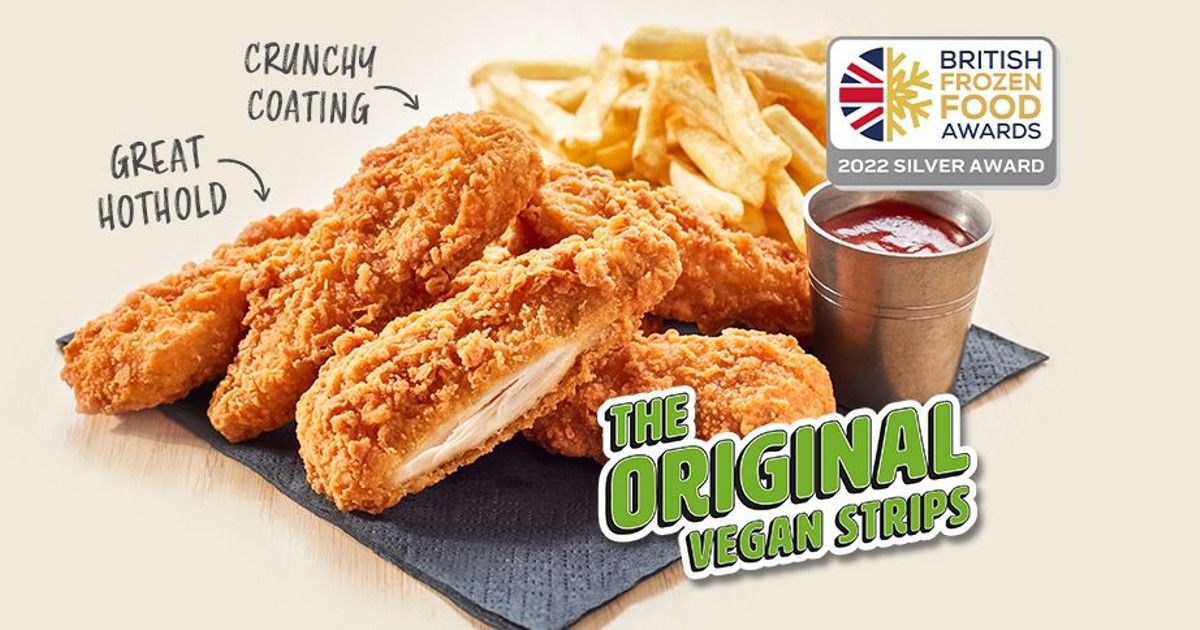
With this in mind, we’re here to help food businesses make the perfect Meat Free Monday or Chicken’less Tuesday with our award-winning Original Vegan Chick’n Strips – we promise, you won’t find a tastier meat-free chicken strip on the market.

A chicken alternative like no other!

Vegan strips.jpg

Meadow Vale Foods’ Original Vegan Chick’n Strips have gone from strength to strength in 2022, giving caterers a seriously tasty, highly versatile meat-free option that can be used in multiple menu applications, from a crunchy hot dog to a tasty taco or refreshing salad!

The strips offer a high-quality meat-free alternative that imitates the taste, texture and appeal of our highly popular hand cut, hand coated Homestyle Breaded Chicken Strips. We took everything that makes Meadow Vale chicken so delicious… and recreated it using flattened pea protein.

The quality is all in the strip… simply heat and serve! The caterer can save time, waste and money as the strips offer quick cook times in a variety of methods, straight from the freezer. What’s more, the product performs great when hot held, as the coating stays crunchy for longer and the core stays succulent for up to two hours, making it perfect for takeaway and delivery.

High in protein and a great source of iron, pea protein is a great fit for any diet, as it is naturally vegan and hypoallergenic.

Like many of our tender chicken strips, the protein is hand cut and coated in our signature Meadow Vale batter, making it extremely difficult to separate the meat-free from the meat… Trust us, we’ve tried!

Click here to request a sample and try it out to inspire your menu on National Vegetarian Week, or get in touch today for more information on suppliers, pricing and much more.

GOVERNMENT PUBLISHES SCHEDULE OF REUL TO BE REVOKED BY THE END OF 2023

As reported in last week’s newsletter, on 10th May government announced that it was tabling an ‘Amendment for Lords Report’ to replace the current sunset clause in the Retained EU Law Bill (REUL) with a list of the retained EU laws which they intend to revoke at the end of 2023.

That list of around 600 pieces of legislation has now been published and can be found here

The list covers each piece of legislation being revoked along with the reason it is being removed.

It includes a significant amount of REUL that is defunct and unnecessary now we have left the EU and removes items of REUL that are burdensome and duplicative. It also includes some REUL which had been designed in a way which was clearly contrary to the needs and requirements of the UK.

The government had already revoked or reformed over 1,000 EU laws since our exit and in addition to this latest list, the Financial Services and Markets Bill and the Procurement Bill will revoke around a further 500 pieces of REUL.

The BFFF will now be reviewing this list but if you have any queries relating to REUL please do not hesitate to contact us.

U.K.’S LEADING FOOD & DRINK WHOLESALER BOOKER & WICKED KITCHEN® PARTNER TO LAUNCH LARGEST VARIETY OF CONVENIENT PLANT-BASED FOODS NATIONWIDE

Wicked Kitchen, the chef-driven and 100% plant-based global food brand with an extensive range of chef-created products and Booker, the market leading wholesale provider in the U.K., have come together to offer the largest line up of vegan options for food service and cash and carry just in time for summer menus.

Booker now offers a range of Wicked Kitchen’s catering packs companywide at its 195 locations – with additional offerings coming this summer— to meet consumer demand for craveable, chef-crafted plant-based foods. This launch comes at a time when 77% of U.K. consumers feel there are not enough choices or that plant-based is not available when they go out.* Booker and Wicked Kitchen will overcome these barriers by offering restaurants, pubs, and caterers quick, convenient, and deliciously versatile food service options including Wicked’s meal solution pouches, breakfast pastries, savory pies, burgers, sausages, desserts, and ice creams, capitalizing on Wicked Kitchen’s expansive variety of bold-flavoured foods.

“As chefs who grew up in restaurants and catering, we love Booker and are honored to offer a one-stop solution while also helping to inspire chefs and food service operators with amazing vegan foods that are versatile and easy to prepare,” said Chef Derek Sarno, co-founder of Wicked Kitchen. “By bringing the largest variety of plant-based products for food service to market, we are meeting consumer requests for flavour-forward, 100% vegan catering packs. Our foods appeal to vegans and omnivores alike.”

In addition to meeting food service demand for full-flavour, chef-crafted plant-based foods, Booker’s commitment to expand its vegan selection supports its sustainability goals as plant-based products are recognized as better for the environment because of a lower carbon footprint when compared to their animal protein counterparts.

Starting with frozen items found in a dedicated space at all Booker wholesale locations, and available for direct ordering online, Booker now carries:

  • Sourdough Pain Au Chocolate
  • Tantalising Tikka Pouches
  • Smoky Chilli Pouches
  • Sweet Potato & Vegetable Tikka Pies
  • No-Chicken Pies
  • Chorizo Style Sausages
  • Italian Inspired Amazeballs
  • Jalapeño Griller Burgers
  • Sticky Toffee Puddings

Additional products available soon with more to come include:

  • Sourdough Croissants
  • Vanilla Ice Dream
  • Cookie Dough Ice Dream
  • Berry White Ice Dream Novelty Sticks
  • Chilli Not Dogs

“We’re excited to launch into food service in the U.K. with such a great partner as Booker that not only has wide reach but a strong commitment to offering the very best in choice, price and service,” said Pete Speranza, CEO, Wicked Kitchen. “We are a ‘for-chefs-by-chefs’ operation on a mission to help restaurants, pubs, hotels and caterers offer irresistible meals and menu items that cater to all tastebuds without sacrificing taste or convenience.”

Wicked Kitchen was first launched in the U.K. at Tesco in 2018 by chefs and brothers Derek Sarno and Chad Sarno, helping to fuel the plant-based movement with more than 150 products featured in Tesco locations. The brand expanded globally in 2021 into the U.S. and in 2022 into Finland and Thailand.

Wicked Kitchen launched into food service in the U.S. last year partnering with the National Basketball Association’s Minnesota Timberwolves team to offer one of the first plant-based concessions in the U.S. at the team’s home arena, Target Center. Additionally, the brand’s offerings are available in a multitude of large-scale arenas and stadiums as well as theaters and convention centers across the U.S.

*ProVeg, Plant-Based Food in the UK report, 2020, Market and Consumer Insights

Government announces proposals to “cut red tape” for employer

The Department for Business and Trade has this week announced a package of regulatory reforms seeking to “reduce unnecessary regulation for businesses, cutting costs and allowing them to compete”.

Cecily Donoghue, Senior Associate in our employment team, considers these proposals. The release this week is stated to be the first in a series of announcements, with further “deregulatory reforms” expected this year.

The package this week includes, but is not limited to, the following proposals:

  • Reducing some of the Working Time Regulations reporting requirements (whilst retaining the 48 hour week requirement);
  • Making regulation a last response, rather than a first response. A new, improved framework for regulation will reduce business burdens and enhance the way regulations for an evolving economy are handled in the future;
  • To reintroduce rolled-up holiday pay and to merge the existing separate entitlements to UK and EU holiday into one pot of statutory annual leave, whilst maintaining the same amount of statutory leave entitlement overall (28 days for full time workers);
  • TUPE transfers – Simplifying regulations by consulting on potentially removing the requirement to elect employee representatives for TUPE consultation for businesses with few than 50 people and transfers affecting less than 10 employees. Given the existing micro-business exemption, this is likely to have a limited impact.
  • Helping reduce the length of non-compete restrictive covenants clauses to three months only. This is intended to provide more flexibility for a worker to join a competitor or start up a rival business after leaving their employer. This should not interfere with employers’ existing abilities to use notice periods, garden leave, non-solicitation or confidentiality clauses. There’s however, no reference to non-dealing covenants in the policy statement.

How will this impact businesses?

The primary goal here is to enhance economic growth in the UK, as part of the Government’s promise to prioritise innovation and an agile regulatory blueprint. The proposals outlined in this week’s update should save businesses an estimated £1bn per annum and simplify current complexities, allowing for quicker decisions and efficient administration.

Rather than being held back by red tape and pages of regulatory obstacles, businesses will be able to compete at a better level globally; something that has been dislodged in the past few decades as more regulations have been brought forwards.

Business and Trade Secretary Kemi Badenoch, says: “I have listened to the concerns of business of all sizes and have made it a priority to tackle the red tape that holds back UK firms, reduces their competitiveness in global markets and hampers their growth.”

Changes to the Retained EU Law Bill

In another statement also released this week, changes are proposed to the Retained EU Law Bill, which is currently passing through government. This Bill is intended to end the special status of retained EU law by the end of 2023 and is currently drafted so that almost all EU laws are automatically revoked at the end of 2023, unless a statutory instrument is passed to preserve them.

However, with the growing volume of EU law being identified and the risks of uncertainty posed by the “sunsetting instruments”, a new approach has been announced this week. An amendment will be proposed to replace the current sunset provisions with a list of the retained EU laws that the government intends to revoke at the end of 2023. This makes it clearer which regulations will be removed instead of highlighting only the ones that will be saved and should give businesses of all sizes further clarity.

No further detail or timescales are provided in either of the announcements this week.

The intention is clear however – “moving away from regulation as a first resort, alongside a reduction in the administrative requirements that divert time away from running a business, and more of a focus for regulators on stimulating economic growth.”

Read the full announcement here and the Policy Paper here.

How we can help

Our experienced employment solicitors are perfectly placed to help you navigate a wide range of employment law issues. We provide solutions that are tailored to the requirements of your organisation.

We will provide further updates on the details of these proposals and the timescales involved once more information is released. It’s however clear that the direction of travel this year is one of ongoing changes… watch this space!

Employment

Contact: Matt McDonald  matt.mcdonald@shma.co.uk

Philip Pepper philip.petter@shma.co.uk

Leading Chinese players poised for Vaper Expo UK – are my vapers UK compliant?

The Vaper Expo UK is set to kick off on 12 May 2023 at the National Exhibition Centre in Birmingham. As Europe’s biggest and most important vaping event, Chinese brands and manufacturers are gearing up to showcase their products in this flagship three-day exhibition.

The UK has no doubt been one of the priority markets for Chinese e-cigarettes producers and brands, partly because it is currently regulated under a more relaxed legal regime in comparison with other regions. In China, for example, Chinese producers are facing ever more tightened laws and regulations for production, marketing and sales of e-cigarettes within mainland China since March last year. Released in March 2022, the final version of the Administrative Measures for E-Cigarettes has imposed a ban on the sale of flavoured e-cigarette in China. The restrictions, however, do not extend to exportation of e-cigarettes to other countries, providing a narrow window for Chinese producers to access to moderately regulated overseas markets where e-cigarettes are considered as healthier alternatives.

Indeed, the opportunities are irresistibly tempting but it would be a dangerous misconception to believe that no one is looking over the shoulders of overseas e-cigarette producers. The recent queries into Elf Bar 600s, a top-selling vape in the UK, should be a warming to other Chinese players in this field. After meeting with Medicines and Healthcare products Regulatory Agency (MHRA) earlier this year, non-compliant Elf Bar 600s were required to be withdrawn from the market.

UK e-cigarettes regulatory framework

Chinese e-cigarette producers are generally aware of MHRA as the top regulatory authority for e-cigarettes in the UK, as well as the producers or importers’ notification requirements under Part 6 of the Tobacco and Related Products Regulations 2016 (TRPR).

However, there are more to watch out for within the overall regulatory framework, from advertisement, labelling or environmental perspectives. For instance:

  • Product requirements: the TRPR’s requirements on nicotine concentration (20mg/ml maximum) and size of presentation (10ml maximum for refill container and 2ml for e-cigarettes). This is the area where Elf Bar 600s has fallen short.
  • Advertising: prohibited advertisements or promotion for e-cigarettes and re-fill containers.
  • Labelling: essential information such as ingredients over a certain quantity must be listed on the label; and an information leaflet about safe use of the product and warning statement should be included.
  • EEE regulations: e-cigarettes producers must register as an EEE (i.e. electrical and electronic equipment) producer annually, and finance the collection and treatment of EEE.
  • Batteries regulations: producers of batteries are required to register as a portable battery producer annually, and finance collection and treatment of waste portable batteries.
  • Packaging regulations:producers of packaging should register as a packing producer, and finance collection and treatment of waste packaging.

It is an offence not to register according to the EEE, batteries and packaging regulations when required to do so, and enforcement action may follow.

Our corporate and commercial law team is comprised of mandarin-speaking lawyer qualified in mainland China and the UK, who has the insights and experience in advising current or prospect market players from China on regulatory compliance issues under UK e-cigarettes legal regime, as well as related commercial matters.

Food safety, licensing and regulatory compliance

Contact: Melissa  Toney   melissa.toney@shma.co.uk

Member Benefits

Exclusive Partnership deals on key products and services:

  • BFFF energy deals and rates
  • Vypr member deals and introduction
  • Defib Plus deals
  • Company Shop – membership
  • Mentor – MHE training health check

Exclusive access to networking opportunities and events:

  • Meet the Buyer events (retail & foodservice)
  • Annual Business Conference with networking dinner
  • Specialist H&S and Technical Conferences
  • Special interest groups (packaging, frozen food temperatures)
  • Annual Lunch
  • Awards Night
Upcoming Events More Events
Sponsorship Packages

We offer a range of sponsorship opportunities to BFFF members across our events throughout the year, with flexible packages that can be tailored to suit your business objectives.

Contact Us
British Frozen Food Federation Members Logo
what our members say...
  • Wakefield Council

    “What an amazing piece of work and indicative of how BFFF respond to the concerns of their members and make an impact on the whole industry sector.”

    See Full Quote

  • Sysco

    “You guys really ‘Do The Right Thing’ for the good of the industry”

    See Full Quote

  • Darta

    “The BFFF awards night is becoming an “appointment not to miss” on our calendar and we again enjoyed it immensely together with lots of well-known people from our industry. The…

    See Full Quote

  • Kantar Worldpanel

    “The Business Conference was an excellent day that was very well organised and allowed so many likeminded individuals in the room to learn so much more around the Frozen industry….

    See Full Quote

  • Lakeside Food Group Ltd

    “This Not For EU labelling situation alarmed us and quickly became a major worry to our business. These are times when you really rely on some support and from previous…

    See Full Quote

  • Meadow Vale Foods Limited

    “We had a few questions with respect to the new EPR waste packaging legislative changes. I know some of my colleagues have been assisted by BFFF in the past so…

    See Full Quote

  • Newberry International Produce Ltd

    “I am writing to express my heartfelt gratitude for the outstanding event you organised. I have only worked in this sector for the past nineteen months coming from twenty-five years…

    See Full Quote

  • Place UK Ltd

    “The BFFF 2024 Conference was compelling and thought provoking, with a many relevant and interesting topics covered at great pace and some depth by excellent speakers – will certainly attend…

    See Full Quote

  • Roswel Spedition GMBH

    “Thank you and the team for rushing around so brilliantly before, during and after the conference. It was pleasure to be part of the conference.”

    See Full Quote

  • Seara

    “The event was great, in my opinion. Not only it was very well organised, but the venue and the catering were excellent too. Furthermore, the content of the presentations was…

    See Full Quote

Website Designed & Built by we are CODA