Become a member

SURROUND YOURSELF WITH SOME OF FROZEN FOODS’ BIGGEST COMPANIES AT THIS YEAR’S GALA DINNER DANCE

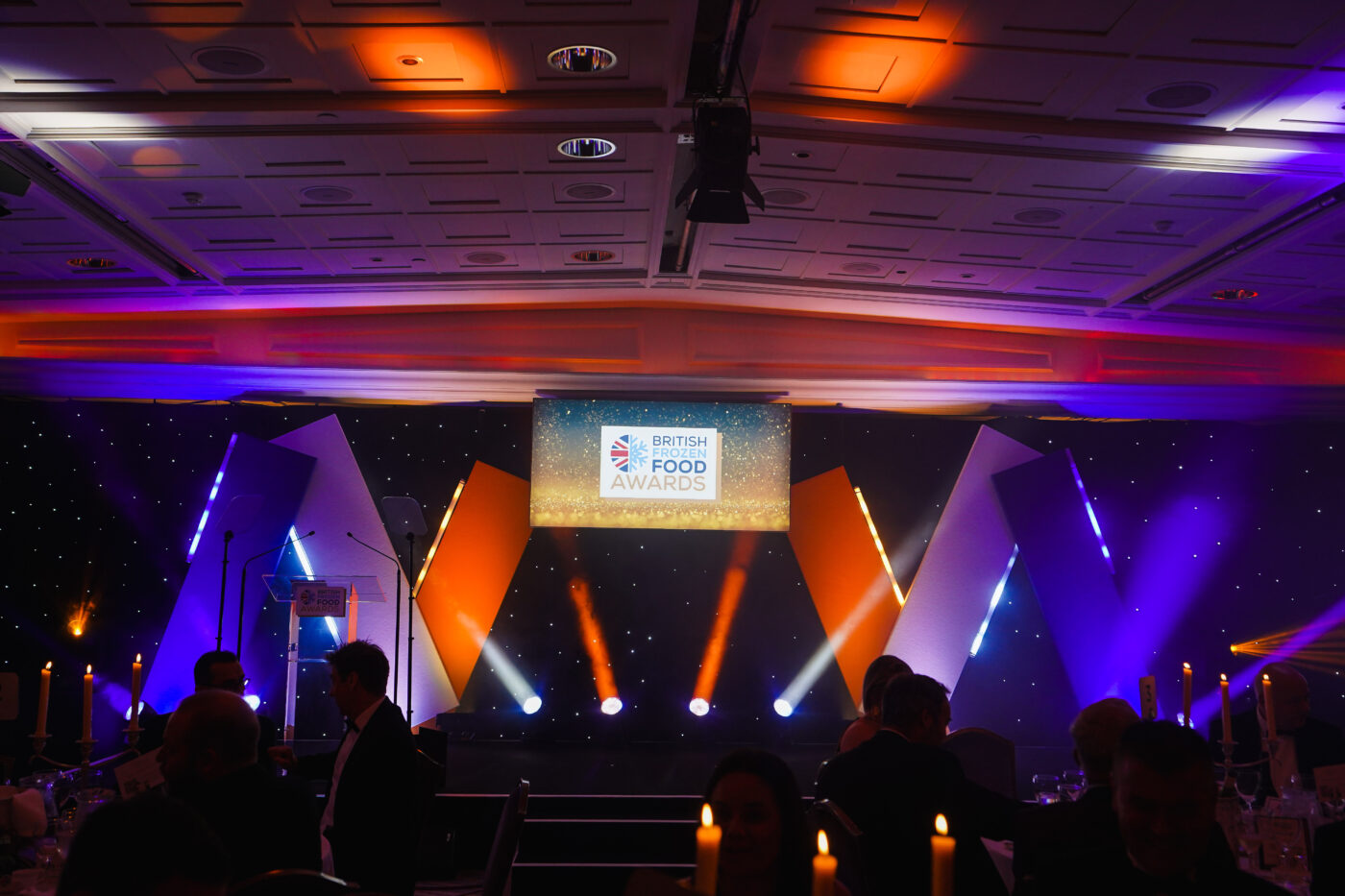
The Gala Dinner Dance returns to The Brewery, Chiswell Street on the 15th of June and the guest list is already full of some of the biggest brands, manufacturers and retailers in the food industry.

These include Freiberger, Creative Foods, Cook, Marks & Spencer, Daregal, Crops, Pacific West, Heron Foods, Seara, Dawsongroup, Greenyard, Seafish UK, Fullers Food, Apetito, What’s Cooking, Birds Eye, Billington Foodservice, Inspired Energy, Cargill and Brakes.

Guests will have the opportunity to network throughout the evening and have the exciting experience of the British Frozen Food Award announcements, highlighting some of the latest NPD in the Frozen Food industry.

The night will also be part of the British Frozen Food Federations’ 75th anniversary celebrations, which will include an anniversary event brochure and a special awards video released on the night.

Only BFFF members are able to purchase tickets to this prestigious event and they are selling fast!

Purchase your tickets today

The Legal Implications of Robots in the Food Factory

In this piece from Food Manufacture Luke Jackson – director at law firm Walker Morris specialising in technology, food and beverage and manufacturing – discusses the legal implications of robots in the factory.

HTTPS://WWW.FOODMANUFACTURE.CO.UK/ARTICLE/2023/04/12/THE-LEGAL-IMPLICATIONS-OF-ROBOTS-IN-THE-FOOD-FACTORY

FROZEN FOOD MARKET RETURNS TO VOLUME GROWTH IN Q1 2023

The volume of frozen food sales has returned to growth in the first quarter of 2023, according to new Kantar data from the British Frozen Food Federation (BFFF).

The 12-week figures to 19 March show that volume sales of frozen food grew by 2,572,000 tonnes, compared to the same period last year.

The value of the retail frozen food sales also continued to increase in the same period, up +9.5% (£273,061,000) largely driven by inflation across the entire food supply chain.

Frozen vegetables, meat & poultry, potato products, ready meals and savoury foods have all seen a jump in volume in the 12 weeks, whilst more indulgent products such as ice cream and confectionery have seen a drop in sales volume in the same period.

The news of growth in the frozen food market comes as Kantar also reports a decrease in the volume sales of fresh and chilled foods by -5.0% in the same period, showing that more consumers have recognised frozen food as a tasty, nutritious and affordable choice for helping them deal with the cost of living crisis.

Rupert Ashby, chief executive of the British Frozen Food Federation, commented: “I am delighted to see that the frozen food market has returned to growth in the first quarter of 2023. Our members have been working incredibly hard under huge pressure of rising costs to make sure that consumers can still find the best quality products with unrivalled value for money in the frozen aisle of their supermarket.

“The cost of living crisis has had a significant impact on consumer spending habits over the winter months, which has likely driven sales of frozen food. However, I am confident that many consumers will now regularly return to the frozen aisle during their weekly shop as more people experience the exceptional quality and taste of frozen food.”

Mr Ashby added: “Innovation is at the heart of the frozen food market, with exciting new products regularly hitting supermarket freezer shelves. I am always impressed with the products which are being brought to the market by our members, so I would encourage all consumers to make friends with their freezer and visit the frozen aisle during their next shop.”

Download Latest Data

The BFFF is proud to recognise the innovation and quality of frozen produce at our annual British Frozen Food Awards, with the 2023 ceremony taking place on 15 June. More information about this year’s awards can be found here.

Legislation: Terrorism (Protection of Premises) Draft Bill

The proposals would directly affect the persons in control of premises with a capacity of 100-persons or more (100-799 persons for the standard tier, and 800 persons or more for the enhanced tier). These include businesses and organisations who own and operate Publicly Accessible Locations (PALs), for example: sports stadiums, festivals, music premises, hotels, pubs, clubs, bars, retail stores, shopping centres, markets, places of worship (PoW), and transport hubs (this list is not exhaustive). As such, the provisions of the Bill will impact a wide range of sectors, including but not limited to:

  • Security industry.
  • Retail.
  • Charitable and civil society.
  • Visitor attractions.
  • Events.
  • Sports.
  • Hospitality.
  • Faith Groups.
  • Entertainment.
  • Small and medium enterprises.
  • Education.
  • Health.
  • Transport.

In addition, there is the potential for other premises to be within scope including charitable premises, Government and local authority buildings, hospitals, police stations, and courts.


When did it change?

Allowing for a period of time between Royal Assent and commencement of the legislation will be necessary to allow responsible persons time to prepare. The likely commencement for this legislation is set for 2025 (the working assumption at time of writing).


What does it mean?

The Terrorism (Protection of Premises) Bill will aim to help keep people safe and enhance national security by ensuring preparedness for, and protection from, terrorist attacks. Proportionate new security requirements will be introduced for certain public venues and locations.

Qualifying premises/events

A person responsible for qualifying public premises or a qualifying public event will be subject to the terrorism protection requirements set out in the Bill. A person is responsible for a qualifying public premises if the person has control of the premises or event, both of which must be accessible to the public as described in the Bill. Premises are included by reference to their use and both events and premises must have the minimum capacities specified. Qualifying public premises may be located within other premises, such as a retail store within a shopping centre.

The requirements will not apply to premises (or parts thereof) that are used as private dwellings or offices.

Qualifying public premises may be either standard duty premises or enhanced duty premises. Enhanced duty premises are those with a public capacity of 800 individuals or more. Standard duty premises are those with a capacity of 100 to 799 individuals. The Bill allows for provision to be made for some premises to be treated as standard duty premises when they would otherwise be enhanced duty premises, and vice versa.

The requirements which will apply to enhanced duty premises will also apply to qualifying public events. These are public events held at premises that are not qualifying public premises with a capacity of 800 or over, where express permission is required to enter for the purpose of attending the event (with or without payment).

The public capacity of premises and events will be determined in accordance with regulations made by the Secretary of State. Such regulations might require some types of premises to determine their capacity differently from others.

Duties

Persons responsible for standard duty premises will be required to undertake what are intended to be low-cost activities which seek to improve protective security and preparedness. They will be required to ensure that relevant workers are given appropriate terrorism protection training. It is expected that they will be able to utilise free terrorism protection training materials to educate relevant personnel on the threat posed by terrorism, and the actions personnel should undertake in response.

Persons responsible for standard duty premises will also be required to undertake a standard terrorism evaluation in which they consider how best to respond in the event of a terrorist event, e.g. procedures to evacuate their premises.

Persons responsible for enhanced duty premises or qualifying public events will also be required to ensure that terrorism protection training is provided to relevant workers at their premises. In addition, they must appoint an individual as the designated senior officer for the premises or event and must complete and regularly review their terrorism risk assessment. In completing this assessment, they will consider the types of terrorist act most likely to occur at or around their premises or event and the ‘reasonably practicable’ measures that might be expected to reduce the risk of such an act occurring, or the risk of physical harm to individuals as a result of such an act.

Persons responsible for enhanced duty premises or a qualifying public event must implement reasonably practicable security measures to reduce the risk of, and harm caused by, terrorist acts occurring at or near the premises or event. Measures must include, for example, those relating to monitoring the premises and vicinity and procedures to be followed in the event of an attack.

Persons responsible for enhanced duty premises or a qualifying public event must keep and maintain a security plan, which must also be provided to the regulator. The security plan documents, amongst other things, information about the premises or event, the persons responsible for the premises or event, and information arising out of compliance with the other requirements.

Other persons who to some extent have control over premises – whether qualifying public premises or those at a which a qualifying public event is to be held – will be under a duty to co-operate with the person responsible for the premises or event under the Bill insofar as it relates to a matter within that other person’s control. For example, the person responsible for a store within a shopping centre must comply with the operator of the shopping centre as necessary for the operator to fulfil their duties under the Bill.

Persons responsible for both standard and enhanced duty premises will also be responsible for ensuring premises are registered with the regulator. Persons responsible for qualifying public events will be required to give notice of the event to the regulator.

Enforcement

‘The Regulator’ means:

  • A public authority prescribed as the regulator in regulations made by the Secretary of State.
  • If no public authority is prescribed, the Secretary of State.

It is anticipated that the regulator will primarily provide a guidance function for businesses. However, in the event of non-compliance, the regulator will have a range of sanctions to quickly address non-compliance and impose penalties where appropriate.

The regulator will also be equipped with a set of inspection powers (see Schedule 2) which will ensure that investigations into compliance at qualifying public premises and qualifying public events can take place. The Bill seeks to ensure that inspection activity is not hindered by obstruction or non-compliance with an inspector exercising their powers lawfully.


What’s changed?

Whilst there are already in existence legal requirements that could involve the consideration of the risks of terrorist attacks in relation to some buildings, there is no existing legal obligation to consider the risk of a terrorist attack occurring, and the harm that might arise if one did, across the range of premises to which this Bill will apply.

The creation of a new, statutory “Protect Duty” was a recommendation resulting from the public inquiry into the deaths of 22 victims at Manchester Arena on 22nd May 2017.

The Bill does not amend, repeal or otherwise touch upon existing legal regimes (apart from the provisions at clause 38 and Schedule 3 (Licensing of premises at heightened terrorism risk) which amend the Licensing Act 2003.


Please click on the url below for the full document:

Terrorism, protection of premises, draft bill

Nitrous Oxide Consultation: Legitimate Uses and Appropriate Controls

This Home Office consultation seeks views to enable the UK Government to determine legitimate uses of nitrous oxide.

It is aimed at organisations or individuals that manufacture, sell, or use nitrous oxide as part of their business or for those who use it in a personal capacity where it is not used for its psychoactive effects, for example when used in home cooking and car maintenance.

This consultation will be used by the government to understand the full range and scale of legitimate uses of nitrous oxide to enable the design of a legal framework that permits its use for legitimate purposes once it becomes a Class “C” controlled drug under the 1971 Act. For the purposes of this consultation, “legitimate use” refers to uses of nitrous oxide which is not for its psychoactive effect in a recreational capacity.

It does this by asking for views on three proposed approaches. Some of these include establishing a requirement to obtain a licence for some actions and purposes. It also asks a series of questions to identify the full range and scale of legitimate uses for nitrous oxide, as well as the mechanisms and nitrous oxide products required for these purposes.

The consultation sets out three proposed approaches to facilitate legitimate use, which are:

  • Introduce a licensing requirement for the import, export, possession, production, or supply of nitrous oxide where this is for a legitimate purpose.
  • Exempt from licensing requirements the import, export, possession, production, and supply of nitrous oxide where this is for legitimate purposes. This would mean no licensing requirements for legitimate purposes.
  • Introduce licensing requirements for the import, export, production, and supply of nitrous oxide and provide an exemption for the possession of nitrous oxide where this is for a legitimate purpose.

It is expected that a different approach may be required for medical, dentistry and veterinary use, in line with the existing scheduling approaches under the 2001 Regulations.

The consultation is open until 27 June 2023.

Home Office
May 2023


Please click on the url below for the full document:

Nitrous oxide, legitimate uses and appropriate controls

Health and well-being and indoor environmental quality in buildings – health and well-being in non-domestic buildings. Code of practice

This British Standard gives recommendations for the measuring, monitoring and reporting of the well‑being and indoor environmental quality (IEQ) performance of an occupied building and the associated building services.

It provides an evaluation and rating system, the purpose of which is to enhance IEQ, with the aim of creating buildings which support and improve the well-being of building occupants; including, but not limited to, staff, visitors, tenants and customers.

The IEQ performance score generated as an outcome of this evaluation provides organizations with a benchmark score that can be used to identify areas of below par performance and enable improvements to be made accordingly.

It is applicable to non-domestic buildings, including existing building stock. It can be used, along with other standards and design guidance, in existing buildings, renovations and new build developments for target setting, evaluation and assessment of health and well-being in buildings. It covers a good practice approach to the evaluation and assessment of the following factors:

  • Air quality.
  • Light quality.
  • Thermal comfort.
  • Acoustic and soundscape quality.

There are several areas not covered by this Standard, including spaces used for permanent or semi-permanent habitation, temporary structures, construction methods, medical assessment or evaluation, etc.

The British Standard is aimed at any organisation of any size and sector. It is intended for use by design, construction, surveying and facilities management professionals, and also by landlords, employers, employee representatives, occupational health and safety and well‑being professionals.

BSI
April 2023

Please click on the url below for the full document:

Health and well-being and indoor environmental quality in buildings health and well-being in non domestic buildings – code of practice

Member Benefits

Exclusive Partnership deals on key products and services:

  • BFFF energy deals and rates
  • Vypr member deals and introduction
  • Defib Plus deals
  • Company Shop – membership
  • Mentor – MHE training health check

Exclusive access to networking opportunities and events:

  • Meet the Buyer events (retail & foodservice)
  • Annual Business Conference with networking dinner
  • Specialist H&S and Technical Conferences
  • Special interest groups (packaging, frozen food temperatures)
  • Annual Lunch
  • Awards Night
Upcoming Events More Events
Sponsorship Packages

We offer a range of sponsorship opportunities to BFFF members across our events throughout the year, with flexible packages that can be tailored to suit your business objectives.

Contact Us
British Frozen Food Federation Members Logo
what our members say...
  • Wakefield Council

    “What an amazing piece of work and indicative of how BFFF respond to the concerns of their members and make an impact on the whole industry sector.”

    See Full Quote

  • Sysco

    “You guys really ‘Do The Right Thing’ for the good of the industry”

    See Full Quote

  • Darta

    “The BFFF awards night is becoming an “appointment not to miss” on our calendar and we again enjoyed it immensely together with lots of well-known people from our industry. The…

    See Full Quote

  • Kantar Worldpanel

    “The Business Conference was an excellent day that was very well organised and allowed so many likeminded individuals in the room to learn so much more around the Frozen industry….

    See Full Quote

  • Lakeside Food Group Ltd

    “This Not For EU labelling situation alarmed us and quickly became a major worry to our business. These are times when you really rely on some support and from previous…

    See Full Quote

  • Meadow Vale Foods Limited

    “We had a few questions with respect to the new EPR waste packaging legislative changes. I know some of my colleagues have been assisted by BFFF in the past so…

    See Full Quote

  • Newberry International Produce Ltd

    “I am writing to express my heartfelt gratitude for the outstanding event you organised. I have only worked in this sector for the past nineteen months coming from twenty-five years…

    See Full Quote

  • Place UK Ltd

    “The BFFF 2024 Conference was compelling and thought provoking, with a many relevant and interesting topics covered at great pace and some depth by excellent speakers – will certainly attend…

    See Full Quote

  • Roswel Spedition GMBH

    “Thank you and the team for rushing around so brilliantly before, during and after the conference. It was pleasure to be part of the conference.”

    See Full Quote

  • Seara

    “The event was great, in my opinion. Not only it was very well organised, but the venue and the catering were excellent too. Furthermore, the content of the presentations was…

    See Full Quote

Website Designed & Built by we are CODA