Become a member

STAR TECHNICAL SOLUTIONS WORK WITH INDUSTRY PARTNERS IN NEW INITIATIVE EXPLORING DECARBONISATION IN THE REFRIGERATION SECTOR

Star Technical solutions will take part in a research project aimed at investigating energy use and greenhouse gas emissions from the transport, industrial and commercial refrigeration (TICR) sectors in the UK. These sectors that are major users of energy across many businesses will play a critical part in the UK’s net zero agenda. It will explore six subsectors in depth: datacentres, food and drink manufacturing sites, and chemical and pharmaceutical manufacturing, retail, cold stores and transport refrigeration units.

BEIS (the Department for Business, Energy and Industrial Strategy) are funding this research project on the non-domestic cooling sector, to look into trends, emissions and innovation potential of decarbonising industrial and commercial refrigeration.

Its aim is to identify innovation levers to facilitate sector-wide decarbonisation and achieve net zero. The work will run for two years and outputs will include roadmaps, sector-specific guidance, training and a programme of events in 2023/4. It’s roadmaps and strategies for end users will be based on a comprehensive data-driven and whole systems evidence base. These outputs will be used to drive forward sector decarbonisation strategies and policies.

The work is being managed by a consortium of experts led by London South Bank University (LSBU). Catarina Marques, PhD FInstR, Senior Research Fellow in the School of Engineering at London South Bank University and Director of the TICR consortium, said: “TICR will guide the industry on its path towards net zero from both end-user and sector-wide perspectives, providing benefits to consumers such as food/IT/pharmaceutical security and climate change mitigation. Our multidisciplinary consortium will foster long term collaborations between industry, academia and government ensuring that the project outputs are widely disseminated”.

Partners in the project include London South Bank University, Carbon Limiting Technologies, the Carbon Trust, Carbon 3 IT, the Centre for Sustainable Cooling at the University of Birmingham, the Institute of Refrigeration and Star Technical Solutions.

Recognised for their technical expertise in low-carbon refrigeration consultancy services, project partner Star Technical Solution will carry out energy surveys across the different business subsectors to identify areas for improvement. The results will feed directly into the consortium’s research to produce roadmaps, sector-specific guidance and training materials.

Dermot Cotter, Managing Director of STS, said, ‘We are proud to work in partnership with the TICR consortium to accelerate the decarbonisation process in the temperature-controlled storage, food and drink manufacturing, retail, chemical and pharmaceutical sectors.”

“Helping customers take further steps to meet net-zero targets has been a fundamental part of our work over the past 10 years. This adds an extra layer of experience to the team and will allow us to successfully identify untapped energy and carbon reduction areas.”

Stakeholders from Government Departments will be involved including BEIS, DEFRA and the Department for Transport. An advisory board to ensure input from business includes trade associations the Air Conditioning and Refrigeration Industry Board, the Centre for Sustainable Road Freight, Chilled Food Association, Cold Chain Federation, The Data Centre Trade Association and Food and Drink Federation.

A website (www.netzerorefrigeration.uk) will be launched in January 2023 and will contain information about how businesses using cooling technologies and specialists in the sector can get involved in contributing to the research at an early stage. This will include a sign-up for project updates and news, and information workstreams, timetables, reports and tools.

If you have any queries contact project lead Catarina Marques catarina.marques@lsbu.ac.uk

To find out more about Star Technical Solutions, visit https://www.star-ts.co.uk/

IS YOUR WAREHOUSE MANAGEMENT SOFTWARE LIMITING YOUR BUSINESS OPPORTUNITIES?

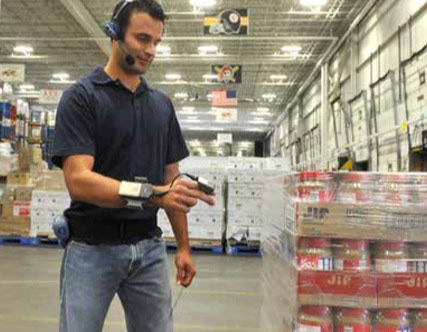
Modern businesses need proper applications to support all aspects of their operations and to exchange information with suppliers and customers. Any business operating in the supply chain will probably see Warehouse Management Software (WMS) as key. But many still rely on systems that do not support easy data exchange and integration with other applications. Could this be limiting their business opportunities?

The ability to work with partners – suppliers and customers – easily and with frictionless transactions is a key part of the modern supply chain. Anything that compromises the swapping and sharing of relevant and useful information not only adds costs and complexity but could also present a barrier to doing business altogether.

Businesses are likely to have invested in specialist applications that are used internally and across their supply chain. These will include sales, accounting, manufacturing management, resource planning, eCommerce, and many more. They will achieve this by deploying applications and technologies at each stage and enabling them to integrate and exchange information with each other. Increasingly this also means the warehouse management or stock control system.

The benefits of WMS for efficient stock management and order processing are generally well established but they clearly offer other advantages in the extended supply chain. When dealing with customers the WMS can provide the real-time stock availability that enhances customer perceptions and helps to drive sales. Several studies have shown that customers make buying decisions based not just on knowing that the item they want is in stock but that it will be delivered to a convenient location at a suitable time. Good WMS enables this through integration with, among others, eCommerce and delivery management applications.

Dealing with suppliers is another area where WMS reduces complexity. For example, suppliers can send advance information about deliveries to be held on the WMS until they arrive. The WMS then uses the information to verify those incoming orders and allocates stock to appropriate warehouse locations to ensure availability for sale and despatch. There is no need for the warehouse team to input data, saving time and removing the potential for rekeying errors. The supplier and warehouse operator also save money because everything is faster and more accurate. This is a basic example, but it is surprising how many businesses still do not do it.

Another example is real-time stock visibility which can help suppliers plan their scheduled deliveries. This is especially useful in retail and manufacturing supply chains where just-in-time (JIT) lead times are short and deliberately designed to be “lean”. Real-time visibility helps suppliers identify what to deliver and by when, to maintain sufficient inventory levels in the warehouse. The supplier can access the WMS via a web interface, or integration with their own inventory application, often using automated triggers to instigate when, for example, warehouse stock levels fall below pre-set thresholds. In scenarios like this the WMS will reflect the genuine situation in the warehouse – the very definition of real-time – and anything that gets in the way has the potential to cause delays and disruption.

Another scenario will be familiar to businesses supplying food, pharmaceuticals, healthcare, chemicals, electronic goods, precision engineering products, and other items that require high degrees of traceability. Here, being able to identify items at the batch, case, or even single pack/item level is not just a business differentiator but can be a matter of regulatory and/or legal compliance. Businesses with this requirement need to be sure that they have – or can access – detailed information about an item at every step along the supply chain so that they can verify its provenance and provide that information when asked. WMS can provide that information for the warehousing and delivery phases if not others as well.

All these scenarios, and many others, can be managed using paper-based systems. But why do it that way when perfectly good information applications are available? While it might be a stretch to claim suppliers will never want to do business, it is not difficult to imagine situations where the complexity and cost of doing things the old-fashioned way would simply make it not worth the effort.

Deploying a WMS therefore offers the ability to work more easily with customers and removes a potential barrier to supply chain collaboration and partnership. The most immediate benefit is internal with all the advantages of accurate and efficient warehouse stock management. For many businesses that would be justification enough but here we are talking about the benefits of data exchange and integration with internal and third-party (customer and supplier) applications. Modern WMS supports this by using APIs (Application Programming Interfaces). These allow applications from different vendors or developers to communicate with little or no additional configuration. This makes it very easy for connected applications to exchange data, especially when it is in popular or common formats.

https://www.principallogisticstechnologies.com/


COOK BOOSTS PRODUCTION BY 30% WITH STARFROST MECHANICAL FREEZING SYSTEM

COOK Trading has increased production capacity of its ready to cook meals with the addition of another spiral freezer from mechanical freezing experts Starfrost.

In the 25 years since COOK has been established, the family firm has transformed the ready-meals market with its superior quality frozen ready meals. Inspired by the taste of great home cooking, COOK services the rapidly increasing consumer demand for quality ready to cook food.

With three production kitchens in the South of England, COOK produces over 30 million meals per year which are sold in 90 of its own shops and more than 900 independent stores. The company has experienced rapid and significant business growth in the past three years following the acquisition of new premises and the development of new product ranges.

Having decided to invest in new freezing equipment to support growth, COOK turned to cooling technology partners Starfrost – the companies had previously worked together on an expansion project in 2019.

Starfrost engineering teams custom-built a mechanical freezing system, which has been designed to integrate seamlessly with COOK’s processing line. Since installation earlier this year, the additional Helix spiral freezer has boosted COOK’s total production capacity by 30% across all production kitchens located in Sittingbourne, Kent.

Ben Walker, General Manager at COOK discusses the importance of freezing and the benefits of the newly installed Starfrost spiral freezer: “Choosing the correct freezing process for food products is essential to maintain high manufacturing standards. The freezing process has an effect on processing time and consequently impacts profit margins. It is also key to deliver the consistent product quality we require at COOK.”

“The choice between spiral freezing and blast freezing – a process we had used before, was made following extensive research and product test trials; the conclusion was that the spiral freezer option would facilitate greater efficiencies in the freezing process and provide consistent freezing. It also removed the need for the trolleys that blast freezing requires, reducing the risk of potential accidents caused by moving trolleys around the kitchen.”

“The Helix spiral freezer has enabled us to significantly expand production capacity by 30%. The use of automated equipment means that our production line is continuously moving without interruption and our product quality levels are improved with consistent, non-stop freezing.”

“As always, we have enjoyed working with Starfrost, from point of sale through to commissioning and install, the transparent and personable service that the teams have provided is refreshing and of the highest standard. We look forward to working with Starfrost on our next project.”

The spiral freezer designed for COOK operates uninterruptedly and freezes produce consistently, allowing production at COOK to be accurately controlled and monitored whilst delivering dependable quality results. The automated solution provided by both Starfrost spiral freezers has enabled COOK to increase total throughput by 80%.

CHILDREN’S CHARITY OAKLAND FOUNDATION CELEBRATES 10 YEARS

Much has changed for children’s charity Oakland Foundation as it celebrates ten years and looks to the future.

Launched by total supply chain solutions provider Oakland International, the Foundation helped formalise the company’s social focus, placing an emphasis on support for local children and their families through funding based around education, health and nutrition, and sport, with the Foundation’s goal to ensure all children, and particularly those living in poverty or underprivileged, irrespective of social background or physical ability, can participate.

Initially a trustee and having left to relocate, Debbie Roberts returned in 2022 and is now the Foundation’s Donations Coordinator, fully funded by Oakland International. ​Debbie’s focus is around engaging with, and supporting, local community and education initiatives particularly those which are close to Oakland international bases in the community and focused on engaging with and supporting local community and education initiatives.

Said Debbie: “I genuinely feel ​very blessed to be supporting the wider development of the Foundation. I recall many years ago sitting in partnership meetings discussing child food poverty as though it was just ‘around’. Oakland International stood up and said this is not okay, did their research and went ahead and set up the Foundation.”

Opened by Her Royal Highness, The Princess Royal, the Oakland Foundation has grown steadily from a small local charity supporting the Worcestershire communities of Redditch and Bromsgrove and opening the area’s first official food bank in Redditch, to a charity supporting various community initiatives, schools, and youth projects for children under the age of 16 and their families living across England and Wales.

From their inaugural year when a team from Oakland International undertook a charity trek to climb Mount Kilimanjaro raising thousands of pounds to today and a minimum commitment of £120,000 annually in funding the Foundation’s work with young people provides funding for enterprise schemes, volunteers, sports funding, healthy eating programmes, training initiatives, team kits and so much more.

Added Debbie: “The Foundation’s trustee board is quite unique as they work together to assess applications ​but also really try to see how they can help and offer support for not only the immediate request but the long-term and looking ahead and planning for the next ten years. They are encouraging other businesses that want to engage and support their local communities to get in touch as they have the potential to add value to any individual CSR project as by working together ​so much more can be achieved.

“Sadly, ​many charities start up with the best intentions but sadly fail within two years, and here we are ten years hence. I’m honoured to have re-joined the Foundation in their anniversary year with the strength of the Oakland Foundation and the support of Oakland International reaching out into local communities they are utilising their joint skills to support organisations working with children experiencing disadvantage.”

Oakland International Co-Founder and Group CEO Dean Attwell commented: “We initially decided to launch our own Foundation following hearing about the level of child poverty in Redditch and Bromsgrove, and we felt we could and should do something about the problem and are delighted to have received the commitment and support from our Trustees to deliver some outstanding change locally.

“Many more challenges ahead which is why we are lifting our levels of support which is 100% utilised for good causes – no admin or management fees!”

A leading D2C/B2C/B2B specialist in contract packing, storage, picking, food distribution, Oakland International is BRCGS AA rated and operates 24-hours/7 days a week and a brand development support provider for ambient, chilled and frozen food to the retail, convenience, discount, wholesale and food service markets in the UK, Ireland and via their partner in Spain. The company has also taken the first step to becoming B Corp certified, joining the fast-growing movement of using business as a force for good, and working towards becoming the first business within their sector to achieve net-zero.

BRAKES LAUNCHES SUPPORT PACKAGE FOR VEGANUARY

Brakes, the UK’s leading wholesaler, has launched a comprehensive support package to help customers take advantage of Veganuary.

With consumers increasingly considering plant-based options, both for meat-reduction and sustainability reasons, this coming Veganuary is likely to provide operators with an opportunity to drive incremental income. Brakes has created a range of calorie-counted, nutritionally analysed menu options to add stand out vegan dishes to any menu.

In addition, there is a range of video content with hints and tips to increase plant-based options on the menu on a new vegan hub at brake.co.uk. Brakes has also launched promotions on both branded and own label products throughout December and January to help operators make the most of Veganuary.

Mandy Van Hagen, Brakes Sector Marketing Manager said: “We’ve created our most comprehensive package for Veganuary to date, as we see an increasing number of chefs wanting to add menu options for January.  Although January has become a focal point for vegan food, we are very focused on making sure that we have a range that works throughout the year and that’s why we believe that we have the biggest range in foodservice.

“Eating a plant-first diet is one of the biggest changes we can make to help tackle climate change. For some operations, food can contribute more than half the carbon footprint, with animal proteins being the most carbon intensive. At Brakes we’ve committed to training our sales colleagues and chefs to support businesses in developing tasty, healthy and sustainable menus.”

Brakes’ campaign will see the number of vegan alternatives grow to more than 350 products, including a range of tasty new products for Veganuary 2023, such as Brakes Vegan & Gluten Free Blackforest Dessert, Tofoo Straight to Wok and our British made Brakes Falafel.

2022 Trade Mark Disputes in the Alcoholic Beverages Industry

The alcoholic drinks industry continues to be rife with trade mark disputes, so what should drinks manufacturers/sellers do when considering trade marks?

All drink manufacturers (and their respective brands teams) should generally follow the same steps when deciding on a new trade mark:

  • Decide what you would like to register (a word or phrase, a logo, or a combination), ensuring that it is not overly descriptive of the goods or services and not a generic phrase.
  • Decide which goods or services are to be covered by the registration. For breweries, Class 32 includes beer, but you may also want to consider merchandise such as clothing in Class 25. For distilleries, the obvious choices are in Class 33 which includes alcoholic beverages other than beer, such as gin, vodka and whisky.
  • Decide which territories are to be covered by the registration(s). Ultimately, this depends on where the brand intends to trade, for example just in the UK or across Europe/the world.

There have been a number of recent decisions at the UK Intellectual Property Office relating to trade mark applications for alcoholic drinks, where the applications were opposed by proprietors of earlier, similar trade marks.

Singha Beer

Boon Rawd Brewery Co Ltd applied for a trade mark for a logo featuring a dragon above the words ‘SINGHA’ for the following goods:

Aerated water; aerated mineral water; aerated fruit juices; soda water; alcohol-free beers; beer; cider, non-alcoholic; cocktails, non-alcoholic; drinking water; fruit beverages and fruit juices; mineral water (beverages); non-alcoholic beverages; non-alcoholic preparations for making beverages; soft drinks; syrups for making beverages; malt syrup for beverages

This was opposed by Jinshan Food Co Ltd, who owned an earlier registered trade mark for a very similar dragon drawing above the words ‘SINGHA’, including in class 32 for the following goods:

Beer; Ginger beer; Ginger ale; Malt beer; Beer wort; Extracts of hops for making beer; Malt wort; Energy drinks; Non-alcoholic fruit juice beverages; Vegetable drinks; Mineral water [beverages].

What was the outcome?

Ordinarily, this looks to be a straightforward case of the marks being so similar, and registered for similar/identical goods, so as to lead to a likelihood of confusion and so a successful opposition under section 5(2)(b) of the Trade Marks Act 1994.

However, Boon responded to the opposition by applying to invalidate Jinshan’s earlier trade mark. This application for invalidation was successful on a number of grounds:

Under section 5(2)(b) of the Trade Marks Act – the goods are identical or similar and the marks are identical or highly similar compared to even earlier registered trade marks belonging to Boon (the closest of which was an EU trade mark featuring the same dragon above wording which included ‘SINGHA’), leading to a likelihood of confusion.

Under section 5(3) of the Trade Marks Act, Boon had a reputation in its marks for the registered goods such that the relevant public will believe Jinshan’s mark is an extension of Boon’s marks. In order to establish this reputation, Boon relied upon extensive evidence of its advertising activity including its sponsorship of football clubs including Manchester United, Manchester City and Chelsea. Boon also claimed that use of Jinshan’s mark will erode the distinctiveness of the earlier marks, damage their reputation if used in relation to goods of different or disappointing quality, and give an unfair advantage to Jinshan by virtue of the reputation of the earlier marks.

Under section 3(6) (that the application was made in ‘bad faith’). Jinshan must have known of the iconic status of Boon’s beer and its use in the UK when it applied for a virtually identical mark. Boon claims that the application for the contested mark was in bad faith, in order wrongly to benefit from the reputation of Boon’s trade marks and to interfere with Boon’s rightful trade in the UK. Jinshan filed no evidence to explain why its mark contained the identical dominant and highly distinctive components as Boon’s mark which had a substantial reputation.

Takeaway points from the decision

Here the opponent not only lost the opposition (and had to pay their own legal fees plus a contribution toward the applicant’s costs of £2500), but they also lost their registered trade mark due to the successful application for invalidity by Boon. A potential opponent should therefore carefully consider the risks of bringing an opposition, as an invalidity challenge from the applicant may be forthcoming. The flip-side to this, is of course, that a key purpose of registering and owning a registered trade mark is to be able to enforce it against third parties. Decisions as to whether to take action in opposing a similar application can therefore be finely balanced.

This decision is also a good example of how the best form of defence can be to attack the opponent’s trade mark for invalidity. Had the earlier trade mark not been invalidated, then the opposition would be likely to have succeeded. However, here it was recognised that the opponent had clearly registered the earlier trade marks to deliberately be similar to the applicant’s pre-existing rights, and so an invalidation was an appropriate result.

The decision can be read in full here – https://www.ipo.gov.uk/t-challenge-decision-results/o46322.pdf

Morrison Scotch Whisky Distillers Limited -v- Morrisons Supermarket

In a 2022 case involving trade marks relating primarily to spirits, Morrison Scotch Whisky Distillers Limited applied for a trade mark for its company name in relation to the following goods and services:

Class 33: Scotch whisky and Scotch whisky based drinks, all being produced in Scotland.

Class 40: Distilling services; information, advisory and consultancy services relating to the same.

This was opposed by Morrisons (WM Morrison Supermarkets PLC), who owned various earlier trade marks incorporating MORRISONS registered in relation to alcoholic goods in class 35 and relevant services in class 35 (e.g. Retail services connected with the sale of malt, beers, and alcoholic beverages).


What was the outcome?

The opponent succeeded here, again under various grounds:

Section 5(2)(b) – similarity: the applicant’s mark is similar to its own trade marks and covers identical or similar goods and services meaning that there is a likelihood of confusion on the part of the public, including the likelihood of association. The hearing officer found that the Class 33 goods were identical, and found some similarity between the class 40 and class 35 services. They also found that the marks themselves were similar after finding that it is the word ‘MORRISON’ that dominates the overall impression of the mark applied for, with the remaining words playing a lesser role.

Section 5(3) – reputation: in order to establish a reputation, the opponent included evidence to show that it held a 10% market share of UK groceries, with an annual turnover of between £16-18 billion for each of the previous seven years, and an advertising spend of nearly £50 million per year. The hearing officer found a very strong reputation in relation to “supermarket retail services”, that a significant part of the relevant public will make a link between the marks (even in relation to dissimilar services) and that there is potential for the Applicant to gain an unfair advantage by using the mark.

Section 5(4)a – that the registration can be prevented by the law of passing off, due to the unregistered rights of the opponent. There are three things to establish for a successful passing off claim:

Goodwill – the opponent was found to have sufficient protectable goodwill in relation to spirits as evidenced by turnover and advertising expenditure.

Misrepresentation – the officer then found that a substantial number of members of the public are likely to be misled into purchasing the applicant’s goods and services in the mistaken belief that they are the goods and services of the opponent

Damage – damage through diversion of sales is easily foreseeable in these circumstances.

The applicant did attempt to rely on the fact that ‘Morrison’ was their family name, to show due cause for applying for the mark, but they were unable to show sufficient use capable of giving rise to a reputation of its own, as they had only recently started using it in a business sense.

Takeaway points from the decision

While the trade marks here were not identical, the mark applied for did incorporate the name of a popular and very successful UK brand, and so it was perhaps not surprising that the opposition was brought. This is the kind of risk that would be flagged to an applicant in a pre-application clearance search.

Similarly, not all of the goods and services were identical between the mark applied for and the earlier marks, but this is only one factor to consider when making the overall comparison between the marks applied for and the earlier marks.

The decision is also a further example of the limitations of any ‘own name’ defence or justification for applying for a trade mark. Just because the applicants here had the surname ‘Morrison’, did not give them an automatic right to apply for a trade mark for such.

The decision can be read in full here – https://www.ipo.gov.uk/t-challenge-decision-results/o47022.pdf

In a sector so susceptible to trade mark disputes it would always be advisable to search for existing similar or identical brands and trade marks, who may bring a challenge to a trade mark application by way of an opposition, or to use of a trade mark by way of an infringement action. If budget allows, a proper clearance search by a suitably qualified legal professional will be a sound investment – this applies is whether they intend to register the trade mark or not.

Intellectual Property

Contact: Kerry Russell   kerry.russell@shma.co.uk

Member Benefits

Exclusive Partnership deals on key products and services:

  • BFFF energy deals and rates
  • Vypr member deals and introduction
  • Defib Plus deals
  • Company Shop – membership
  • Mentor – MHE training health check

Exclusive access to networking opportunities and events:

  • Meet the Buyer events (retail & foodservice)
  • Annual Business Conference with networking dinner
  • Specialist H&S and Technical Conferences
  • Special interest groups (packaging, frozen food temperatures)
  • Annual Lunch
  • Awards Night
Upcoming Events More Events
Sponsorship Packages

We offer a range of sponsorship opportunities to BFFF members across our events throughout the year, with flexible packages that can be tailored to suit your business objectives.

Contact Us
British Frozen Food Federation Members Logo
what our members say...
  • Wakefield Council

    “What an amazing piece of work and indicative of how BFFF respond to the concerns of their members and make an impact on the whole industry sector.”

    See Full Quote

  • Sysco

    “You guys really ‘Do The Right Thing’ for the good of the industry”

    See Full Quote

  • Darta

    “The BFFF awards night is becoming an “appointment not to miss” on our calendar and we again enjoyed it immensely together with lots of well-known people from our industry. The…

    See Full Quote

  • Kantar Worldpanel

    “The Business Conference was an excellent day that was very well organised and allowed so many likeminded individuals in the room to learn so much more around the Frozen industry….

    See Full Quote

  • Lakeside Food Group Ltd

    “This Not For EU labelling situation alarmed us and quickly became a major worry to our business. These are times when you really rely on some support and from previous…

    See Full Quote

  • Meadow Vale Foods Limited

    “We had a few questions with respect to the new EPR waste packaging legislative changes. I know some of my colleagues have been assisted by BFFF in the past so…

    See Full Quote

  • Newberry International Produce Ltd

    “I am writing to express my heartfelt gratitude for the outstanding event you organised. I have only worked in this sector for the past nineteen months coming from twenty-five years…

    See Full Quote

  • Place UK Ltd

    “The BFFF 2024 Conference was compelling and thought provoking, with a many relevant and interesting topics covered at great pace and some depth by excellent speakers – will certainly attend…

    See Full Quote

  • Roswel Spedition GMBH

    “Thank you and the team for rushing around so brilliantly before, during and after the conference. It was pleasure to be part of the conference.”

    See Full Quote

  • Seara

    “The event was great, in my opinion. Not only it was very well organised, but the venue and the catering were excellent too. Furthermore, the content of the presentations was…

    See Full Quote

Website Designed & Built by we are CODA