Become a member

BRCGS REPORT OF MAJOR INCIDENTS IN 2025 REVEALS KEY LEARNINGS

We would like to draw your attention to a recent BRCGS publication by guest author Alec Kyriakides, entitled “Recalls: A Review of 2025”.

Major incidents provide an important source of information from which we can all learn, especially if root causes are identified and preventive measures shared. This article looks back at some of the key food safety outbreaks, incidents and recalls of 2025 to provide insight that we can use to challenge our own systems and processes. This ensures they remain sufficiently robust and we do not have to suffer the same issues first hand.

The article is a must read for food safety and quality leaders looking to stay ahead of evolving compliance standards and can be accessed here

DEFRA AND APHA ISSUE UPDATED GUIDANCE ON USING ABP FOR PETFOOD

The Department for Environment, Food & Rural Affairs (Defra) and the Animal and Plant Health Agency (APHA) have recently issued updated guidance on using animal by-products to make pet food with a specific focus on using materials for human consumption.

You need approval from to process animal by-products (ABPs) into pet food. In addition to APHA approval, you may also need to be approved or registered by your Local Authority (usually the trading standards service) as a feed business. You can’t start production until you have received approval or registration by both APHA and local authority.

You must also only use suppliers and transporters that are approved or registered by APHA.

There are 3 different categories of ABP’s, and you can use different types depending on what kind of pet food you are making – raw, processed, heat treating processed pet food for non-airtight containers, processed animal protein (PAP), or dog chews.

The guidance covers the requirements for each type as well as how to test samples for bacteria, how to package your products, and how to deal with raw pet food.

You can access the guidance in full here

DEFRA ANNOUNCE NEW AVIAN INFLUENZA VACCINE TRIALS IN THE UK

Defra have announced that highly pathogenic avian influenza (HPAI) vaccine trials started at the beginning of March, in a major step forward in the fight against the disease.

New trials will explore the potential for the latest vaccines to protect birds, focusing on turkeys only in England, providing valuable insight into how well vaccines work in the field, how surveillance can be managed to retain trade and how vaccines can help manage the disease.

The scale of avian influenza outbreaks in the UK and Europe within the last few years has been unprecedented, causing devastation for bird keepers on the frontline and the poultry sector. Annual outbreaks cost the UK Government and industry up to £174m each year. The disease has significantly impacted both captive and wild birds globally since 2020.

Turkeys have been selected as a priority species for further research as they are highly susceptible to avian influenza, with outbreaks resulting in severe clinical signs with rapid and elevated mortality rates.

The trial will sample a small group of birds under strict supervision following approval from the Veterinary Medicines Directorate (VMD) and using UK/ EU authorised vaccines. Vaccinating poultry against bird flu is not currently allowed more widely in the UK.

The potential benefits of HPAI vaccination are being considered in several countries experiencing similar challenges to the UK. In Europe there are ongoing trials of vaccines in Italy and the Netherlands.

The trials will last for 24 weeks and will provide insight into the final recommendations of the UK HPAI vaccination taskforce.

EU PUBLISH CONSULTATION SUMMARY ON MODERNISATION OF RULES FOR ON-FARM ANIMAL WELFARE

The EU have recently published the summary report of the ‘public consultation on the modernisation of EU’s on-farm animal welfare rules for certain animals’

The consultation, which ran from 19th September to 17th December 2025, received 236524 responses which were then screened in line with the Better Regulation Guidelines to identify duplicates and erroneous entries, as well as potential Artificial Intelligence generated responses and campaigns.

As a result of screening 46461 responses were found to originate from a unique campaign and were consequently counted as one single response. Also, 190062 were individual responses many of which were suspected to have been mobilised by politically motivated NGOs. Hence, the current total number of responses recorded is 190 063 from 159 countries. The largest number of responses came from Germany (148113) where as 2456 came from the UK.

Amongst other findings, respondents broadly agreed that the current EU legislation regulating animal welfare at farm level does not ensure that farmed animals can express normal behaviour.

The phasing out cages for laying hens was considered as very important or important by the majority and the systematic killing of day-old male chicks was considered as ethically problematic.

The need for equivalent animal welfare standards for food imported from non-EU countries was also strongly supported.

You can read the report in full here

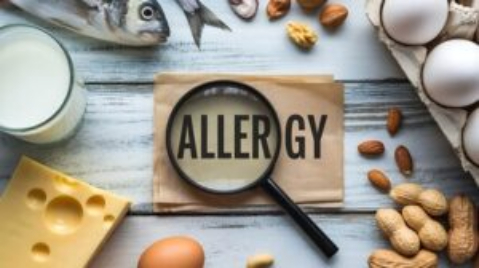
GOVERNMENT LAUNCH NEW PLANS TO GIVE STRONGER PROTECTIONS FOR CHILDREN WITH ALLERGIES IN SCHOOL

Under new plans announced on 5th March, Government have confirmed that life-saving allergy pens must now be stocked by schools

The move will also see compulsory training for teachers and a requirement for each school to have a dedicated allergy policy.

As well as saving lives, the new measures will help children stay in school, with 500,000 days of learning lost due to allergy-related illness or medical appointments in the last year alone.

The plans come after the government listened to families and campaigners who have fought for change — including Helen Blythe, mother of Benedict Blythe, who tragically lost his life to an allergic reaction at school, and the National Allergy Strategy Group.

Replacing previous non-statutory advice, the consultation on the new guidance on supporting children and young people with medical conditions and allergies is now open, ahead of coming into force in September 2026.

The consultation closes at 11:59pm on 1 May 2026

The new statutory requirements mean for the first time schools must:

  • stock “spare” adrenaline auto-injectors for use in emergency situations
  • provide allergy awareness training for all staff — covering recognition of symptoms, emergency response and the use of adrenaline devices — alongside improved incident recording and lessons learnt processes
  • have a comprehensive policy for supporting children with medical conditions, including Individual Healthcare Plans to record specific arrangements for individuals like an allergy management plan

Schools up and down the country are already undertaking the necessary training to keep children safe. This guidance will standardise practise, pointing to a collection of reliable resources for teachers to use, and work in parallel to the government’s open call to businesses to support with costs such as adrenaline auto-injectors.

UNIVERSITY RESEARCHERS LAUNCH PROJECT TO TRACK ALLERGIC REACTIONS TO NEW TYPES OF FOOD

Researchers at the University of Surrey and the University of Manchester have launched the AltProt-P eObservatory to track allergic reactions to new types of food.

As we move toward more sustainable food production, new protein sources are becoming more common in our diets. These can include pea protein, lentils, chickpeas, beans, edible insects, seaweed and cultivated meat.

While these help the environment, they may pose new risks for the allergy community. They can trigger reactions in people with existing allergies or even cause people to develop brand-new ones.

The AltProt-P eObservatory (part of the EU “Giant Leaps” project) is collecting data to find out if these proteins are causing real-world reactions. This information will help create a “watch list” to ensure these foods are properly regulated and labelled in the future.

How to get involved

You can help by sharing your experiences and helping researchers understand the safety of these emerging foods.

Who can take part?

  • If you are aged 16 years or older.
  • Have experienced an adverse reaction to alternative proteins like peas, chickpeas, chia, pumpkin seeds, spirulina, Quorn, seaweed, or insects.

What does participation involve?

You will be asked to complete an anonymous online questionnaire about yourself, your reactions to these new foods, and any existing “classical” food allergies you may have such as allergy to milk, egg and peanuts/treenuts.

The questionnaire can be accessed via the url https://redcap.surrey.ac.uk/surveys/ and by using the code TRPJ4YPRF.

What are the potential benefits of getting involved?

Participation helps improve the understanding of emerging allergies to alternative proteins. This data is vital for finding better ways to protect the public from accidental reactions and ensuring the safety of future food sources.

For further information, visit the Giant Leaps website or contact the team at altprotstudy@surrey.ac.uk

Member Benefits

Exclusive Partnership deals on key products and services:

  • BFFF energy deals and rates
  • Vypr member deals and introduction
  • Defib Plus deals
  • Company Shop – membership
  • Mentor – MHE training health check

Exclusive access to networking opportunities and events:

  • Meet the Buyer events (retail & foodservice)
  • Annual Business Conference with networking dinner
  • Specialist H&S and Technical Conferences
  • Special interest groups (packaging, frozen food temperatures)
  • Annual Lunch
  • Awards Night
Upcoming Events More Events
Sponsorship Packages

We offer a range of sponsorship opportunities to BFFF members across our events throughout the year, with flexible packages that can be tailored to suit your business objectives.

Contact Us
British Frozen Food Federation Members Logo
what our members say...
  • Wakefield Council

    “What an amazing piece of work and indicative of how BFFF respond to the concerns of their members and make an impact on the whole industry sector.”

    See Full Quote

  • Sysco

    “You guys really ‘Do The Right Thing’ for the good of the industry”

    See Full Quote

  • Darta

    “The BFFF awards night is becoming an “appointment not to miss” on our calendar and we again enjoyed it immensely together with lots of well-known people from our industry. The…

    See Full Quote

  • Kantar Worldpanel

    “The Business Conference was an excellent day that was very well organised and allowed so many likeminded individuals in the room to learn so much more around the Frozen industry….

    See Full Quote

  • Lakeside Food Group Ltd

    “This Not For EU labelling situation alarmed us and quickly became a major worry to our business. These are times when you really rely on some support and from previous…

    See Full Quote

  • Meadow Vale Foods Limited

    “We had a few questions with respect to the new EPR waste packaging legislative changes. I know some of my colleagues have been assisted by BFFF in the past so…

    See Full Quote

  • Newberry International Produce Ltd

    “I am writing to express my heartfelt gratitude for the outstanding event you organised. I have only worked in this sector for the past nineteen months coming from twenty-five years…

    See Full Quote

  • Place UK Ltd

    “The BFFF 2024 Conference was compelling and thought provoking, with a many relevant and interesting topics covered at great pace and some depth by excellent speakers – will certainly attend…

    See Full Quote

  • Roswel Spedition GMBH

    “Thank you and the team for rushing around so brilliantly before, during and after the conference. It was pleasure to be part of the conference.”

    See Full Quote

  • Seara

    “The event was great, in my opinion. Not only it was very well organised, but the venue and the catering were excellent too. Furthermore, the content of the presentations was…

    See Full Quote

Website Designed & Built by we are CODA