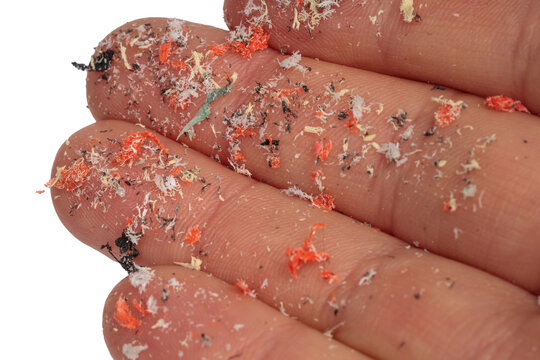
The European Food Safety Authority (EFSA) recently published a ‘Literature review on micro- and nanoplastic release from food contact materials during their use’.
This structured literature review was carried out on studies published between 2015 and 20th January 2025. It identified 1711 publications of which 122 were selected for data extraction. Eight additional publications were added to provide more context. Most studies concerned microplastics, while data on nanoplastics were almost entirely absent.
The objective of the review was to look for evidence of micro- and nanoplastics (MNP) release during the use of Food Contact Materials (FCMs).
Whilst reported findings were shown to have been strongly influenced by weaknesses in test conditions or sample preparation, the most robust data suggested that the release of micro plastic is mainly caused by mechanical processes, such as abrasion, friction of FCMs (e.g. opening/closure of caps and of storage, sealing bags, capping, mill grinding), with aging and material structure acting as potential amplifying factors such as embrittlement from UV/sunlight exposure.
Additionally, some materials with open or fibrous structures (e.g. woven or non-woven synthetic and natural fibres, such as tea bags) are prone to releasing/detaching fibres or fragments, especially under conditions of temperature-induced ‘softening/swelling’ of fibrous networks and mechanical stress such as agitation.
In view of the findings the review concluded that despite the uncertainties, the extent of the actual particle release is much lower than the results presented in many of the reviewed publications. Therefore, there is no sufficient basis at this stage to estimate MNP exposure from FCM during their uses. Several recommendations are also made regarding identified gaps and related future research needs
You can read the review in full here