What happened in February?
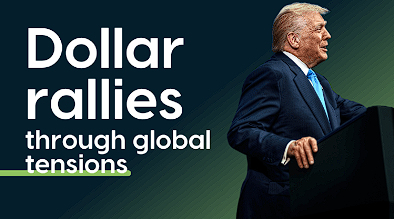
February saw currency markets reacting to conflicting economic data, new trade tariffs and geopolitical tension. The dollar finished the month strongly.
The dollar regains ground
Tensions in the Middle East drove a dollar rally at the end of February and into March as the US currency found favour as a safe haven asset. Investors bought dollars after US and Israeli missile strikes on Iran and Tehran’s retaliation; a prolonged conflict could drive significant and unpredictable money market fluctuations. The US currency was also supported by low expectations of an imminent rate cut by the Federal Reserve (Fed). Despite its rally, the dollar remains down by well over 11% against the euro over the last 12 months.
Sterling slides on a sense of uncertainty
Sterling remained in something of a holding pattern for much of the month, as investors reacted to mixed economic signals. Figures released mid month painted a picture of fragile economic recovery in the UK, with GDP increasing by just 0.1% in the final quarter of 2025. However, more recent data showed a strong expansion in private sector activity. A poor showing by the ruling Labour government in the Gorton and Denton parliamentary by-election weighed on the pound as investors priced in a period of political uncertainty; sterling has now lost over 6% against the euro in the last 12 months.
The euro steadies
The euro’s progress stalled after a strong start to the year, mostly due to a strengthening dollar. Nevertheless, the EU currency continues to benefit from the eurozone’s low inflation and settled monetary policy, with no further rate reduction on the cards in the next few months. Interest rates in the eurozone are stable at 2.15%, well below the 3.75% rates in the US and UK. The euro has weakened by nearly 1% against the dollar over the last month, but much of that decline can be explained by the ramping up of tensions in the Middle East and investors seeking safe havens amid the chaos.
What’s in store for March?
The dollar
The big question for dollar watchers as we move into March is how the currency will be impacted by a prolonged conflict in the Middle East. The war has the potential to hike oil prices and make the movement of goods and people problematic. The dollar may initially benefit from its safe haven status, but that could reverse if the conflict were to continue through the month. Allied with further Trump tariffs announced in February, confidence in the dollar could eventually slide. Late spring could also herald the implementation of a more dovish monetary policy under new Fed chairman Kevin Warsh, assuming his nomination is confirmed.
The pound
The pound is not considered a safe haven asset and is likely to be hit in the short-term as investors prioritise caution in a chaotic situation. The early evidence supports the theory that the pound will suffer against a resurgent dollar while military action continues, with sterling hitting its lowest level against the dollar since last December. Other pressures could include US tariff policy and the UK’s uncertain economic recovery. The Chancellor’s Spring Statement (3 March) will provide some clues as to the underlying state of UK finances. The pound remains susceptible to short-term shocks.
The euro
The euro will likely continue to benefit from the EU’s stable fiscal situation, though fallout from tensions in the Middle East and US tariff policy may weigh on the euro dollar pair. Much will depend on the Fed’s monetary easing agenda and when any rate cuts might hit. At the moment we just don’t know, though investors are pricing in at least two cuts this year. Hints of an impending US rate cut could strengthen the euro, but the opposite is also true. By contrast, many investors expect the euro to outperform the pound in the medium term, especially if UK Prime Minister Starmer comes under increased pressure to hike public spending from fretful Labour Party MPs.
The takeaway?
Expect some exchange rate volatility in March. Conflict in the Middle East, coupled with political uncertainty in the UK, are likely to make money markets choppy through the month. Much depends on how long military action continues.


 + 44 (0) 1400 283090


 March 9th, 2026.



























 + 44 (0) 1400 283090