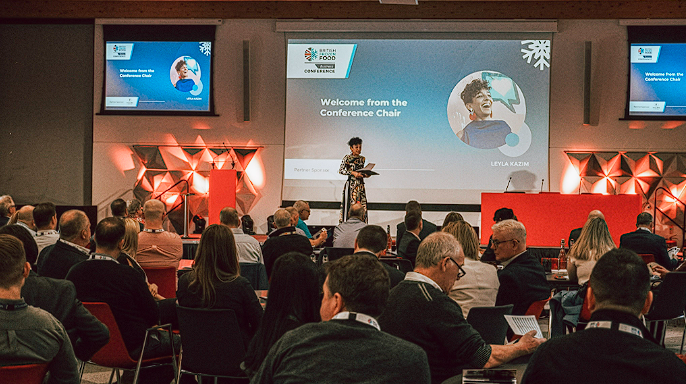
Last week BFFF members from across the Frozen food chain gathered to examine challenges, opportunities and the future of the sector at the Annual Business Conference held in Warwick.
Expertly hosted by writer and broadcaster Leyla Kazim – familiar to many as a critic on BBC’s MasterChef, and a presenter on the Radio 4 Food Programme – the event brought together voices from across government, manufacturing, retail, foodservice and research to explore the most pressing challenges facing the sector today, where the opportunities for growth lie, and what strategies might help unlock them.
Economic headwinds and a shifting regulatory landscape
Opening the conference, BFFF chief executive Rupert Ashby outlined the backdrop where in spite of ongoing food inflation and rising costs for energy and labour, many member businesses are growing. At the same time, BFFF research shows increasing recognition by consumers of the benefits of frozen products. He also covered how the sector is navigating an increasingly complex regulatory landscape, including debates around ultra processed foods, HFSS legislation and the proposed new Nutrient Profile Model.
James Walton, chief economist at IGD, expanded on this economic context, warning that the UK may face a prolonged period of slow growth. His presentation raised key strategic questions for the industry, from the resilience of food supply chains in an increasingly uncertain geopolitical environment to the evolving shopper case for frozen foods.
Emily Miles, Director General for Food, Farming and Biosecurity at DEFRA, acknowledged the pressures facing both households and the food sector. However, she also highlighted potential opportunities arising from a reset in UK–EU relations, which could reduce some of the regulatory friction affecting food imports and exports.
Understanding changing consumer behaviour
A central theme throughout the conference looked at how consumer and business expectations are evolving across both retail and foodservice channels.
Simon Stenning of Future Foodservice argued that frozen products can help hospitality operators run more efficient kitchens by providing what he described as friction free ingredients that reduce complexity and waste. At the same time, he emphasised that operational efficiency must never come at the expense of the pleasure that ultimately drives dining choices.
Further insight into frozen’s performance came from Neya Gwillim of Circana and Andrew Selley of Bidfood, who examined trends shaping both the wholesale and foodservice markets. Their presentations highlighted the continued importance of value, reliability and convenience as operators respond to cost pressures and shifting demand.
Next, Matthew Garside of Worldpanel by Numerator (formerly Kantar) identified four key opportunities for frozen food. These include reinforcing the category’s value credentials, continuing the premiumisation of frozen products, responding to growing consumer interest in health and cleaner ingredient lists, and capitalising on the rise of the so-called ‘big night in’ as consumers seek restaurant-style experiences at home.
Closing out the insight section, Chris Schatynski of Vypr demonstrated how real-time shopper research can help businesses better understand changing attitudes towards frozen food and identify opportunities for innovation.
Growth and innovation across the sector
These themes continued in a spirited panel discussion featuring Mitch Lee of Pack’d, Laura Whittle of Whitby Seafoods and BFFF President Karen McQuade of the UK Foodhall.
The conversation ranged widely, touching on issues such as the positioning of frozen products in supermarkets, the limitations of household freezer capacity and the need for fresh thinking in how frozen food is marketed to consumers, businesses and the public sector.
Yet one theme ran consistently throughout the discussion: growth. As Laura Whittle observed, long term business survival ultimately depends on the ability to expand the category and attract new consumers.
Karen McQuade also highlighted the strengths of UK based production when supplying institutional buyers such as local authorities. Being able to demonstrate production standards in person can offer reassurance that overseas suppliers may struggle to match.
Science, technology and the future of food production
The afternoon sessions turned to scientific and technological developments shaping the industry.
Bertrand Emond of Campden BRI emphasised that food safety ultimately rests on trust between all participants in the supply chain. Maintaining that trust requires transparency, consistent standards and collaboration across producers, suppliers and regulators.
Greg Hooper, also from Campden BRI, addressed a more practical issue emerging in the consumer kitchen. The growing popularity of air fryers presents a challenge for manufacturers when providing cooking instructions, as different models vary widely in how quickly they reach and maintain temperature. As a result, manufacturers must prioritise safety even if that sometimes results in food being overcooked.
Food technologist Craig Leadley of the Institute for Food Science & Technology then explored the rapidly emerging role of artificial intelligence in the frozen food sector, highlighting how AI could support areas such as forecasting demand, optimising supply chains and accelerating product development.
Environmental pressures and sustainability
The final session of the conference focused on sustainability and environmental constraints facing the food industry.
Professor Jacob Tompkins of BFFF Energy Services warned that water scarcity and limitations in sewerage infrastructure are becoming significant barriers to future food manufacturing in parts of the UK. Because of its population density, the UK ranks in the top quartile of European countries for water insecurity, meaning some new industrial developments are already being restricted. However, by understanding your water use, how it works, where it comes from and how much you are paying for it can significantly increase efficiencies and returns for your business.
Amriene Kalsi, climate change manager at Tesco, outlined the retailer’s Planet Plan and its wider ambition to help customers make healthier and more sustainable food choices.
The conference concluded with a lively discussion that raised a question of key importance for the sector: which is more energy efficient overall, frozen or chilled food?
While the answer remains unclear, speakers agreed that further research could help clarify the issue and ensure that the industry communicates its sustainability story more effectively.
A big thank-you to our speakers, exhibitors and attendees for contributing to an insightful and inspiring day.
Photos
Take a look at the event gallery – here


 + 44 (0) 1400 283090


 March 16th, 2026.

























 + 44 (0) 1400 283090