The route to net zero is a complicated road for me.
I believe in net zero targets, and I understand the importance of continued investment in sustainable energy to support our overworked national grid. But I cannot pretend it is an ambition I fully support, not in its current form, and not at the pace being asked of businesses like mine.
Right now, the road to net zero for a refrigerated transport business like Keep It Cool is not a straight line. It is a road with very few charging points suitable for HGVs and a significant price tag that threatens the long-term viability of small transport businesses across the country.
The financial reality
Let’s start with the numbers:
A typical diesel HGV costs in the region of £80,000 to £100,000. An electric equivalent can cost £150,000 to £300,000; that’s twice the price of its diesel counterpart. Granted, the government has introduced grant funding to help close that gap, and under the extended Plug-in Truck Grant, businesses buying HGVs over 26 tonnes can receive up to £120,000 towards the purchase cost.
That sounds significant until you consider the real-world numbers for an SME. Analysis from the Electric Freightway project suggests that under certain conditions, electric HGVs can achieve cost parity with their diesel equivalents after just five years of operation. That is five years of higher operating costs before breaking even, and that calculation assumes the operating conditions are always right. Very honestly, for businesses like ours, they aren’t.
The conditions that make the economics work are depot charging, predictable mileage and fixed routes. A business running last-minute, nationwide, 24/7 deliveries with unpredictable routes is about as far from that scenario as it is possible to get. For a large operator on fixed routes with depot infrastructure already in place, the long-term saving may well justify the investment. For an SME like Keep It Cool, the five-year parity point is not a reassurance. It is a timeline that assumes a stability of routes and revenue that the nature of our business simply does not provide.
The infrastructure gap
The cost of the vehicles is only part of the problem. The infrastructure needed to run them is simply not ready.
At the end of May 2026, there were 121,262 EV chargers in the UK, this number continues to grow not just year on year, but month on month. However, the same cannot be said for the infrastructure needed to support HGVs.
As electric HGV batteries often exceed 600 kWh for long-haul vehicles, they require ultra-rapid chargers of 700 kW or higher to minimise downtime. Although a limited number of dedicated HGV charging hubs are under development, the rollout is not nearly substantial enough to support an imminent change to an electric fleet.
We operate 24 hours a day, seven days a week, responding to calls at midnight and dispatching drivers to locations that are not always predictable, across routes that are not always straightforward. For planned, depot-to-depot routes on fixed schedules, electric works. There is even an argument that the mandatory rest periods governing how long a driver can legally be on the road make the pattern of a truck’s day well suited to charging stops, so long as the network is there to support it. But for last-minute, flexible, nationwide coverage, it just does not work. Not yet.
Why net zero still matters
None of the above is an argument against net zero. It is an argument for getting there properly.
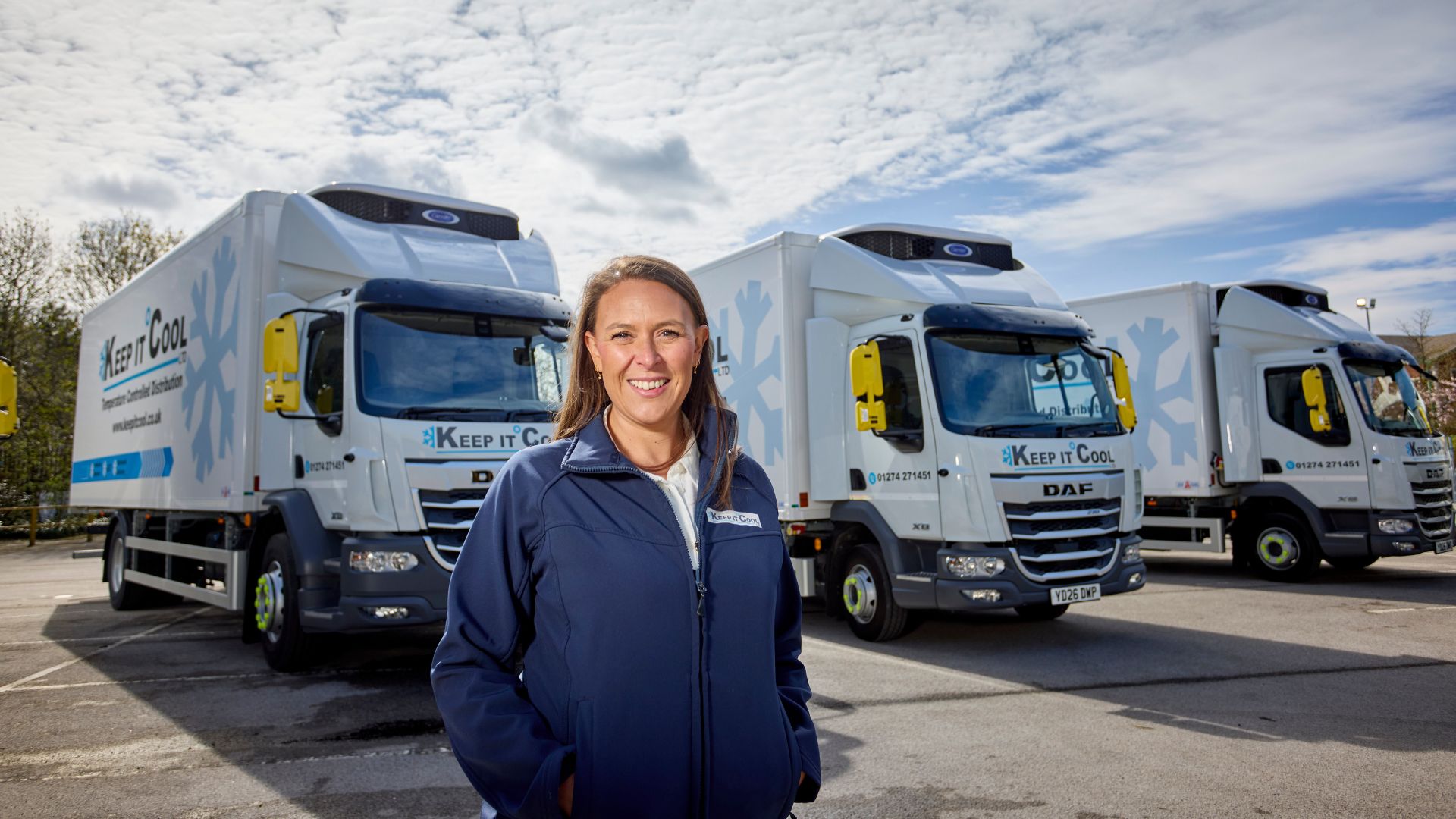
The transition needs to happen. HGVs account for a significant share of the UK’s transport carbon emissions, and the cold chain, which keeps food safe, medicines available and supply chains moving, is part of that picture. We know it, and we take it seriously. Keep It Cool already invests in the most fuel-efficient DAF fleet available, monitors developments in electric and solar technology, and has built requirements for renewable energy infrastructure into the plans for its future Bradford site.
What needs to change
The transition to electric will happen and Keep It Cool is committed to being part of it when the conditions make it genuinely viable. What that requires is not just better vehicles, but better infrastructure, more accessible funding for SMEs and a regulatory framework that acknowledges the difference between a national operator running fixed routes and a specialist logistics business covering the length and breadth of the country at short notice.
Incentives alone will not deliver mass adoption. What really matters is whether electric trucks make commercial sense day to day.
For Keep It Cool, the road is not quite ready yet. But we are keen to help shape one that works for everyone.
About Keep It Cool
Keep It Cool is a specialist refrigerated transport business serving B2B food businesses across the UK. Operating 24 hours a day, seven days a week, the business provides dedicated same-day temperature-controlled transport with no consolidated loads, no contracts and no compromises.
Founded in 2014 by Managing Director Nikki Redhead, Keep It Cool has grown from a standing start to a £3 million operation, built on reliability, responsiveness and a team that takes responsibility when it matters most.


 + 44 (0) 1400 283090


 July 22nd, 2026.




























 + 44 (0) 1400 283090