In the frozen-food industry, the demand for efficiency, hygiene and safety is ever-increasing.
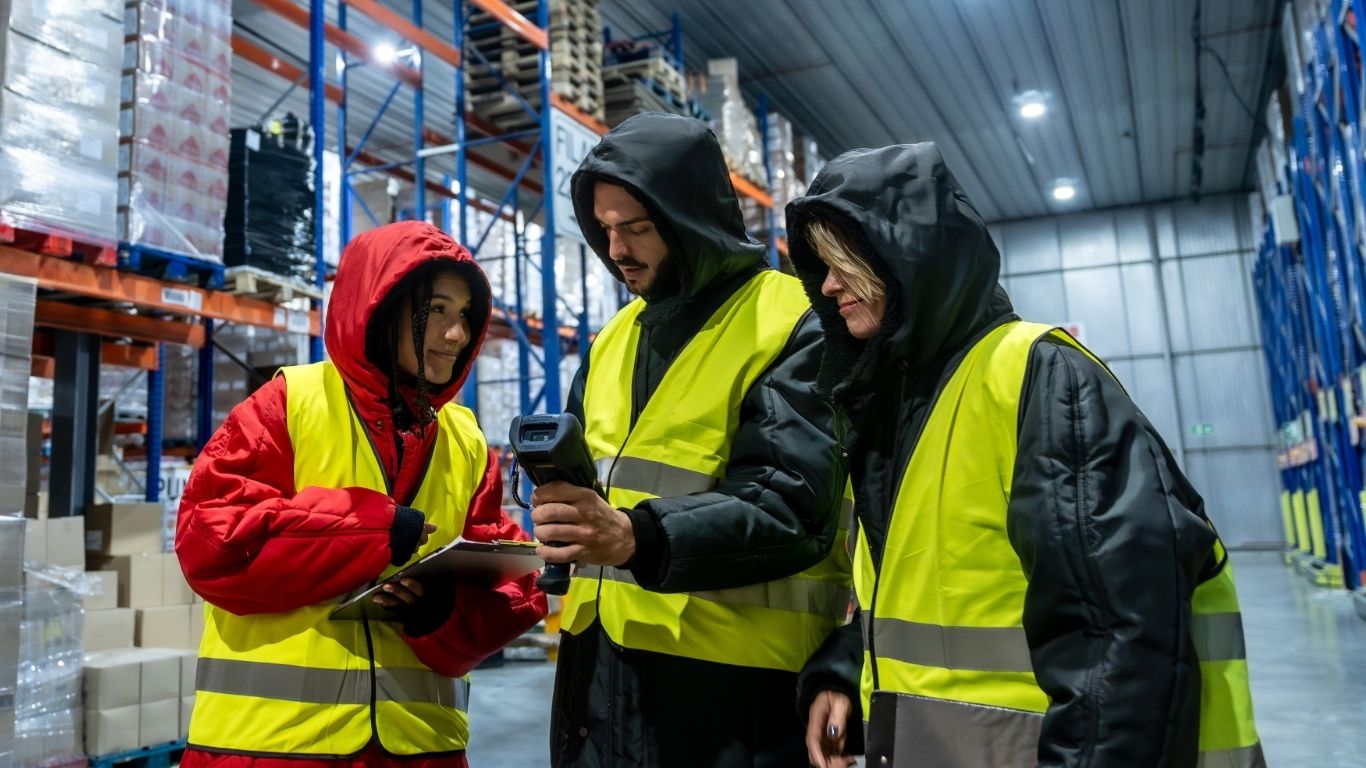
According to the Health & Safety Executive (HSE), over 30% of reported acute injuries in the food & drink sector stem from manual handling tasks such as lifting, lowering, carrying or moving loads. In a frozen-food environment – where cold temperatures, slippery surfaces, stacked pallets, and time pressures are the norm – these risks are amplified.
As a specialist in forklift attachments tailored for cold and hygiene-critical environments, Contact Attachments Ltd shares the top five manual-handling challenges facing frozen food operations, along with practical hints and equipment-based solutions that can help mitigate them.
- Heavy loads and awkward stacking/unstacking
One of the most common causes of injury in food & drink manufacturing is handling heavy boxes, crates, sacks or palletised loads – especially when stacking or de-stacking. In a frozen-food warehouse, loads are often bulky, may be stacked high, and must be moved quickly to maintain the cold-chain.
Why it’s a challenge:
- Loads above shoulder height or from the floor demand awkward lifting, increasing musculoskeletal strain
- In freezers or chillers, workers may lift heavier loads while wearing bulky gloves or protective gear, reducing dexterity and increasing physical demand
- Time pressures can encourage workers to lift manually rather than utilise specialist lifting equipment.
What to do:
- Risk-assess all tasks involving heavy/awkward loads – can the load be reduced, split, or moved mechanically?
- Use purpose-built attachments for example fork extensions) to avoid manual lifting of heavy or unstable loads.
- Ensure stacking heights are within safe reach, and loads are secured to reduce manual handling after stacking.
- Working in the Cold – Extra Strain and Slip Hazards
Frozen and chilled storage introduces additional manual-handling hazards. Working in sub-zero temperatures slows down response times and increases fatigue – and added to that, surfaces may be icy or wet.
Why it’s a challenge:
- Reduced grip when wearing cold-weather PPE (gloves, heavy boots etc)
- Slips, trips and falls become more likely on icy or wet flooring – the HSE estimates that slips/trips in wet/icy areas cost UK business £millions annually
What to do:
- Provide and enforce suitable non-slip footwear, gloves and PPE designed for freezer use
- Minimise manual handling in freezer zones: use attachments designed for cold environments (for example, stainless-steel, corrosion-resistant) so that forklift attachments rather than people bear more of the load
- Implement ergonomic designs – avoid manual lifting of goods from the floor in a freezer, ensure good lighting and flooring condition, and schedule regular breaks for workers exposed to cold.
- Repetitive tasks, high volumes and operator fatigue
High-throughput frozen-food operations often involve repetitive manual tasks – unpacking, loading, stacking, transferring goods, and repeated handling of products.
Why it’s a challenge:
- Repetition of the same manual lifting, pushing or pulling actions contributes to fatigue
- Pressure to fulfil tight schedules (e.g. peaks during seasonal demand) can reduce time for safe manual handling
- Manual pick-and-pack work in cold rooms is especially
What to do:
- Rotate tasks to avoid prolonged exposure to the same manual handling activity
- Introduce mechanical aids – forklift attachments that reduce manual lifting (e.g. drum rotators or bulk-handling shovel attachments)
- Ensure workers are trained in manual-handling technique (especially for the cold-storage environment) and recognise signs of fatigue or strain
- Poor load stability and awkward load types
In frozen food operations, not all loads are uniform or easy to handle – pallets may be double-stacked, cages may be heavy or awkward, loads may be unstable due to ice or condensation.
Why it’s a challenge:
- Irregular or unstable loads require more manual intervention to adjust, reposition or stabilise
- Manual movement of roll cages or pallets on slippery floors (especially in freezers) adds strain.
What to do:
- Choose forklift attachments that improve load handling efficiency (e.g. pallet pullers which reduce the need to manually reposition pallets)
- Ensure load design is appropriate, load heights are safe, and worker access is ergonomic (e.g. not requiring stretching or twisting).
- Conduct risk assessments for all manual handling of irregular/unstable loads
- Inadequate training, assessment and equipment-mismatch
Even with the best equipment and policies, the root of many manual-handling issues lies in insufficient risk assessment, poorly matched equipment, and inadequate worker training. The HSE emphasises that many manual-handling injuries are preventable through mechanisation and training.
Why it’s a challenge:
- Frozen-food operations often operate 24/7, with multiple shifts and high staff turnover – so ensuring consistent manual training can be more difficult.
- Equipment (forklifts, attachments, racks) may be standard ambient-temperature models, not suited to freezer conditions which can increase manual handling load
- Risk assessments may not account for the unique cold-storage hazards – heavier gloves, slower reflexes, icy surfaces, bulk loads, stacking at height – all of which increase manual handling risk.
What to do:
- Conduct regular, task-specific manual handling risk assessments, including in cold/chiller/freezer zones. The ‘avoid–assess–reduce’ approach of the Manual Handling Operations Regulations (MHOR) remains a key framework.
- Provide role-specific training, updated for cold-store conditions (in heavier gloves, with floor/temperature hazards in mind)
- Invest in attachments and handling equipment designed for the environment, rather than relying on general-purpose equipment
- Ensure inspection and maintenance of attachments and forklift equipment in cold-conditions so that mechanical aids remain reliable and reduce the need for manual intervention.
The frozen-food supply chain presents unique manual handling challenges – heavy and/or unstable loads, repetitive tasks, cold environments, and equipment mismatches. But by taking a systematic approach – assessing risk, upgrading equipment, training staff and utilising specialist attachments – both manual handling demands and the risk of injury can be significantly reduced.
With over 50 years’ experience in designing forklift attachments for the food & drink industry, Contact Attachments supports frozen-food operations with bespoke solutions that are hygiene-safe, cold-store compatible and ergonomically smart. They’re proud to work alongside BFFF members in helping make the chain of frozen-food logistics safer, cleaner and more efficient.
If you’d like to discuss how the right attachment can reduce manual handling in your chilled or frozen operations – or to conduct a review of your site – please contact the team on 01686 611200 or via their website at www.forklift-attachments.co.uk.


 + 44 (0) 1400 283090


 November 5th, 2025.

























 + 44 (0) 1400 283090