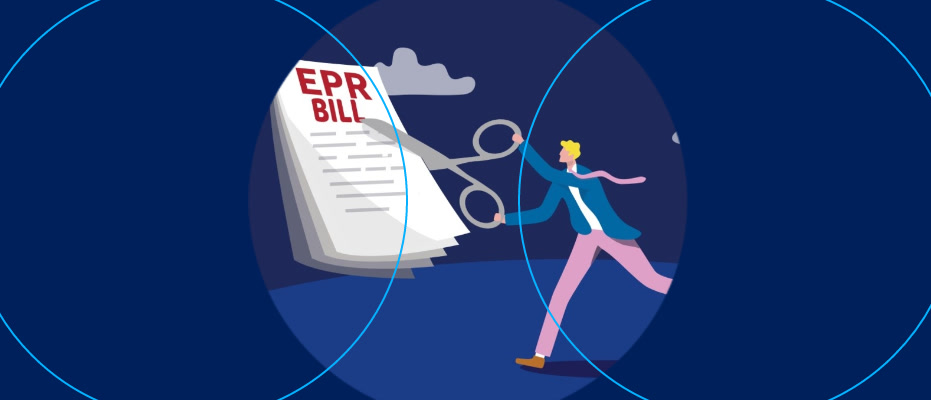
UK businesses are facing a new challenge – the arrival of their first Extended Producer Responsibility (EPR) invoices. For many, the costs are higher than expected, and with EPR holding businesses accountable for the collection, sorting, and disposal of household packaging waste, the financial impact is becoming increasingly hard to ignore. Plus, as well as costly EPR fees, non-compliance can lead to fines, enforcement notices, sales bans, and even criminal prosecution.
But it’s not only legislation driving the change. Consumer expectations around packaging are also rising, with 3 in 4 UK consumers demanding action on plastic waste, and 32% valuing responsible supply chains (Deloitte). That means reducing packaging costs isn’t just about compliance – it’s also about meeting customer demand and protecting brand reputation.
The good news is that by making smart choices about packaging materials and reporting, businesses can meet consumer expectations while significantly reducing EPR costs.
Which packaging materials attract the lowest EPR charges?
When it comes to reducing EPR fees, not all packaging is equal. Some packaging materials incur higher fees, while others are considered far more sustainable and, in turn, more cost-effective. For example, corrugated cardboard and paper are highly recyclable and widely collected, which attracts lower EPR fees. Though plastic is lightweight, lower recycling rates can mean higher EPR fees.
- Material modulation – EPR fees are influenced by the recyclability of packaging, and materials that are highly recyclable attract lower fees.
- High recovery rates – Under EPR, packaging with higher recycling recovery rates is often subject to lower fees. Some materials perform better than others, as widely collected and easily recycled formats reduce costs while supporting strong environmental outcomes.
- Eco-modulation ready – EPR regulations are likely to change over time, and some packaging, like corrugated cardboard, is poised to benefit from reduced fees under future eco-modulation rules. By using these materials now, you can future-proof your packaging strategy.
How does changing my packaging help reduce EPR fees?
Switching packaging material can lower your environmental footprint, but it also has a direct impact on your EPR bill. By choosing the right packaging materials and prioritising smart sourcing, you can significantly reduce EPR costs while meeting the demands of eco-conscious consumers. This is important, as 78% of consumers say that sustainability is an important factor when shopping (USwitch).
- Swap plastic for corrugated – Plastic packaging, such as trays, wraps, Expanded Polystyrene (EPS) and void fill, tends to attract higher EPR fees due to its lower recycling rates. By replacing plastic packaging with corrugated alternatives, EPR costs can be reduced. A good example is Sutherlands of Portsoy, who replaced their EPS fish boxes with a corrugated solution – improving recyclability, cutting compliance costs, and maintaining the protection needed for seafood exports.
- Choose mono-material solutions – Packaging made from a single material, makes recycling easier compared to packaging that uses a combination of different materials. Opting for packaging that’s easy to sort and recycle can reduce EPR costs. Take Marshall-Tufflex, the UK’s leading cable management manufacturer – they removed plastic tape from their packs to create a fully recyclable corrugated solution that aligns with their Net Zero mission.
- Optimise design for weight and size – Because EPR fees are linked to packaging weight, cutting down on heavy or high-cost materials is essential. Strong, durable, yet lightweight designs not only reduce material use but also lower transport emissions and shipping costs. For example, Iron Mountain, a global leader in storage and information management services, streamlined their packaging to cover a wide range of equipment sizes – reducing four box formats down to one, resulting in fewer materials used.
Which packaging materials reduce EPR fees the most?
Each packaging material carries different costs depending on its recyclability, weight and future modulation rules. For example, according to base costs from July 2025, paper and board incur fees of £196 per tonne, whereas EPR fees for plastic waste are £423 per tonne. This means that a business using one tonne of mixed plastic may pay significantly more in fees than one tonne of corrugated cardboard, due to recyclability.
Will some packaging materials be penalised more than others?
Some packaging materials will be penalised more from 2026. Under the new Recycling Assessment Methodology (RAM) framework, the differences between packaging materials and relevant EPR fees will be even more apparent. Materials will fall into three categories that directly affect fees, with materials that are difficult to recycle incurring higher fees. This means businesses that act now to switch to widely recyclable materials can reduce EPR fees and avoid penalties going forward.
How can packaging reporting errors increase EPR fees?
Alongside packaging materials, inaccurate reporting can have a significant impact on EPR costs, regardless of the packaging you use. Even small mistakes in packaging weights can quickly add up to hefty, unnecessary costs. It’s essential that packaging weights are accurately reported, and that the data is precise, but different materials bring different reporting challenges.
Although plastic is relatively lightweight, it has diverse formats, making weights harder to track. Glass is heavy, so even minor reporting errors can cause significant overpayment. As it’s easier to track, audit and standardise, corrugated packaging is easier to report, but precision is still key. By working closely with suppliers to gather accurate packaging weights, you can reduce the risk of over-reporting and avoid paying more than necessary.
Why is a packaging partner key to EPR compliance success?
By working with experienced packaging providers like Smurfit Westrock and trusted environmental compliance specialists such as Valpak LTD, you can stay ahead of DEFRA’s EPR regulations with confidence.
Choosing a sustainable packaging partner in the UK means your packaging can be redesigned with recyclability, efficiency, and EPR cost savings in mind. From replacing plastics with fibre-based alternatives to optimising weight and size, the right collaboration ensures your packaging is fully future-ready.
We offer packaging audits, lifecycle assessments, and ‘What If’ modelling – practical tools that help you:
- Spot areas where costs can be reduced
- Understand the full environmental impact of your packaging
- See how different packaging changes could affect your future fees
With expert support on both the packaging and compliance sides, you can be confident your strategy is reducing costs now – and is ready for whatever changes EPR brings next. Speak to our experts to discover how the right packaging choice can cut your EPR fees and future-proof your business today.


 + 44 (0) 1400 283090


 October 8th, 2025.




























 + 44 (0) 1400 283090