Become a member

INTRODUCING YORISA – PREMIUM KOREAN-INSPIRED PERFECTION

Say hello to Yorisa, the latest addition to the FBI Food Group family! A fully cooked, high-quality Korean range with a unique twist, crafted exclusively for chefs and restaurants seeking fresh, exciting options for their menus—delivered hassle-free. Simply cook in the fryer or oven, and you’re ready to impress.

Available Now!

The Yorisa Range Includes:
• Breaded Chunk Skewers in BBQ Sauce: Whole muscle chicken breast chunks on a skewer, coated and glazed in rich BBQ sauce. (12 skewers per bag, 1.02kg)
• Plain Chunk Skewers: Coated whole muscle chicken breast chunks on a skewer, perfect for your creative culinary touch. (12 skewers per bag, 1.02kg)
• Breaded Chunks in Sweet & Sour Sauce: Crispy, coated chicken breast chunks glazed in a vibrant, tangy sauce. (1.05kg per bag)
• Yakatori Skewers in Korean Chili Sauce: Charcoal-cooked chicken leg meat skewers, glazed in bold, spicy Korean-style sauce. (12 skewers per bag)

Yorisa delivers premium quality with ultimate convenience—perfectly designed to inspire chefs and elevate your menu.

Want to try it for yourself? Contact FBI Food Group today to arrange samples on 01708 373663 or orders@fbifoodgroup.co.uk

JOIN EUROPASTRY AT THE UK FOOD & DRINK EXPO

Join Europastry at the UK Food & Drink Expo in Birmingham and explore the wide range of high-quality proudcts: Cristallino and Brioche breads, American Bakery, sweet and savoury pastries, and more exciting and innovative options.

FMD UPDATES – RECOGNITION OF REGIONALISATION IN GERMANY AND EXTENSION OF RESTRICTIONS TO AUSTRIA

RECOGNITION OF REGIONALISATION IN GERMANY

Great Britain has now recognised regionalisation for the Foot and Mouth Disease (FMD) outbreak in Germany that was confirmed on 10 January 2025.

The relevant lists and safeguard declarations published at Imports, exports and EU trade of animals and animal products: topical issues – GOV.UK have been amended accordingly and include details of the extent of the containment zone from which exports to Great Britain remain restricted.

Trade of affected commodities can now resume from the areas outside of the containment zone, provided that all other import conditions are met. For the purposes of certification, the UK considers the area outside the containment zone to be free of FMD for at least 24 months.

Please note that import restrictions in place for other diseases remain, including for Bluetongue and African Swine Fever.

Defra have also issued a press notice, which can be found here.

For certificates of bovine, ovine and caprine semen, ova and embryos, the appropriate ISO code as described in column 1 of the following lists: bovine semen, ovine and caprine semen, bovine embryos, and ovine and caprine ova and embryos should be added to Box I.8 of the relevant certificate and to the first paragraph of the animal health attestations.

This provides the relevant assurance that the products originate from animals outside of the containment zone

Supporting documentation:

Certain animal by-products (ABP), from FMD susceptible animals, require supporting documentation to provide assurance that the products have either undergone acceptable risk mitigation treatments or where applicable, originate from animals outside of the restricted zones in Germany.

‘FMD-susceptible animals’ means a cow, bull, sheep, goat, deer, camel, llama, alpaca, guanaco, vicuna, any other ruminant, any swine (that is, a member of the suborder Suina of the order Artiodactyla) or elephant.

Types of supporting documentation

Type A (processing/treatment)

  • copies of manufacturing records showing relevant parameters of the production process that relate to the specific goods in the consignment

or

  • commercial document or statement signed by a person with knowledge of and responsibility for the relevant parts of the production process on company letter headed paper, that specifies the production parameters that relate to the specific goods in the consignment.

Type B (origin of material)

  • commercial document or statement signed by a person with knowledge of and responsibility for the relevant parts of the production process on company letter headed paper, that declares the product does not contain ABP originating from animals inside FMD restricted zone

ABPs requiring supporting documentation

Only the listed ABPs require supporting documentation.

The following ABPs originating from inside the restricted zones require Type A supporting documentation:

  • fat derivatives
  • pig bristles (in addition to health certificate)
  • processed petfood (other than canned or extruded dry petfood)
  • rendered fats for use outside the feed chain
  • treated wool and hair
  • treated game trophies or other preparations of susceptible animals, being solely comprised of bones, horns, hooves, claws, antlers or teeth, except those referred to in Section 5, point 1 of Annex XIV to Regulation 142/2011.

The following ABPs originating from outside the restricted zones require Type A or Type B supporting documentation:

  • bones and bone products, horns and horn products and hooves and hoof products intended for use other than as feed material organic fertilisers or soil improvers
  • fat derivatives – low risk only (for use other than in animal feed)
  • processed pet food (other than canned and extruded dry petfood)
  • rendered fats for uses outside the feed chain
  • treated game trophies or other preparations being solely comprised of bones, horns, hooves, claws, antlers or teeth, except those referred to in paragraph (1) of Section 5 of Chapter II of Annex 14 to Regulation 142/2011
  • treated hair and wool
  • treated pig bristles

The following ABPs originating from outside the restricted zones require Type B supporting documentation:

  • colostrum, colostrum products – low risk only (not for use in animal feed)
  • milk, milk-based products and milk-derived products – low risk only (not for use in animal feed)
  • processed manure
  • treated game trophies comprised of hides and skins except those referred to in paragraph (1) of Section 5 of Chapter II of Annex 14 to Regulation 142/2011
  • treated hides and skins of ungulates except:
  1.   hides and skins having undergone the complete process of tanning
  2.   wet blue
  3.   pickled pelts
  4.   limed hides which have been treated with lime and in brine at a pH of 12 to 13 for at least eight hours

Submitting the documents

The documents must be uploaded and attached to the CHED import notification the trader creates in IPAFFS, in the ‘Additional Documentation’ section before they submit it unless the goods are already detained at the BCP. This does not apply to treated wool and hair which is not subject to official controls at a BCP.


FOOT AND MOUTH DISEASE (FMD) RESTRICTIONS: AUSTRIA

A case of FMD has been reported in Levél, Győr-Moson-Sopron County, near the Austrian border. Given the proximity of the outbreak to Austria, a decision has been taken to extend the FMD restrictions already in place for Hungary and Slovakia, to Austria.

This means that from 27 March 2025, there are restrictions in place on the import of the following commodities from Austria:

  • live (including non-domestic) ruminant and porcine animals, including wild game, and their germplasm
  • fresh meat from ruminant and porcine animals (including chilled and frozen)
  • meat products from ruminant and porcine animals that have not been subject to specific treatment D1, D, C or B (including wild game)
  • milk, colostrum and their products, unless subjected to treatment as defined in Article 4 of Regulation 2010/605
  • certain animal by-products
  • hay and straw

Please also note that personal import restrictions due to FMD additionally apply to Austria from 28 March 2025: Bringing food into Great Britain: Meat, dairy, fish and animal products – GOV.UK

Managing Employee Underperformance: A Fair and Compliant Approach

Why performance improvement plans matter

A recent employment tribunal case saw a social media worker awarded over £20,000 after being dismissed for not posting enough content and making typos. The key issue? The employee was not given sufficient warning before being let go.

This case serves as an important reminder to employers: handling employee underperformance requires a structured, fair, and legally compliant process. Failing to follow proper procedures can result in costly tribunal claims, reputational damage, and unnecessary workplace disruption.

Identifying and addressing underperformance

Performance concerns can arise for various reasons and impact different roles in different ways. A customer service employee who mishandles client interactions could harm a company’s reputation, just as a social media worker failing to meet output expectations could affect marketing efforts.

However, before taking formal action, employers must ensure they are assessing performance fairly. Standards should be clearly communicated from the outset through inductions, regular appraisals, and development meetings. Employees should also understand the consequences of underperformance and the steps involved in addressing it.

The importance of clear communication

When an employee is underperforming, direct communication is essential. Employers should:

  • Outline performance expectations clearly
  • Identify specific areas where the employee is falling short
  • Offer support and guidance on how improvements can be made

Raising concerns about underperformance can be sensitive, and employees may react defensively. Some may take stress-related sick leave, further complicating the situation. Approaching these discussions with empathy and openness can help prevent unnecessary escalation.

The role of informal warnings

Before escalating to formal action, an informal conversation should take place. This is an opportunity for the employer to:

  • Explain performance concerns
  • Provide clear examples of underperformance
  • Understand if there are underlying issues, such as personal challenges or health conditions, affecting work

If an employee is struggling due to external factors, offering reasonable adjustments or support can lead to a more positive resolution. Employees who feel supported are more likely to improve and remain engaged with their work.

When to implement a performance improvement plan (PIP)

If an employee’s performance does not improve following informal discussions, a performance improvement plan (PIP) may be introduced. A PIP provides a structured framework for:

  • Documenting performance concerns
  • Setting clear improvement targets
  • Defining a timeline for progress

The first stage of a PIP involves notifying the employee of their underperformance and providing a set period to improve. If no improvement is made, the PIP progresses to a more formal stage, which may lead to a final warning and, ultimately, dismissal on capability grounds.

Ensuring PIPs are constructive, not punitive

PIPs should be designed to motivate employees, not penalise them. To be effective, a PIP should:

  • Be tailored to the individual, setting achievable and measurable targets
  • Offer necessary support, such as training or mentoring
  • Encourage open dialogue between employer and employee

A common concern is that PIPs may be perceived as unfair or overly critical. To mitigate this, discussions should be handled sensitively, with a focus on improvement rather than blame. Asking employees for their input and listening to their concerns can help create a more positive process.

The importance of employee representation

Employees have the right to be accompanied at formal meetings by a colleague or trade union representative. Having a third-party present can help ensure discussions remain balanced and provide reassurance to the employee.

A fair and legally compliant approach

Managing underperformance fairly requires clear policies, structured processes, and empathy. Employers should:

  • Set clear expectations from the outset
  • Provide fair and consistent feedback
  • Follow structured disciplinary procedures if necessary
  • Offer employees the opportunity to improve before considering dismissal

A well-managed approach to underperformance can lead to positive outcomes for both employers and employees, reducing legal risks and improving overall workplace morale.

How we can help

If your business needs expert legal advice on handling employee performance issues, our employment law specialists can help. Contact us today for guidance on implementing fair and compliant processes.

COURTAULD COMMITMENT 2030 BECOMES UK FOOD AND DRINK PACT

The Waste and Resources Action Programme (WRAP) recently announced that the Courtauld Commitment has become the UK Food and Drink Pact.  

The Courtauld Commitment has been the driving force behind industry-wide action transforming the sector for twenty years. Bringing businesses, government and sector leaders together to tackle food waste, greenhouse gas emissions and water stewardship for food and drink production.  

The UK Food and Drink Pact, builds on this legacy to reinforce WRAP’s collaborative ambition for a more sustainable food and drink system both nationally and around the world. 

The fundamental details of the original commitment remain unchanged, but the rebranded UK Food and Drink Pact gives fresh clarity to this ambition in a direct statement of intent, helping to build trust and recognition in the sector.  

The new name brings a consistent and cohesive identity alongside WRAP’s other key voluntary agreement, the UK Plastics Pact while aligning with WRAP’s expanding international focus and the growing global Food Pact Network.  

Read more here  

FSA PUBLISH FINAL PATH-SAFE PROGRAMME NEWSLETTER

The Food Standards Agency (FSA) have recently issued the very last newsletter from thePathogen Surveillance in Agriculture, Food and the Environment (PATH-SAFE) programme 

PATH-SAFE is a4-year, UK wide, cross government programme, led by the FSA and supported by £24m funding from the HMT Shared Outcomes Fund (SOF) and match funding from a range of government and academic delivery partners.  

The programme is working to develop a pilot national surveillance network, using the latest DNA-sequencing technology and environmental sampling, to improve the detection, and tracking of foodborne human pathogens and antimicrobial resistance (AMR) through the whole agri-food system from farm-to-fork.  

As the programme draws to a close at the end of March 2025, this final March 2025 newsletter reflects on the successes of the programme and looks to the future.  

Through over 30 different projects, spanning four thematic areas (Data Sharing and Analysis, Foodborne Disease, Antimicrobial Resistance and On-Site Diagnostics), the programme has broken new ground scientifically and has challenged the status quo.  It has generated new knowledge (pillar 1), brought data together (pillar 2) and developed new methodologies, approaches and tools (pillar 3). 

You can read the newsletter in full here  

Member Benefits

Exclusive Partnership deals on key products and services:

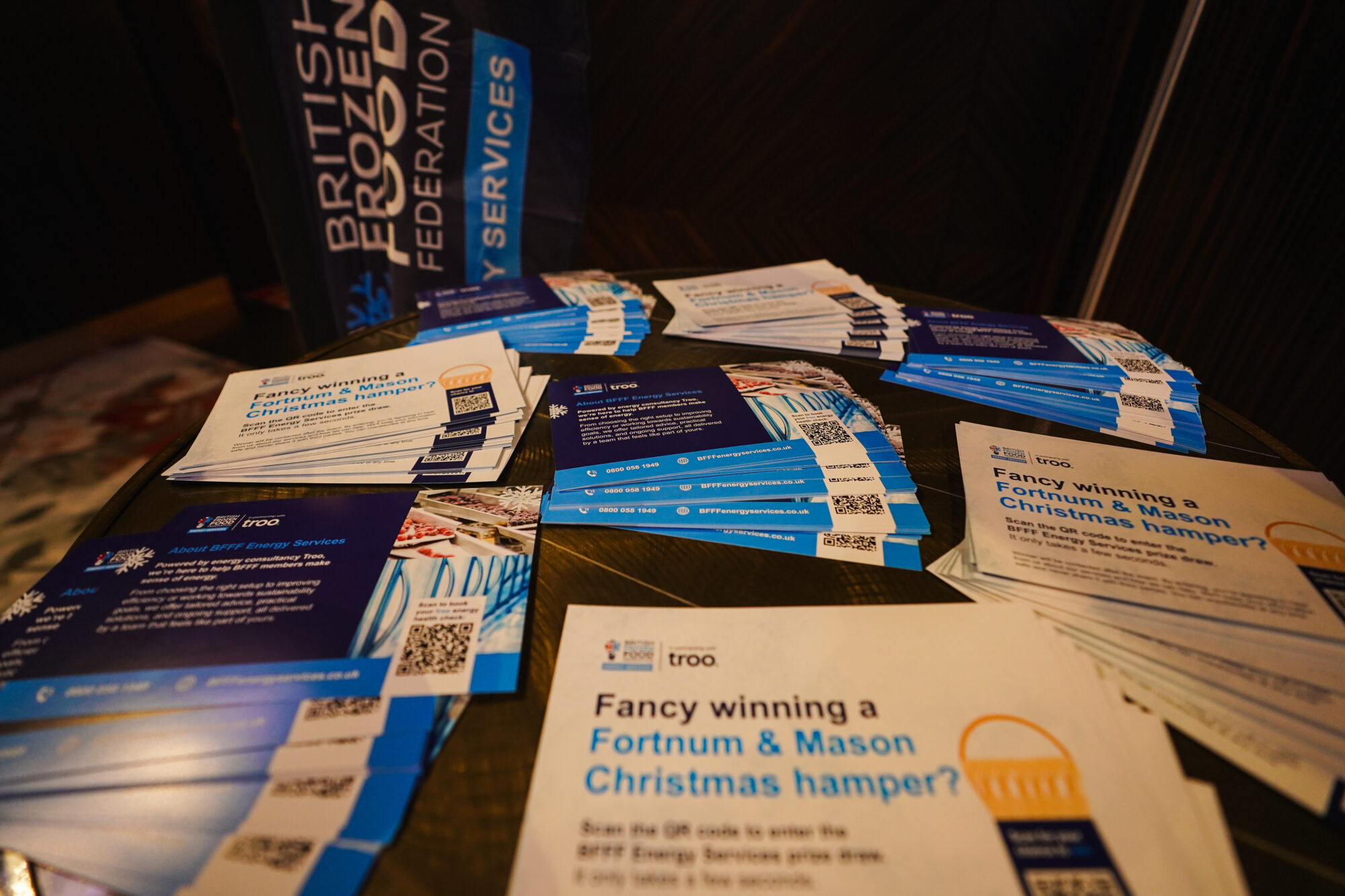
  • BFFF energy deals and rates
  • Vypr member deals and introduction
  • Defib Plus deals
  • Company Shop – membership
  • Mentor – MHE training health check

Exclusive access to networking opportunities and events:

  • Meet the Buyer events (retail & foodservice)
  • Annual Business Conference with networking dinner
  • Specialist H&S and Technical Conferences
  • Special interest groups (packaging, frozen food temperatures)
  • Annual Lunch
  • Awards Night
Upcoming Events More Events
Sponsorship Packages

We offer a range of sponsorship opportunities to BFFF members across our events throughout the year, with flexible packages that can be tailored to suit your business objectives.

Contact Us
British Frozen Food Federation Members Logo
what our members say...
  • Wakefield Council

    “What an amazing piece of work and indicative of how BFFF respond to the concerns of their members and make an impact on the whole industry sector.”

    See Full Quote

  • Sysco

    “You guys really ‘Do The Right Thing’ for the good of the industry”

    See Full Quote

  • Darta

    “The BFFF awards night is becoming an “appointment not to miss” on our calendar and we again enjoyed it immensely together with lots of well-known people from our industry. The…

    See Full Quote

  • Kantar Worldpanel

    “The Business Conference was an excellent day that was very well organised and allowed so many likeminded individuals in the room to learn so much more around the Frozen industry….

    See Full Quote

  • Lakeside Food Group Ltd

    “This Not For EU labelling situation alarmed us and quickly became a major worry to our business. These are times when you really rely on some support and from previous…

    See Full Quote

  • Meadow Vale Foods Limited

    “We had a few questions with respect to the new EPR waste packaging legislative changes. I know some of my colleagues have been assisted by BFFF in the past so…

    See Full Quote

  • Newberry International Produce Ltd

    “I am writing to express my heartfelt gratitude for the outstanding event you organised. I have only worked in this sector for the past nineteen months coming from twenty-five years…

    See Full Quote

  • Place UK Ltd

    “The BFFF 2024 Conference was compelling and thought provoking, with a many relevant and interesting topics covered at great pace and some depth by excellent speakers – will certainly attend…

    See Full Quote

  • Roswel Spedition GMBH

    “Thank you and the team for rushing around so brilliantly before, during and after the conference. It was pleasure to be part of the conference.”

    See Full Quote

  • Seara

    “The event was great, in my opinion. Not only it was very well organised, but the venue and the catering were excellent too. Furthermore, the content of the presentations was…

    See Full Quote

Website Designed & Built by we are CODA