MEADOW VALE HEADS BACK TO THE CAPITAL FOR 2026

We’re thrilled to share that Meadow Vale will be making our fourth appearance at this year’s at the Excel Centre in London. Widely recognised as “The Ultimate Business Event for Food & Drink Product Discovery,” this flagship industry gathering will take place from Monday 30th March to Wednesday 1st April at the Excel Centre in London.

Each year, the event brings together the very best in innovation, inspiration, and expertise from across the food and drink sector, with 2026 set to be bigger than ever. With a record-breaking 25,000 visitors expected across the three days, the exhibition promises unparalleled opportunities to connect, collaborate and explore the latest trends shaping the industry.

From exciting new product launches to thought-provoking discussions, it’s always a highlight of our calendar.

Spotlight on Innovation

The annual IFE show provides the perfect stage for us to champion innovation and demonstrate how we continue to deliver standout solutions for foodservice operators. Taking centre stage this year are our double award-winning Meadow Vale Boneless Chicken Wings.

Recognised for their exceptional taste, texture and quality, these wings have quickly become a go-to menu hero for operators looking to offer bold flavour with reliable consistency. Each boneless wing is crafted to deliver a satisfyingly hearty crunch and succulent bite, with consistent sizing to ensure confidence in presentation and portion control.

Their versatility makes them ideal for everything from street food concepts and sharing platters to loaded fries, wraps and premium bar menus. Each product has been developed with operators firmly in mind, delivering standout flavour, strong visual appeal and dependable performance in busy kitchen environments.

From sharing platters and street food concepts to classic comfort dishes and globally inspired menus, our range offers the versatility today’s foodservice sector demands. Whether you’re refreshing an existing menu or developing something new, Meadow Vale provides innovative chicken solutions designed to help you stand out,and we’d love to show you how at our stand.

All Roads Lead To London

We couldn’t be more excited to be returning to IFE and connecting with so many industry professionals once again. Events like this are a fantastic opportunity to share ideas, spark new partnerships and, of course, serve up plenty of seriously tasty chicken.

For the second-year running, we’ll be bringing along our impressive double-decker street food stand, designed to welcome even more visitors! The expanded space means we’ll be able to host more conversations, showcase more innovation and give out more samples than ever before.

Whether you’re keen to explore our latest product launches, discuss new opportunities, or simply stop by for a taste, we’d love to see you there. We’re looking forward to seeing you at IFE and making this our best year yet!

WHY OPERATORS ARE THE MOST UNDERUSED ASSET IN MANUFACTURING

For years, manufacturing transformation has been framed as a technology problem. More data. Better systems. Smarter analytics. Yet productivity growth across Europe remains stubbornly slow, despite record investment in digital tools. The uncomfortable truth is this. Most factories are not short of technology. They are short of adoption.

According to the OECD, Europe’s productivity gap is driven less by access to new technologies and more by the slow and uneven way existing tools are embedded into daily work. The biggest gains come not from breakthrough innovation, but from better diffusion. In other words, helping people use what they already have more effectively. This is where operators come in. And where many transformation programmes quietly fall down.

The people closest to the work see the problems first

Lean thinking has long been clear on this point. The Lean Enterprise Institute’s core principle of “go see, ask why, show respect” is not philosophical. It is practical. The people doing the work understand variation, disruption and loss before it appears in a report.

Operators know when materials are inconsistent. They know when a changeover will struggle. They know which faults are repeat offenders. And they know this in real time.

Yet in many factories, this insight never becomes visible. Data is collected, but context is missing. Performance is reviewed, but too late. Operators are asked to hit targets, but rarely given the tools to explain why those targets were missed.

Why digital transformations stall on the shop floor

The World Economic Forum has been explicit about why so many manufacturing transformations fail. Digital tools are often designed for analysts, not for operators. Data exists, but it is siloed, historical or disconnected from daily routines. When insight arrives days or weeks after the event, it no longer changes behaviour. It becomes commentary, not control. What operators need is not more dashboards. They need clarity in the moment decisions are being made. What is happening now? Why it is happening? What can be done about it?

Operator-led performance is not a soft idea

There is a persistent myth that focusing on operators is about engagement rather than performance. In reality, it is about speed, accuracy and confidence.

Factories that treat operators as the primary source of operational insight move faster. Problems are identified earlier. Decisions are made closer to the line. Improvement becomes routine, not reactive.

This is exactly the gap the OECD highlights. Productivity improves when knowledge flows to where decisions are made, not when insight is trapped in reports reviewed far from the process.

From data collection to operational intelligence

The opportunity now is to connect real time data with operator knowledge. Not to replace experience, but to amplify it.

When operators can see performance clearly, explain loss as it happens, and ask better questions of the organisation, something important shifts. Conversations move from blame to cause. From opinion to evidence. From firefighting to learning.

That is when performance becomes repeatable.

The most underused asset is already on the payroll

Manufacturing does not need fewer people and more systems. It needs systems that respect how people work.

The factories that will outperform over the next decade will be those that stop treating operators as data inputs and start treating them as operational experts. Supported by real time insight. Embedded in daily routines. Trusted to lead improvement.

The technology already exists. The people already exist. The question is whether organisations are ready to bring the two together.

At OFS we are creating Centres of Excellence to showcase the businesses embracing innovation. If you would like to find out more contact Thomas Nolan on Thomas@OFSystems.com or apply here

SIGNATROL’S NEW NIFTY FDA-APPROVED BUTTON-STYLE DATA LOGGERS

Signatrol’s SL60 dLog is a new range of low cost, miniature button-style temperature or temperature and humidity data loggers, ideal for use in the food industry.

These next generation SL60 data loggers work with Signatrol’s TempIT5 software and offer more readings that its predecessor with a wider range of accuracy and resolution, increased battery life of up to three years and a cheaper price. The system also allows users to read data even if the battery is exhausted.

All SL60 products are self-contained and easy to use. As a result, they are suitable for food production, distribution, and storage. Both the SL62T (£149) and the SL63T (£180) are made with FDA-approved food safe material and are fully sealed to IP68 meaning they can be fully submersed without the need for protective enclosures. Communication to the data logger is provided by the latest NFC technology. The SL63T has an improved operating range of -40°C to +125°C making it ideal for food producers who wish to log the temperature of finished products during the freezing process post-cook.

‘A’ version of the SL60 range comes complete with a UKAS ISO 17025 traceable calibration certificate, while it is optional on other data loggers in the range.

Signatrol is offering the new SL60 in a starter kit including either two or five data loggers of your choice, TempIT5-Pro Microsoft Windows Application software, SL60-READER NFC reader and an individual three-point UKAS traceable calibration certificate at default points (A version only).

For more information www.signatrol.com

DESIGNING COLD STORES FOR AUTOMATION: WHAT OPERATORS NEED TO GET RIGHT

Automation is gathering pace across the frozen food sector as operators respond to persistent labour shortages and rising throughput demands.  Labour gaps remain a consistent challenge across food‑supply roles, creating real risks to day‑to‑day continuity.  Both government and academic studies highlight automation as one of the most effective ways for operators to strengthen resilience and reduce reliance on increasingly scarce warehouse labour¹.

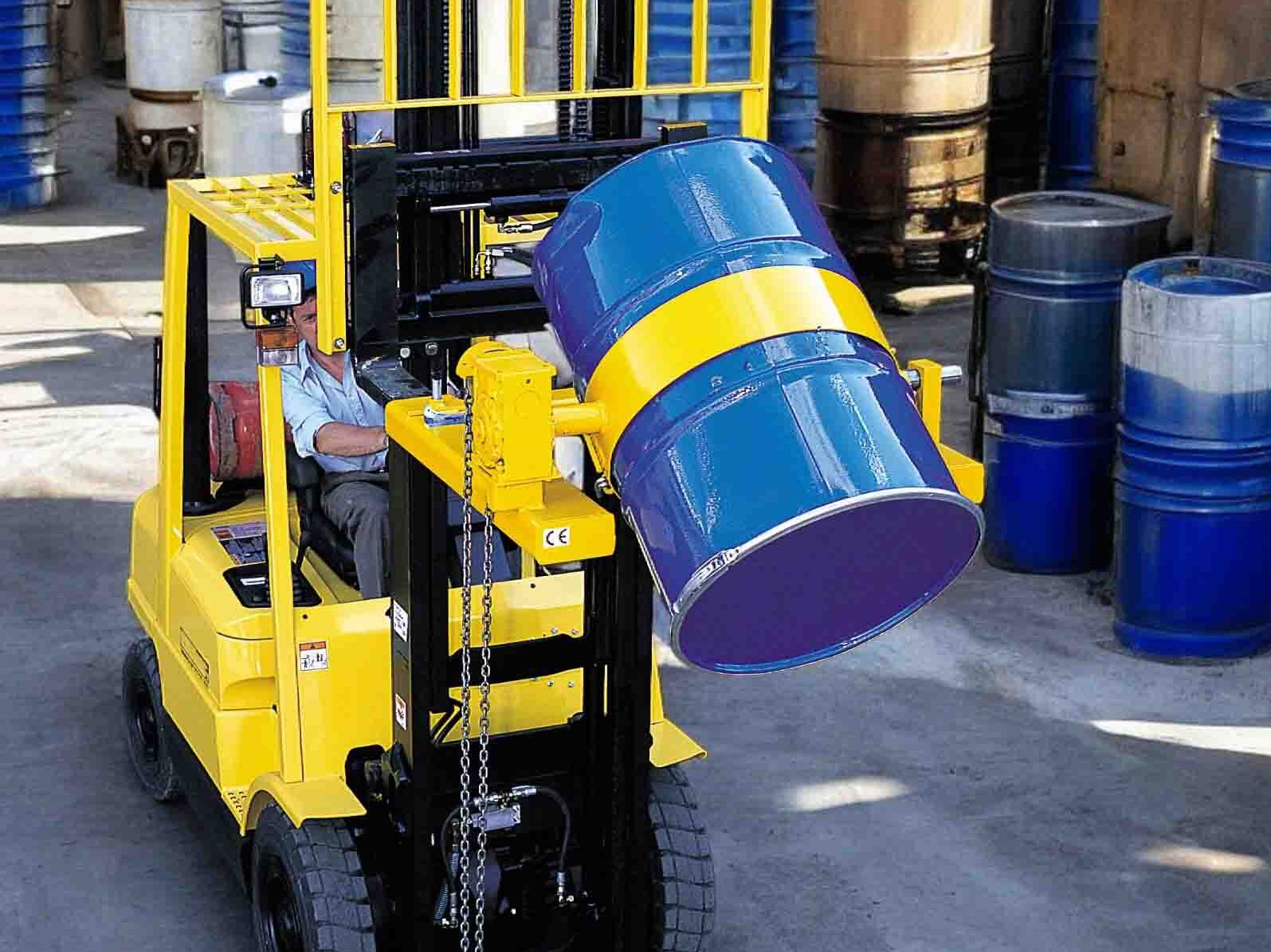
Yet even the most advanced automated systems still rely on manual handling at key touchpoints – and the equipment used has a direct impact on overall performance.  To get the full benefit of automation, cold stores need handling solutions engineered for precision, reliability and seamless integration.  And that’s where specialist manufacturers like Contact Attachments play a vital role.

Why Attachments Matter in Automated and Semi‑Automated Systems

Automation depends on consistency, and that begins with how every pallet is lifted, aligned and presented.  Attachments designed specifically for cold‑store environments help operators achieve:

  • Reliable pallet engagement | precision‑engineered forks and clamps ensure automated systems receive loads exactly as required, reducing stoppages and misalignment
  • Fewer manual touchpoints | streamlining repetitive tasks supports smoother, faster automated flows
  • Improved uptime | cold‑store‑ready materials and components maintain performance in sub‑zero temperatures
  • Future‑ready integration | automation‑compatible designs support sensors, telematics and data‑driven systems.


Retrofitting Older Cold Stores

Most UK cold stores weren’t designed for today’s automated technologies. Industry research shows that much of the UK’s cold‑chain infrastructure is ageing and increasingly being ‘pushed to its limits’, with many facilities requiring significant upgrades to support modern operational demands.² ³

Retrofitting can deliver significant efficiency gains, but only when operators plan for the realities of older infrastructure, including:

  1. Space and racking limitations | tighter tolerances mean narrow aisles, older racking or inconsistent pallet sizes can quickly create bottlenecks
  2. Manual-automation interfaces | even highly automated sites rely on forklifts for replenishment, exception handling and maintenance.  If manual handling isn’t optimised, automation can’t perform at its best
  3. Unsuitable equipment | generic attachments often lack the precision, repeatability and durability required, leading to mis‑picks, downtime or increased maintenance
  4. Hybrid operations | people, forklifts and automated systems must work together safely and predictably.


Adaptable Handling: The Backbone of Hybrid Cold Stores

Hybrid environments are now the norm.  Adaptable attachments help operators maintain smooth flow between automated and manual zones, scale throughput during peak periods, improve safety, and protect long‑term investment as automation strategies evolve.

As frozen food demand continues to rise, automation offers a powerful route to greater efficiency and resilience – but only when supported by the right handling equipment.   With more than 50 years of manual handling expertise, Contact Attachments delivers robust, automation‑ready solutions that keep cold stores operating safely, efficiently and reliably.

To discuss your manual handling requirements, contact the team on 01686 611200 or visit www.forklift-attachments.co.uk

WTA GROUP – YOUR SUPPLY CHAIN PARTNER IN CANADA

For frozen and chilled products, cold-chain integrity is non-negotiable. WTA’s temperature-controlled logistics keep product within spec across sea, air and road legs, backed by real-time monitoring of temperature and other critical parameters. By combining cold-chain control with intelligent routing and contingency plans, we help brands significantly cut spoilage, claims and write-offs, therefore protecting margin as much as product.

On the UK–Canada corridor, compliance is often the biggest hidden risk. The Canada–United Kingdom Trade Continuity Agreement provides reduced or zero tariffs on many food products, alongside a clear and predictable regulatory framework. As Thomas Sommer (WTA Group, Commercial Director) notes: “For UK exporters, that means greater certainty, streamlined customs procedures and significantly lower administrative barriers. In practical terms, it reduces cost, complexity and risk, making Canada one of the most accessible and commercially attractive non-EU markets for UK food producers.” WTA’s in-house customs and cross-border compliance teams manage documentation, HS classification and origin requirements so loads clear quickly and cleanly. Faster, more predictable customs processes reduce dwell time, demurrage and the risk of temperature excursions while cargo sits at the border.

Crucially, BFFF members get more than “track and trace”. Through the WTA Platform, you have visibility over shipments, exceptions and performance in one place, linking movements to POs and SKUs, and aligning logistics data with your commercial reality. That means earlier intervention when issues arise, better root-cause analysis, and continuous improvement of lane performance. WTA back this up with very hands-on support: you get one named account manager with specialist food & drink logistics expertise, who understands temperature control, shelf life, and the compliance landscape you operate in. They act as your single point of contact across freight, customs and warehousing, so you’re not bounced between departments when you need answers. The aim is simple: fewer surprises, faster responses, and a logistics partner who feels like an extension of your own team.

In short, WTA is a risk and revenue protection partner for frozen food logistics between the UK and Canada: maintaining cold-chain integrity, reducing spoilage, accelerating customs, and giving you the data to stay ahead of problems, not react to them.


INDUSTRY LEADERS COME TOGETHER AT THE BFFF BUSINESS CONFERENCE 2026

Last week BFFF members from across the Frozen food chain gathered to examine challenges, opportunities and the future of the sector at the Annual Business Conference held in Warwick.

Expertly hosted by writer and broadcaster Leyla Kazim – familiar to many as a critic on BBC’s MasterChef, and a presenter on the Radio 4 Food Programme – the event brought together voices from across government, manufacturing, retail, foodservice and research to explore the most pressing challenges facing the sector today, where the opportunities for growth lie, and what strategies might help unlock them.

Economic headwinds and a shifting regulatory landscape

Opening the conference, BFFF chief executive Rupert Ashby outlined the backdrop where in spite of ongoing food inflation and rising costs for energy and labour, many member businesses are growing. At the same time, BFFF research shows increasing recognition by consumers of the benefits of frozen products. He also covered how the sector is navigating an increasingly complex regulatory landscape, including debates around ultra processed foods, HFSS legislation and the proposed new Nutrient Profile Model.

James Walton, chief economist at IGD, expanded on this economic context, warning that the UK may face a prolonged period of slow growth. His presentation raised key strategic questions for the industry, from the resilience of food supply chains in an increasingly uncertain geopolitical environment to the evolving shopper case for frozen foods.

Emily Miles, Director General for Food, Farming and Biosecurity at DEFRA, acknowledged the pressures facing both households and the food sector. However, she also highlighted potential opportunities arising from a reset in UK–EU relations, which could reduce some of the regulatory friction affecting food imports and exports.

Understanding changing consumer behaviour

A central theme throughout the conference looked at how consumer and business expectations are evolving across both retail and foodservice channels.

Simon Stenning of Future Foodservice argued that frozen products can help hospitality operators run more efficient kitchens by providing what he described as friction free ingredients that reduce complexity and waste. At the same time, he emphasised that operational efficiency must never come at the expense of the pleasure that ultimately drives dining choices.

Further insight into frozen’s performance came from Neya Gwillim of Circana and Andrew Selley of Bidfood, who examined trends shaping both the wholesale and foodservice markets. Their presentations highlighted the continued importance of value, reliability and convenience as operators respond to cost pressures and shifting demand.

Next, Matthew Garside of Worldpanel by Numerator (formerly Kantar) identified four key opportunities for frozen food. These include reinforcing the category’s value credentials, continuing the premiumisation of frozen products, responding to growing consumer interest in health and cleaner ingredient lists, and capitalising on the rise of the so-called ‘big night in’ as consumers seek restaurant-style experiences at home.

Closing out the insight section, Chris Schatynski of Vypr demonstrated how real-time shopper research can help businesses better understand changing attitudes towards frozen food and identify opportunities for innovation.

Growth and innovation across the sector

These themes continued in a spirited panel discussion featuring Mitch Lee of Pack’d, Laura Whittle of Whitby Seafoods and BFFF President Karen McQuade of the UK Foodhall.

The conversation ranged widely, touching on issues such as the positioning of frozen products in supermarkets, the limitations of household freezer capacity and the need for fresh thinking in how frozen food is marketed to consumers, businesses and the public sector.

Yet one theme ran consistently throughout the discussion: growth. As Laura Whittle observed, long term business survival ultimately depends on the ability to expand the category and attract new consumers.

Karen McQuade also highlighted the strengths of UK based production when supplying institutional buyers such as local authorities. Being able to demonstrate production standards in person can offer reassurance that overseas suppliers may struggle to match.

Science, technology and the future of food production

The afternoon sessions turned to scientific and technological developments shaping the industry.

Bertrand Emond of Campden BRI emphasised that food safety ultimately rests on trust between all participants in the supply chain. Maintaining that trust requires transparency, consistent standards and collaboration across producers, suppliers and regulators.

Greg Hooper, also from Campden BRI, addressed a more practical issue emerging in the consumer kitchen. The growing popularity of air fryers presents a challenge for manufacturers when providing cooking instructions, as different models vary widely in how quickly they reach and maintain temperature. As a result, manufacturers must prioritise safety even if that sometimes results in food being overcooked.

Food technologist Craig Leadley of the Institute for Food Science & Technology then explored the rapidly emerging role of artificial intelligence in the frozen food sector, highlighting how AI could support areas such as forecasting demand, optimising supply chains and accelerating product development.

Environmental pressures and sustainability

The final session of the conference focused on sustainability and environmental constraints facing the food industry.

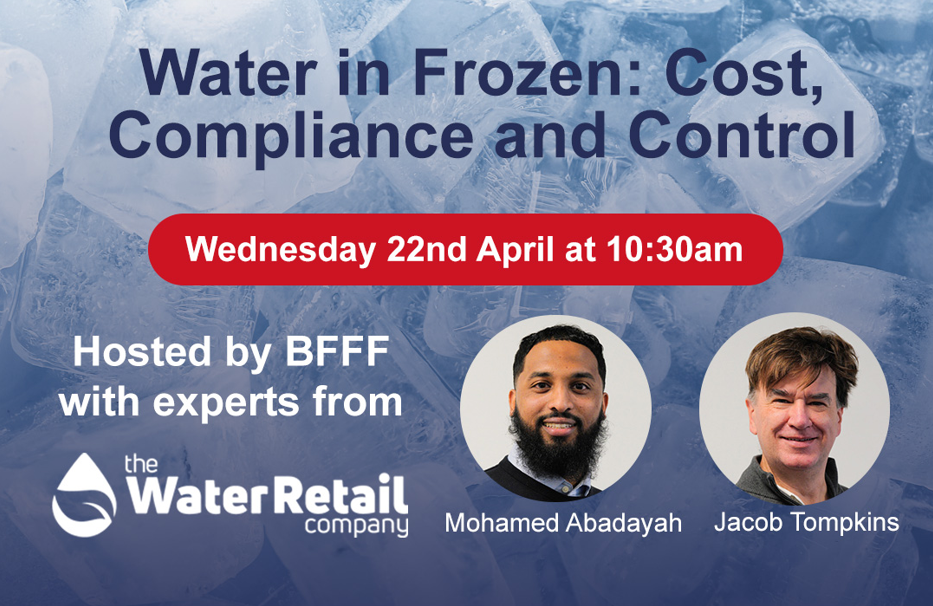
Professor Jacob Tompkins of BFFF Energy Services warned that water scarcity and limitations in sewerage infrastructure are becoming significant barriers to future food manufacturing in parts of the UK. Because of its population density, the UK ranks in the top quartile of European countries for water insecurity, meaning some new industrial developments are already being restricted. However, by understanding your water use, how it works, where it comes from and how much you are paying for it can significantly increase efficiencies and returns for your business.

Amriene Kalsi, climate change manager at Tesco, outlined the retailer’s Planet Plan and its wider ambition to help customers make healthier and more sustainable food choices.

The conference concluded with a lively discussion that raised a question of key importance for the sector: which is more energy efficient overall, frozen or chilled food?

While the answer remains unclear, speakers agreed that further research could help clarify the issue and ensure that the industry communicates its sustainability story more effectively.

A big thank-you to our speakers, exhibitors and attendees for contributing to an insightful and inspiring day.

Photos

Take a look at the event gallery – here

HEADING TO IFE LONDON? COME AND MEET S.T.I. (U.K.) LTD.

Let’s connect and talk about logistics solutions


This year, we at STI UK will be attending IFE London with our own stand for the first time, and we are very pleased to be part of the event and meet people from across the industry.

If you are visiting the show, we would be delighted if you stopped by for a chat. You will find us at stand N678 in the North Hall. It would be a great opportunity to connect in person, meet the people behind the businesses, and start conversations that could lead to future collaboration. 

Who we are

S.T.I. (U.K.) Ltd. is the UK subsidiary of the STI Freight Management Group, headquartered in Germany. Together with seven sister companies across Europe, we combine strong local knowledge with a wider European structure.

For you, this means a clear point of contact in the UK, supported by a network that helps coordinate transport across borders whenever required.

Temperature controlled transport is at the heart of what we do. We work closely with companies in the food and quick service restaurant sectors, supporting chilled, frozen, and ambient goods across the UK and Europe.

Our teams coordinate road, sea, and air freight, selecting the transport option that best fits each requirement. Every transport task is different, and we work closely with our customers and partners to find the right solution.

This approach is built on responsible transport, efficient processes, and strong partnerships that support reliable operations over the long term. To support these partnerships, we believe in staying in close contact, sharing updates, and keeping communication open throughout our collaboration.

This is also reflected in what guides us every day: Taking Quality the Extra Mile.

If you are attending IFE London, please come and say hello.
Mark Hustwayte and Paul Mundy
will be there and look forward to meeting you.

DON’T MISS THE UK’S LEADING FORKLIFT TRAINING PROVIDER AT THE HEALTH & SAFETY EVENT

Mentor Training, the UK’s leading provider of Material handling equipment (MHE) training, returns to the Health & Safety Event this April with essential training solutions to help businesses stay compliant and protected.

With the UK witnessing around 1,300 serious injuries per year from accidents involving forklift trucks, Mentor emphasise the importance of ensuring that those working on and around workplace transport understand the risks involved and how to keep themselves and others safe.


The nationwide training provider is returning to the Health & Safety Event with solutions to combat causes of accidents and injuries, and their experienced and knowledgeable team will be on hand in the exhibitor area to advise visitors on their own specific risks and requirements.

Leading the team is Mentor’s Commercial Director, Adam Smith, who shares his thoughts on the upcoming exhibition, “I’m really excited about this year’s event as it’s a great opportunity to walk people through recent important updates, such as the ABA category changes and showcase our wide range of training solutions.”

Mentor’s offerings include in-person, online and blended learning courses, helping employers provide vital training more easily and with minimal disruption to operations.


Adam explains, “We are passionate about keeping people safe at work and therefore want to reach as many individuals as possible. Of course, in-person practical training is essential when learning how to safely operate MHE but incorporating online theory elements, where possible, can save businesses time and money, which is exactly what our blended learning solutions are proven to do.”


Another reason to visit Mentor’s stand is to take part in their interactive forklift safety game, where players will be able to compete for the chance to win a prize.


As the UK’s premier event of its kind, Mentor is looking forward to returning The Health & Safety Event for 2026. Attracting thousands of UK safety professionals each year, the three-day event has plenty to offer attendees, including access to the latest products, valuable networking and multiple theatres of free-to-attend CPD accredited seminar sessions, delivered by industry-leading experts.


Adam concludes: “If you have any training questions or requirements, a visit to our stand will be well worth your time. Our experienced team will help you identify any challenges and implement solutions that deliver lasting results. Whatever your needs and wherever you are based in the UK, our accredited courses will help you stay safe and compliant.”


The Health & Safety Event takes place between 28th-30th April 2026 at the Birmingham NEC. If you’re responsible for forklift safety onsite, pay Mentor a visit on stand 3/J50 to discover how their latest solutions can massively benefit your operations.


Register for your free pass now by clicking here or contact Mentor today to find out more about their training solutions.