Become a member

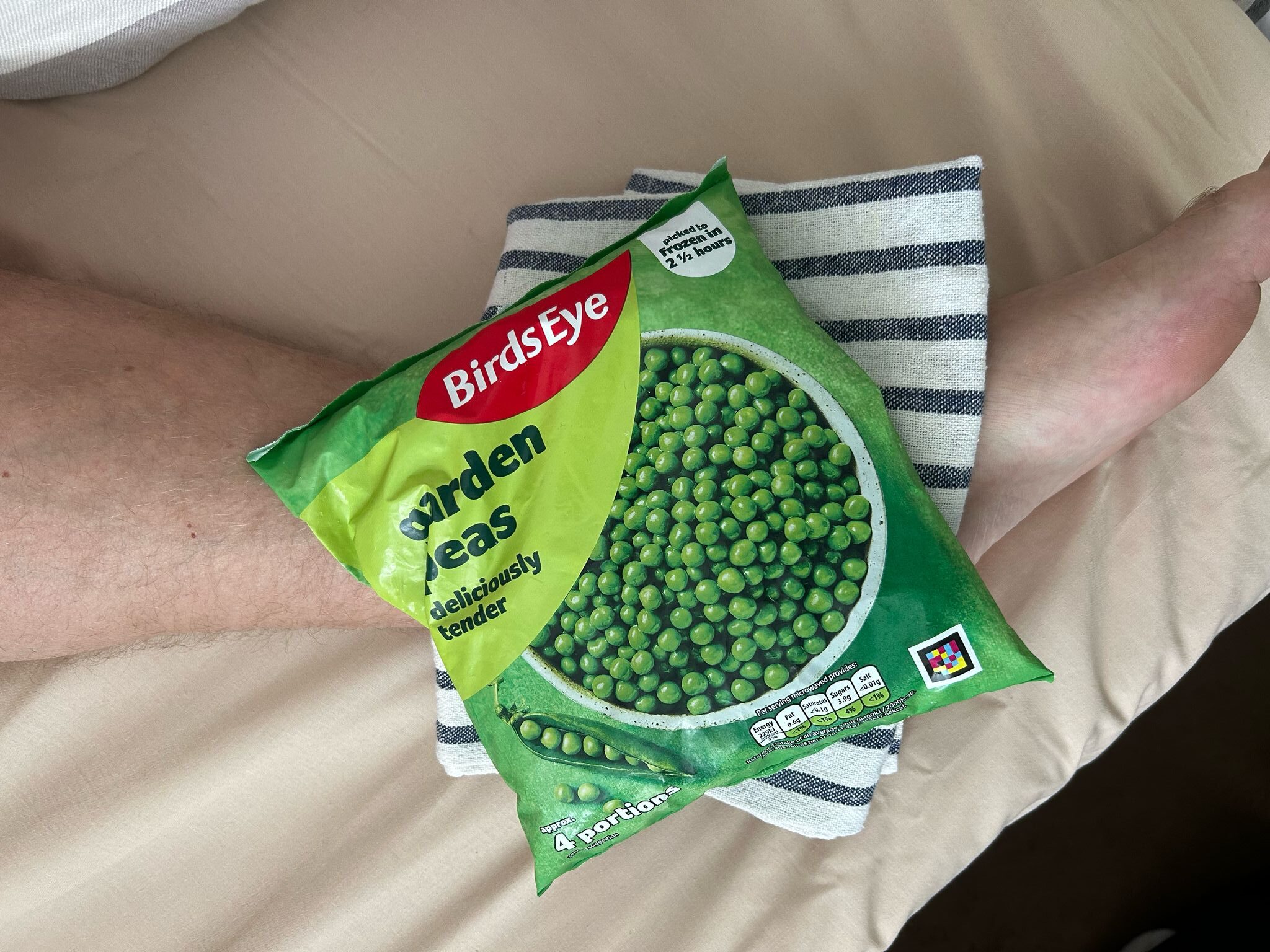
BIRDS EYE URGES MARATHON RUNNERS TO STOP USING FROZEN PEAS TO ICE INJURIES

A recent poll by the UK’s leading frozen food brand, and authority on all things peas, revealed over a third (38.7 per cent) of households don’t use frozen peas for their intended use, contributing to an estimated 3.3 million packs being wasted in the UK each year*


Energy gels? Check. Electrolytes? Check. Birds Eye Peas to ice injuries? Delicious on your dinner plate, but something marathon runners can remove from their post-race recovery strategy.


As we head into marathon season, Birds Eye is urging athletes to stop using frozen peas on their injuries, in a bid to help stop food waste. The much-loved frozen food brand took to social to launch its mission, highlighting how wasteful using the veg is when treating Britain’s bumps and bruises.


Mike Sowerby, Marketing Director at Birds Eye UK&IE, shared the campaign on LinkedIn earlier this week: “Wishing all marathon runners the very best this weekend – but please think twice before you ice any pains with frozen peas 😉. Our farmers work really hard to bring our peas packed with nutrients and sweetness to your plate; they’re just too good to be used on your knees!”


This comes as research, conducted by Birds Eye, unveils over half (56.7 per cent) of Brits have used frozen peas to ice an injury at some point in the last year. The survey reveals that 21 per cent of these whip up a meal with the thawed out peas that day, and 52 per cent claim to pop them back in the freezer to be eaten at a later date. The survey also revealed that over 38 per cent admit to using peas for other purposes beyond nutrition, with 9.4 per cent keeping them for the sole purpose of icing injuries!


The results therefore indicate that a staggering estimate of 3.3 million packs of peas are being wasted in the UK each year by not being used for their intended purpose.


Stephanie Harding, Head of RDQ at Birds Eye UK&IE explains: Freezing our peas within 2.5 hours of picking them helps to “lock in” their nutritional goodness**. It’s so important to keep the peas frozen until you’re ready to cook them to maintain their quality and freshness. Following our on-pack cooking instructions is the recommended way to use our peas.”  


When surveying those who can’t bear to part with their peas why that is, 32.8 per cent claimed to re-freeze due to not wanting to waste their food. Meanwhile, 40 per cent see it as a waste of money to simply throw them away. It’s for these reasons Birds Eye is rallying for the public to stick to the trusty ice pack for their pains – with campaign slogan: “Peas are for plates, not pain”.


Mike Sowerby comments: “Our peas are high in protein and fibre, and a source of vitamin C – so are great as part of a balanced meal for marathon runners in prep for the big day. But when it comes to treating injuries after the fact, now that’s a different story.


“The effort and attention that goes into producing our peas is what really sets them apart. Our farmers are so proud of the care and attention that goes into bringing quality peas to your dinner table – we can’t let all that go to waste!  That’s why we’re encouraging runners to think twice before they ice, and save peas for their plate, not their pain.”


For more information on Birds Eye Peas and the harvest process, please visit: https://www.birdseye.co.uk/our-brands/birds-eye-peas

*Research conducted by Birds Eye with Censuswide, April 2025; base n = 1000

** Vitamin C contributes to the normal function of the immune system. Enjoy your garden peas/petit pois as part of your varied, balanced diet and healthy lifestyle


Birds Eye recommends seeking professional medical advice for injuries

PECAN DELUXE COOKIE DOUGH NOW HALAL CERTIFIED

Pecan Deluxe is pleased to announce that the Halal Food Authority has certified the Vegan Diet Friendly Choc Chip Cookie Dough made under its Bling brand.  These frozen cookie dough chunks are a novel product which offer caterers a multitude of ways to add cookie dough to their menus.

Bling vegan diet-friendly frozen choc chip cookie dough is made without added dairy or egg so it is suitable for vegan dietary preferences and now the HFA certification provides consumers with the assurance that it complies with halal standards too.

Bling cookie dough is safe & delicious to eat raw and perfect for baking, air frying or microwaving into hot cookie dough desserts.  Available in bulk 18kg or 6kg catering packs or smaller 780g pouches – the product is ideal for dessert & ice cream parlours, and also restaurants, pubs, cafes, ice cream vans & event caterers.


Pecan Deluxe are keen to hear from foodservice wholesalers interested in adding this to their product range


sales@pecandeluxe.co.uk

01977 681141

OAKLAND INTERNATIONAL’S DISTRESS LOAD MANAGEMENT COMBATING FOOD WASTE IN THE COLD CHAIN

With a growing emphasis on sustainability in the cold chain, aimed at preventing food wastage, Oakland International’s accredited Distress Load Management (DLM) service continues to innovate and evolve to meet emerging needs.


Experience and longevity, Oakland International has been operating for over 25 years in this specialist field and is the longest-established service provider in the UK, and the first registered and recognised provider of DLM services in the country.


Oakland is a UK market leader, with international ties that extend as far as Türkiye. Their dedicated DLM service offers a range of unique features and benefits that set Oakland apart from other similar services. Clients have praised Oakland for its prompt responses, ease of communication, and ability to minimise damage, with this level of client satisfaction reinforcing Oakland’s prominent position.


Oakland International Distress Load Manager Stuart Pugh stated: “Our knowledge and experience in this field are highly regarded by industry stakeholders, insurers, the FSA, and local Environmental Health Offices (EHO), with their recognition underscoring our commitment to sustainability and reducing food waste.


“Trusted by major insurers as they can attend our site to witness the entire process and verify waste recovery levels, with non-conforming stock quarantined according to HACCP procedures before disposal by external waste contractors, accompanied by a certificate of destruction.


“Our process aims to minimise the impact on incoming goods. However, in cases where some stock is damaged, at risk and unrecoverable, we dispose of it securely. A certificate of destruction is then forwarded to the relevant parties once the process is completed.


“Oakland is a registered as a waste carrier with the Environmental Health Office in England and Wales with all stock to be disposed of managed through anaerobic digestion. We oversee the entire process from start to finish.”


All conforming stock is surface tested for evidence of surface contamination using scientific measuring equipment and is wrapped and security sealed before being presented for onward delivery. With instant digital reporting ensuring rapid communication with stakeholders, enhancing transparency and efficiency, dedicated multi-temperature chambers for storage, Oakland is continuing to advance and lead the way in dedicated DLM solutions.


Their comprehensive solutions address a wide range of issues, including contamination from temperature abuse, collapsed pallets, theft, relabelling needs, and clandestine infiltration.


An extensive history in this distinct field has allowed them to build a formidable reputation for reliability and expertise. In terms of accreditations and compliance Oakland’s DLM service is also BRCGS accredited, ensuring compliance with the highest food safety standards, of which many competitors may not have the same level of accreditation.


High recovery rates, regularly achieving an average of 85% for distress loads, Oakland International is significantly reducing food waste compared to other services, with this efficiency a cornerstone of its offering and long-standing commitment to sustainability.


Added Stuart: “In addition to our DLM service offer, Oakland International is dedicated to achieving net-zero emissions by 2040. Our latest sustainability report highlights our progress towards reducing our carbon footprint, expanding our renewable energy portfolio, and implementing various social and environmental initiatives.


“We are proud to be a Certified B Corporation, demonstrating our exacting standards of verified performance, accountability, and transparency. Our partnerships with organisations like FareShare and City Harvest London play a vital role in helping us address food waste within the supply chain.”


Based at their Midlands facility, providing same-day or next-day treatment of distress loads,

Oakland International’s DLM service stands out due to its established proficiency, high recovery rates, advanced facilities, sustainability initiatives, and strong industry reputation.


While other providers may offer similar services, Oakland’s comprehensive approach, coupled with its accreditations and insurer trust, makes it a preferred choice for managing distress loads effectively in the UK.


PACKUK PUBLISH UPDATED RECYCLABILITY ASSESSMENT METHODOLOGY

An updated version of the Extended Producer Responsibility for Packaging (pEPR) Recyclability Assessment Methodology (RAM), referred to as v1.1, has been published by PackUK today.

This latest update has been created following feedback from industry on RAM v1, which was published on 23 December 2024.

The updated RAM V1.1 guidance can be found on Gov.uk. 

The RAM methodology will enable large packaging producers to assess the recyclability of their household packaging and produce a red/amber/green output, which will inform the level of fee modulation payable for that material from year 2 of pEPR.

Producers are required to apply the methodology for household packaging placed on the market from 1 January 2025, with the first reporting deadline being 1 October 2025.

Only large producers (also known as ‘large organisations’) must report their recyclability assessment data.  Find out about small and large producers.

You only need to collect and report recyclability assessment data if you are responsible for household packaging.

Join the Circular Economy stakeholder forum  

At the May stakeholder forum, Defra will deliver a presentation on RAM v1.1. There will also be an opportunity for stakeholders to ask in-depth questions and relay feedback.

  • Date: Tuesday 6 May 2025 
  • Time: 14:30 – 16:00 
  • Registration: Please register for the forum on Microsoft Teams Live


Please direct any questions about RAM v1.1 to the pEPR helpdesk.

Neonatal Care Leave: What Employers Need to Know

Neonatal Care Leave: What Employers Need to Know

Following widespread speculation and debate, the Neonatal Care (Leave and Pay) Act 2023 officially came into force in the UK on 6 April 2025. The legislation is designed to support parents whose babies require neonatal care shortly after birth and is now a statutory obligation all employers must comply with.

Who is entitled to neonatal care leave?

Neonatal care leave applies to those with parental responsibility for a baby admitted to neonatal care within the first 28 days of life. This includes biological and adoptive parents, as well as the partners of the baby’s mother. To qualify, the baby must require at least seven consecutive full days of neonatal hospital care.

Entitlement from day one

Under the new law, employees (excluding workers and self-employed individuals) are now legally entitled to up to 12 weeks’ neonatal care leave from the very start of their employment, provided they meet eligibility criteria. This ‘day one’ right ensures parents can immediately access time off to be with their newborn receiving hospital care.

Previously, parents in similar situations often had no choice but to rely on their annual leave or request time off informally. In many cases, one or both parents returned to work while their baby was still in neonatal care – a deeply challenging situation that the new law aims to eliminate.

Topping up existing leave

Neonatal care leave can be used to effectively ‘top up’ maternity/paternity leave arrangements, providing parents with even more quality time with their babies without having to worry about using up all of their annual leave or rushing back to work for fear of potentially losing their job.

Who qualifies for neonatal care pay?

To receive statutory neonatal pay, employees must have at least 26 weeks of continuous service and earn a minimum of £123 per week. This pay is available for up to 12 weeks, provided the leave is taken within 68 weeks from the birth of the child.

This element of the legislation provides a vital financial safety net, but also introduces further obligations for employers around payroll processing and leave tracking.

The implications for employers 

  • Cost and resource considerations – With more parents potentially taking up to 12 additional weeks of leave, employers may face increased staffing costs to cover absences, especially in smaller teams.
  • Administrative and policy updates – Employers should update all of their relevant policies and procedures, making sure they clearly and adequately set out their new neonatal care leave duties. Neonatal leave guidance should sit alongside existing parental leave policies and clearly outline the new entitlements and processes for both employees and managers.
  • Legal risk and return-to-work obligations– Employers must also be mindful of the legal protection employees have while on neonatal care leave. Staff returning after up to 12 weeks are entitled to return to their role. If this is no longer feasible, an equivalent position or priority consideration for other suitable roles must be offered. Additionally, employees are protected from redundancy, dismissal, or any detriment due to taking neonatal care leave—failure to comply could result in legal action.

Creating a new standard for family-friendly workplaces

Employers familiar with previous legislation such as Shared Parental Leave or Carer’s Leave may find the transition smoother. However, this latest development demands immediate attention for those who are yet to get started.

Proactive employers who have already embedded these changes into their workplace policies signal a clear commitment to employee wellbeing and compliance. For others, the time to act is now.

What employers should do now

  • Review and revise internal HR policies to reflect the Neonatal Care (Leave and Pay) Act 2023.
  • Train managers and HR staff on the new entitlements and obligations.
  • Ensure payroll systems can accommodate statutory neonatal pay accurately.
  • Prepare for staffing adjustments during periods of extended leave.
  • Communicate clearly with employees about their rights and the process to request neonatal care leave.

How we can help

Our expert employment solicitors are on hand to help you navigate this new legislation with confidence. Whether you need assistance updating your policies, managing requests, or avoiding potential pitfalls, we offer practical, commercial advice tailored to your business.


ARE WE OVER-FREEZING?

Could we be ‘over-freezing’ our food supply and if so, what can we do about it? These were the questions raised at last month’s Cold Chain Summit 2024, where experts affirmed that an industry-wide change in the standard temperature set point for frozen food could drastically improve the sector’s sustainability, saving 17.7 million metric tonnes of CO2 per year globally.

This landmark conclusion came off the back of a recent study commissioned by Nomad Foods, undertaken by Campden BRI. They revealed that reducing the set freezing point from -18°C to -15°C could deliver a 10% reduction in freezer energy consumption, without compromising product safety, nutrition, texture, or taste.

Clearly these are significant findings for the sector. Delivered at scale they could help cut down emissions, safely reduce food loss, and minimise costs for manufacturers. But implementing these changes industry-wide is not so simple. As Birsen McArdle, Value Optimisation Lead at Campden BRI illustrates: “This has the potential to revolutionise the frozen food industry and deliver significant energy and cost reductions for manufacturers and retailers. However, this is not something that we at Campden BRI and Nomad Foods can deliver on our own. Trade bodies, retail partners and other key stakeholders will need to help us to explore opportunities for broader collaboration.

“We envisage next steps in this broader project to include the temperature monitoring of the whole frozen logistics chain, from initial production freezing through to supermarket aisle freezers, as well as how we can support Nomad Foods in sharing their work with the wider frozen food industry.”

The frozen food industry needs a new focus on smart, more sustainable freezing. So, what else can businesses do to help?

Tracking and monitoring

Investing in quality freezing technology is one way businesses can reduce their own energy consumption, maintain consistent and accurate temperature control, and drive down industry-wide emissions. An increase in the use of smart meters and temperature control technology will be on the rise over years to come, helping improve manufacturing efficiency and productivity.

Remote monitoring systems, such as our Air Products Freshline® Smart Technology, connect with cryogenic freezers using wireless communications technology to track process parameters and suggest improvements based on advanced analytics. This allows for the monitoring of operating conditions such as nitrogen usage, helping businesses make more sustainable, cost-saving decisions.

The Air Products Inline Ingredient Chilling System is another such example, with a tailor-made temperature control system designed to accurately cool down dry ingredients and powders during production. These sorts of automated temperature monitoring systems optimise operational efficiency, as well as overall energy and gas consumption.

Collaborations and partnerships

Innovating new technology is one thing, but securing widespread change is another. Businesses and trade bodies of every size and scope must now come together to ensure efficient freezing processes come to the fore in shaping new industry standards.

The UK’s food and beverage sector could take the lead in pioneering industry change towards reducing CO2 emissions. Representative trade bodies such as the Cold Chain Federation are supporting initiatives that explore how a set point change could work in practice amongst their members. These range from capturing members’ views across the industry, to lobbying for broader awareness within Westminster.

On a global scale, the industry-wide coalition Join the Move to -15 is inviting businesses worldwide to build on the work of Campden BRI’s report and explore the feasibility of warming the cold chain.

With the mounting pressures of an ever-growing global population, the need for the sector to cut its emissions has never been greater. This is possible, but not without the support from every player at every stage of the supply chain. From global cooperation to embracing new technologies that reduce energy consumption throughout the production process and maximise efficiency, innovation, and collaboration, a joined up approach will be key to reshaping the sector in years to come.

For more information on the work undertaken by Campden BRI contact Birsen McArdle, Value Optimisation Lead at Campden BRI Birsen.McArdle@campdenbri.co.uk.


Member Benefits

Exclusive Partnership deals on key products and services:

  • BFFF energy deals and rates
  • Vypr member deals and introduction
  • Defib Plus deals
  • Company Shop – membership
  • Mentor – MHE training health check

Exclusive access to networking opportunities and events:

  • Meet the Buyer events (retail & foodservice)
  • Annual Business Conference with networking dinner
  • Specialist H&S and Technical Conferences
  • Special interest groups (packaging, frozen food temperatures)
  • Annual Lunch
  • Awards Night
Upcoming Events More Events
Sponsorship Packages

We offer a range of sponsorship opportunities to BFFF members across our events throughout the year, with flexible packages that can be tailored to suit your business objectives.

Contact Us
British Frozen Food Federation Members Logo
what our members say...
  • Wakefield Council

    “What an amazing piece of work and indicative of how BFFF respond to the concerns of their members and make an impact on the whole industry sector.”

    See Full Quote

  • Sysco

    “You guys really ‘Do The Right Thing’ for the good of the industry”

    See Full Quote

  • Darta

    “The BFFF awards night is becoming an “appointment not to miss” on our calendar and we again enjoyed it immensely together with lots of well-known people from our industry. The…

    See Full Quote

  • Kantar Worldpanel

    “The Business Conference was an excellent day that was very well organised and allowed so many likeminded individuals in the room to learn so much more around the Frozen industry….

    See Full Quote

  • Lakeside Food Group Ltd

    “This Not For EU labelling situation alarmed us and quickly became a major worry to our business. These are times when you really rely on some support and from previous…

    See Full Quote

  • Meadow Vale Foods Limited

    “We had a few questions with respect to the new EPR waste packaging legislative changes. I know some of my colleagues have been assisted by BFFF in the past so…

    See Full Quote

  • Newberry International Produce Ltd

    “I am writing to express my heartfelt gratitude for the outstanding event you organised. I have only worked in this sector for the past nineteen months coming from twenty-five years…

    See Full Quote

  • Place UK Ltd

    “The BFFF 2024 Conference was compelling and thought provoking, with a many relevant and interesting topics covered at great pace and some depth by excellent speakers – will certainly attend…

    See Full Quote

  • Roswel Spedition GMBH

    “Thank you and the team for rushing around so brilliantly before, during and after the conference. It was pleasure to be part of the conference.”

    See Full Quote

  • Seara

    “The event was great, in my opinion. Not only it was very well organised, but the venue and the catering were excellent too. Furthermore, the content of the presentations was…

    See Full Quote

Website Designed & Built by we are CODA