Become a member

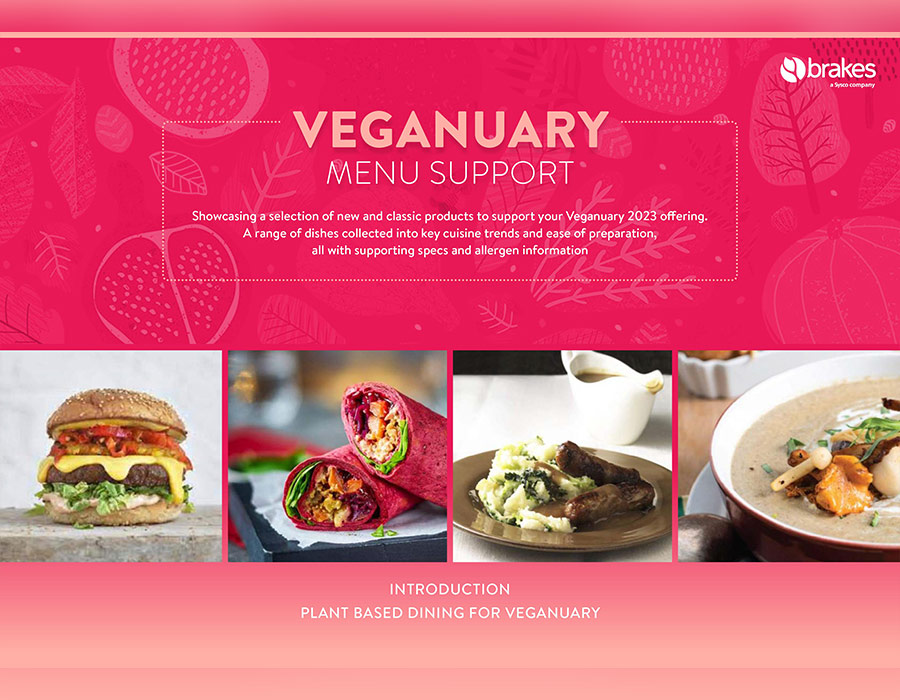
BRAKES LAUNCHES SUPPORT PACKAGE FOR VEGANUARY

Brakes, the UK’s leading wholesaler, has launched a comprehensive support package to help customers take advantage of Veganuary.

With consumers increasingly considering plant-based options, both for meat-reduction and sustainability reasons, this coming Veganuary is likely to provide operators with an opportunity to drive incremental income. Brakes has created a range of calorie-counted, nutritionally analysed menu options to add stand out vegan dishes to any menu.

In addition, there is a range of video content with hints and tips to increase plant-based options on the menu on a new vegan hub at brake.co.uk. Brakes has also launched promotions on both branded and own label products throughout December and January to help operators make the most of Veganuary.

Mandy Van Hagen, Brakes Sector Marketing Manager said: “We’ve created our most comprehensive package for Veganuary to date, as we see an increasing number of chefs wanting to add menu options for January.  Although January has become a focal point for vegan food, we are very focused on making sure that we have a range that works throughout the year and that’s why we believe that we have the biggest range in foodservice.

“Eating a plant-first diet is one of the biggest changes we can make to help tackle climate change. For some operations, food can contribute more than half the carbon footprint, with animal proteins being the most carbon intensive. At Brakes we’ve committed to training our sales colleagues and chefs to support businesses in developing tasty, healthy and sustainable menus.”

Brakes’ campaign will see the number of vegan alternatives grow to more than 350 products, including a range of tasty new products for Veganuary 2023, such as Brakes Vegan & Gluten Free Blackforest Dessert, Tofoo Straight to Wok and our British made Brakes Falafel.

2022 Trade Mark Disputes in the Alcoholic Beverages Industry

The alcoholic drinks industry continues to be rife with trade mark disputes, so what should drinks manufacturers/sellers do when considering trade marks?

All drink manufacturers (and their respective brands teams) should generally follow the same steps when deciding on a new trade mark:

  • Decide what you would like to register (a word or phrase, a logo, or a combination), ensuring that it is not overly descriptive of the goods or services and not a generic phrase.
  • Decide which goods or services are to be covered by the registration. For breweries, Class 32 includes beer, but you may also want to consider merchandise such as clothing in Class 25. For distilleries, the obvious choices are in Class 33 which includes alcoholic beverages other than beer, such as gin, vodka and whisky.
  • Decide which territories are to be covered by the registration(s). Ultimately, this depends on where the brand intends to trade, for example just in the UK or across Europe/the world.

There have been a number of recent decisions at the UK Intellectual Property Office relating to trade mark applications for alcoholic drinks, where the applications were opposed by proprietors of earlier, similar trade marks.

Singha Beer

Boon Rawd Brewery Co Ltd applied for a trade mark for a logo featuring a dragon above the words ‘SINGHA’ for the following goods:

Aerated water; aerated mineral water; aerated fruit juices; soda water; alcohol-free beers; beer; cider, non-alcoholic; cocktails, non-alcoholic; drinking water; fruit beverages and fruit juices; mineral water (beverages); non-alcoholic beverages; non-alcoholic preparations for making beverages; soft drinks; syrups for making beverages; malt syrup for beverages

This was opposed by Jinshan Food Co Ltd, who owned an earlier registered trade mark for a very similar dragon drawing above the words ‘SINGHA’, including in class 32 for the following goods:

Beer; Ginger beer; Ginger ale; Malt beer; Beer wort; Extracts of hops for making beer; Malt wort; Energy drinks; Non-alcoholic fruit juice beverages; Vegetable drinks; Mineral water [beverages].

What was the outcome?

Ordinarily, this looks to be a straightforward case of the marks being so similar, and registered for similar/identical goods, so as to lead to a likelihood of confusion and so a successful opposition under section 5(2)(b) of the Trade Marks Act 1994.

However, Boon responded to the opposition by applying to invalidate Jinshan’s earlier trade mark. This application for invalidation was successful on a number of grounds:

Under section 5(2)(b) of the Trade Marks Act – the goods are identical or similar and the marks are identical or highly similar compared to even earlier registered trade marks belonging to Boon (the closest of which was an EU trade mark featuring the same dragon above wording which included ‘SINGHA’), leading to a likelihood of confusion.

Under section 5(3) of the Trade Marks Act, Boon had a reputation in its marks for the registered goods such that the relevant public will believe Jinshan’s mark is an extension of Boon’s marks. In order to establish this reputation, Boon relied upon extensive evidence of its advertising activity including its sponsorship of football clubs including Manchester United, Manchester City and Chelsea. Boon also claimed that use of Jinshan’s mark will erode the distinctiveness of the earlier marks, damage their reputation if used in relation to goods of different or disappointing quality, and give an unfair advantage to Jinshan by virtue of the reputation of the earlier marks.

Under section 3(6) (that the application was made in ‘bad faith’). Jinshan must have known of the iconic status of Boon’s beer and its use in the UK when it applied for a virtually identical mark. Boon claims that the application for the contested mark was in bad faith, in order wrongly to benefit from the reputation of Boon’s trade marks and to interfere with Boon’s rightful trade in the UK. Jinshan filed no evidence to explain why its mark contained the identical dominant and highly distinctive components as Boon’s mark which had a substantial reputation.

Takeaway points from the decision

Here the opponent not only lost the opposition (and had to pay their own legal fees plus a contribution toward the applicant’s costs of £2500), but they also lost their registered trade mark due to the successful application for invalidity by Boon. A potential opponent should therefore carefully consider the risks of bringing an opposition, as an invalidity challenge from the applicant may be forthcoming. The flip-side to this, is of course, that a key purpose of registering and owning a registered trade mark is to be able to enforce it against third parties. Decisions as to whether to take action in opposing a similar application can therefore be finely balanced.

This decision is also a good example of how the best form of defence can be to attack the opponent’s trade mark for invalidity. Had the earlier trade mark not been invalidated, then the opposition would be likely to have succeeded. However, here it was recognised that the opponent had clearly registered the earlier trade marks to deliberately be similar to the applicant’s pre-existing rights, and so an invalidation was an appropriate result.

The decision can be read in full here – https://www.ipo.gov.uk/t-challenge-decision-results/o46322.pdf

Morrison Scotch Whisky Distillers Limited -v- Morrisons Supermarket

In a 2022 case involving trade marks relating primarily to spirits, Morrison Scotch Whisky Distillers Limited applied for a trade mark for its company name in relation to the following goods and services:

Class 33: Scotch whisky and Scotch whisky based drinks, all being produced in Scotland.

Class 40: Distilling services; information, advisory and consultancy services relating to the same.

This was opposed by Morrisons (WM Morrison Supermarkets PLC), who owned various earlier trade marks incorporating MORRISONS registered in relation to alcoholic goods in class 35 and relevant services in class 35 (e.g. Retail services connected with the sale of malt, beers, and alcoholic beverages).


What was the outcome?

The opponent succeeded here, again under various grounds:

Section 5(2)(b) – similarity: the applicant’s mark is similar to its own trade marks and covers identical or similar goods and services meaning that there is a likelihood of confusion on the part of the public, including the likelihood of association. The hearing officer found that the Class 33 goods were identical, and found some similarity between the class 40 and class 35 services. They also found that the marks themselves were similar after finding that it is the word ‘MORRISON’ that dominates the overall impression of the mark applied for, with the remaining words playing a lesser role.

Section 5(3) – reputation: in order to establish a reputation, the opponent included evidence to show that it held a 10% market share of UK groceries, with an annual turnover of between £16-18 billion for each of the previous seven years, and an advertising spend of nearly £50 million per year. The hearing officer found a very strong reputation in relation to “supermarket retail services”, that a significant part of the relevant public will make a link between the marks (even in relation to dissimilar services) and that there is potential for the Applicant to gain an unfair advantage by using the mark.

Section 5(4)a – that the registration can be prevented by the law of passing off, due to the unregistered rights of the opponent. There are three things to establish for a successful passing off claim:

Goodwill – the opponent was found to have sufficient protectable goodwill in relation to spirits as evidenced by turnover and advertising expenditure.

Misrepresentation – the officer then found that a substantial number of members of the public are likely to be misled into purchasing the applicant’s goods and services in the mistaken belief that they are the goods and services of the opponent

Damage – damage through diversion of sales is easily foreseeable in these circumstances.

The applicant did attempt to rely on the fact that ‘Morrison’ was their family name, to show due cause for applying for the mark, but they were unable to show sufficient use capable of giving rise to a reputation of its own, as they had only recently started using it in a business sense.

Takeaway points from the decision

While the trade marks here were not identical, the mark applied for did incorporate the name of a popular and very successful UK brand, and so it was perhaps not surprising that the opposition was brought. This is the kind of risk that would be flagged to an applicant in a pre-application clearance search.

Similarly, not all of the goods and services were identical between the mark applied for and the earlier marks, but this is only one factor to consider when making the overall comparison between the marks applied for and the earlier marks.

The decision is also a further example of the limitations of any ‘own name’ defence or justification for applying for a trade mark. Just because the applicants here had the surname ‘Morrison’, did not give them an automatic right to apply for a trade mark for such.

The decision can be read in full here – https://www.ipo.gov.uk/t-challenge-decision-results/o47022.pdf

In a sector so susceptible to trade mark disputes it would always be advisable to search for existing similar or identical brands and trade marks, who may bring a challenge to a trade mark application by way of an opposition, or to use of a trade mark by way of an infringement action. If budget allows, a proper clearance search by a suitably qualified legal professional will be a sound investment – this applies is whether they intend to register the trade mark or not.

Intellectual Property

Contact: Kerry Russell   kerry.russell@shma.co.uk

FURTHER DELAY TO HFSS ADVERTISING RESTRICTIONS

The UK government has announced that the 9pm watershed ban on TV and online advertising for foods high in fat, salt and sugar (HFSS) will be further delayed to 1 October 2025.

The delay comes following feedback from industry and regulators as it was made clear that there is insufficient time to prepare for the implementation on the previously announced date of 1 January 2024.

Ahead of the implementation, there are a number of steps that need to be taken, including:

  • A Government consultation on draft regulations that are required to set out of the details of the advertising restrictions, including the definition of the product categories in scope as well as those that are exempt.
  • The making of such regulations.
  • A consultation from the statutory regulator (Ofcom) on the designation of a frontline regulator.
  • Publication of guidance to support business compliance with advertising restrictions.

The government claim they have listened carefully to concerns raised by advertisers, broadcasters and regulators abut the importance of having sufficient time with these documents to fully prepare, restructure advertising and to allow businesses time to reformulate their products.

Parliament included a power in the Health and Care Act to delay implementation of the advertising restrictions if necessary. Government will be utilising this power to amend the date of implementation for the advertising restrictions by secondary legislation.

To show their commitment to the policy, a consultation has been launched on the definitions included in a secondary legislation, to provide detail to that included in the Health and Care Act. The consultation will run for 16 weeks until 31 March 2023.

The consultation will not be inviting opinions on the policy, it is to confirm the clarity of the definitions used and that the text in the secondary legislation is fit for purpose.

The government claim having a fit and healthy population is essential for a thriving economy and they remain committed to helping people live healthier lives, so obesity remains a priority for them.

FEED THE WHOLE FAMILY FOR JUST £3.90 PER PERSON THIS CHRISTMAS WITH THE FOOD WAREHOUSE

Planning for Christmas Day is always stressful but with rising energy costs and increasing food prices, this year will not be any easier – even more so if you’re hosting the whole family. The Food Warehouse is doing all it can to ease the pain with an entire Christmas dinner for 8–10 guests for £35.00, at just £3.90 a head and most products can be cooked in an air fryer and a microwave too, for even further energy savings.

The Food Warehouse has got the centrepiece of the table covered with the Luxury Perfect Turkey Crown (£20.00, 2.2kg), perfect for bringing the traditional feel of Christmas to the whole family. Simply defrost and cook in an oven for 2 hours and 15 minutes on 160 degrees then leave to stand for 10 mins before carving for a juicy and succulent turkey, easy to serve straight to plates. If you prefer a crispier skin, simply open the paper wrap after the cooking time and return to oven for a further 5 minutes. Be-yule-tiful!

Christmas wouldn’t be Christmas without pigs in blankets but if you’re worried about making sure everybody gets a portion of this much-loved festive side, the 40 pack Pigs in Blankets (£7.50, 40pk) are the perfect option for feeding the family. With this big pack, you won’t have to worry about siblings fighting over who gets the last one.

Tasty when oven baked straight from the freezer, so you don’t have to worry about fridge space, Aunt Bessie Crispy & Fluffy Roasties (£3.50, 1.3kg) are perfect for making sure you sleigh your guests with plates stacked high.

Do Yorkshires belong on a Christmas dinner? That’s an argument for the big day, but whether you agree or not, you can treat yo’elf with a 20 pack of Yorkshire Puddings (£1.25, 20pk). Simply cook in an air fryer for four minutes at 200 degrees and turn halfway through for a perfectly golden-brown Yorkshire. 

But wait—there’s myrrh! You won’t have to worry about using expensive gas and electric hobs this year, with large packs of Carrots, Broccoli and Peas Mix (£2.00, 1kg) and Button Sprouts (£1.00, 900g) all of which can be cooked in the microwave in four minutes or less.

The Food Warehouse’s £35.00 Christmas for 8 – 10 includes:

  • Iceland Luxury Perfect Turkey Crown (£20.00, 2.2kg)
  • Iceland Pigs In Blankets (£7.50, 40pk)
  • Aunt Bessie Crispy & Fluffy Roasties (£3.50, 1.3kg)
  • Iceland Yorkshire Puddings (£1.25 20pk)
  • Iceland Carrots, Broccoli and Peas Mix (£2.00, 1kg)
  • Iceland Button Sprouts (£1.00, 900g)

Shoppers can also pick up the award-winning Luxury Turkey Gravy (£1.75, 350g), flavoursome, sweet, herby, you’ll delight the whole family by drizzling this all over plates.

For more information on The Food Warehouse’s affordable Christmas range, head to your local store or visit https://www.thefoodwarehouse.com/

PROHIRE BOOSTS CUSTOMER SERVICE WITH TNS 365

A leading provider of commercial vehicle contract hire and fleet management solutions says it has further improved customer service through a new partnership.

Prohire Group provides vehicle rental, contract hire and fleet management to a variety of commercial vehicle operators in a diverse range of industries. It also offers service and maintenance, accident repair management, and fleet compliance to clients across the UK, ranging from single vehicle operators to blue chip fleets.

According to Prohire, the company has a strong focus on corporate social responsibility and strives to lead the charge as the UK’s most trusted provider of sustainable vehicle hire.

The Group wanted to further enhance the customer experience for the van and truck operators who rely on Prohire for emergency breakdown and repair. To this end it has brought in TNS 365, a specialist in this sector, to provide additional support.

Gary Banister, Group Operations Director at Prohire Group said: “Prohire has built a highly successful business by providing exceptional customer service. Call handling was an area of operations we felt we could further improve by working with a third party and this has proved to be the case. In fact, TNS 365 has enabled us to significantly reduce call handling times both during office hours and out of hours. This has been especially helpful while we roll out a new phone system in our offices.”

Founded by Adam Drake, TNS 365 is a specialist in call centre provision as well as commercial vehicle and trailer breakdown repair. TNS 365 has an extensive network of dedicated commercial vehicle technicians, meaning that Prohire customers are never more than 90 minutes from a mechanic – and most are less than an hour away.

Adam said: “We are proud to work with Prohire as they are a valued client that utilises all our service offerings. We continue to work with them to enhance their customer service and lower call answer times through our experienced call handling service as well as resolving breakdowns for their customers as required. The feedback from Gary and the team helps us to evolve our partnership and find more ways to assist their business.”

TNS 365 provides Prohire with an overflow call centre service during office hours, handling calls when Prohire’s own operators are experiencing high demand. TNS 365 also acts as Prohire’s out of hours breakdown and repair service from 6pm to 7am.

Gary added: “Being able to tap into TNS 365’s after-hours breakdown and repair network has been excellent in terms of enhancing support for our customers. They are helping us to support 260 customers across the UK and Ireland, with more than 4,000 vehicles.

“Adam took the time to understand our business and is always available if I need to discuss anything with him. That personal touch is what makes TNS 365 stand out from other companies. We know he will look after our customers as well as he looks after us.”

To find out how TNS 365 could provide breakdown cover for your commercial vehicle fleet, visit https://www.tns365.com/.


CAMPDEN BRI IS SEEKING PARTNERS FOR NEW FOREIGN BODY DETECTION TECHNOLOGIES RESEARCH TO COMBAT UNSAFE PRODUCTS AND COSTLY RECALLS

With foreign bodies in food and drink products continuing to cause product recalls across the industry, Campden BRI is looking for partners to help with new research that aims to improve the range of foreign bodies that can be detected in food.  Practical trials have been designed to evaluate the potential of new technologies for detecting a range of foreign bodies in various foods.

Campden BRI’s Future Technology and Insights Lead Danny Bayliss, who is jointly leading the project, reflected on the limitations of current detection technologies across the industry, including metal detectors, X-ray detection and optical sorting,

“These technologies are not capable of detecting all foreign body materials that manufacturers are challenged with:  metal detectors only detect metal and have low sensitivity to some types; X-ray is only sensitive to dense materials such as metal, glass and calcified bones and these can be obscured by structures within the product; and optical technologies are only suitable for surface objects or materials that can be spread in a thin layer.  The food industry lacks technologies that can reliably detect materials like soft plastics, wood, uncalcified bones, fruit stones, nutshells and insects.  Campden BRI is aware of innovative technologies and methods, at various stages of development, that could improve the detection of foreign bodies in food, including materials that are currently difficult to detect.”

The research team are looking for interested food manufacturers to work with them on this project, so that they can evaluate these technologies with a view to encouraging the development of their practical application in the food industry.

Club project lead and Strategic Knowledge Development Scientist at Campden BRI, Greg Jones expanded on the benefits of the project to club members and the industry,

“Foreign bodies have always been a challenge for food manufacturers to eliminate from their products and are a quality and food safety concern.  Manufacturers have robust HACCP (Hazard Analysis and Critical Control Points) plans in place to minimise the risk of foreign bodies in their products, with detection systems often acting as the ‘last line of defence’.  With the limitations of current detection systems, this club provides the opportunity for members to see the potential of new detection technologies that could improve food safety and quality, reduce complaints, improve due diligence and increase customer confidence for their products.”

Club members will be consulted on the choice of foods and foreign materials and will have the competitive advantage of exclusive access to trial results and advance awareness of their potential.  Technology developers will participate in the club, enabling them to be aware of user needs and enabling food manufacturers to influence technology development.

The research is set to commence in early 2023.  Any companies wanting to take part in the project should contact: greg.jones@campdenbri.co.uk

Member Benefits

Exclusive Partnership deals on key products and services:

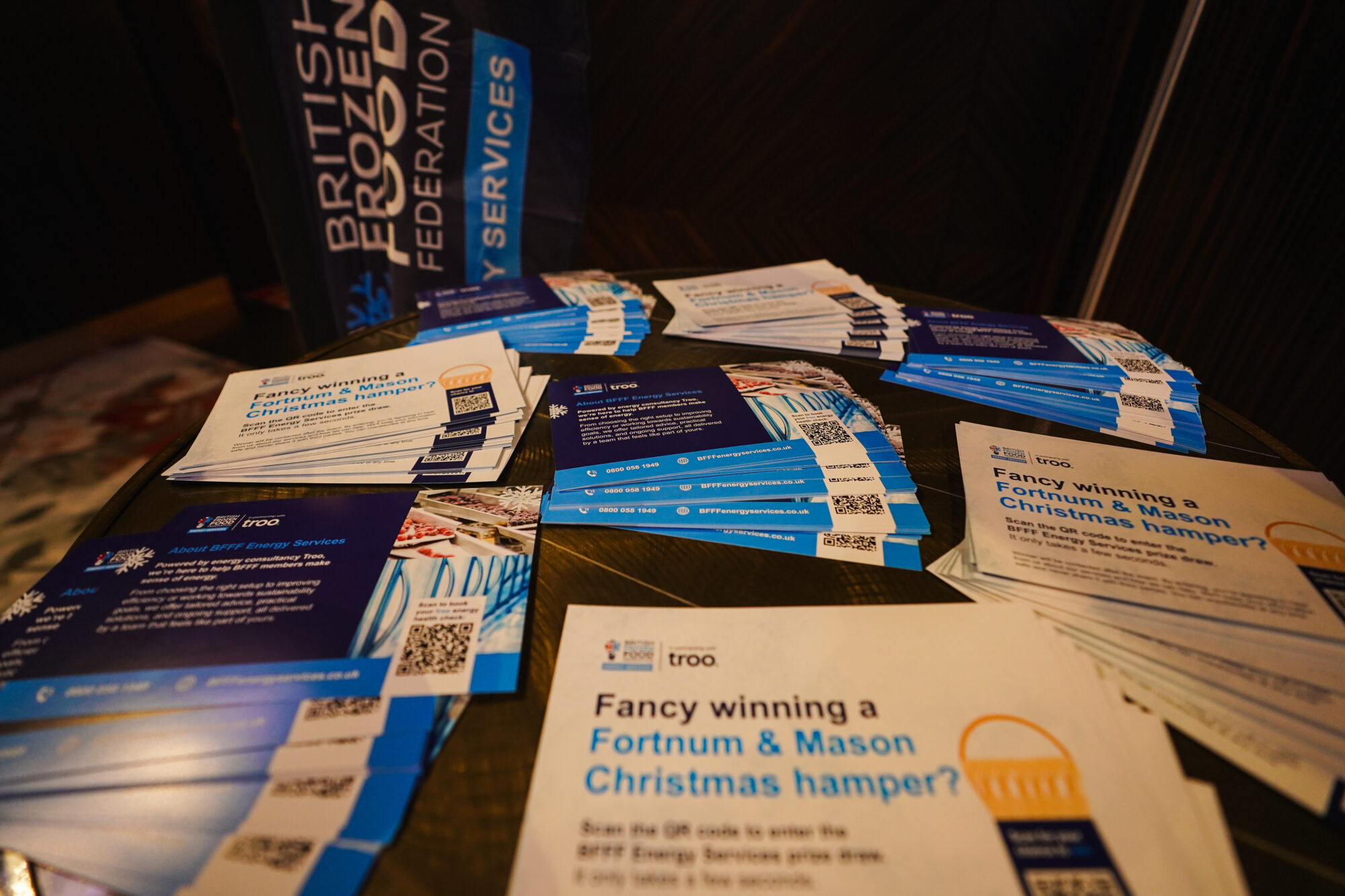
  • BFFF energy deals and rates
  • Vypr member deals and introduction
  • Defib Plus deals
  • Company Shop – membership
  • Mentor – MHE training health check

Exclusive access to networking opportunities and events:

  • Meet the Buyer events (retail & foodservice)
  • Annual Business Conference with networking dinner
  • Specialist H&S and Technical Conferences
  • Special interest groups (packaging, frozen food temperatures)
  • Annual Lunch
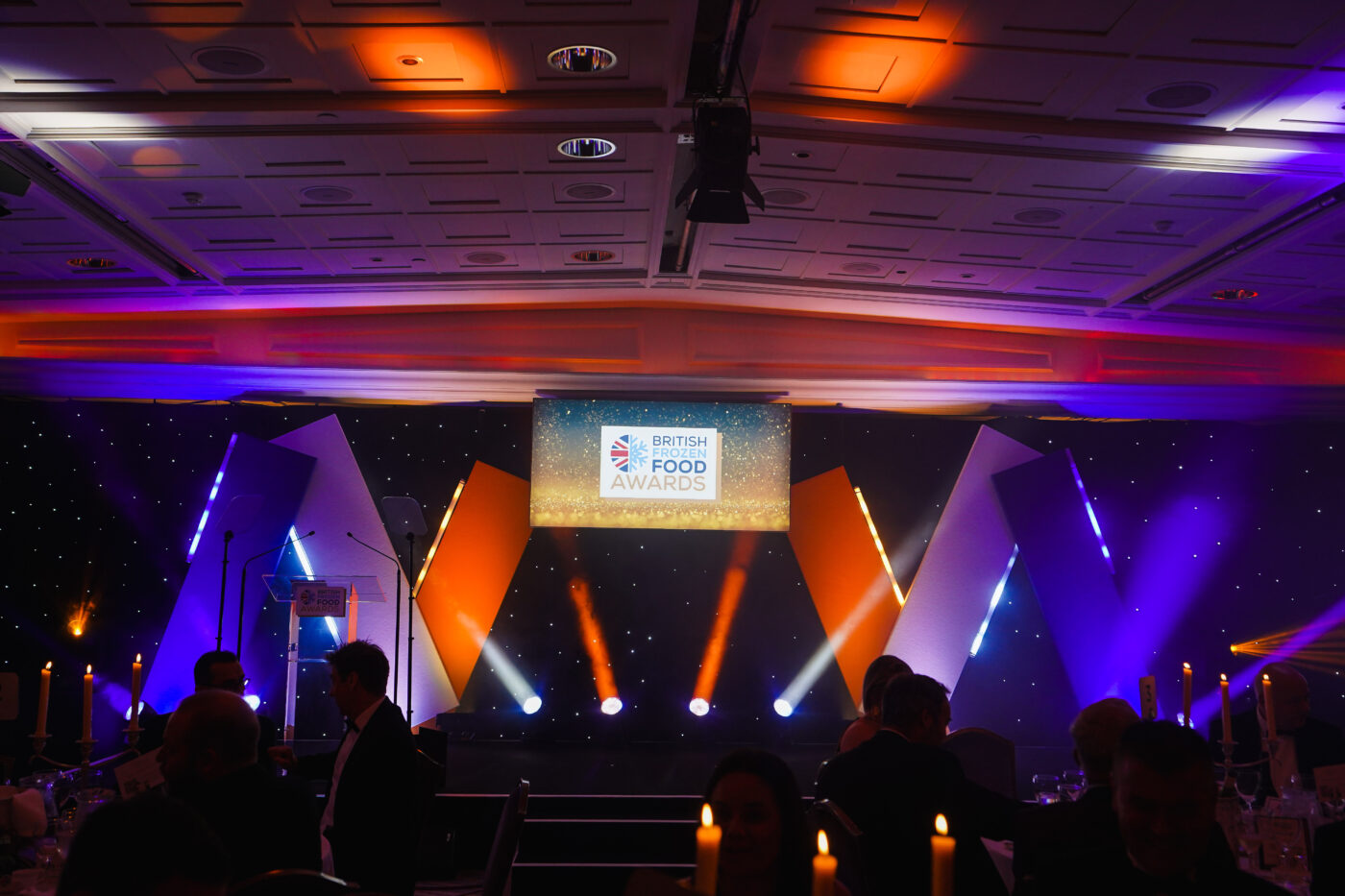
  • Awards Night
Upcoming Events More Events
Sponsorship Packages

We offer a range of sponsorship opportunities to BFFF members across our events throughout the year, with flexible packages that can be tailored to suit your business objectives.

Contact Us
British Frozen Food Federation Members Logo
what our members say...
  • Wakefield Council

    “What an amazing piece of work and indicative of how BFFF respond to the concerns of their members and make an impact on the whole industry sector.”

    See Full Quote

  • Sysco

    “You guys really ‘Do The Right Thing’ for the good of the industry”

    See Full Quote

  • Darta

    “The BFFF awards night is becoming an “appointment not to miss” on our calendar and we again enjoyed it immensely together with lots of well-known people from our industry. The…

    See Full Quote

  • Kantar Worldpanel

    “The Business Conference was an excellent day that was very well organised and allowed so many likeminded individuals in the room to learn so much more around the Frozen industry….

    See Full Quote

  • Lakeside Food Group Ltd

    “This Not For EU labelling situation alarmed us and quickly became a major worry to our business. These are times when you really rely on some support and from previous…

    See Full Quote

  • Meadow Vale Foods Limited

    “We had a few questions with respect to the new EPR waste packaging legislative changes. I know some of my colleagues have been assisted by BFFF in the past so…

    See Full Quote

  • Newberry International Produce Ltd

    “I am writing to express my heartfelt gratitude for the outstanding event you organised. I have only worked in this sector for the past nineteen months coming from twenty-five years…

    See Full Quote

  • Place UK Ltd

    “The BFFF 2024 Conference was compelling and thought provoking, with a many relevant and interesting topics covered at great pace and some depth by excellent speakers – will certainly attend…

    See Full Quote

  • Roswel Spedition GMBH

    “Thank you and the team for rushing around so brilliantly before, during and after the conference. It was pleasure to be part of the conference.”

    See Full Quote

  • Seara

    “The event was great, in my opinion. Not only it was very well organised, but the venue and the catering were excellent too. Furthermore, the content of the presentations was…

    See Full Quote

Website Designed & Built by we are CODA