Become a member

Access the library of Assured and Industry Level Guidance available to members

HEALTH AND SAFETY  – PRIMARY AUTHORITY ASSURED ADVICE

Please contact carlabrown@bfff.co.uk to request copies of the guidance, whilst the new web page is under construction

COVID-19 OFFICE REOPENING GUIDANCE

  • Primary Authority Advice COVID 19 Office Re-Opening Policy, Procedures and RA
  • Primary Authority Advice – Office Reopening Policy, Procedures and Risk Assessment

FIRE SAFETY

  • Hot Works Permit Checklist
  • Hot Work Permit
  • Induction Training Check List for Contractors
  • Induction Training Check List for Staff
  • Example Fire Risk Assessment in Food Processing and Cold Storage

FIRST AID

  • Selecting Staff for First Aid Training
  • Provision of Defibrillators in the Workplace

GUIDANCE ON RAYNAUDS PHENOMENON

  • Guidance on Raynaud’s Phenomenon V4 2021

Health Surveillance for Coldstore Workers

  • Cold store Health Surveillance V4 2021
  • H&S poster Employee ‘Keep Warm’ Advice A3

Head Protection for Cold Store Workers

  • Head Protection for Cold Store Workers V4 2021

OVERTIME RISK ASSESSMENTS

  • Overtime risk assessments V3 Oct 2019

PREVENTING FALLS WHILST WORKING ON MOBILE

  • This Guidance is under review. Please contact us for further information

Provision of defibrillators

  • V4 Provision of defibrillators NF

REST BREAKS FOR COLDSTORE WORKERS

  • Rest Breaks for Cold Store Workers
  • Keep Warm Info sheet

RIDDOR REPORTING GUIDANCE

  • RIDDOR – Version 2

SELECTING STAFF FOR FIRST AID

  • Selecting Staff for First-Aid Training V4 NF

WORKING AT HEIGHT IN COLD STORES

  • Work at height Equipment in a cold store V4 2021

Working in a Coldstore – Advice for Employees

  • Working in a Cold Store-Environment V4 2021

INDUSTRY GUIDANCE

ACCIDENT, INCIDENT AND NEAR MISSES

  • Legal Obligation to Report Near Misses

 AMMONIA

  • ammonia-guide-smars-2016_copy-0023_stephen-crocker
  • Application of Ammonia is Refrigeration Systems – Safety & Environmental Requirements 2

ASBESTOS

  • Managing Asbestos

BUSINESS CONTINUITY PLANNING

  • Expecting The Unexpected – Business Continuity Planning
  • HSE Advice – Dealing With Flooding

COMAH

  • COMAH Regs 2015 v2

ELECTRICAL SAFETY

  • Electrical Safety Training

FALLS FROM VEHICLES

  • Falls From Vehicles

 FIRE ASSEMBLY POINT

  • Choosing a Fire Assembly Point

 FIRE DOOR AND CONSIDERATIONS

  • Fire Doors and Considerations
  • Best Practice Fire Grab Packs

FIRE SAFETY

  • Cover sheet – risk assessment for food processing & cold storage premises
  • Cold Storage and Food Processing Examples of Significant Findings from Fire Risk Assessments


INDUSTRY LEVEL FIRE SAFETY GUIDANCE

  • Acetylene Considerations
  • Control of Major Accident Hazards Regulations 2015
  • Disabled Refuges
  • E-Cigarettes and Considerations
  • Emergency Lighting British Standards 5266 1 2016
  • Fire Compartments and Considerations
  • Fire Risk Management
  • Solar Panels & Fire Safety
  • Third Party Certification of Fire Doors
  • Unwanted Fire Signals Guidance
  • What are Significant Findings

FIRST AID

  • Cold Store First Aid Requirements
  • Importance of Annual Refresher Training for First Aiders

GAS & EXPLOSIVE SUBSTANCES

  • Working with Hazardous Substances

HEALTH & WELLBEING

  • Occupational Health Service Provision
  • HSE Face Coverings and Face Masks
  • Managing Display Screen Equipment in the Office

HSE

  • HSE – A Recipe For Safety
  • HSE Face Coverings and Face Masks

LEGIONELLA

  • Legionnaires Disease, Responsibilities and Guidance

MANUAL HANDLING

  • HSE MSD Tool
  • Manual Handling Assessment Chart
  • Manual Handling in Food and Drink Sector

MATERIALS HANDLING

  • A Site Safer
  • Forklift Supervisor Training Regulations
  • Is Forklift Truck Training Transferable
  • PRIMARY AUTHORITY ADVICE Materials Handling Equipment Observation Assessment
  • Second Hand Forklift Trucks
  • Training is key to Powered Plant Truck Safety
  • Working at Height – The MEWP
  • Young Persons and Material Handling Equipment

 MOVING GOODS

  • Assessing The Risks At Your Customers’ Delivery Points

 MUSCULOSKELETAL DISORDERS

  • Food And Drink ‘Better Backs’ Initiative 2008

NOISE

  • Noise Risk Assessment Guidance on Action Levels

RISK ASSESSMENTS

  • Dynamic Risk Assessments

TRANSPORT

  • Driving in Adverse Conditions
  • Employers Road Safety Guide
  • Logistics-Report-2021-summary-version-210525

Fire Safety – Water Supplies by Brian Dean, Primary Authority Manager Essex County Fire & Rescue Service

There is one essential in life that is critical to effective firefighting – WATER – with it, a fire authority will normally have the tools and procedures to instigate an effective firefighting plan and protect additional risks around the fire. Without it, there is Armageddon.

As you would expect there are many pieces of legislation that need to be followed and adhered to and of course if these things are not achievable then additional measures must be instigated. The first of these is the Fire Services Act 2004. It would not be possible to go into this in great detail, but section 38.1 states one of the main duties would be, ‘A fire and rescue authority must take all reasonable measures for securing that an adequate supply of water will be available for the authority’s use in the event of fire’ and so ‘A fire and rescue authority may enter into an agreement with a water undertaker for the purposes of section 38(1). Therefore we have hydrant systems in the streets.

Approved Document ‘B’ is the basic fire safety legislation that must be followed with any new build or alterations to a building. It states that a building should be no more than 100 metres from a fire hydrant, which is usually achievable for smaller factory units and shops, but for larger more industrial sites this is not always possible, so the document calls for the provision of private hydrants or alternative supplies of water. These can come in many differing formats with the simplest of these being an extension from the water authority’s line with hydrants 90 metres apart along its length, this becomes a private main and the testing and maintenance falls to the occupier.

Some larger sites, for example larger airports, have systems utilising ‘dirty water’ in other words rain water or other waste water that is collected through drains and stored in large tanks or ponds, this is then fed via pumps into the onsite hydrant system, usually these hydrants are fixed above ground for speed of access and visibility.

Article 38 of the Regulatory Reform (Fire Safety) Order stipulates that any facilities, equipment and devices for the use of firefighters are subject to suitable maintenance and must be in efficient working order and good repair. Therefore hydrant systems should be inspected regularly to ensure all moving parts and washers operate and tested to inspect the flow at least annually. The National guidance document on the provision of water for fire fighting gives the relevant flow rates for any system depending on the size of the site, the main itself should be a minimum of 150mm (6’’) bore and the flow rates should achieve:

  • Up to one hectare 20 litres per second.
  • One to two hectares 35 litres per second.
  • Two to three hectares 50 litres per second.
  • Over three hectares 75 litres per second.

When it is not possible to supply a piped system or the pressure and flow within the local system is insufficient then the alternatives come into play. These must be in consultation with your local

Fire service and will depend on the size of the site but as a minimum it would be a charged static water tank with a minimum capacity of 45,000litres. This could be a solid tank or a neoprene bag, the choices are endless. 

The other option would be a spring, river, canal or pond (non-tidal) that can provide or store a minimum of 45,000 litres of water at all times and it must be provided with access, space and a hard standing for a pumping appliance, this is called an Emergency Water Supply and is denoted by an EWS sign.


The hard standing is to allow an appliance to lower a hard suction pipe into the water to draw up its supply, but many modern systems incorporate the pipework into the set up and this allows an appliance to connect straight in and draw the water off.

ICELAND LAUNCHES UK’S FIRST PAPER-COTTON WOVEN REUSABLE BAG IN FIGHT AGAINST PLASTIC

Iceland has become the first supermarket in the UK to launch plastic-free reusable woven bags that will see the retailer expand its alternatives to traditional plastic bags.

The new bags are a combination of paper and cotton and provide customers with a strong, reusable bag that has been designed to match the performance of existing woven bags.

Iceland will launch the bags in all of its stores across the country as it continues to monitor customer feedback for all its plastic-free innovations.

The bags will cost £1.00 each and will be sold alongside sustainably sourced reusable and recyclable paper bags (30p) and insulated freezer bags (£1.50).

Richard Walker, Managing Director of Iceland, said: “We know that many customers are still using ‘bags for life’ only once so we have been working hard to create an alternative plastic-free reusable solution. Nearly 500 million plastic bags for life were sold last year in the UK – a steep decline in recent years – but this figure is still far too high.

“These new paper cotton bags will offer our customers a strong, reusable alternative to plastic bags. We’re looking forward to seeing how customers respond to these new bags as part of our wider plans to reduce our plastic footprint.”

This is the latest in a long succession of industry-leading plastic removal projects, as the retailer continues to lead the UK’s grocery sector in its fight against plastic. In 2019, Iceland became the first UK supermarket to trial plastic bag free stores.

The retailer continues to lead the way in the fight against plastic, recently becoming the first major UK supermarket to fully publish its plastic footprint.

For further information on Iceland’s plastic reduction progress to date, please visit sustainability.iceland.co.uk.

AD AND BIOGAS INDUSTRY AWARDS 2022: THE RESULTS ARE IN!

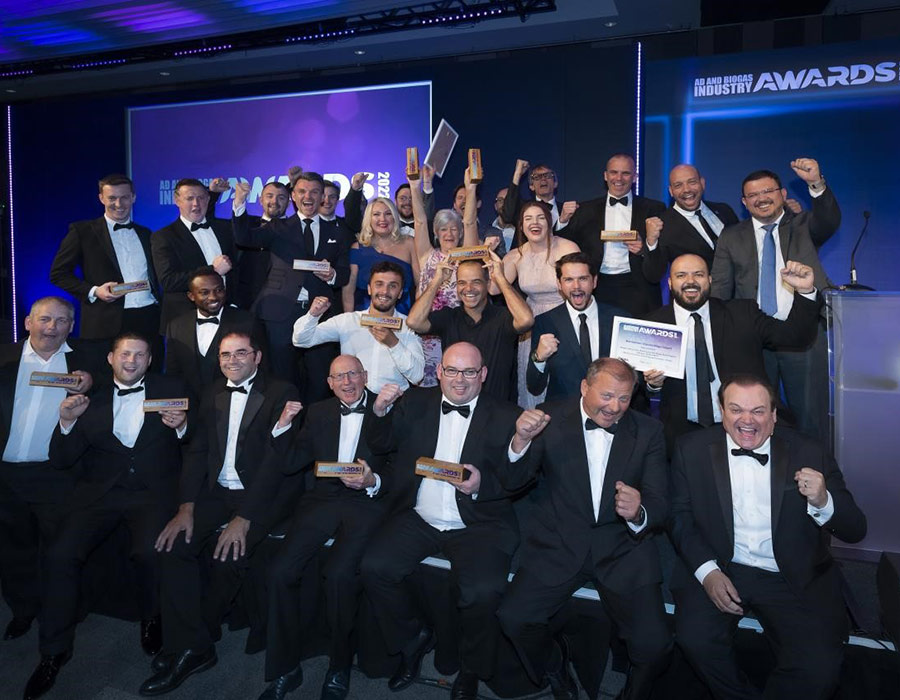
The 2022 AD and Biogas Industry Awards, organised by the Anaerobic Digestion and Bioresources Association (ADBA) and the World Biogas Association (WBA), reached their climax on Wednesday night with the Awards Ceremony celebrating the winners and highly commended entries of this year’s competition.

Held since 2010 to recognise excellence and innovation in the UK and global biogas sector, the Awards have reflected the rapid growth of the industry on a global scale, as well as its diversification, with an increasing number of entries from around the world and the launch, this year, of the Women in Biogas category.  The latter proved exceptionally popular with three joint winners out of a shortlist of 37 – the judges having decided that the quality of all the entrants justified giving them all a chance to win.  Another milestone this year was the Award handed out to former WBA President, David Newman, for his lifetime achievements.

Chris Huhne, Chairman of ADBA, commented: “Congratulations to all our winners, highly commended and all finalists to this year’s competition.  These Awards demonstrate the excitement that is running through the green gas industry as a result of the opportunities that are opening up. Not only does biogas have a key role to play in combating climate change, but it is also essential to our energy security in the face of Russia’s invasion of Ukraine.

Charlotte Morton, WBA Chief Executive, added:  “Our industry can deliver 50% of the Global Methane Pledge targets signed up by over 100 countries after COP26. 

Realising that potential will require a massive growth of the sector and the commitment of all its players. To achieve this we will have to be at our best, and we will. Our industry’s global footprint is growing and so is its diversity, as exemplified by the calibre of the 37 shortlisted women for the Women in Biogas award. The evidence is clear that a more diverse workforce delivers significantly greater performance.

The Awards are there to celebrate those who are demonstrating that excellent performance – not least our former president, David Newman, whose dedication, leadership and influence over the years have helped place biogas at the heart of the international agenda on climate change and environmental sustainability.  We were thrilled to present him with the Lifetime Achievement Award, and thrilled to host another superb cohort of Awards entrants.

Congratulations to our winners and highly commended recipients, and a big thank you to all our finalists for their commitment to our industry.  Keep up the very good work and we hope to see you again next year.”

Full winners and highly commended list:

The Health and Safety Award – Sponsored by SGN Commercial Services
Winner: Energen Biogas/ Bio Capital Group 
Highly Commended: Shropshire Energy UK Ltd 

Women in Biogas – Sponsored by Air Liquide
Winners: 
– Lucy Lewis, Marches Biogas 
– Dr Fatima Zahra Beraich , BIODOME.SARL
– Christine McKiernan, Bioenergy Devco

AD Hero of the Year – Sponsored by Future Biogas
Winner: Fatima Zahra Beraich, BIODOME.SARL 
Highly Commended: Sophie Randall, Waste4Generation Ltd 

AD Rising Star – Sponsored by Esmil
Winner: Timothy Hamill, Bio Capital Group 
Highly Commended: Charlotte Catt, BioteCH4

Best Anaerobic Digestion/Biogas Support – Sponsored by Blended
Winner: PRODEVAL: Between Services and Innovation 
Highly Commended:
– DiBiCoo, Biogas and Gasification Matchmaking Platform
– Ministry of Science, Technology and Innovation Brazil: Biogas Training Track offered by the GEF Biogas Brazil Program, CIBiogás, UNIDO & MCTI 

AD Circular Solutions 
Winner: McCulla Ireland: Sustainable Transport Circular Solution 
Highly Commended: 
– Project Biogas Ladyzhyn of MHP (Ukraine) 12 MWe 
– The Bennamann Biocycle 

The Net Zero Award – Sponsored by ECO2
Winner: Severn Trent Green Power 

AD Pacesetter: Micro AD
Winners: 
– Cold & High AD, Washington State University
– HomeBiogas 
Highly Commended: BioNomad, EcoNomad Solutions Ltd 

AD Pacesetter: Below 1Mwe
Winner: Liholmen, Norway: The World’s Northernmost AD Plant

AD Pacesetter: Above 1Mwe
Winner: Recovery of Plastics From Depackaging Process, Swancote Energy Ltd 

Lifetime Achievement Award
David Newman

PEANUT CONTAMINATION OF SOYA LECITHIN – RISK ASSESSMENT CONSIDERATIONS

Members will be aware of the FSA’s ongoing investigations into peanut contamination of soya lecithin produced in India.

To reiterate, as outlined in the FSA’s statement on 25th May, there is currently no evidence of unsafe food having been placed on the market and information provided by industry to date suggests that the incident has been controlled.

As investigations indicated a wide distribution, with many businesses affected across the UK and globally, the FSA decided that the most effective way of addressing the issue was to provide industry with guidance and to make consumers aware of the issue.

The industry guidance asked each business to carry out its own risk assessment to ensure that only safe food is placed on the market. However, following conversations with members, it’s clear that a few ‘pointers’ would be welcomed.

Please note that the following is not an exhaustive list and does not constitute formal advice or instruction but merely gives suggestions of things to consider:

  • First and foremost, remember you need to ensure the food you sell is safe. Therefore, any food placed on the market or supplied needs to be risk-assessed to decide whether a recall/withdrawal is necessary to protect consumers.
  • The risk assessment should be based on worst case scenario and look at the whole process.
  • It is reasonable to expect that an effective positive release system is put in place at the raw material stage.
  • The contamination levels may be below limit of detection for the chosen laboratory test method, therefore a calculation will be necessary.
  • In your calculations, use the highest level of peanut protein that has been detected in the raw material. Also, consider mixing bowl tolerances – look at the highest potential inclusion levels of the affected ingredient(s)/components in combination with the lowest inclusion levels of non-affected ingredients/components.
  • Consider the amount per unit of consumption and how much may be realistically consumed, even in excess.
  • The Voluntary Incidental Trace Allergen Labelling (VITAL) Program is widely used as a useful tool to provide a risk-based methodology for food manufacturers to use in assessing the impact of allergen cross contact and to provide appropriate precautionary allergen labelling (PAL).
  • If the result of your calculation is remotely near the VITAL threshold, we would recommend seeking expert opinion for confirmation. It may be that the quantity of product needed to be consumed to invoke a reaction is so huge that the food would not necessarily be considered unsafe and so a withdrawal or recall may be unnecessary.


BFFF PEOPLE AWARDS CELEBRATE PANDEMIC HEROES

The frozen food industry has celebrated its stand-out individuals and teams in the British Frozen Food Federation’s (BFFF) People Awards.

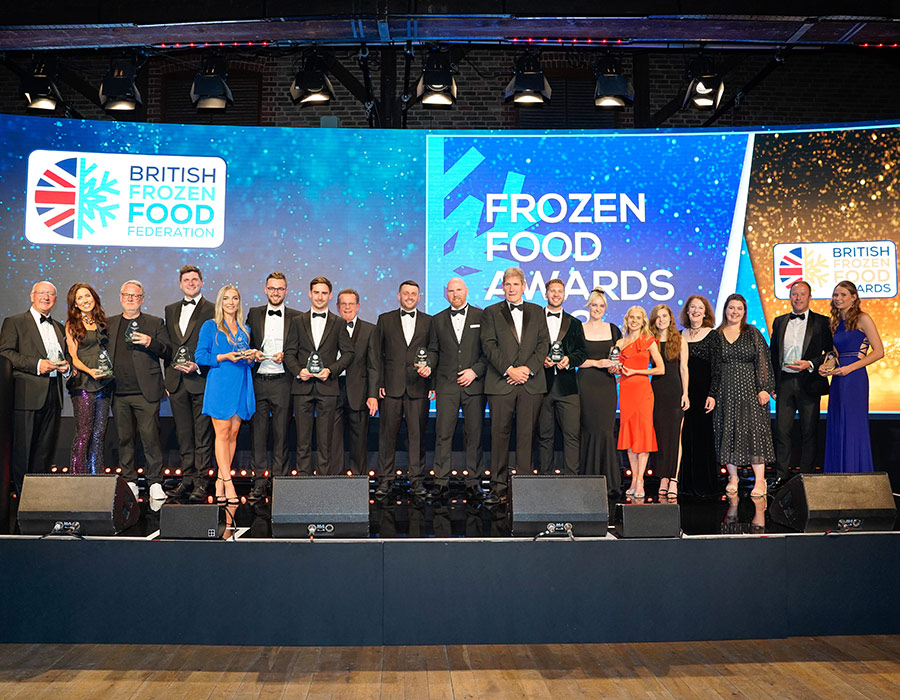
The awards, which returned after the pandemic, took place last night (16 June) in London as part of the BFFF Gala Dinner, and recognised many of the industry’s unsung heroes: people who had helped ensure food supplies continued throughout Covid-19 pandemic.

In total 19 people and teams were recognised across 11 categories, with former Iceland joint managing director, Nigel Broadhurst receiving the Lifetime Achievement Award. Other winners included Health and Safety Champion, Peter Jenkins of Dalziel Ingredients, The Ice Co’s Top Bank team that collected the Supply Chain/Logistics Team of the Year award and Declan Henderson of Apetito, who claimed the Rising Star Award.

Richard Harrow, BFFF chief executive, said: “Following an incredibly challenging period, the People Awards are the perfect opportunity to reward those who have gone above and beyond for their businesses, their communities and the frozen food sector.

“The role frozen plays in tackling issues such as food waste has never been more important, so giving those working tirelessly behind the scenes a morale boost in this way is therefore equally important.”

Award categories were open to BFFF members from both foodservice and retail sectors, as well as associate members where relevant.

The awards were judged by Robert Reader, supply chain account development director at GXO, Isaac Fisher, general manager of Pukka Pies, Marcus Coleman, CEO of Seafish and Vince Craig an independent consultant to the food industry.

The full list of award winners is:BFFF People Awards 2022 winners

Adaptability Champion
Name Company  
Wiltshire Farm Foods Team Wiltshire Farm Foods Winner
Special Award for Innovation
Name Company
David Lennox Iceland
Lauren Metcalfe Iceland
Supply Chain/Logistics Team of the Year
Name Company  
Top Bank Team The Ice Co Winner
Rising Star
Name Company Ranking
Declan Henderson Apetito Winner
Sustainability Champion
Name Company Ranking
Lee Sheppard & team Apetito Winner
Digital Champion
Name Company Ranking
Ellie Shreeves Birds Eye Winner
Key Account Manager/Commercial Champion
Name Company Ranking
James Buckingham Birds Eye Winner
Outstanding Contribution
Name Company Ranking
Jonathan Whiteley Birds Eye Winner
Charity/Community Champion
Name Company Ranking
Yvonne Bennett Cargill Winner
Lifetime Achievement
Name Company Ranking
Nigel Broadhurst   Winner
Member Benefits

Exclusive Partnership deals on key products and services:

  • BFFF energy deals and rates
  • Vypr member deals and introduction
  • Defib Plus deals
  • Company Shop – membership
  • Mentor – MHE training health check

Exclusive access to networking opportunities and events:

  • Meet the Buyer events (retail & foodservice)
  • Annual Business Conference with networking dinner
  • Specialist H&S and Technical Conferences
  • Special interest groups (packaging, frozen food temperatures)
  • Annual Lunch
  • Awards Night
Upcoming Events More Events
Sponsorship Packages

We offer a range of sponsorship opportunities to BFFF members across our events throughout the year, with flexible packages that can be tailored to suit your business objectives.

Contact Us
British Frozen Food Federation Members Logo
what our members say...
  • Wakefield Council

    “What an amazing piece of work and indicative of how BFFF respond to the concerns of their members and make an impact on the whole industry sector.”

    See Full Quote

  • Sysco

    “You guys really ‘Do The Right Thing’ for the good of the industry”

    See Full Quote

  • Darta

    “The BFFF awards night is becoming an “appointment not to miss” on our calendar and we again enjoyed it immensely together with lots of well-known people from our industry. The…

    See Full Quote

  • Kantar Worldpanel

    “The Business Conference was an excellent day that was very well organised and allowed so many likeminded individuals in the room to learn so much more around the Frozen industry….

    See Full Quote

  • Lakeside Food Group Ltd

    “This Not For EU labelling situation alarmed us and quickly became a major worry to our business. These are times when you really rely on some support and from previous…

    See Full Quote

  • Meadow Vale Foods Limited

    “We had a few questions with respect to the new EPR waste packaging legislative changes. I know some of my colleagues have been assisted by BFFF in the past so…

    See Full Quote

  • Newberry International Produce Ltd

    “I am writing to express my heartfelt gratitude for the outstanding event you organised. I have only worked in this sector for the past nineteen months coming from twenty-five years…

    See Full Quote

  • Place UK Ltd

    “The BFFF 2024 Conference was compelling and thought provoking, with a many relevant and interesting topics covered at great pace and some depth by excellent speakers – will certainly attend…

    See Full Quote

  • Roswel Spedition GMBH

    “Thank you and the team for rushing around so brilliantly before, during and after the conference. It was pleasure to be part of the conference.”

    See Full Quote

  • Seara

    “The event was great, in my opinion. Not only it was very well organised, but the venue and the catering were excellent too. Furthermore, the content of the presentations was…

    See Full Quote

Website Designed & Built by we are CODA