Become a member

BIDFOOD LAUNCHES ITS BIGGEST EVER CHRISTMAS DEALS FOR 2025!

Christmas has come early at Bidfood – and it’s bigger, better, and more rewarding than ever before!

Bidfood, one of the UK’s leading foodservice providers, is making Christmas 2025 even more rewarding for its customers with an exciting lineup of festive offers, early-bird discounts, and the biggest Safari Rewards giveaway to date.

Designed to help operators maximise margins and stay ahead during the busy holiday period, this year’s campaign combines substantial early-order incentives, an extensive seasonal product range, and the biggest Safari Rewards prize draw ever held!


Pre-order now and save 10% off Christmas bestsellers

Customers placing their Christmas pre-orders before 24th October 2025 will benefit from an exclusive 10% discount on nearly 100 selected festive lines. Additionally, those who order a minimum of six different products and at least 15 cases from the qualifying range will receive a £50 promo code to use on future purchases.


Over 300 Christmas Deals running through November & December

In addition to the early-order incentives, Bidfood will be launching over 300 Christmas Deals throughout November and December, offering exceptional value across its full seasonal portfolio.

This comprehensive promotional push supports operators in delivering festive menus that are both commercially and creatively compelling.


Safari Rewards: record-breaking prize draw giveaway

To add extra excitement to the season, Bidfood’s customer loyalty programme, Safari Rewards, is rolling out its largest-ever prize draw giveaway. A total of 6 million Safari Points will be awarded, with 1 million points given to a single winner in each of six prize draws held across November and December.

To qualify, customers simply need to purchase any product from the Christmas Deals range during a qualifying period. All eligible free-trade Safari Rewards account holders will be automatically entered into the draw—one entry per account per draw, with the opportunity to qualify for all six.

Customers must have an activated Safari Rewards account and be part of the eligible free-trade group to participate.


Katie Sillars, Head of Commercial Growth Initiatives at Bidfood said:

“At Bidfood we know the pressures our customers face during the busy festive season and understand that margins are tight, and time is critical. That’s why, this year, we’re giving customers the chance to secure 10% savings right now, lock in their stock early, and get rewarded like never before.

“We are delighted to be able to provide some truly fantastic offers from right across the range, helping chefs and operators win this Christmas!”


Start saving this Christmas

Combined with its cost saving support, Bidfood’s Christmas 2025 campaign gives customers the tools, prices, and rewards to win big in one of the most important trading periods of the year.With a wide selection of seasonal lines, layered promotional incentives, and meaningful rewards, this Christmas will be one to remember for both operators and consumers.

To find out more, take a look through  Christmas Deals 2025 brochure


SYSCO ANNOUNCES SENIOR CHANGES TO ITS EUROPEAN MERCHANDISING TEAMS

Sysco, the world’s leading foodservice supplier, has promoted Sysco GB Merchandising VP, Stuart Smith, to the role of Merchandising VP for Sysco Europe.


Having joined Brakes from Sainsbury’s more than 20 years ago, Smith has worked in a variety of executive leadership roles across the business, primarily leading Brakes’ product proposition. He later took on a broader role following Sysco’s acquisition of Brakes in 2016.


Since then, he has led merchandising teams across the Sysco GB business and also established a centralised merchandising function across Sysco’s European markets. In his new role, Smith will take responsibility for product and procurement across all of Sysco’s European operations.


Taking over responsibility for the British market will be David Cole, who is promoted to the role of Sysco GB Merchandising Director. This move will see Cole joining Sysco GB’s Executive Leadership Team.


Since joining Brakes as Category Merchandising Director in 2023, Cole has been responsible for a number of key initiatives, including the transformation of the organisation’s critical centre of plate meat proposition, and supporting with the acquisition of Campbells Prime Meats.


He brings extensive experience in own-label and branded business to his new role, having previously worked at 2 Sisters Food Group, M&S, Aldi and Kerry Foods.


Speaking about the changes, Sysco GB Chief Executive, Paul Nieduszynski, said: “Stuart has made a fantastic contribution to the growth and development of Sysco GB, leading a high performing team and ensuring that all our operating businesses are able to flourish.


“Stuart’s are big shoes to fill, but David has already demonstrated his value to the business. In a relatively short period of time, he’s completely transformed the meat category developing both the quality and breadth of the range and was a critical part of the team that handled the acquisition of Campbell’s Prime Meats.


“He has a particular strength for building collaborative relationships with Sysco, its suppliers and its customers, helping to create some fantastic success stories for the business.”


MAGNAVALE OPENS NEW CATEGORY 3 STORAGE FACILITY AT EASTON, LINCOLNSHIRE

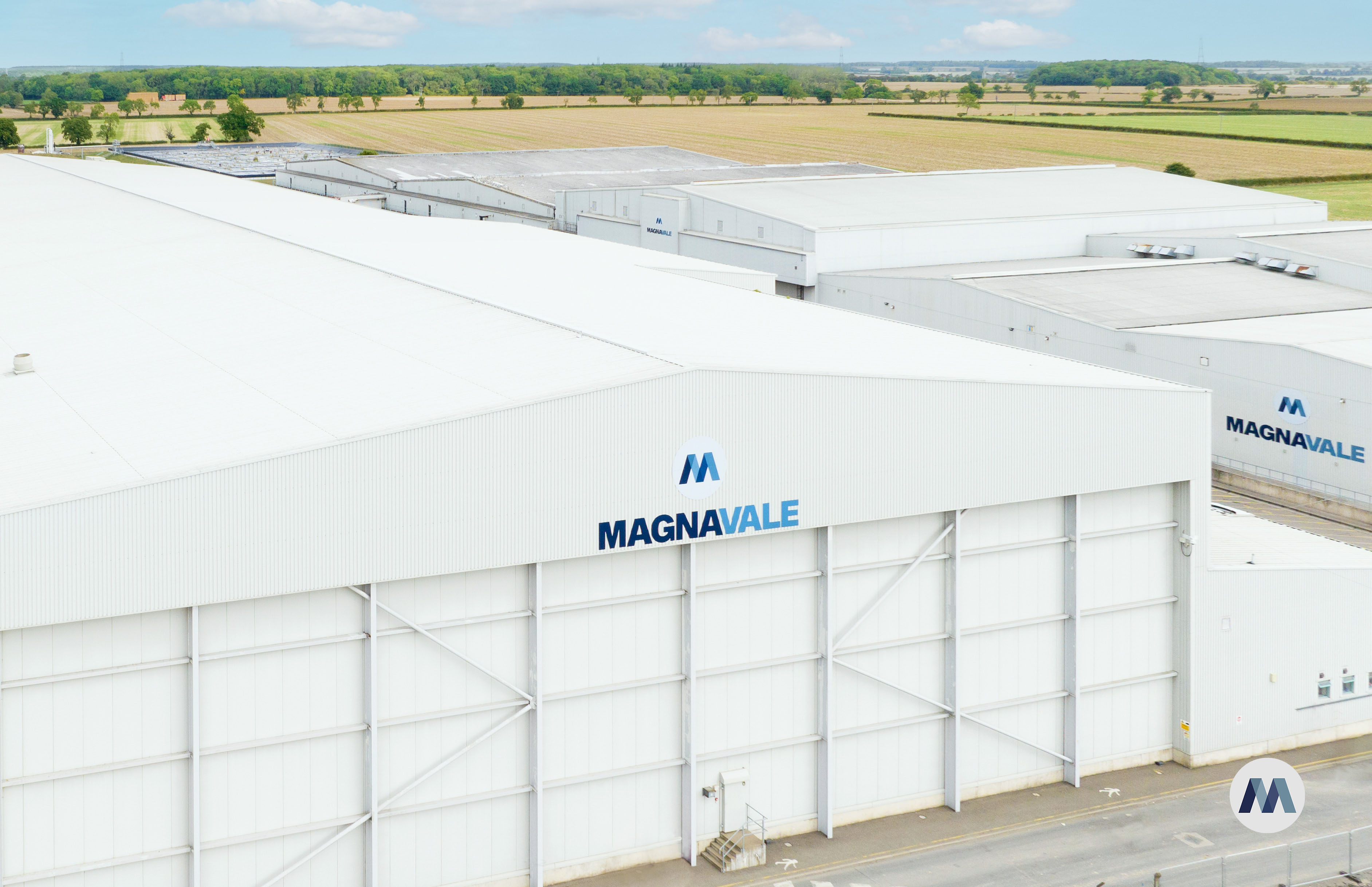
Magnavale launches a new dedicated Category 3 frozen storage facility at its Easton site in Lincolnshire, enhancing its capacity to store and handle products not intended for human consumption compliantly. With the recent completion of Magnavale’s 101,000-pallet high-bay frozen store, capacity is now available on site to reconfigure one of the existing frozen chambers to provide a stand-alone chamber for Category 3 frozen products. With the addition of handling capabilities for non-human consumption products Magnavale Easton is one of the most comprehensive cold chain hubs in the UK.

The new Category 3 facility meets the stringent hygiene, traceability, and regulatory standards required for the handling of animal by-products under UK and EU legislation. It adds significant flexibility and resilience to Magnavale’s national network of temperature-controlled storage and value-added services infrastructure.

In addition to frozen, chilled and ambient storage, the Easton site provides a comprehensive suite of integrated cold-chain services including contract packing, container processing, date coding, and blast freezing. These services are aimed at supporting food manufacturers and processors with complex, high-volume requirements.

Magnavale continues to regenerate the Easton site, underscoring the company’s continued commitment to sustainable operations and long-term investment in the UK food supply chain.

EXCLUSIVE DISCOUNT (£) ON VYPR FOR BFFF MEMBERS

We’re thrilled to share that the British Frozen Food Federation (BFFF) has renewed its partnership with Vypr – the consumer insight and product intelligence platform used by leading brands and retailers.

As part of the continued collaboration, BFFF members now have access to:

  • £500 off any ad-hoc or managed project*
  • Or 10% off any 12-month Vypr licence*

If you’re planning your next launch or working on something new, Vypr helps you test and validate products, packs, pricing and messaging with real consumers, giving you the clarity to move forward with confidence.


To use the offer, just quote STAYCOOL when speaking to the Vypr team.

Contact Vypr –https://vyprclients.com/book-a-demo/?utm_campaign=bfff&utm_medium=partner&utm_source=referral

*offer available based on Vypr’s current new sales rate card

Artificial Infringement: Holding Back or Holding Out for the Win?

Artificial Infringement: Holding Back or Holding Out for the Win?

From Denmark granting individuals copyright over their physical likeness to tackle deepfakes, and the US ruling that Meta using authors’ work to train its AI is fair use. It’s clear international leaders are experimenting to achieve an optimal legislative balance between ethics and innovation.

In comparison, the UK appears to be falling behind other nations, despite the PM pledging it will be a “world leader in AI”. The government, however, is open about ensuring its ‘pro-innovation’ approach to AI regulation is preserved, as referenced in section 1.4 of its AI Opportunities Action Plan. The UK’s approach may attract criticism for its perceived inaction, but its lighter-touch stance on AI regulation could, in fact, be the most pragmatic path forward.

The challenge of regulating a rapidly evolving technology

The rapid development of AI’s capabilities has made regulation a difficult feat. In addition to its fast-growing impact, the legal challenges that it could pose create uncertainty, particularly in terms of copyright infringement, as seen in the recent UK case of Getty Images suing Stability AI for using its images to train its system. This, however, does not mean that a rushed approach is the best approach when legislating. Regulation has the potential to either boost or stagnate AI innovation in the UK, so the strategy must be careful, pragmatic and considered. The government should look to establish a strong understanding of the opportunities, economic value and legal challenges in relation to AI, using this to build the foundation for any regulations or legislation.

Creative industries caught in the crossfire

Unregulated AI presents difficulties around protecting intellectual property which could have significant implications for creative industries, with the UK already seeing protest from creators who are concerned about its use. For example, this year’s #MakeitFair campaign saw the biggest media outlets in the UK, including the Times and the Guardian, using their front pages to come out in support of creators, with an aim to highlight that unregulated AI could damage the UK’s creative industries. In addition to this, there have and will continue to be legal concerns around data usage in AI, and the raft of ethical implications that this brings. This demonstrates the challenge of striking a delicate balance that supports AI developers and fosters innovation, whilst also ensuring creators feel confident enough to continue publishing their work.

Why is the UK taking a wait-and-see approach to AI regulation?

It’s in no doubt that the matter of regulating AI is a complex one, but governments which rush to regulate based on fears around these challenges risk having to re-legislate later down the line, after finding that their laws don’t have the intended effect. The UK’s decision to hold back on regulating means that, in the long-term, it could become a hotbed for AI innovation.

By taking a pause, the UK can monitor how AI’s capabilities are developing, while observing how other countries’ regulations have fared. This could include monitoring if and how the volume of litigation changes, whether the continuous and rapid development in AI slows down, and how the country’s economy and investment is impacted. Prematurely regulating or over-regulating could stagnate the growth of AI, removing many of the economic benefits for countries. The UK, however, already has the right mission in mind – to be a global AI enabler.

Early signals of legislative direction

Ultimately, it’s about the right timing and the right balance. The UK may be holding back, but that doesn’t mean it isn’t moving forward. Instead, it’s taking careful steps towards regulation, with one member of the UK government submitting proposals for the UK Artificial Intelligence (Regulation) Bill. Within this, there are a range of policies that clearly demonstrate the UK is not out of the loop with AI regulation. Key proposals of note include obligations for transparency in businesses when testing or using AI, obligations for businesses to appoint an AI officer to manage proper usage, and the potential development of a national governing body for AI to oversee regulation all of which will be useful in helping to regulate AI, without stifling its potential.

Copyright and data mining

As these proposals continue to be refined, and while the UK continues to observe other countries, it’s safe to say that the best and most likely starting point for legislation will be in relation to fair usage of copyright, which poses the most legal uncertainty at this time.

A key part of this will be addressing data mining regulations, and how these can be reformed to ensure the safe usage of data, but also to be as competitive as the EU’s regulations as set out in section 24 of the AI Opportunities Action Plan. The EU currently uses a general text and data mining exemption to give AI developers the freedom to innovate, whilst also providing rights to creators to opt-out from their work being used to train AI systems. When addressed in the UK, this will help to give both creators and businesses a clearer vision of fair use in AI, and it will be interesting to see how the government walks the tightrope of supporting both AI developers and the creative industry simultaneously.

Striking the right balance for the future

When regulatory measures begin to be passed, the UK government will need to create a space that allows for the ethical use of AI without undermining innovation. With the UK already being home to twice as many companies providing AI products and services than any other EU country, it is already on the route of becoming a global AI leader. This could be monumental for the economy, and so it’s vital that any regulation supports and stabilises AI usage, rather than hindering it.

As AI continues to reshape the legal and commercial landscape, businesses and creators alike must stay ahead of regulatory developments. Our multidisciplinary team is already advising clients on how to navigate the legal, ethical and commercial challenges posed by emerging AI technologies. If you’re looking to future-proof your business or understand how evolving AI regulation could impact your operations, we’re here to help.

Managing Suppliers’ Use of AI and Protecting Your Confidential Information

Managing Suppliers’ Use of AI and Protecting Your Confidential Information

With the use of AI becoming increasingly prevalent within many businesses and organisations, AI is being used, not only, by suppliers of AI tools – and other software and SaaS products marketed as using or being ‘powered by’ AI – but also by many providers of products and services to supply their goods to their customers.

Given the increasingly wider use of AI, businesses should consider whether suppliers are using AI and take appropriate measures to address and manage the risks this use may present.

What are the risks of suppliers using AI?

Such risks may include:

  • misuse of confidential information;
  • intellectual property rights ownership and infringement;
  • data security and personal data issues;
  • bias and discrimination; and
  • other ethical concerns.

In addition to the above, there is often a misconception that the use of AI will always be precise and free from the risk of human error, however, there is no guarantee that any results produced by AI will be wholly accurate, and any such results should be treated with caution.

How to manage the risks

There are a number of steps that business and organisations can take to manage the risks imposed by a supplier’s use of AI.

1. Implement policies and procedures

Having an AI policy in place that sets out clear guidelines outlining how your organisation uses artificial intelligence in a responsible and ethical way:

  • sets clear expectations for employees in relation to the use of AI;
  • provides direction on the use and procurement of AI tools and data protection; and
  • identifies potential risks that will help guide your organisation in its approach to AI and your organisation’s attitude to use of AI by your organisation’s suppliers and service providers.

Having an AI policy in place will help inform what controls your organisation should put in place on suppliers’ use of AI to mitigate the risk of data leakage, misuse of confidential information, intellectual property rights infringement, and errors and hallucinations arising from the use of the AI solution.

Read more on AI policies and how to mitigate employees’ use of AI.

2. Understand the scope of use of AI by suppliers

Having and implementing an AI policy is important. However, the policy in isolation will not sufficiently address a supplier’s use of AI. It is essential for your organisation to identify and understand what use a supplier is making of AI, how data and prompts input into the AI system is treated, what information and datasets are used to generate outputs and what level of human intervention is present.

Although the use of AI by suppliers can help drive efficiencies, and has many benefits, its use may expose your organisation to potential areas of vulnerability and risk – which can only be assessed once your organisation has an awareness of whether AI is being used by the supplier and how it is being used.

When procuring products and services, your organisation should ask suppliers to disclose their use of AI, whether in your supplier onboarding processes, supplier due diligence questionnaires or tender documentation.

3. Conduct risk assessments

Once your organisation has an understanding of what use is made of AI by your suppliers, the risk posed by this use can be assessed.

This risk assessment should analyse and evaluate the potential risks with the supplier’s particular use of AI as outlined above. Where personal data is involved, a data protection impact assessment should also be carried out before deciding whether to proceed with the procurement of an AI solution or with a supplier or service provider who uses AI to provide its products or services.

4. Establish contractual controls

Where a supplier is using AI, your organisation can include controls on the supplier’s use of AI in its contractual terms with the supplier. Some of the crucial clauses that should be included in agreements with suppliers who use AI include:

Restrictions on use of AI

If your organisation is not comfortable with the supplier using AI to provide its products and services, a prohibition on the supplier using AI should be included in the agreement.

Customer data

The agreement should deal with whether the supplier can make of customer data to train the AI system. If so, the agreement should state to what purposes can the supplier use customer data to train the AI system and the basis on which it can do so.

If any customer data (for example, personal data) should not be input into the AI system at all, then the agreement should include a prohibition on the supplier from inputting such customer data into the AI system.

Confidential information

It is important to ensure that an agreement has appropriate mechanisms in place to ensure the confidentiality of customer data, and the definition of ‘confidential information’ should be wide enough to cover all customer data that is transmitted through and collected by any AI systems used.

To offer greater protection for the risk of any breaches of confidential information, it is also helpful to obtain an indemnity from a supplier regarding any data breaches.

Security

The agreement should set out appropriate security standard with which the supplier must comply, obligations on the supplier to notify your organisation of security breaches and a right for your organisation to require the supplier to cease its use of the relevant AI systems in the event of a security breach or other circumstances.

Intellectual property rights ownership and infringement

It is important that the agreement makes clear who will own the intellectual property rights in the outputs generated by the AI system and what rights either party has to use such outputs.

Appropriate warranties should be included in the agreement from the supplier that the use of the outputs by your organisation will not infringe the intellectual property rights of a third party and an equivalent indemnity be given by the supplier.

Supplier liability

The agreement should clearly set out what the supplier will be responsible for in relation to the use of AI. For example, a supplier may accept responsibility for preventing any failures with the AI system but may not be willing to accept responsibility nor liability for any inaccurate or biased data that is produced by the AI system. Liability for any confidentiality or data breaches should also be explicitly provided for in the agreement.

It is important for customers to ensure that any limits or exclusions on liability in relation to any loss or damage caused by use of the AI system are appropriate. Any liability caps will likely need to be higher than those for other damage or losses, and it will be important to ensure that suppliers have the required level of insurance cover in place.

Supplier warranties

It is also useful for a customer to request warranties from the supplier in relation to the use of AI systems. This may include warranties that the supplier will carry out regular monitoring of the results produced by the AI system, as well as carry out regular training of employees who will be interreacting with the AI system.

Human oversight

The agreement should provide what level of human oversight is required in relation to the AI system and what measures the supplier will put in place to ensure that such human oversight is effective.

5. Provide training and implement operational controls

The contractual controls mentioned above should be used in conjunction with operational and technical controls.

Your organisation should provide training to your employees to ensure they avoid inputting confidential information and personal data into the AI system, where appropriate.

Technical measures that prevent inappropriate content from being input into the AI system by employees should also be considered, as well as technical measures that attribute the same permissions and restrictions to the outputs of the AI system to those attached to the prompts.

6. Ensure ongoing monitoring

Suppliers’ AI systems and processes should be regularly evaluated and tested to ensure that the outputs produced are accurate and precise. One way of doing this is by carrying out a variety of ’spot checks’ on any outputs that are produced.

Your organisation should consider what circuit breakers should be implemented to prevent harmful outputs from being generated by the AI system, whether due to inaccuracies or bias in the AI system and models.

Suppliers should also be required to regularly assess how data is accessed and stored within its AI systems. There should be efficient measures in place to ensure that all data is stored securely to avoid any breaches of confidentiality and ensure that data is not stored for any longer than is necessary.

Conclusion

The use of AI by suppliers and service providers can be extremely beneficial to all parties involved, however such AI usage should be exercised with caution and the risks of supplier’s using AI should not be underestimated.

Organisations who procure products and services from suppliers who use AI should actively prioritise the security and confidentiality of data and to seek to impose measures upon the supplier to ensure that outputs generated by the AI system are accurate and precise.

This can be achieved through implementing both contractual controls and operational and technical controls on the supplier’s use of AI. Once the supply or service provision commences, and the AI system is implemented or used by the supplier, its use should be regularly monitored, and employees should be obliged to undertake regular training to ensure they are aware of any potential risks that may occur through using AI.

If you need any support with reviewing or implementing policies to protect your customer data, then our team of experienced commercial solicitors can help.

Member Benefits

Exclusive Partnership deals on key products and services:

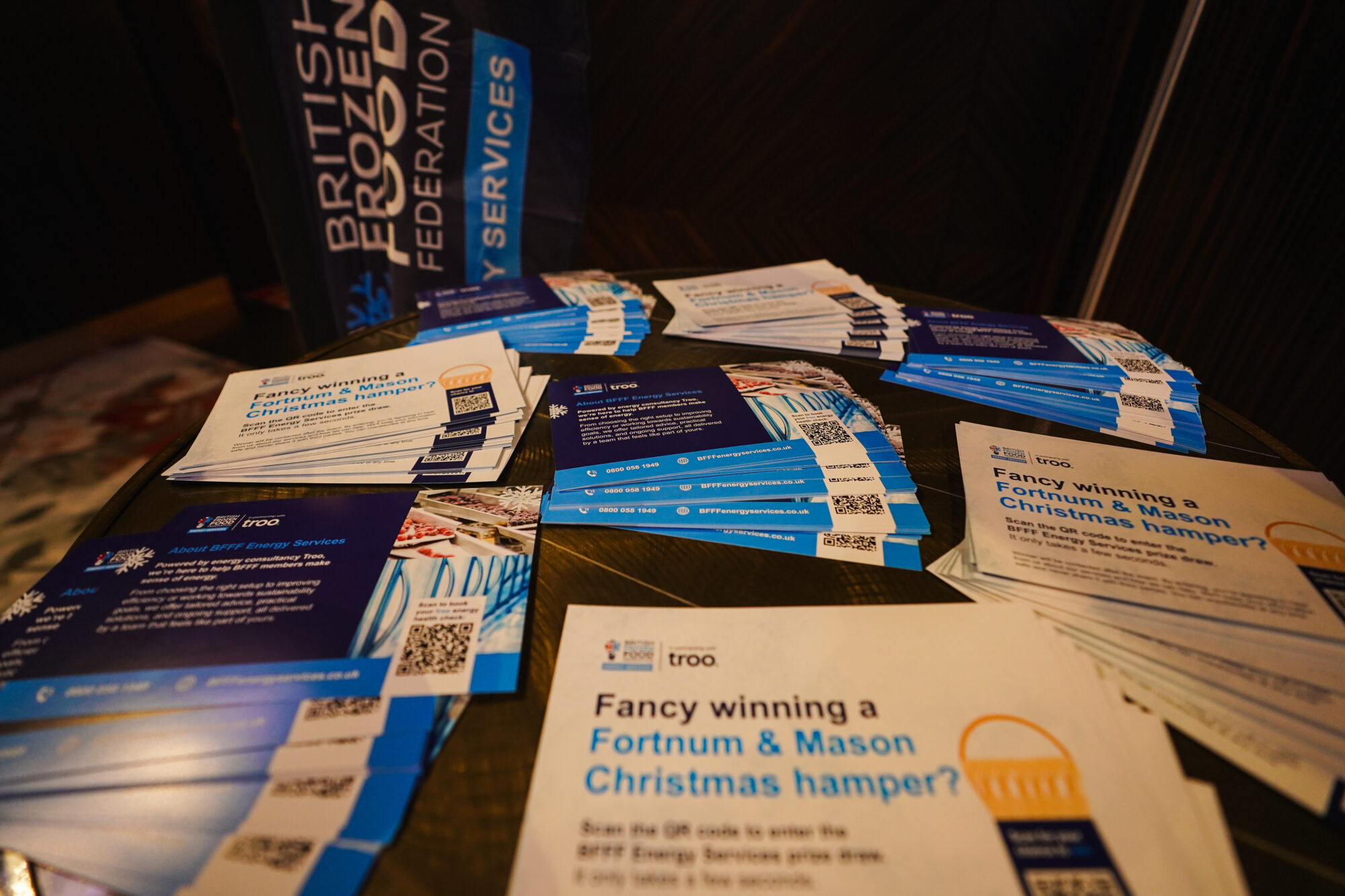
  • BFFF energy deals and rates
  • Vypr member deals and introduction
  • Defib Plus deals
  • Company Shop – membership
  • Mentor – MHE training health check

Exclusive access to networking opportunities and events:

  • Meet the Buyer events (retail & foodservice)
  • Annual Business Conference with networking dinner
  • Specialist H&S and Technical Conferences
  • Special interest groups (packaging, frozen food temperatures)
  • Annual Lunch
  • Awards Night
Upcoming Events More Events
Sponsorship Packages

We offer a range of sponsorship opportunities to BFFF members across our events throughout the year, with flexible packages that can be tailored to suit your business objectives.

Contact Us
British Frozen Food Federation Members Logo
what our members say...
  • Wakefield Council

    “What an amazing piece of work and indicative of how BFFF respond to the concerns of their members and make an impact on the whole industry sector.”

    See Full Quote

  • Sysco

    “You guys really ‘Do The Right Thing’ for the good of the industry”

    See Full Quote

  • Darta

    “The BFFF awards night is becoming an “appointment not to miss” on our calendar and we again enjoyed it immensely together with lots of well-known people from our industry. The…

    See Full Quote

  • Kantar Worldpanel

    “The Business Conference was an excellent day that was very well organised and allowed so many likeminded individuals in the room to learn so much more around the Frozen industry….

    See Full Quote

  • Lakeside Food Group Ltd

    “This Not For EU labelling situation alarmed us and quickly became a major worry to our business. These are times when you really rely on some support and from previous…

    See Full Quote

  • Meadow Vale Foods Limited

    “We had a few questions with respect to the new EPR waste packaging legislative changes. I know some of my colleagues have been assisted by BFFF in the past so…

    See Full Quote

  • Newberry International Produce Ltd

    “I am writing to express my heartfelt gratitude for the outstanding event you organised. I have only worked in this sector for the past nineteen months coming from twenty-five years…

    See Full Quote

  • Place UK Ltd

    “The BFFF 2024 Conference was compelling and thought provoking, with a many relevant and interesting topics covered at great pace and some depth by excellent speakers – will certainly attend…

    See Full Quote

  • Roswel Spedition GMBH

    “Thank you and the team for rushing around so brilliantly before, during and after the conference. It was pleasure to be part of the conference.”

    See Full Quote

  • Seara

    “The event was great, in my opinion. Not only it was very well organised, but the venue and the catering were excellent too. Furthermore, the content of the presentations was…

    See Full Quote

Website Designed & Built by we are CODA