Become a member

IMPORTANT! – NEW DEFRA GUIDANCE AND WEBINARS ON WINDSOR FRAMEWORK FOR TRADE BETWEEN GB AND NI

On Friday 28th July, Defra published further guidance on elements of the Windsor Framework, including how the retail movement scheme (ReMoS or NIRMS as it is now referred to) will work, how to register and seal consignments, and groupage and mixed load consignments.

As always, there is a lot of information to go through so please bear with us whilst we digest. In the meantime, a summary of the guidance can be found below along with details of a series of webinars Defra have scheduled to help you gain further information and explanation about the changes.

Webinars:

These will run on MS Teams over the next 3 weeks, will be approx. 45mins-1 hour long and will include a presentation and Q&A section.

Tuesday, 8th Aug 09:30* – The Northern Ireland Retail Movement Scheme, groupage and mixed load consignments

Wednesday, 16th Aug 14:00* – The Northern Ireland Retail Movement Scheme, groupage and mixed load consignments

Tuesday 22nd Aug 09:30* – The Northern Ireland Retail Movement Scheme, groupage and mixed load consignments

To register your interest please email NIDBusinessReadinessTeam@defra.gov.uk.


Summary

Implementation of the Framework is taking place in stages up to 2025. As of 30th September, this year, the existing UK Trader Scheme (UKTS) will be replaced by a new UK Internal Market Scheme (UKIMS).

Procedures for the movement of goods subject to Sanitary and Phyto Sanitary (SPS) controls will also change with effect from 1 October 2023. Currently they are supported under STAMNI (Scheme for the Temporary Agrifood Movements to Northern Ireland). This will be replaced in October 2023 by a new scheme, the Northern Ireland Retail Movement Scheme. This will be available to a much broader range of traders and includes new labelling provisions applicable to goods for sale only in Northern Ireland for goods moving through the new ‘green lane’. Movements which do not qualify under the scheme will move through the ‘red lane’. The government will continue to provide support through the Digital Assistance Scheme, and should goods remain in Northern Ireland, the Movement Assistance Scheme.

Formal registration for the Northern Ireland Retail Movement Scheme will be launched in September 2023. In the meantime, traders are able to register their interest through a pre-registration process, the key elements of which are outlined below.

Note: The STAMNI scheme will remain in operation until these new arrangements enter into force. All existing members of the STAMNI scheme will be contacted directly regarding moving seamlessly to the new scheme. Unlike STAMNI, businesses will be able to join the Northern Ireland Retail Movement Scheme on an ongoing basis.


Key elements of the Scheme:

From 1 September 2023, all businesses responsible for selling or facilitating the movement of food for final consumption in Northern Ireland will be able to register for the Northern Ireland Retail Movement Scheme (NIRMS).


I am eligible, how do I register for the Scheme?

As part of the registration there are important steps you will need to follow, along with necessary systems to be put in place which is covered within the guidance. This includes:

Pre-registration: To enable registration for the Northern Ireland Retail Movement Scheme you will need to ensure you are already registered on some key accounts as well as a specific portal if your business is based in Northern Ireland.

Sign up to system: On completion of pre-registration, you will then be able to sign up using the new digital platform which will allow you to send or receive goods under the Northern Ireland Retail Movement Scheme.

During registration: You will need to provide details of all establishments for dispatch or receipt of goods under the scheme and confirm that you are a registered food business operator (FBO) in the UK. The business sending the consignment in GB and the business receiving the consignment in NI need to be registered for the scheme.

Application process: You will need to agree to the terms and conditions of the scheme. If your application is successful, you will receive an email confirmation along with a Scheme Membership Number for your business and Establishment Numbers for all establishments sending or receiving goods.

Registered: Once you are registered on the Northern Ireland Retail Movement Scheme, you will be able to complete the General Certificate (GC) via a link which will be provided following sign to the scheme through Export Health Certificate Online (EHC Online).

Sealing consignments: All consignments must be sealed with an authorised seal with appropriate supervision. The seal must have a unique identifier with associated number, and the number must be included in the General Certificate. Further explanation on sealing consignments can be found here.

Compliance: In line with the existing processes under STAMNI the NI destination establishment must inform DAERA of the arrival of the goods at the NI listed establishment via the Common Health Entry Document Operators Platform (CHOP) system, within 48 hours. DAERA will complete any channelling procedures and will follow up by email, if necessary, rather than “if there are any discrepancies”.

DAERA will complete 100% documentary verification on the General Certificate and Common Health Entry Document (CHED) using the CHED Inspection Platform, Common Health Entry Document Interface Platform (CHIP).  All goods must be labelled in accordance with the scheme’s labelling requirements. Details on the eligibility of products that you can move under the Northern Ireland Retail Movement Scheme can be found here.

How do I express an interest in registering for the Scheme?

Expressing an Interest in joining the Northern Ireland Retail Movement Scheme will grant you access to further details and webinars on how the scheme will work and the onboarding requirements, including what can be done ahead of 1 September 2023. If you would like to express an interest in registering for the scheme, please send an email to NIRetailMovementSchemeRegistration@defra.gov.uk, providing your name, email address, company name and whether you are based in GB or NI.

Please note, expressing an interest does not constitute registering for the NI Retail Movement Scheme, registration will open 1 September 2023.

Northern Ireland Retail Movement Scheme: groupage and mixed load consignments 

The guidance published is specifically for businesses moving consignments of scheme-compliant agrifood products within grouped loads (known as ‘groupage’) from Great Britain (England, Scotland, and Wales) to Northern Ireland, which may include consignments of Northern Ireland Retail Movement Scheme (NIRMS) goods and consignments of non-NIRMS goods.
Details of eligible products can be found within the section above. It also notes the steps to take to utilise the certification and standards benefits of the NIRMS when moving scheme-compliant goods in a load which contains non-NIRMS goods (which will be subject to full Official Control regulations (OCR) controls).
You can find existing guidance on moving groups of agrifood products from Great Britain to Northern Ireland under full OCR compliance here.

Full guidance can be found here but the guidance covers in detail: –
What groupage is under the Windsor Framework: how you can continue to move goods using any of the following groupage models; linear or consolidation hub.

Actions consignor is required to follow, in line with current arrangements under STAMNI, after contacting the haulier: which is to complete a General Certificate (GC) for the consignment, provide a packing list with your GC, submit both the GC and the packing list, confirming consignment meets the scheme conditions and send the GC and attachments to the Consignee in NI, who will raise a Common Health Entry Document (CHED).

Actions consignee is required to follow, in line with current arrangements under STAMNI, once the above paperwork has been received from the consignor: Produce a retail movement CHED (at least 4 hours in advance of arrival in NI), attaching the General Certificate (including seal number) and packing list and finally the NI destination establishment must inform DAERA of the arrival of the goods at the NI listed establishment within 48 hours, as is currently the case under STAMNI.

Sealing your NIRMS consignment (and if all consignments on lorry are NIRMS consignments): You must ensure that all your consignments are sealed with an authorised seal under the supervision of a Scheme member’s responsible person. The seal must have a unique identifier with associated number, and the number must be included in the General Certificate. Further explanation on seal requirements can be found in the Northern Ireland Retail Movement Scheme section above and full guidance here link.

Mixed load of NIRMS and non NIRMS consignments: If the grouped load contains a mix of NI Retail Movement Scheme compliant goods and consignments which are not eligible for the NI Retail Movement Scheme the lorry, as a whole, cannot benefit from all the facilitations under the Northern Ireland Retail Movement Scheme. Further explanation can be found in the full guidance here.

Action:
You should continue to use guidance and procedures that presently are in place on gov.uk until new procedures come into effect on 1st October 2023.

For up-to-date guidance we encourage you to sign up for gov.uk alerts.

Defra hold a fortnightly NI-GB Food Supply Chain Forum, the next session will be held on Thursday 3 August at 09.00. The Forum is open to all traders. If you would like to attend and do not already have the invite, please email: NIGBFoodSupplyChainForum@defra.gov.uk


Questions/queries on the guidance can be sent to traders@defra.gov.uk

HOW CAN WE STOP UK INNOVATION FALLING BEHIND OUR COMPETITORS?

I share the concerns raised by Tony Danker, the Director-General of the CBI, regarding the world’s entry into a subsidy arms race that could harm investment in green technology in the UK. The US’ Inflation Reduction Act, the European Recovery Fund and Horizon Europe are all leading the way globally at putting investment back into R&D and whilst the UK Government has certainly made bold commitments, we’re yet to see that translated into similar levels of action.

The UK’s exclusion from the Horizon Programme is certainly a factor as to why innovation may be leaving the UK. The fundamental driver of this exodus is uncertainty, exacerbated by the changes to the SME R&D scheme announced in the Chancellor’s Autumn Statement.

This line of thought is closely aligned with the findings of our first UK Innovation Barometer. In this barometer, we carried out a survey of 200 senior executives in innovation, finance, tax, and CEOs/MDs in the UK. 69% of the businesses surveyed reported moving their R&D activities overseas in the last year, and 70% plan to do so in the upcoming year. The US and Germany proved to be the most popular destinations for these R&D shifts, receiving 28% and 27% of the responses respectively.

This alone is already supporting the earlier point that Tony Danker had brought up. The absence of a compelling incentive for green innovation from the UK government is a clear and present threat to the nation’s position as a leader in this field. Without the necessary support and encouragement, it is only a matter of time before we see a significant shift in the epicentre of innovation away from the UK, which would be a detrimental outcome for all UK business.

The Green agenda and net zero

Chris Skidmore has recently released a report that highlights the fact that the transition to a green economy is an opportunity, not a burden. It is an opportunity to create new and innovative products and services that will drive economic growth, while also addressing the pressing issue of climate change. The report emphasizes the need for the UK government to provide the necessary support and incentives to encourage green innovation, such as investment in research and development, tax incentives, and access to financing.

In addition, by investing in green innovation, the UK will be better equipped to compete in the global marketplace. The demand for green products and services is growing, and by developing a strong and vibrant green innovation sector, the UK will be well-positioned to capture a significant share of this growing market.

A new scheme that could be focused more to green innovation within the UK is also likely to stem the flow of businesses leaving our shores to carry our R&D abroad. 95% of respondents in the UK Innovation Barometer said it was important to have a scheme focused on green innovation, with half of total respondents saying it is very important.

The House of Lords Finance Bill Subcommittee report

It’s encouraging the House of Lords has recognised that HMRC’s over-zealous activity has not actually done much to combat fraud. Action was definitely needed, but the approach until now has been counterproductive. Whilst fraudulent claims are a problem that must be confronted for the longevity of the scheme, forestalling legitimate innovation will not serve the UK’s ambitions for becoming a genuine science superpower.

This is heavily impacting the UK’s ability to incentivise new tech start-ups to stay in the country rather than heading elsewhere. A recent Financial Times article, published by Ian Johnston supports Ayming’s findings within the UK Innovation Barometer. Founders of early-stage tech companies in the UK have said that due to the budget cuts, as well as the impact of Brexit and a decrease in venture capital funding, they are now considering international opportunities more seriously.

In conclusion, the UK’s exclusion from the Horizon Programme and changes to the SME scheme announced in the Chancellor’s Autumn Statement have led to uncertainty and a potential shift of innovation away from the UK. This is further supported by the findings of the UK Innovation Barometer, which showed that a significant number of businesses surveyed have moved their R&D activities overseas or plan to do so in the near future. We must continue to support innovation and green technology development to create a better future for the UK and the world.

FSA ADVISE HIGHER RISK CONSUMERS TO AVOID READY-TO-EAT COLD- SMOKED OR CURED FISH

The Food Standards Agency (FSA) and Food Standards Scotland (FSS) have issued advice today (27th July 2023) that pregnant women and those with a weakened immune system should avoid eating ready-to-eat cold-smoked or cured fish, following publication of a risk assessment showing they are at higher risk of severe illness from listeriosis. Products include smoked salmon, smoked trout, and gravlax.

As the risk of serious illness from listeriosis increases with age, the FSA and FSS are also advising that older people should be aware of the risks associated with eating these products.

The FSA and FSS’s joint risk assessment, commissioned in response to an ongoing outbreak of Listeria monocytogenes linked to ready-to-eat cold smoked fish, found that while the risk of contracting listeriosis in higher-risk individuals from cold-smoked fish is low, the severity of the illness is high. This means there is the potential for severe illness, hospitalisation, and death among higher risk groups.

Professor Robin May, FSA Chief Scientific Adviser, said: 

“Our risk assessment shows that there is still an ongoing risk to health associated with eating cold-smoked fish for specific groups of vulnerable people, including pregnant women and individuals with impaired immunity.

“In light of the risk assessment, we are advising that these consumers avoid ready-to-eat cold-smoked and cured fish products.

“If you are in the group of people more at risk of listeria infection, and you decide to consume these products, we strongly recommend that you first cook them until steaming hot all the way through. This will ensure that any listeria present in the product is killed before it is eaten.”

The FSA, FSS, and UK Health Security Agency have been investigating and taking steps to tackle an ongoing outbreak of Listeria monocytogenes linked to smoked fish since cases were first reported in 2020. There have been 19 linked cases of listeriosis dating back to 2020, and sadly four people have died.

Dr Gauri Godbole, Consultant Microbiologist at UKHSA said: 

“While smoked fish has a higher risk of carrying listeria, the overall risk to the population is very low. However, some people are more likely to get a serious infection including those who are pregnant and those with weakened immune systems. The risk also increases with age.

“Most people who are affected by listeriosis will have no symptoms or experience mild diarrhoea which subsides in a few days. Those who are more vulnerable can be at risk of severe illness such as meningitis and life-threatening sepsis. Listeriosis in pregnancy can cause very serious illness in mothers and their babies.”

The updated advice applies to pregnant women and those with weakened immune systems, such as people with certain underlying conditions for example cancer, diabetes, liver and kidney disease, or anyone taking medications which can weaken the immune system.

The level of risk will depend on whether the individual has underlying health conditions. The risk also increases with advancing age and in pregnancy.

Cold-smoked fish such as smoked salmon or trout, and cured fish such as gravlax, have not been fully cooked during the production process to kill any listeria that may be present, and therefore present a higher risk of infection.

‘Cold-smoked’ fish is normally labelled as ‘smoked’ fish on packaging. Ready-to-eat cold-smoked fish typically comes in thin slices, and it can be eaten cold. It may also be found in sushi.

Once thoroughly cooked, the smoked fish will be safe to eat, and can be served immediately, or served cold after being chilled in the fridge.

If consumers would like to add cold-smoked fish to dishes like cooked pasta or scrambled eggs, it is important to cook it first. This is because simply warming it through while preparing a meal will not heat the fish to a high enough temperature to kill any listeria present.

Smoked fish products that have been heat-treated during production, such as tinned smoked fish, may be safely consumed without further cooking. These tinned products are heated to a high temperature during production, sufficient to kill any listeria that may be present.

Most people who are affected by listeriosis will get mild gastroenteritis which subsides in a few days. However, certain individuals are particularly at risk of severe symptoms which can include meningitis and life-threatening sepsis.  Listeriosis in pregnancy can cause miscarriages and severe sepsis or meningitis in new-born babies.

Cases of listeriosis from smoked fish remain rare overall. If you have eaten these products recently, you do not need to do anything unless you get symptoms of the infection. These include a high temperature of 38C and above, aches and pains, chills, feeling and being sick, or diarrhoea. Contact NHS 111 or your GP surgery if you are unwell and pregnant or have a weakened immune system and you think you could have listeriosis.

More information on listeria is available on the FSA’s listeria guidance page.

LEARNING FROM THE PAST, PLANNING FOR THE FUTURE

There is no doubt that many things changed as a result of Covid. But as we return to something like normal there are plenty of other pressures in the supply chain. The ongoing effects of Brexit, staff shortages, limited warehouse space, and an unstable economy are forcing businesses to assess their supply chain operations to make them leaner, more adaptable, more efficient, and less expensive. On top of this the ongoing evolution in automation and emergence of new forms of AI are likely to bring even more challenges. What are the lessons from the past three years and what can we do to plan for the future?

Build Resilience: supply chains – by and large – coped very well during Covid. While many organisations had planned and tested crisis management processes, few foresaw the precise nature of the emergency. But in the event many businesses were able to cope with the sudden and significant increases in demand that were driven by more people ordering more things online for home delivery or click-and-collect. This is due in no small part to the resilience of the physical supply chains and supporting infrastructure that had been planned and built into the system over many years. Attaining and retaining resilience is always a good way to meet future challenges.

Dealing with Fewer Staff: in almost every imaginable scenario, businesses operating a warehouse needed to cope with fewer staff during the pandemic. That meant ensuring existing processes and tasks were completed at maximum efficiency. A well-designed WMS can cope with even large fluctuations in demands and throughput in technological terms. Having the staff to cope may be a different matter. Adding capacity can be achieved through increased efficiency. The continued growth in the supply chain sector coupled with shortage of skilled and suitable staff means these pressures will remain but a well-designed and configured WMS will help.

Fast Deployment: responding to new market challenges, such as those presented by the pandemic but more generally in an increasingly fast-paced world, is a typical business scenario. Effective solutions can often be created by using – or at least starting from – a well-defined set of core features that cover most requirements. This is a common characteristic of cloud-based systems – including WMS – and for most customers these can be deployed with very little or no additional configuration. Nor do they require all the local infrastructure required by conventional or traditional systems. In particular, there is no need to install, configure and “go live” a dedicated on-premises computer to host the application. Instead, the cloud-based application is hosted and managed by the service provider. All of this means that a system can be made available to a potential user in very short order – weeks rather than months. And system enhancements are dynamically installed and instantly available so there is nothing the user needs to do.

Scalability: for established and growing businesses, such as those in ecommerce, the ability to scale applications upwards to meet increased volumes and throughput is critical. Most well-designed WMS will have a degree of scalability but SaaS-based solutions are almost always based on platforms with this capability. Modern operating systems and application architectures were designed to cope with more concurrent users than older systems which might be based on what we now think of as very old concepts. Cloud-based systems generally have fewer restraints in terms of data throughput so there should be less risk of “bottlenecks” when more users are added or there is an increase in transactions. In reality, well-designed WMS of any kind will be able to cope but it can often be simpler to add extra users to a cloud-based system.

Speed of Implementation: cloud-based solutions can generally be up and running more quickly than conventional systems. This can be useful when setting up temporary supply chains or new routes to market in response to rapidly changing demands, such as during the recent crisis. SaaS based solutions offer a wide range of standard features – more than enough for most warehouse operations – but relatively little bespoke capability. This means they can be implemented very quickly, with new users added or removed when required to provide scalability.

Cost Control: always important, but never more so that during a crisis, cost-control should always be part of the justification for WMS investment. Cloud-based solution providers generally charge monthly for the number of users, and are not subject to long term contracts, so costs only increase when they can be justified by the growing size of the operation. But they can also decrease if demand reduces. Conventional systems, on the other hand, are generally built (and priced) for a specific number of users with most costs loaded up front. Moreover, cloud-based monthly fees can be easier to justify (and may come from revenue rather than capital budgets) while the benefits and returns are easier to identify because they are more closely aligned with operational patterns.

Remote Capability: another lesson from Covid is that working from home – or more generally remotely – is possible for far more people than previously thought. During the crisis this was the one area where a cloud-based WMS stood apart from a traditional application. The applications are hosted on robust and resilient servers running in a dedicated data centre and managed by the service provider. Users access the system from any location with internet or mobile data availability using a browser or, increasingly, a dedicated app on whatever device suits – PC, laptop, tablet or phone. Users are freed to work productively from any location. In the real world, of course, people still need to be present in the warehouse to carry out the actual handling tasks. Nevertheless, remote access removes one of the major potential restrictions in a warehouse’s ability to cope during an emergency by allowing managers to maintain oversight and control even if they are unable to be in the building.

Automation: although automation has been around for some time there is no doubt that the unique circumstances of Covid gave added impetus to development and innovation. Many organisations have invested more in automation in their supply chains over the past two or three years than ever before and this trend shows no sign of slowing. At the same time, new forms of AI are beginning to deliver intriguing insights into operational trends and enable new forms of interaction between other systems, equipment, transport networks, employees, suppliers, and customers. Well-designed WMS should have industry-standard API interfaces to integrate easily with existing business applications and the ability to import data simply from a range of sources. This means they should already be able to interface with even newer technologies so that operators can integrate highly efficient capabilities into their extended supply chains but with the potential for as-yet only hinted at possibilities.

The unique set of challenges presented by Covid have evolved and merged with current economic, technological, and business trends to create a very different supply chain landscape from the one we saw in 2019. Many businesses responded well to the emergency and lessons learned can be applied to cope with these newer challenges. Having a WMS that can cope with changing business and technological requirements and interface and integrate with other systems will help.


Warehouse Management Systems

PACKAGING EPR SCHEME PAYMENTS DEFERRED FOR A YEAR UNTIL OCTOBER 2025

Defra have announced this week that they will be deferring Extended Producer Responsibility payments for 1 year from October 2024 to October 2025.

Their official statement of 26th July reads:

Following extensive engagement with industry, and in light of the pressure facing consumers and businesses in the current economic context, new rules to ensure packaging producers pay for the cost of recycling their packaging will be deferred a year from October 2024 to 2025.

Government will use the additional year to continue to discuss the scheme’s design with industry and reduce the costs of implementation wherever possible. In anticipation of EPR, producers have already started to use less packaging and adopt easier to recycle packaging formats, and we expect this process to continue – ensuring that costs are not then passed onto households later on.

This decision to defer producer payments has been taken jointly with the devolved administrations and will provide industry, local authorities and waste management companies with more time to prepare to ensure the success of the scheme, helping make sure it is best designed to deliver on long term recycling goals while supporting households with the immediate challenge of high prices caused by inflation.

Environment Minister Rebecca Pow said:

We’re determined to transform the way we collect, recycle and reuse our waste materials so we eliminate all avoidable waste by 2050 in a way that works for households and consumers. That’s better for our environment.

We are also listening to industry and ensuring our work to tackle inflation and to drive up recycling go hand in hand, to make sure our reforms will be a success.

Simon Roberts, CEO of Sainsbury’s, said:

Whilst we remain absolutely committed to a circular economy and support the introduction of EPR, we welcome today’s announcement.

This will provide the necessary time to work across our industry and with Government in order to get EPR right first time. This decision is also an important step in minimising further pressure on food inflation and we will continue to focus on delivering the best value to customers in the coming months.

Paul Vanston, Chief Executive of the Industry Council for Packaging and the Environment (INCPEN), said:

UK and devolved Ministers are making the right set of decisions at this time to drive forward the shaping of the collections and packaging reforms.

Ensuring overall systems efficiency, cost-effectiveness and high recycling performance are essentials for the governments and stakeholders to achieve together.

The government remains committed to delivering on its commitments to eliminating avoidable waste by 2050 and recycle 65% of municipal waste by 2035.

The extended producer responsibility scheme will play a central part in delivering that mission and will build on other measures, including the tax on plastic packaging which does not meet a minimum threshold of at least 30% recycled content, which came into force last April, and the upcoming bans on countless single-use plastic items, including cutlery and plates.

Meanwhile, our single-use plastic carrier charge has successfully cut usage by more than 97% in the main supermarkets.

Consistent recycling collections for households will come in after the implementation of the extended producer responsibility scheme. More details on this will be set out in due course.

INTRODUCING DOTS WORLD: YOUR GATEWAY TO DELIGHT

Welcome to Dots World, an extraordinary universe created by Europastry, a leading brand in the food industry. With over 200 exquisite products, Dots has become a household name synonymous with indulgence and innovation. From the delightful assortment of Mini Dots, Big Dots, Filled Dots, Decorated Dots, Pop Dots, Crodots to Ball Dots, we offer a wide range of irresistible treats to satisfy every craving.

At Europastry, we are committed to continuously pushing boundaries and staying at the forefront of culinary trends. To achieve this, we have collaborated with renowned partners such as Dunkin Donuts, KitKat, Lion, and Chupa Chups, resulting in delectable Dots creations that are sure to captivate your taste buds.

Our dedication to quality and excellence is reflected in our three production facilities, located in two different regions of Spain and one in the Netherlands. Together, these facilities churn out an impressive average of 2.5 million dots per day, ensuring that our delectable treats reach Dots enthusiasts all around the globe.

What sets Dots apart is not just the sheer volume we produce, but the meticulous attention we pay to our recipe and production process. Every product within the Dots range is made with care and adheres to our strict standards:

No Preservatives: We believe in keeping things fresh and natural, which is why we refrain from using preservatives. By avoiding the presence of microorganisms, we ensure that each bite of Dots is a wholesome delight.

No Artificial Colours: We take pride in crafting visually appealing treats without the need for artificial colours. Our commitment to using only the finest ingredients guarantees an authentic and vibrant experience.

No Hydrogenated Fats: Europastry is at the forefront of eliminating partially-hydrogenated fats from our production processes. By doing so, we prioritize your health and well-being without compromising on taste.

No Added Trans Fats: Trans fats have been linked to increased cholesterol levels and cardiovascular diseases. At Dots, we prioritize your well-being by avoiding the use of these fats, ensuring that each indulgence is guilt-free.

Sustainable Palm Oil: Europastry has been awarded the prestigious RSPO Mass Balance (MB) Certification. We proudly use Certified Sustainable Palm Oil (CSPO) and Palm Kernel Oil (CSPKO) in all our Dots products, promoting responsible and sustainable practices.

Dots have become synonymous with moments of pure indulgence worldwide, and that’s precisely the experience Europastry aims to deliver to each and every customer. We invite you to Savor your very own moment of indulgence with Dots.


To learn more about our delectable range of products, contact our dedicated sales agent in England,

Ash Hirani, at Ahirani@europastry.com.

Alternatively, visit our website a and embark on a journey through the enticing world of Dots.

https://europastry.com/global/en/products/dots/


Member Benefits

Exclusive Partnership deals on key products and services:

  • BFFF energy deals and rates
  • Vypr member deals and introduction
  • Defib Plus deals
  • Company Shop – membership
  • Mentor – MHE training health check

Exclusive access to networking opportunities and events:

  • Meet the Buyer events (retail & foodservice)
  • Annual Business Conference with networking dinner
  • Specialist H&S and Technical Conferences
  • Special interest groups (packaging, frozen food temperatures)
  • Annual Lunch
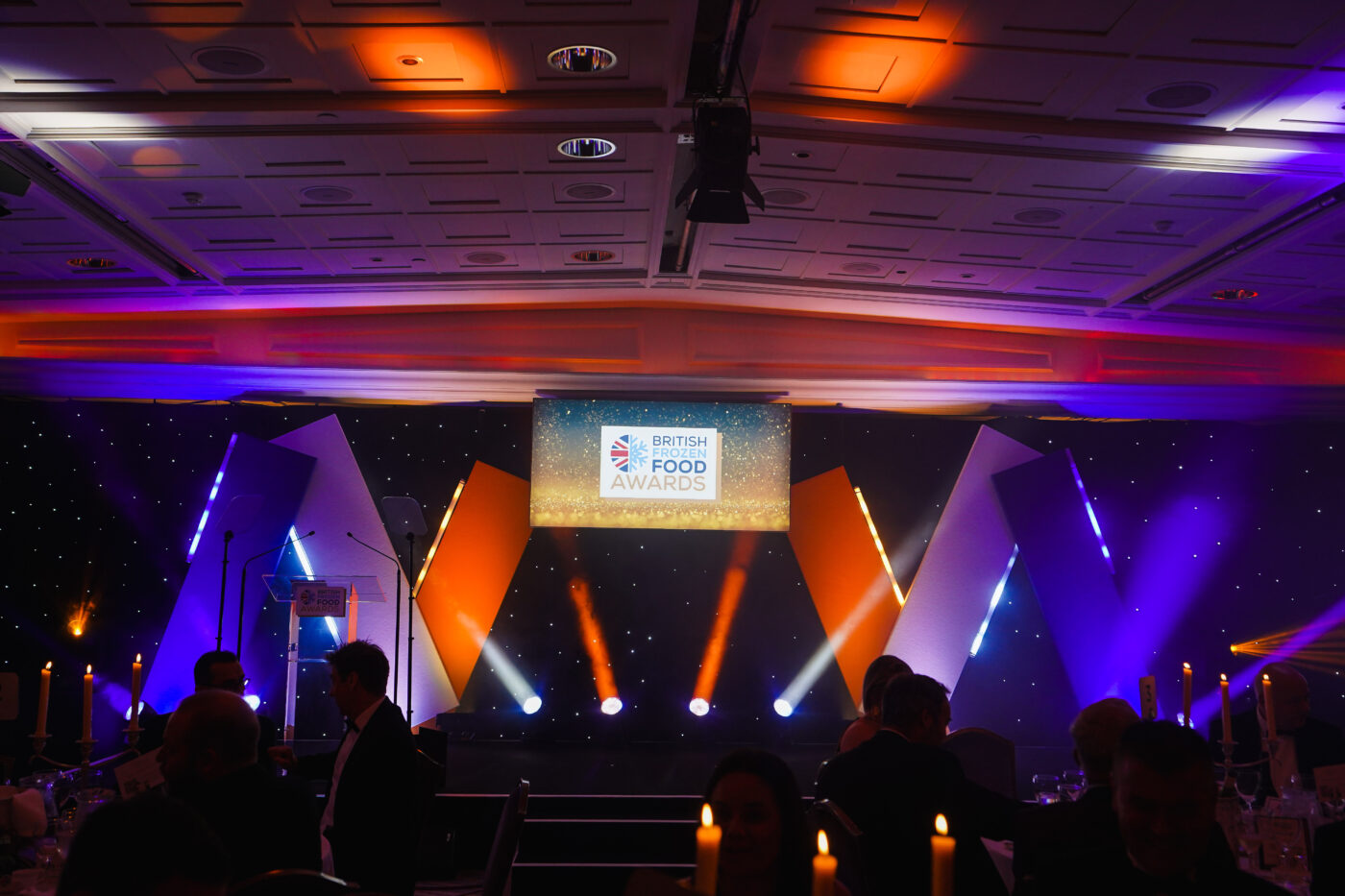
  • Awards Night
Upcoming Events More Events
Sponsorship Packages

We offer a range of sponsorship opportunities to BFFF members across our events throughout the year, with flexible packages that can be tailored to suit your business objectives.

Contact Us
British Frozen Food Federation Members Logo
what our members say...
  • Wakefield Council

    “What an amazing piece of work and indicative of how BFFF respond to the concerns of their members and make an impact on the whole industry sector.”

    See Full Quote

  • Sysco

    “You guys really ‘Do The Right Thing’ for the good of the industry”

    See Full Quote

  • Darta

    “The BFFF awards night is becoming an “appointment not to miss” on our calendar and we again enjoyed it immensely together with lots of well-known people from our industry. The…

    See Full Quote

  • Kantar Worldpanel

    “The Business Conference was an excellent day that was very well organised and allowed so many likeminded individuals in the room to learn so much more around the Frozen industry….

    See Full Quote

  • Lakeside Food Group Ltd

    “This Not For EU labelling situation alarmed us and quickly became a major worry to our business. These are times when you really rely on some support and from previous…

    See Full Quote

  • Meadow Vale Foods Limited

    “We had a few questions with respect to the new EPR waste packaging legislative changes. I know some of my colleagues have been assisted by BFFF in the past so…

    See Full Quote

  • Newberry International Produce Ltd

    “I am writing to express my heartfelt gratitude for the outstanding event you organised. I have only worked in this sector for the past nineteen months coming from twenty-five years…

    See Full Quote

  • Place UK Ltd

    “The BFFF 2024 Conference was compelling and thought provoking, with a many relevant and interesting topics covered at great pace and some depth by excellent speakers – will certainly attend…

    See Full Quote

  • Roswel Spedition GMBH

    “Thank you and the team for rushing around so brilliantly before, during and after the conference. It was pleasure to be part of the conference.”

    See Full Quote

  • Seara

    “The event was great, in my opinion. Not only it was very well organised, but the venue and the catering were excellent too. Furthermore, the content of the presentations was…

    See Full Quote

Website Designed & Built by we are CODA