Become a member

DR RUTH HUSSEY APPOINTED INTERIM CHAIR OF FSA

The new Interim Chair of the Food Standards Agency (FSA) has been announced as Dr Ruth Hussey CB, OBE, DL. She takes up the post from 1st February 2021 for up to 3 months whilst the Chair recruitment is concluded.

Dr Hussey previously served as a Board Member of the FSA in Wales and the Welsh Food Advisory Committee from 2016 before being appointed Deputy Chair of the FSA in July 2020. She also had a successful career in Public Health which culminated in her role as the Chief Medical Officer for Wales. Prior to that she worked in local and regional public health in England and as part of the Department of Health Public Health Transition Team at Whitehall.

Dr Hussey said, “I am delighted to be able to step into this new role. The FSA is a progressive and effective organisation which works in an evidence based and transparent way.  As the food system continues to evolve, I will strive to ensure that food safety and public health continues to be protected with confidence. I look forward to working with my fellow Board members to continue to protect consumers’ interests in relation to food.”

Heather Hancock, the current Chair, stands down as Chair at the end of January 2021 having been elected the master of St John’s College, Cambridge. Heather served as Deputy Chair from 2015 until being appointed Chair of the Board in 2016.

MEALWORMS APPROVED FOR HUMAN CONSUMPTION

The European Food Safety Agency (EFSA) has approved mealworms for human consumption. This is the very first insect-based food to be approved although it does await endorsement from the European Commission.

Mealworms are high in protein and fibre and are in fact not ‘worms’ but larvae of the darkling beetle. It could soon become a main ingredient in smoothies, snacks, curries and other food products. The mealworms can also be ground down making it suitable for flour for the production of biscuits, pasta and even bread.

It is also relatively sustainable compared to meat products with their low-carbon emissions.

There are fears that European consumers may take to the idea of eating mealworms but other parts of the world have been eating insects for a very long time eg Central America and Africa.

It is being regarded as a major breakthrough by the International Platform of Insects for Food and Feed (IPIFF) who are hoping that this is the first of many approvals and will reassure consumers on the trustworthiness of this industry.

To see the full article – please click here

NEW HISTAMINE TESTING METHOD

South Korean scientists claim to have developed an effective, simple and inexpensive test to detect harmful levels of histamine in fish samples. Histamine can occur in spoiled food, such as fish, if left too long at room temperature.

The Chung-Ang University scientists, led by Professors Tae Jung Park and Jong Pil Park stated that, “We managed to accurately measure histamine concentrations ranging from 0.1 to 100 parts per million, with a limit of detection as low as 13 parts per billion.”

This was accomplished by using phage-display technology where external proteins of genetically modified viruses were used to check for chemical interactions. They established the best one to use as ‘Hisp3’. They then went on to produce carbon quantum dots and coated them in NAC (N-Acetyl-L-Cysteine) which naturally occurs and binds to ‘Hisp3’. The CQDs are fluorescent when exposed to irradiation with ultraviolet light but this is quenched when ‘Hisp3’ is added – this binds the NAC and coats the surface of the CQD.

The next stage is essential because when the sample, which contains histamine, is mixed with the CQD, the ‘Hisp3’ unbinds from the NAC and binds to the histamine which restores the fluorescent levels of the CQDS in direct proportion to the amount of histamine. By comparing the first and last levels of CQDs the scientists, using a handheld UV flashlight, or fluorescent detection equipment, were able to indirectly quantify the amount and intensity of histamine in the samples.

This strategy has been validated with samples of fish using known histamine concentrations and established techniques. Although the method is simpler it is proving to be more powerful than existing tests.

The detection of histamine is important and this new approach could further help to measure the quality, freshness of food and hence food safety for consumers.

To see the full article – please click here

HOW INVESTING IN TECHNOLOGICAL INNOVATIONS CAN CUT BOTH ENERGY USE AND CARBON EMISSIONS

Food waste is contributing to a global climate catastrophe, and the existence of reliable and efficient cold storage in the UK is critical to minimising wastage. BFFF research has shown that switching from fresh to frozen can actually reduce greenhouse gas emissions, but refrigeration is still energy intensive.

NewCold Advanced Cold Logistics strives to increase global food security by providing leading food companies with the most innovative cold storage and transportation services. The company has an international network with eight locations on three continents, holding 730,000 pallet positions worldwide.

Always striving to reduce the impact of its operations on the environment and local communities, NewCold optimises existing and new innovative concepts in the cold chain to achieve the best for its customers and the industry at large.

Our company believes the efficient use of natural resources, together with healthy local community and employee relations, are key elements which lead to outstanding financial results and business prosperity.

In keeping with this philosophy, NewCold incorporates a Triple Bottom Line framework in its core operations which enables the evaluation of company performance from different perspectives, while creating greater overall transparency.

This unique approach embraces three distinct criteria: Planet, People and Profit. Firstly, NewCold recognise that all its facilities consume energy and use air and water for cooling purposes, and so employ sustainable solutions wherever possible.

Then, in regarding their people as their greatest strength and most valuable asset, the company encourages all employees to focus on creating customer satisfaction, to promote long term customer relationships and sustainable revenues.

Thirdly, NewCold employ the simple formula whereby efficient operations combined with satisfied customers contribute to a competitive advantage, which in turn leads to commercial success.

This sustainable methodology is the driving force behind the success of NewCold’s existing Wakefield site and already is providing the operational foundations for a new deep-freeze facility due to open in Corby in 2021.

Sustainable development of a global deep freeze phenomenon

As with each of our sites world-wide, our focus at the new Corby facility will be on sustainability. Both the Wakefield and Corby sites are fashioned on our unique cold store design and use around 50% less energy than conventional stores. This, coupled with our ability to reduce food miles by using high-volume trailers, will greatly reduce CO2 emissions and energy use.

The new Corby facility sits on a 23-acre plot which is a prime location in the logistics ‘golden triangle’. The site is in proximity with frozen distribution centres of retail and food service customers and perfectly located to help minimise consignment handling and logistics costs.

Key to the delivery of NewCold’s energy efficiency is the company’s state of the art warehouse management systems and fully automated handling equipment. These include FEFO handling (First Expired, First Out); shipment buffer zones to minimise truck waiting times; automated storage and racking; bespoke picking floors with automated replenishment and pallet discharge. All of which combine to increase efficiency and reduce energy consumption.

For example, the Wakefield facility, with a footprint of 129m x 170m and storage height of 41m, handles 4,000,000 pallets annually and in a 24-hour day can receive and dispatch up to 18,000 deep frozen pallets.

Drawing on the latest available automated loading technology, NewCold has designed a bespoke pallet handling Pod to bridge the gap between the deep-frozen production or storage environment and its auto-loading 44-pallet double-deck trailers.

To this end, as soon as the product leaves the production line at minus 22 degrees, it is automatically loaded through a sliding door at the back of the 60-pallet-capacity Pod, which itself is pre-cooled to the same temperature. From here, the pallets are automatically transferred into the double-deck trailer, docked to the front of the Pod.

Loading into the Pod is completed in around five minutes. Meanwhile, three Carrier TRS refrigeration systems hold the temperature at a constant minus 25 degrees and, being electric running off the factory, keep harmful emissions to a minimum.

Effectively, every deep-frozen package or pallet remains at a constant set temperature of minus 22 – minus 25 degrees, and at no time during its journey from the production line to completed loading in the trailer does any pallet need to be exposed to an ambient environment or touched by an operative. This not only ensures absolute temperature integrity but virtually eliminates product damage.

The same process is reversed when the load reaches the NewCold warehouse where automatic unloading capability unloads the trailer in five minutes, directly into a frozen warehouse, ensuring best product integrity and quality.

Furthermore, faster turnaround times reduce supply chain cost and, by linking directly to production loading, efficiencies are achieved at production sites. In addition, the company’s innovative double-deck trailers make a positive impact on the environment by significantly reducing road miles.

To help control this colossal, non-stop operation NewCold uses a proprietary Warehouse Management System (WMS) which is produced by daughter company Davanti Warehousing. Working in the company’s eight facilities around the world, the cloud-based system, called CORAX, employs Software as a Service (SaaS) to control all movements in the operation, while providing constant real-time information regarding consignments and equipment performance.

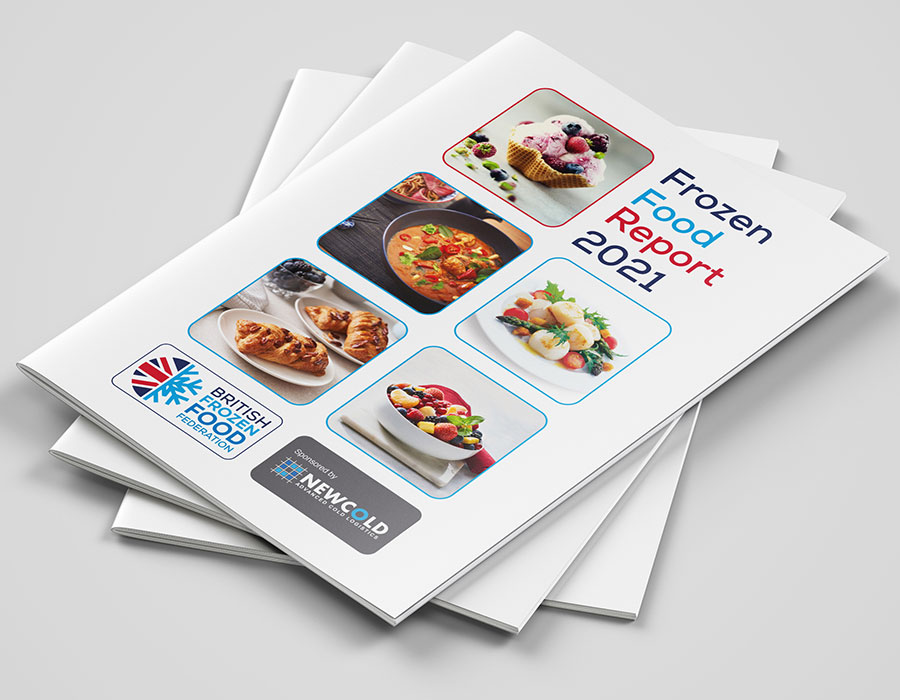
Article from The Frozen Food Report 2021 – view full report here

ADAPTING FOOD DELIVERY DURING LOCKDOWN

The Food Standards Agency (FSA) has announced help to businesses with the move from ‘sit in dining’ to ‘takeaway’ and ‘delivery’ during lockdown.

Out of Home businesses such as cafes, restaurants, pubs, bars and social clubs have all been closed to limit the spread of the virus but do still have the option to sell food and non-alcoholic drinks for takeaway until 11 pm with a ‘click and collect/drive-through’ or to deliver food and drink, including alcohol.

It is important for these businesses to be aware of the risks and requirements relating to food delivery. The FSA offers guidance on food delivery to help protect both the customer and the business. This guidance includes ‘taking an order’, hygiene, delivery instructions, vehicle specifications and most importantly advice on allergens.

The FSA also offers guidance on those companies looking to switch to deliveries and sets out a step by step guide to help ease the transition and ensure food safety – please click here. This guidance includes informing your local authority, risk assessments, online selling, communication and avoiding food crime.

Any change in business should trigger a review and where necessary an update to HACCP (Hazard Analysis and Critical Control Point) procedures. This link will take you to the appropriate form. If you are in Northern Ireland then please click on this link.

It is to be noted than an additional risk which is required to be addressed is Covid-19. The HSE (Health and Safety Executive) have issued guidance which covers food hygiene, food safety including allergens and food delivery from home.


EMERGING TECHNOLOGIES IN FOOD ANALYSIS AND FUTURE PERSPECTIVES

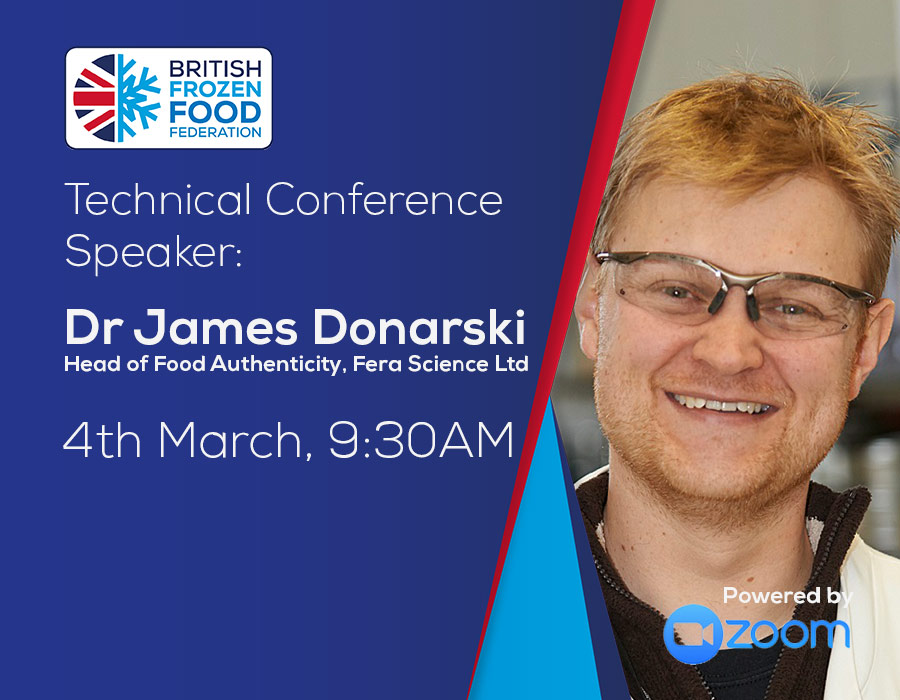
Dr James Donarski holds joint positions as the head of food authenticity at Fera Science Ltd and a senior lecturer in the field of chemistry at Newcastle University. He has a background in analytical chemistry, authenticity determination, non-targeted analysis and small molecule structure elucidation. James oversees the science of the authenticity and profiling team, which comprises experts in the fields of stable isotope analysis; high resolution mass spectrometry; high field nuclear magnetic resonance; and proteomics.

Currently, his primary research interests include: the use of a variety of data sources for the prevention of food fraud; the development of new and emerging technologies towards identification of food fraud; and the identification of specific biomarkers and where applicable, the subsequent development of rapid and/or portable tools for their detection.

View the full programme here: Technical Conference Virtual Programme

To book your tickets CLICK HERE


If you are interested in sponsoring this event contact Kate Miller katemiller@bfff.co.uk

Member Benefits

Exclusive Partnership deals on key products and services:

  • BFFF energy deals and rates
  • Vypr member deals and introduction
  • Defib Plus deals
  • Company Shop – membership
  • Mentor – MHE training health check

Exclusive access to networking opportunities and events:

  • Meet the Buyer events (retail & foodservice)
  • Annual Business Conference with networking dinner
  • Specialist H&S and Technical Conferences
  • Special interest groups (packaging, frozen food temperatures)
  • Annual Lunch
  • Awards Night
Upcoming Events More Events
Sponsorship Packages

We offer a range of sponsorship opportunities to BFFF members across our events throughout the year, with flexible packages that can be tailored to suit your business objectives.

Contact Us
British Frozen Food Federation Members Logo
what our members say...
  • Wakefield Council

    “What an amazing piece of work and indicative of how BFFF respond to the concerns of their members and make an impact on the whole industry sector.”

    See Full Quote

  • Sysco

    “You guys really ‘Do The Right Thing’ for the good of the industry”

    See Full Quote

  • Darta

    “The BFFF awards night is becoming an “appointment not to miss” on our calendar and we again enjoyed it immensely together with lots of well-known people from our industry. The…

    See Full Quote

  • Kantar Worldpanel

    “The Business Conference was an excellent day that was very well organised and allowed so many likeminded individuals in the room to learn so much more around the Frozen industry….

    See Full Quote

  • Lakeside Food Group Ltd

    “This Not For EU labelling situation alarmed us and quickly became a major worry to our business. These are times when you really rely on some support and from previous…

    See Full Quote

  • Meadow Vale Foods Limited

    “We had a few questions with respect to the new EPR waste packaging legislative changes. I know some of my colleagues have been assisted by BFFF in the past so…

    See Full Quote

  • Newberry International Produce Ltd

    “I am writing to express my heartfelt gratitude for the outstanding event you organised. I have only worked in this sector for the past nineteen months coming from twenty-five years…

    See Full Quote

  • Place UK Ltd

    “The BFFF 2024 Conference was compelling and thought provoking, with a many relevant and interesting topics covered at great pace and some depth by excellent speakers – will certainly attend…

    See Full Quote

  • Roswel Spedition GMBH

    “Thank you and the team for rushing around so brilliantly before, during and after the conference. It was pleasure to be part of the conference.”

    See Full Quote

  • Seara

    “The event was great, in my opinion. Not only it was very well organised, but the venue and the catering were excellent too. Furthermore, the content of the presentations was…

    See Full Quote

Website Designed & Built by we are CODA