Become a member

DEFRA ISSUE STATEMENT REGARDING MISLEADING COVERAGE ABOUT UPCOMING BORDER CHECKS

Following press coverage claiming that import checks planned to commence from 30th April will be delayed, Defra have issued the following response:

There has been misleading reporting this morning (19 April) claiming that health and safety checks for EU imports won’t be “turned on” as planned from 30 April 2024. However, as has been previously outlined, we will be commencing checks from 30 April.

The UK government has full confidence that the facilities, infrastructure and systems at the border, will be ready for the 30 April implementation date of new border checks.

The priority for physical checks from day one will be on the highest risk goods, and Port Health Authorities will be conducting documentary checks on consignments of all risk levels and will contact traders where they have concerns. Checks will be scaled up to full check levels in a sensible and controlled way.

A UK Government spokesperson said:

“As we have always said, the goods posing the highest biosecurity risk are being prioritised as we build up to full check rates and high levels of compliance. Taking a pragmatic approach to introducing our new border checks minimises disruption, protects our biosecurity and benefits everyone – especially traders.

“There has been extensive engagement with businesses over the past year – with our approach welcomed by several trade associations and port authorities. We will continue to work with and support businesses throughout this process to maintain the smooth flow of imported goods.

“We are confident we have sufficient capacity and capability across all points of entry to handle the volume and type of expected checks. It is important to remember the cost of our border checks is negligible compared to the impact of a major disease outbreak on our economy and farmers.”

Our approach ensures we are striking the appropriate balance between protecting the UK from biosecurity risks and facilitating trade.

We will continually review our enforcement approach tracking compliance levels to protect biosecurity and food safety whilst minimising disruption to trade flows. Our enforcement approach will be graduated to help traders to comply.

This follows extensive engagement with businesses – including regularly contacting 30,000 importers with up-to-date information, delivering over 50 webinars to thousands of businesses, working with major supermarkets and their suppliers to provide training, alongside working with HMRC to deliver communication to all VAT registered businesses in the UK (approximately 150,000 businesses).

SCOOP: COLOMBIER ECOBARRIER MAKES A COOL ICE-CREAM TUB

Colombier EcoBarrier cup board is developing a taste for ice-cream.

Since the product launch in 2022, over 100 million ice creams have been served in the recyclable EcoBarrier tubs. It’s safe to say, we’re serving up sustainable success.

In collaboration with a longstanding partner, Colombier took on the challenge of tackling traditional plastic lined containers that are difficult to recycle. This partnership led to the eco-friendly tubs that are 𝐜𝐨𝐦𝐩𝐨𝐬𝐭𝐚𝐛𝐥𝐞, 𝐫𝐞𝐜𝐲𝐜𝐥𝐚𝐛𝐥𝐞, 𝐚𝐧𝐝 𝐩𝐥𝐚𝐬𝐭𝐢𝐜-𝐟𝐫𝐞𝐞

Additionally, an independent life cycle assessment (LCA) of the EcoBarrier material shows a significant decrease in CO2e emissions for a comparable ecosystem.

This breakthrough not only aligns with our commitment to environmental responsibility, but also stands testament to the power of partnering up with others in the value chain. 🤝

How did we do it? ⬇️

Finding the sweet spot

The idea was to simply replace plastic-lined cup board with Colombier EcoBarrier and run it on our partners existing tub converting machines.

After vigorous testing by our dedicated product development team, coupled with transparent cooperation with our partners, the ingredients for creating the sweet spot were met.

Colombier created and delivered this truly exceptional solution.

Together we work towards a greener, more sustainable future, whilst ensuring our eco-friendly ice cream tubs do not leave a bad aftertaste.

Follow us or visit colombier.com for eco-friendly packaging innovations.

MAGNAVALE EASTON DEVELOPMENT, SET TO SUPPORT FOOD SECURITY IN LINCOLNSHIRE, APPROACHES FINISH LINE

Magnavale is pleased to announce that its highly anticipated Easton-based temperature-controlled storage facility is approaching the finish line and is set to open in Q3 2024. This advanced development represents a significant step forward in supporting food production and strengthening food security in the Lincolnshire region.

In recent weeks, the facility, based just South of Grantham, Lincolnshire, has witnessed remarkable progress, with the installation of crucial components such as refrigeration pipework, cladding, roofing, and the refrigeration plant. These milestones bring the facility closer to becoming a cutting-edge solution for sustainable and efficient cold storage.

Amanda Cogan, Magnavale’s Chief Operating Officer, commented:

“We recognise the critical role that our automated temperature-controlled facility will play in supporting food production in Lincolnshire, minimising food waste and ensuring product safety. Easton has been designed with the cold chain in mind. With the integration of cold chain solutions, such as contract packing, the facility will allow partners to cut out unnecessary steps in their cold chain, reducing transport costs and reducing carbon emissions.”

The Easton development underscores Magnavale’s commitment to sustainability and environmental responsibility. Powered by renewable energy sources, the facility aims to reduce its carbon footprint while incorporating advanced automation technologies to minimise unnecessary transportation and associated costs.

Working with some of the best equipment suppliers in the industry, the facility has been designed to prevent disruptions during peak operational periods like the Christmas season, with multiple pallet ingress and egress points to avoid bottlenecks as well as built-in redundancy planning with no single point of failure.

Moreover, product safety is a paramount concern at Magnavale Easton. With planned systems such as oxygen reduction in place, the risk of fires is almost eliminated, ensuring that stored products remain protected from fire and the water damage associated with traditional sprinkler systems. This innovative approach to safety further solidifies Magnavale’s commitment to preserving the integrity of its partners’ stock.

Resources

Video available – https://youtu.be/ltSruTn8xz8

FIVE TRENDS IN WAREHOUSE MANAGEMENT

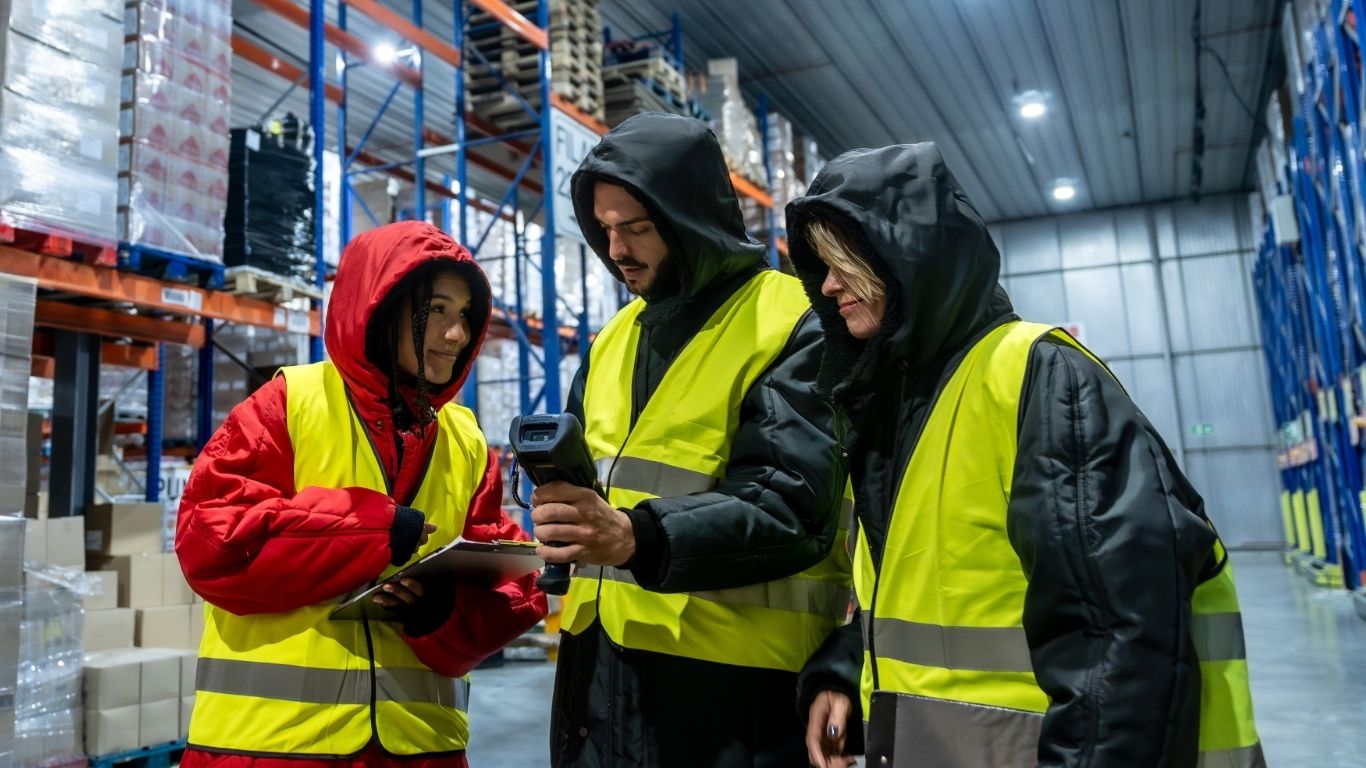
Warehouse management software developers introduce new capabilities and concepts all the time to meet demand for improved performance, productivity, and efficiency. While many of the changes in any given period are incremental there are always overarching trends which tend to drive innovation and change harder and faster in particular directions. Currently, much of the attention is focused on what might broadly be termed as “automation” or “better use of data”.


Warehouse Robotics and Automation: robots have been used in warehouses for years, but their form and capabilities continue to evolve. From articulated robotic arms to automated guided vehicles (AGVs) and autonomous mobile robots (AMRs), robotics are increasingly used for tasks like picking, packing, inventory management, and transportation. Systems are inevitably becoming more sophisticated, incorporating features to support greater autonomy, smarter decision making, and enhanced fleet utilisation among others. The aim as always is to enhance accuracy and operational efficiency while also generating a faster return on what is often considerable investment. Advances in 2024 might include improvements to robotic guidance systems, leading to wider adoption across warehouses, and better integration with employees to enable use across all areas of the warehouse. This final point was reiterated in Gartner’s recent report on current trends in supply chain technology.


Big Data and Data Warehouses: modern WMS and other supply chain applications generate a huge amount of data. Until recently, most businesses either did not recognise the potential uses of this data or had no way of releasing its value. Now they are beginning to leverage data analytics to optimise processes, improve inventory management, and enhance decision-making. Leading WMS now include features or modules to promote the efficient storage, retrieval, and analysis of large volumes of data, enabling better insights and informed supply chain strategies.


Computer Vision: it could be argued that barcode scanners were the forerunners of computer vision, enabling WMS and other warehouse systems to “read” information about items entering and moving through the warehouse. But modern computer vision systems go much further, using cameras and sensors to capture visual data which can be analysed for various purposes. For example, they can help with tasks such as quality control where they can detect damaged or faulty products and packaging. In some applications they can identify specific items to help with sortation and picking. There is no doubt and innovative suppliers and their customers will find new ways to use the technology in the future.


Blockchain Technology: this is revolutionising how warehouse and supply chain data is managed and transactions are conducted. Its underlying concepts are similar to the worldwide patented Unique Referencing (UR) mechanism that Principal Logistics Technologies developed some years earlier and which form the backbone of its product suite. Blockchain supports inventory management traceability and transparency by creating an immutable ledger of inventory movements where each transaction, from receiving goods to shipping, is recorded to provide real-time visibility. All stakeholders can track a product’s journey from source to destination. It can enable smart contracts by automating processes such as payment, delivery confirmation, and quality checks. The decentralised nature of blockchain prevents fraudulent alterations to records, enhancing security and trust. This promotes and enhances collaboration because participants – warehouses, manufacturers, suppliers – connect through a shared record, streamlining operations and improving efficiency. In 2024, more warehouses will likely explore blockchain for secure transactions, provenance tracking, and supply chain visibility.


Artificial Intelligence (AI): much has been written about AI in the last 18 months and whether or not it is currently being used widely in the supply chain its potential is clear. According to some reports, as much as $100 billion has been invested worldwide in the technology during this timeframe. AI algorithms can transform warehouse operations in areas such as optimising pick routes and paths, predicting demand, and automating decision-making. Expect AI-driven solutions for demand forecasting, inventory optimisation, and route planning to become more prevalent in 2024.

These are some of the trends that will drive innovation in warehouse operations and the applications such as WMS that support them. In reality, few of these technologies are deployed in isolation because they are in many respects interrelated. For example, although it is possible to analyse large volumes of data using conventional techniques to reveal hidden patterns which lead to new insights, much more can be achieved and faster when this analysis is conducted with the help of AI. Similarly, advances in vision systems are providing robotics and automation equipment with greater capabilities to understand their working environment and to identify products (through shape and pattern recognition) more quickly. Blockchain is helping to secure and protect the ever-larger volumes of data that are generated across the board. And, of course, all these technologies have at least some aspects that overlap or interface with the modern WMS applications that underpin the operations of countless warehouses.

PRIME MINISTER LAUNCHES RETAIL CRIME CRACKDOWN

Assaulting a retail worker is to be made a standalone criminal offence, the Home Office has announced.

Serial or abusive shoplifters will face tougher punishments under the new action announced by the Prime Minister last week to crack down on retail crime and protect UK highstreets.

Perpetrators could be sent to prison for up to six months, receive an unlimited fine and be banned from going back to the shop where they committed their crimes, with Criminal Behaviour Orders barring them visiting specific premises. Breaching an order is also a criminal offence and carries a five-year maximum prison sentence. For the most serious cases of assault, such as causing grievous bodily harm with intent, offenders could face a life sentence.

The move to create the new offence follows longstanding campaigning on this issue from Matt Vickers MP, and some of the biggest retailers, calling for more action to better protect their staff.

The government is also stepping up action to clamp down on offenders who repeatedly target the country’s high streets, with serial offenders forced to wear tags to track their movements.

These tags will be a constant and physical reminder to offenders that the Probation Service can find out where they have been and when, and that they risk being sent to prison if they refuse to obey the rules. Under an amendment to the Criminal Justice Bill, if an offender is found guilty of assaulting staff three times, or is sentenced for shoplifting on three separate occasions, they should be made to wear a tag as part of any community order.

Ahead of this legislation coming in, the government says it will partner with a police force to pilot a bespoke package of community sentencing measures which can be used by judges to tackle high levels of shoplifting, sending a clear message that repeat criminality will not be tolerated.

The government is also ramping up the use of facial recognition technology to help catch perpetrators and prevent shoplifting in the first place. Backed by a £55.5m investment over the next four years, the police will be able to further roll this new state of the art technology. This will include £4m for bespoke mobile units that can be deployed to high streets across the country with live facial recognition used in crowded areas to identify people wanted by the police – including repeat shoplifters.

The mobile units will take live footage of crowds in towns and on highstreets, comparing images to specific people wanted by the police or banned from that location. Police in the area will then be alerted so they can track down these offenders.

Prime Minister Rishi Sunak said: “Since 2010, violent and neighbourhood crime in England and Wales has fallen dramatically, showing our plan to keep our streets safe is working. Yet shoplifting and violence and abuse towards retail workers continues to rise.

“I am sending a message to those criminals – whether they are serious organised criminal gangs, repeat offenders or opportunistic thieves – who think they can get away with stealing from these local businesses or abusing shopworkers, enough is enough.

Home Secretary James Cleverly said: “There is quite simply no excuse for threatening behaviour or stealing – which can run other people’s livelihoods into the ground, while being traumatic for workers.

“To turn a blind eye to retail crime shakes the foundations of law and order which protect our society and that is unacceptable. We are enhancing our plan and doubling down on the zero-tolerance approach needed to fight back.

“The number of offenders being charged for these crimes is increasing and while I want to see more people face consequences for their actions, our plan is designed to help put a stop to these crimes happening in the first place.”

The government has driven forward significant efforts to tackle retail crime in the past year, bringing together policing and business to commit to smarter, more joined up working to reduce criminal behaviour and rebuild public confidence in the police response when it does occur.

Crime and Policing Minister Chris Philp said: “Sadly if you speak to anyone working in retail, they will tell you of the verbal abuse and sometimes violent assaults they’ve been victims of, simply for trying to do their job.

“In no other workplace would this be accepted. I have been driving forward action to improve the police response to retail crime since I became Policing Minister, because nothing less than a zero-tolerance approach will do.

“That’s why we’re sending a clear message to criminals that enough is enough bringing forward further measures to protect retail workers and crack down on those who continuously disregard the law.”

A specialist new police team set up last year is building intelligence on organised retail crime gangs funded through ‘Pegasus’, a first-of-its-kind business and policing partnership backed by 14 of the UK’s biggest retailers, National Business Crime Solutions and the Home Office, launched to radically improve the way retailers are able to share intelligence with police to identify more offenders. The unit forms part of Opal, the national police intelligence unit for serious organised acquisitive crime.

Where CCTV or other digital images are secured, police are committed to running this through the Police National Database, as standard, to aid efforts to identify prolific offenders or potentially dangerous individuals. This builds on the pledge by police forces across England and Wales that they will follow up on all lines of enquiry, where there is a reasonable chance it could lead them to catching a perpetrator and solving a crime.

All police forces across England and Wales made another significant commitment last year to prioritise police attendance at the scene of a retail crime incident where violence has been used towards shop staff, where an offender has been detained by store security, or where evidence needs to be secured and can only be done by police personnel.

Home Office

WANT TO FIND OUT MORE ABOUT FOOD INDUSTRY APPRENTICESHIPS? – FREE ONLINE BRIEFING SESSIONS

Earlier in the month, the BFFF met with colleagues from Nottingham Trent University to discuss, amongst other things, the food industry apprenticeship schemes they offer.

In such a fast-moving industry there are excellent opportunities for career progression in this sector, while at the same time there is also a real need for employees to be qualified in key areas such as Food Science and Technology. Apprenticeships can offer the best of both worlds.

Apprenticeships are structured, quality-assured education, delivered alongside practical on-the-job learning that benefits both the employer and the employee.

If you would like to find out more, then why not tune into one of the following briefing sessions to hear about the courses on offer and how organisations and individuals can benefit from the programme. Registration is open to all:

Member Benefits

Exclusive Partnership deals on key products and services:

  • BFFF energy deals and rates
  • Vypr member deals and introduction
  • Defib Plus deals
  • Company Shop – membership
  • Mentor – MHE training health check

Exclusive access to networking opportunities and events:

  • Meet the Buyer events (retail & foodservice)
  • Annual Business Conference with networking dinner
  • Specialist H&S and Technical Conferences
  • Special interest groups (packaging, frozen food temperatures)
  • Annual Lunch
  • Awards Night
Upcoming Events More Events
Sponsorship Packages

We offer a range of sponsorship opportunities to BFFF members across our events throughout the year, with flexible packages that can be tailored to suit your business objectives.

Contact Us
British Frozen Food Federation Members Logo
what our members say...
  • Wakefield Council

    “What an amazing piece of work and indicative of how BFFF respond to the concerns of their members and make an impact on the whole industry sector.”

    See Full Quote

  • Sysco

    “You guys really ‘Do The Right Thing’ for the good of the industry”

    See Full Quote

  • Darta

    “The BFFF awards night is becoming an “appointment not to miss” on our calendar and we again enjoyed it immensely together with lots of well-known people from our industry. The…

    See Full Quote

  • Kantar Worldpanel

    “The Business Conference was an excellent day that was very well organised and allowed so many likeminded individuals in the room to learn so much more around the Frozen industry….

    See Full Quote

  • Lakeside Food Group Ltd

    “This Not For EU labelling situation alarmed us and quickly became a major worry to our business. These are times when you really rely on some support and from previous…

    See Full Quote

  • Meadow Vale Foods Limited

    “We had a few questions with respect to the new EPR waste packaging legislative changes. I know some of my colleagues have been assisted by BFFF in the past so…

    See Full Quote

  • Newberry International Produce Ltd

    “I am writing to express my heartfelt gratitude for the outstanding event you organised. I have only worked in this sector for the past nineteen months coming from twenty-five years…

    See Full Quote

  • Place UK Ltd

    “The BFFF 2024 Conference was compelling and thought provoking, with a many relevant and interesting topics covered at great pace and some depth by excellent speakers – will certainly attend…

    See Full Quote

  • Roswel Spedition GMBH

    “Thank you and the team for rushing around so brilliantly before, during and after the conference. It was pleasure to be part of the conference.”

    See Full Quote

  • Seara

    “The event was great, in my opinion. Not only it was very well organised, but the venue and the catering were excellent too. Furthermore, the content of the presentations was…

    See Full Quote

Website Designed & Built by we are CODA