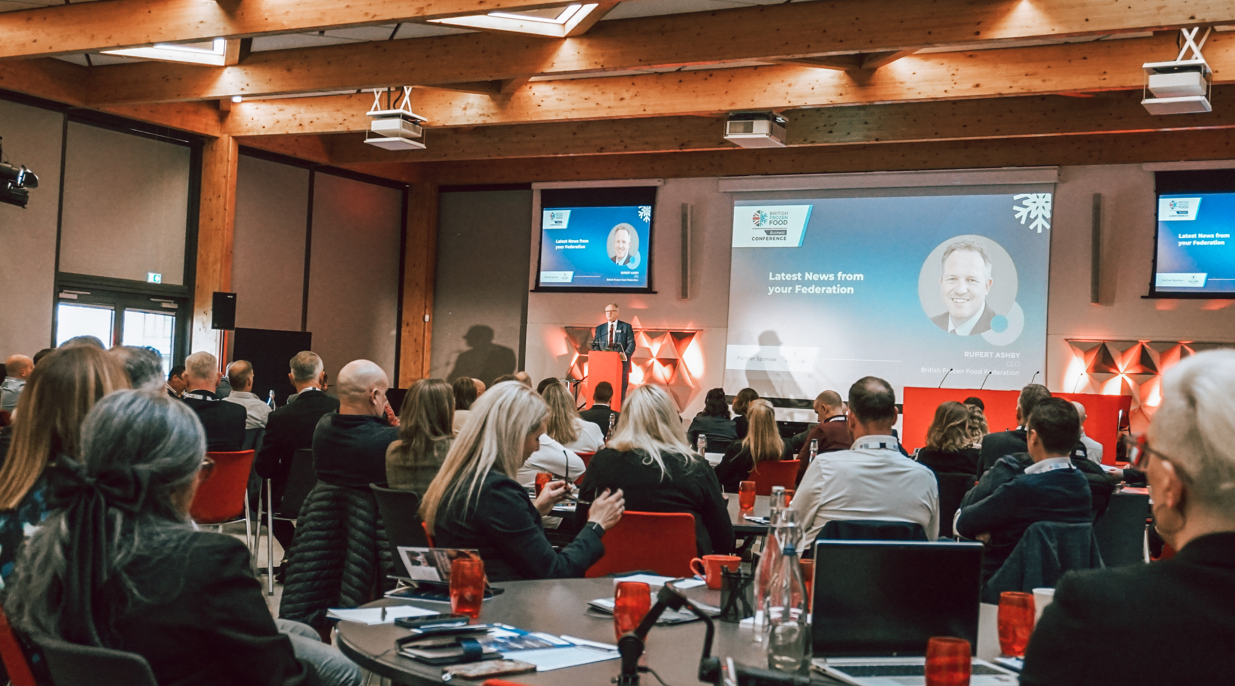
The 2026 BFFF Business Conference brought together leading figures in the frozen food industry to explore current performance and priorities, and emerging risks, opportunities and trends.
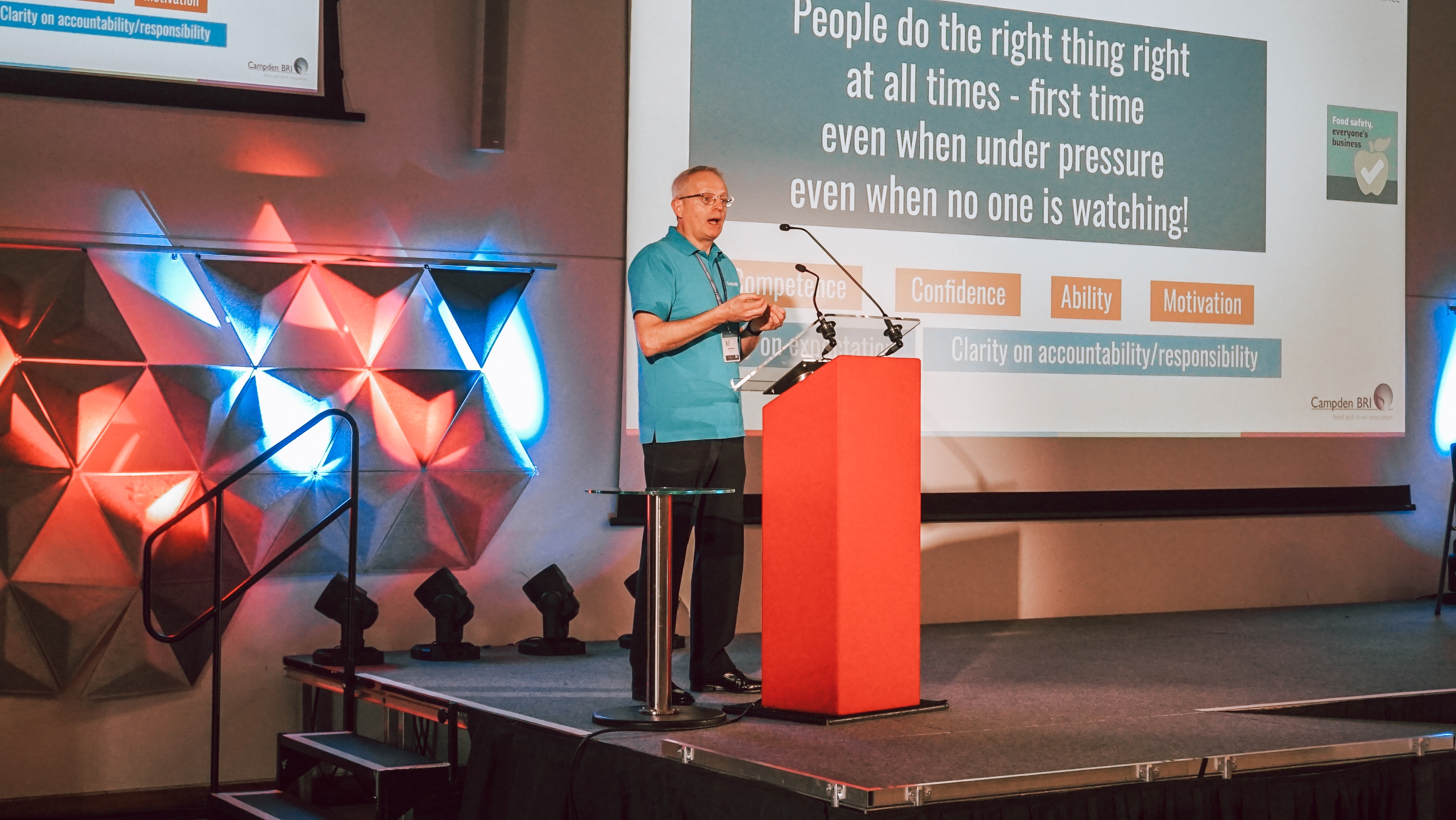
Across the many expert speakers were Greg Hooper (Instruction Services Manager & Microwave / Thermal Process Specialist) and Bertrand Emond (Membership Ambassador) from Campden BRI.
Greg’s presentation sparked engaging and important discussion in the area of air fryer cooking instructions (namely regarding variability issues with air-fryers and the impact this has on being able to produce on-pack cooking instructions that ensure a process equivalent to 70 °C for 2 mins and achieve good quality).
Issues discussed during Greg’s presentation included:
- Findings from air fryer testing conducted by Greg and his team, including;
- Inaccuracy of air fryer dial temperature settings;
- Air fryer pre-heat times;
- Non-digital (clockwork) time inaccuracies in air fryers;
- Variability in air fryer food heating rates due to heating method (halogen or element), air-flow rates, insulation, thermal mass of components, and more;
- The potential to develop an air fryer rating system, similar to that used to microwaves.
- Risk level of products in relation to using one-size-fits-all instructions for air fryer cooking (e.g. precooked chips vs raw frozen chicken).
- Packaging – due to close proximity of the heating element to food packaging in air-fryers, it cannot be assumed that packaging suitable for ovens can be used without additional testing (all food packaging for air-fryer cooking needs validating by testing).
Greg has a white paper covering the detail and data of what was discussed.
Bertrand covered ‘How food businesses can support good consumer practices’ to protect consumers from the food safety risks of mishandling food/drink products and other behaviours.
Key takeaways from Bertrand’s talk included:
- Ensuring that consumers do not fall ill or die from eating foods or drinking beverages is a shared responsibility.
- We need to take responsibility for influencing the correct handling and consuming of our products (not only owning the production and supply elements).
- Food companies need to –
- relay/repeat/reinforce the key food safety messages;
- drive/nudge the right behaviours consistently and constantly using all the “channels” and tools at their disposal;
- support Good Consumer Practices (GCPs);
- practice education-based marketing;
- engage in outreach programmes and public/private partnerships;
- leverage the food safety knowledge of their employees to educate others.
- To adequately protect consumers, food companies may need to provide information to consumers that is over and above what is required by law.
- The consumer has the right to expect that the food is safe to eat, is what it is supposed to be / sold as, and that anything that might be harmful is clearly communicated.
- The importance of the following were emphasised:
- GCP-related parts of HACCP studies;
- Using packaging communication effectively and being mindful of the impacts of the commercial pressures/aims affecting what goes on labels/packaging;
- Having fit for purpose packaging that also helps the consumer do the right thing;
- In communication and advertising, watch out that creativity and/or commercial pressures do not compromise food safety and basic food hygiene rules.
Are you playing your part? Do you stand up to drive responsible and positive behaviours?
To speak to Bertrand or Greg about these topics, or for other support from Campden BRI (including consultancy, analysis and testing, troubleshooting, training, regulatory and labelling advisory services), get in touch with Campden BRI.


 + 44 (0) 1400 283090


 April 29th, 2026.
























 + 44 (0) 1400 283090