Become a member

THE MASTERCHEF WINNER MAKING GLUTEN-FREE, HASSLE-FREE.

In 2016, Jane Devonshire stepped into the Masterchef kitchen and viewers were immediately won over by the bubbly mum-of-four. Four years after winning the coveted trophy, Jane talks to Emma Scott about the release of her second cookbook and how frozen can help fill the gluten-free gap in the market.

Most applicants for the long-running BBC Masterchef series are looking to escape the daily 9-to-5 grind by turning their love of cooking into a career as a chef. For Jane Devonshire, a stay-at-home mum, her motivation wasn’t her job, but her family.

Explaining how she came to be on the show, she says: “Ben had been pestering me for a couple of years to enter and on a whim we filled in the form together.”

Ben is the youngest of Jane’s four children. Aged two, Ben was diagnosed with coeliac disease, which forever changed the whole family’s relationship with food. Coeliac disease a condition where the immune system attacks the body’s own tissues when gluten is eaten. This damages the small intestine, making sufferers unable to take in nutrients.

It affects at least one in every 100 people in the UK, but some experts think this number may be underestimated as milder cases can go undiagnosed or be misdiagnosed. Untreated, coeliac disease can lead to impaired weight gain and growth problems, plus a range of other health problems.

Looking back Jane remembers: “Ben was very ill from being a tiny baby. It was a very stressful time as doctors kept putting my complaints down to the stress of having four children. It was only after we moved to a new area and my new doctor listened that he was diagnosed.”

The diagnosis initially gave Jane a sense of relief; Ben’s condition was not only treatable, Jane could use her passion for cooking to help her son. Faced with the challenge of feeding her toddler a completely gluten-free diet, she set to work researching his condition and experimenting in the kitchen to create meals he would like.

Having always seen food as a ‘wonderful sharing event with family and friends’, it quickly became apparent how isolating it was for someone, especially a child, to follow a different diet to everyone else.

She says: “It’s heartbreaking when classmates get a biscuit or a treat at school bake sales, or when your child is excluded because they can’t have pizza or go to McDonalds. So, I made a very strict rule that we would all eat the same at home.”

The new rule didn’t always go down well with her other three children, but it was a necessity:

“When something makes one person so sick you have no choice but to adapt, and we did. If we had pizza, I made gluten-free bases for everyone. Of course, I was a stay-at-home mum and I could spend a lot of time cooking and making recipes up. It was not as challenging for me as it is for many and for that I am hugely grateful.”

However, for much of this time Jane was facing a health battle of her own. Aged 41 she was diagnosed with breast cancer and would spend the next decade fighting the illness. Throughout, she continued to cook for her family, but it became imperative that meals were fuss-free as well as gluten-free.

She said: “I was ill for a long while and being able to cook something that was quick to put together for the family was really important to me.”

Today, Jane has been in remission for seven years, but the easy-to-follow recipes she’s developed over the years were the inspiration behind her first major project after winning Masterchef.

Hassle Free, Gluten Free: Over 100 Delicious, Gluten-free Family Recipes was published in 2018. It’s designed not only to help time-poor families catering for a coeliac relative, but de-mystify gluten-free cooking generally.

Jane said: “I am so aware that in many families both parents are working and don’t have time to spend hours in the kitchen every night. Like any cuisine, gluten-free is fabulous and fun once you master a few tricks.”

But Jane also recognizes the important role frozen can play in providing high-quality, nutritious, gluten-free meals that are accessible to all.

When recalling the struggle to find gluten-free options for her son after his diagnosis, she said: “Originally there really wasn’t a lot of choice and a lot of it was substandard. I remember feeding the bread to the chickens and even they wouldn’t eat it. Pasta was horrible, often falling apart and smelt quite revolting. I’m very grateful there are more off-the-shelf and frozen options available now than there used to be, but there are huge gaps to be filled.

“While I use a lot of frozen vegetables, fruit and fish, I think frozen could offer so much more to the gluten-free community; good, affordable family meals everyone can eat. Ben has things like fish fingers and pizzas for quick meals but other than that it’s quite limited in the frozen aisle for a gluten-free consumer. The lack of choice is frustrating. Like many parents I want the odd night off and to be able to throw something in the oven. High-quality food that tastes good and can be eaten by everyone shouldn’t really be a luxury in today’s market.

Despite a limited gluten-free offering, Jane believes the perception of the sector overall has improved over the years, and that the pandemic has given consumers a new appreciation of frozen: “With limited access to shops the ability to raid your freezer and turn out a really good meal has been invaluable.”

Nevertheless, her own experience as a gluten-free shopper means Jane now has her sights set on her own range of frozen ready meals.

“I’d be delighted to talk to manufacturers and retailers who might be interested in working with me to create a Hassle Free Gluten Free food range. It’s my absolute passion to make gluten-free accessible and affordable to all and frozen ticks all the boxes.”

In the meantime, winning Masterchef has given Jane a platform from which to raise awareness of coeliac disease and help other families to cope with it. She is closely involved with Coeliac UK as an official ambassador working with the gluten free community, and her second gluten-free cookbook – Vegetarian Hassle Free Gluten Free – will be published in December.

She also travels the country presenting at food festivals and free-from events where she is often approached by parents who ask about catering for a child with coeliac disease: “I get lot of questions about cost and how prohibitively expensive the gluten-free diet is for families. A lot are about baking of course. Mainly people want to know what they can cook for the whole family that’s inclusive and flavoursome.”

As if this didn’t keep her busy enough, she continues work in her own kitchen, trying out new, gluten-free recipes on her family.

It’s impossible to speak to a winner of Masterchef without asking about their favourite food. Despite the range of culinary skills she picked up on the show, Jane’s answer is true to her signature home-cooked style: “A big family spread, be it a BBQ, Sunday roast or veggie feast. Anything we can all share together.”

www.janecdevonshire.com


DINING OUT POST-PANDEMIC

Bars, restaurants and cafes may be able to re-open, but regaining consumer confidence remains a challenge. Even with the huge uptake of curbside and delivery services, it’s imperative to the survival of these businesses that people book tables. We take a closer look at the tech making this possible in the post-pandemic landscape.

If retailers are struggling to persuade everyone it’s safe to go back in the water, so to speak, foodservice businesses are facing an even tougher challenge.

An Office for National Statistics (ONS) survey suggests the majority of Brits still feel uncomfortable at the prospect of eating in a restaurant, with just over two-in-10 of the 1,788 adults asked saying they would be happy to have a sit-down meal as restrictions ease.

So what can businesses do to help make the customer feel safe?

In addition to the use of hand sanitiser and PPE, other suggestions include asking staff to change gloves between customers or diners to remove their own plates.

However, according to Conor McCarthy, CEO of Flipdish, simply introducing new behavioural practises can be expensive, time-consuming and impractical. Instead, technology can play a part in supporting social distancing measures, particularly when customers order and pay for food.

He explains: “One example is self-ordering kiosks. The digital touchscreen allows customers to order by tapping menu items on a screen instead of speaking to a cashier. Kiosks can drastically reduce both the size of queues and the number of person-to-person interactions. Many kiosks are card-only which greatly reduces the risk of spreading infections via surfaces on cash.”

International chains including McDonald’s adopted the technology some time ago but Conor says it isn’t just for brands with big budgets:

“Pre-lockdown, forward-thinking restaurant owners had found success with technology that enables customers to order from their table via a phone app. The software gives customers confidence they can receive food with limited staff contact and vice versa.”

But the potential for the technology to reduce queues and person-to-person contact goes beyond simply ordering from a chosen table. The same software can also be used to allow customers to order food from a hotel room, airport gate or even seats at a concert.

In Manchester’s lively Northern Quarter, a single app allows diners to sit outdoors and order from any bar or restaurant and have food and drink brought out to them.

McCarthy adds: “The technology implemented now is not just a lockdown quick fix but will improve the bottom line in the long-term too. Kiosks and apps will never call in sick, be rude to a customer, or make a mistake when giving change. Instead they can speak several languages and offer customers quick service. Profit margins, as well as customers, will see the benefit as research shows the average basket is 20-30% bigger when purchased through systems such as a digital kiosk.”

The ability to order and pay for food via our phones has been in use for a while though, so in order to remain competitive, businesses will have to enhance their offering by using technology to enhance the customer experience. This may include looking at ways to reduce or eliminate queues.

OrderPay, for example, has pioneered a function through which foodservice customers can pay for items simply by tapping their phones on a shelf label.

Social distancing is of course going to be key in the reopening of our hospitality industry and quickly becoming a part of our new normal. But as lockdown restrictions continue to ease, we must take care not to lose what’s special about eating out: the atmosphere. It’s a social experience, it’s about being around people – not just those at your table, but the general buzz of other diners, waiting and kitchen staff.

If safety measures put in place are at the expense of this atmosphere, the novelty of the post-lockdown pint or meal will quickly wear off. Eating out will not be the experience it once was, people will stop booking tables, and the herculean effort it’s taken to remain open will be for nothing.

Perhaps new technologies can help us walk the line between social and safe interaction as we get used to the new normal, but what about after that? How can technology help secure the long-term future of foodservice businesses?

Joseph Cox, business development manager at sales enablement software provider sales-i, says: “The COVID-19 crisis has been a huge wake up call for the industry. If it has taught us anything, it’s just how powerful a tool technology can be to connect both organisations and individuals. Going forward this connectivity is going to be more important than ever, so we firmly expect technology adoption to increase as more businesses look to reshape their offerings, become more streamlined and ultimately, develop more data-driven strategies.”

Sales enablement software platforms such as sales-i give organisations full visibility of customer relationships on a range of metrics that allow the user to spot trends and identify opportunities to cross and upsell.

The benefits are compelling. Cox says that the average food wholesale/distribution business using the software can expect an increase in total sales volume of as much as 20% alongside increases in average invoice value and the number of spending customers.

He adds: “Being better informed about customer behaviours enables businesses to make better decisions about overall sales strategies and move from reactive customer relationship management to more proactive sales.”

Next time we explore how traceability technology can help ensure food security in a post-pandemic landscape.

THE BULLETIN BRIEF: BREXIT

We invite members to have their say in the next Bulletin feature.  The focus is on Brexit and with the end of the transition period looming we ask:

  • Do you feel prepared for January 1st 2021?
  • How has your business been preparing for Brexit?
  • What lessons, if any, has the pandemic taught us about the resilience of our food supply chain?
  • Do you currently import from/export to Japan? If not, do you plan to in light of the potential new trade agreement?
  • What are the main ways in which Brexit will change the way you do business?
  • What are your main concerns about leaving the EU?
  • Have you updated your packaging in line with third-country regulations? How difficult has this been?
  • What opportunities do you see coming as a result of Brexit?
  • On balance, do you think your business will be better off, or worse? Are you optimistic about our post-Brexit future?

To contribute to the feature, send your response to bulletineditorial@bfff.co.uk

Deadline for submission: Friday 23rd October 2020

POUNDLAND ACQUIRES FULTONS FOODS

  • Move will accelerate the roll out of frozen and chilled foods to more Poundland stores

  • Acquisition key part of Poundland’s transformation programme bringing customers broader ranges and more choice

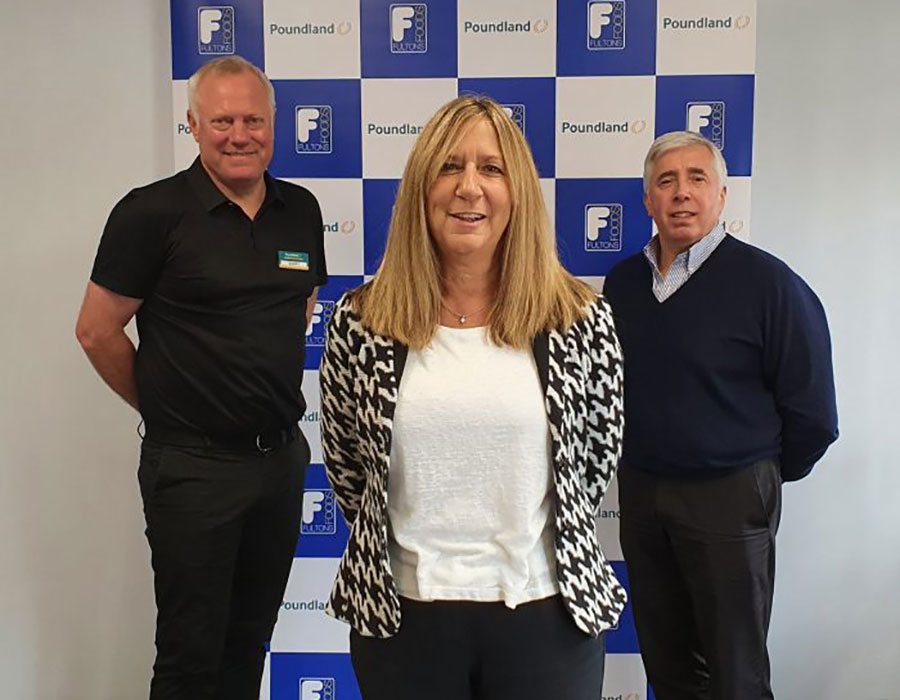
Poundland today announces it has acquired Fultons Foods (Fultons), the north of England frozen food retailer, in a move that will help accelerate its transformation programme.

The UK’s favourite discount retailer has been working closely with Fultons for 12 months developing its chilled and frozen food range and building a distribution network to serve stores.

This partnership has enabled Poundland to roll out frozen and chilled foods to more than 70 of its stores and the acquisition will now enable Poundland to significantly extend the offer to another 40-plus stores by December, beginning this month in Luton.

The transaction demonstrates the intent of Pepco Group, the owner of Poundland, to invest in widening the customer offer in Poundland while also improving its operational gearing, primarily through reducing the discount retailer’s in-store rents.  Together these will build both sales and profit, as well as creating new jobs in the UK.

While the acquisition will allow Poundland to step up its frozen and chilled rollout, it will also allow it to do more than simply almost double the number of stores carrying these ranges.

Alongside extending the range to a further 40-plus stores in 2020, Poundland plans to invest in excess of £25m over the next two years in its chilled and frozen operation to:

  • Convert the most appropriate Fultons stores into a full Poundland format, retaining a frozen and chilled offer in each location.
  • Establish Fultons’ Barnsley base as its National Frozen Distribution Centre and build the infrastructure at its Harlow DC to bring its frozen and chilled food offer to stores across the south of England.
  • Create around 1,000 full and part time roles through the introduction of chilled and frozen in stores and the transformation of the distribution centres in Barnsley and Harlow.

Poundland expects to bring its chilled and frozen offer to a further 150 stores in the 2021/22 financial year and to as many as 500 stores over the next two years, making it an increasingly significant player in the near-£20 billion[1] UK chilled and frozen food market.

Both Fultons co-owners will remain involved in the business. Karen Rees will become managing director reporting directly to Poundland MD Barry Williams. Kevin Gunter will continue in an advisory role for six months. All 800-plus Fultons colleagues will join the Poundland family this month with no changes to their terms and conditions.

Poundland’s transformation strategy

The acquisition follows the country’s most popular discount retailer recently unveiling a wider transformation programme to bring customers even more choice and amazing value.

These include bringing its PEP&CO fashion brand to more than 310 locations and last month rolling out its new PEP&CO Home ranges to all stores, step-changing its general merchandise offer.

These transformation plans also include changes to stores and the introduction of wider ranges in all categories at simple prices.

As part of this project, Poundland is refreshing and refurbishing stores, pressing ahead with new stores and relocations to bring Poundland to new towns such as Banbury and Bulwell and expanding in existing locations such as Telford and Tunstall.

Poundland will also complete the first phase of its chain-wide simple pricing roll-out next month, ensuring every category has extended ranges at prices above and below £1 to ensure customers can find more of what they buy week-in, week-out under one roof.

As well as investing in stores, Poundland’s transformation plan also includes the pilot of new free from ranges and beers, wines, and spirits in selected stores.

Barry Williams, Poundland managing director, said: “We couldn’t have developed our chilled and frozen ranges without Fultons’ expertise and now is the right time to move to the next level and bring the team on board.

“By combining our experience, we can accelerate our frozen and chilled rollout and bring the amazing value it offers to more of our customers across the UK.”

Fultons’ managing director Karen Rees said: “For the last 12 months we’ve been proud to partner with Poundland, but even prouder that today we become family.

“We already know the Poundland customer loves our frozen and chilled foods offer – and we’re excited to know our people will be able to play a bigger part in Poundland’s transformation story”.

Fultons’ chairman Kevin Gunter said: “After leading the business for 24 years, I’m pleased we’ve been able to agree terms with Poundland who are committed to a renewed period of growth and investment.  I’m looking forward to contributing in an advisory role over the next six months”.

SUGAR REDUCTION: REPORT ON PROGRESS BETWEEN 2015 AND 2019

Public Health England has published ‘Sugar reduction: report on progress between 2015 and 2019’. This is available online at: https://www.gov.uk/government/publications/sugar-reduction-report-on-progress-between-2015-and-2019.

[Please note that there is an error in the baseline year for juice and milk-based drinks on page 4; we have been advised this will be corrected in due course. The baseline for retailers and manufacturer branded juice and milk-based drinks is 8 September 2017. This is correct elsewhere in the report]

Retailers and manufacturer branded products:

Overall progress achieved is comparable to previous annual reports. There has been progress in some, but not all, food categories. Progress achieved by retailers and manufacturers at brand and product level is mixed. Some businesses are making progress whilst others are showing little or no change, and some brands are showing increases in their sales weighted average for both sugar and calorie content. Data suggests that overall, retailers branded products have changed to a greater extent than manufacturer branded products.

Eating out of home sector:

There has been hardly any change in the simple average sugar content since the baseline of 2017. Comparisons for this sector between different years of the programme should be treated with caution however due to the differing number and profile of products included in each dataset. The analysis shows a reduction of 9.7% in the calories likely to be consumed on a single occasion suggesting that, for the products included in the current analysis, this sector has focused more on reducing portion size than the sugar content of products. However, the simple average calories per single serve remains higher than for retailers and manufacturer branded products across all categories, apart from chocolate confectionery.

Soft Drinks:

The sugar levels of soft drinks subject to the Soft Drinks Industry Levy (SDIL) have continued to fall. The reductions have been much larger when compared with the food categories in the sugar reduction programme and have been achieved despite an overall increase in sales of soft drinks.

It should be noted, however, that reducing sugar in drinks is more straightforward than it is for some food categories because sugar generally does not provide functionality beyond taste to drinks.

It should also be noted that conclusions cannot be drawn on the extent to which these changes are caused by the levy as this analysis does not take into account other factors or trends that could be important in determining patterns of drink purchases, including price changes.

For further details, please contact dietary.improvement@phe.gov.uk.

GOVERNMENT LAUNCHES FOODFARMHELP WEBSITE

A new website www.foodfarmhelp.com has been launched specifically designed to provide the latest practical tips, guidance, tools and case studies to help businesses in the food, agriculture and horticulture industries to better manage risks associated with the COVID-19 pandemic during the autumn and winter period.

The site offers a wide range of good practice to implement UK government and public health guidance and will be updated regularly to include any changes until the end of the year.  Please note however, it does not replace government, legal or expert guidance and will need to be customised to reflect government guidance in different countries.

All the information is free to share and download and you can register here to receive updates.

This work has been overseen and managed by FNET (Food Network for Ethical Trade) on behalf of its members and the wider food industry and has been supported by a group of collaborators across the food, industry, agriculture and horticulture industries.

Member Benefits

Exclusive Partnership deals on key products and services:

  • BFFF energy deals and rates
  • Vypr member deals and introduction
  • Defib Plus deals
  • Company Shop – membership
  • Mentor – MHE training health check

Exclusive access to networking opportunities and events:

  • Meet the Buyer events (retail & foodservice)
  • Annual Business Conference with networking dinner
  • Specialist H&S and Technical Conferences
  • Special interest groups (packaging, frozen food temperatures)
  • Annual Lunch
  • Awards Night
Upcoming Events More Events
Sponsorship Packages

We offer a range of sponsorship opportunities to BFFF members across our events throughout the year, with flexible packages that can be tailored to suit your business objectives.

Contact Us
British Frozen Food Federation Members Logo
what our members say...
  • Wakefield Council

    “What an amazing piece of work and indicative of how BFFF respond to the concerns of their members and make an impact on the whole industry sector.”

    See Full Quote

  • Sysco

    “You guys really ‘Do The Right Thing’ for the good of the industry”

    See Full Quote

  • Darta

    “The BFFF awards night is becoming an “appointment not to miss” on our calendar and we again enjoyed it immensely together with lots of well-known people from our industry. The…

    See Full Quote

  • Kantar Worldpanel

    “The Business Conference was an excellent day that was very well organised and allowed so many likeminded individuals in the room to learn so much more around the Frozen industry….

    See Full Quote

  • Lakeside Food Group Ltd

    “This Not For EU labelling situation alarmed us and quickly became a major worry to our business. These are times when you really rely on some support and from previous…

    See Full Quote

  • Meadow Vale Foods Limited

    “We had a few questions with respect to the new EPR waste packaging legislative changes. I know some of my colleagues have been assisted by BFFF in the past so…

    See Full Quote

  • Newberry International Produce Ltd

    “I am writing to express my heartfelt gratitude for the outstanding event you organised. I have only worked in this sector for the past nineteen months coming from twenty-five years…

    See Full Quote

  • Place UK Ltd

    “The BFFF 2024 Conference was compelling and thought provoking, with a many relevant and interesting topics covered at great pace and some depth by excellent speakers – will certainly attend…

    See Full Quote

  • Roswel Spedition GMBH

    “Thank you and the team for rushing around so brilliantly before, during and after the conference. It was pleasure to be part of the conference.”

    See Full Quote

  • Seara

    “The event was great, in my opinion. Not only it was very well organised, but the venue and the catering were excellent too. Furthermore, the content of the presentations was…

    See Full Quote

Website Designed & Built by we are CODA