Become a member

DEFRA Webinars – March Calendar

Monday Tuesday Wednesday Thursday Friday
1 2 3 4 5
Rules of Origin: Fish and Processed Fish
12.00 

Rules of Origin: Vegetable, fruit and nuts, and prepared veg, fruit and nuts
16.00

Rules or Origin: At risk goods and UK trader scheme (second session)
11.00

Rules of Origin: Coffee, tea, spices, miscellaneous
16.00

Rules of Origin: Animal and vegetable fats and oils
10.00

Rules of Origin: Cereals and Cereal products
15.00

How to register for IPAFFS
10.00-11.00
14.00-15.00

SPS import controls for Fish and Fishery products from 1st April (EU to GB)
10.00-11.00

Rules of Origin: Dairy, eggs, honey
14.00


Rules of Origin: Drinks
10.00

Rules of Origin: Sugar and chocolate
12.00

Rules of Origin: Animal Feed
15.00

Monday Tuesday Wednesday Thursday Friday
8 9 10 11 12


Requirements for Digital Assistance Scheme – Large companies
10.00-11.30

SPS import controls for Composite Products from 1st April (EU to GB)
10.00-11.00

Requirements for Digital Assistance Scheme – Consolidation Centres and Hubs
10.00-11.30
Monday Tuesday Wednesday Thursday Friday
15 16 17 18 19
Requirements for Digital Assistance Scheme – Sequential Groupage/ Hauliers
10.00-11.30
Requirements for Digital Assistance Scheme – Smaller Companies
10.00-11.30
Requirements for Digital Assistance Scheme – Manufacturers Consolidating by Product
10.00-11.30


Monday Tuesday Wednesday Thursday Friday
22 23 24 25 26
How to use IPAFFS when Importing Products of Animal Origin (POAO) / High Risk Food Not of Animal Origin (HRFNAO) from the European Union into Great Britain
10.00-11.00


How to use IPAFFS when Importing Products of Animal Origin (POAO) / High Risk Food Not of Animal Origin (HRFNAO) from the European Union into Great Britain
10.00-11.00
14.00-15.00


How to use IPAFFS when Importing Products of Animal Origin (POAO) / High Risk Food Not of Animal Origin (HRFNAO) from the European Union into Great Britain
10.00-11.00
14.00-15.00


How to use IPAFFS when Importing Products of Animal Origin (POAO) / High Risk Food Not of Animal Origin (HRFNAO) from the European Union into Great Britain
10.00-11.00
14.00-15.00


How to use IPAFFS when Importing Products of Animal Origin (POAO) / High Risk Food Not of Animal Origin (HRFNAO) from the European Union into Great Britain
10.00-11.00
14.00-15.00


Monday Tuesday Wednesday Thursday Friday
29 30 31
How to use IPAFFS when Importing Products of Animal Origin (POAO) / High Risk Food Not of Animal Origin (HRFNAO) from the European Union into Great Britain
11.00-12.00
How to use IPAFFS when Importing Products of Animal Origin (POAO) / High Risk Food Not of Animal Origin (HRFNAO) from the European Union into Great Britain
12.00-13.00
How to use IPAFFS when Importing Products of Animal Origin (POAO) / High Risk Food Not of Animal Origin (HRFNAO) from the European Union into Great Britain
13.00-14.00


Download DEFRA Webinars – Calendar Format

A MESSAGE FROM THE UK GOVERNMENT ‘S FOOD SURPLUS AND WASTE CHAMPION

Ben Elliot is a British businessman, investor and philanthropist.  He co-founded the Quintessentially Group in 2000 and has a number of commercial interests across hospitality, retail and tech sectors.  In 2008, he founded the Quintessentially Foundation, which has raised over £14m for charities to improve the health, education and welfare of disadvantaged people and communities across the UK.

Ben was appointed as the Government’s first-ever Food Surplus and Waste Champion in 2018 – a role he still holds – and actively campaigns for the reduction of food waste by manufacturers, retailers and households.

He has been co-Chairman of the Conservative Party since July 2019.

Ben is a Trustee of the Eranda Rothschild Foundation, Chairman of the Philanthropy Board of the Royal Albert Hall and on the Board of the Centre for Policy Studies.

He co-produced the award-winning documentary Fire in Babylon in 2010.

Ben graduated with a BSc in Politics from the University of Bristol.

View the full programme and book your tickets here: https://bfff.co.uk/event/the-bfff-technical-conference/


SUSTAINABLE PACKAGING.

This year is being hailed by some as a crucial year for action on climate change, with government, businesses and the public all committed to reducing carbon footprints. What does this renewed sense of environmental purpose mean for the future of packaging in the frozen sector?

Frozen food packaging needs to tick a number of boxes. It must of course protect the product from spoilage and moisture. It must also be easy to fill, seal and store. It must be made from food-grade substrates and resistant to grease, oil, and water. Additionally, since frozen food products can expand up to 9% during the freezing process, packaging materials need to be strong and flexible enough to accommodate this.

But arguably the most difficult criteria to fulfil, and one which will become increasingly important in the coming years, is that it must be sustainable.

Frozen food packaging often includes cardboard, laminated paper, and flexible and rigid plastic materials, but each comes with its own sustainability challenge.

Shrink film – a plastic film commonly made from polyethylene, polyolefin or poly-vinyl-chloride – is one of the most popular types of frozen food packaging. While technically many films can be recycled, the collection, separation and reprocessing of household plastic film is not widely implemented in the UK

In 2017, only 67 local authorities in the UK provided kerbside collections of films out of 391. Consequently, end markets for the recycled material is limited. Although collection of plastic films is available at some front-of-store collection points, some films simply cannot be recycled, for example if they are too contaminated with leftover food.

Other types of flexible plastic packaging, such as laminated pouches and bags, are not currently recycled at all in the UK.

Cardboard is another commonly-used frozen packaging material, and a deceptively innocent one in terms of recycling. However, frozen food boxes are required to have a coating of plastic to protect them from low temperatures. As is generally the case with mixed-materials packaging, individually the materials used to make frozen-food boxes are recyclable, but they are layered in such a way that it is difficult to separate them during the recycling process.

Wax-coated cardboard is another mixed-material packaging product similar to, and often confused with, poly-coated paperboard. Like poly-coated paperboard, wax-coated cardboard is difficult to recycle.

Aluminium foil trays are still sometimes used in frozen food packaging. While the metal itself is widely collected and simple to recycle if clean, foil pans often feature cardboard or waxed coated cardboard toppers, which cannot.

The microwave-friendly alternative is plastic trays, which like flexible plastics, are not collected for recycling in all parts of the UK. Even where they are, these trays are problematic. They are often black to give products a more premium feel, and because the colour cannot be identified by automatic sorting machines they often end up in landfill.

Of course, frozen brands can boost their environmental credentials by using recycled materials for packaging, but it is difficult to get food-grade recycled plastic, which must be made from >99% food contact raw material. For this to be produced in the UK, a technically and commercially viable automated solution is needed to separate packaging that has been used with food from that which has not.

Even brands using sustainable packaging solutions need to be careful when making sustainability claims.

Recipe box brand Gousto was recently found to have breached adverting standards by claiming its delivery packaging was ‘100% plastic free and recyclable’, even though it contained an ice pack made from low-density polyethylene, which only around 20% of local authorities have the facilities to recycle from household waste.

Nevertheless, finding sustainable packaging solution is an ever more important consideration as consumers increasingly care about the sustainability of the products they buy.

According to results of a survey from Accenture, more than half of consumers would pay more for sustainable products designed to be reused or recycled. The survey of 6,000 consumers in 11 countries across North America, Europe and Asia, found that while consumers remain primarily focused on quality and price, 83% believe it’s important or extremely important for companies to design products that are meant to be reused or recycled.

Nearly three-quarters of respondents said they’re currently buying more environmentally friendly products than they were five years ago, and 81% said they expect to buy more over the next five years.

In response many businesses are taking decisive action. Tesco recently announced it had removed one billion pieces of plastic in the past 12 months. Measure included ditching the small plastic bags used to gather loose fruits and vegetables and cutting shrink wrap from branded and own-label items.

Tesco officials say the plastic-elimination initiative is based on a four-pillar strategy – Remove, Reduce, Reuse and Recycle.

Similarly, Birds Eye is closer to achieving its sustainability targets after moving to recyclable packaging on its Natural Vegetable products. The update will remove 379 tonnes of plastic and is the first step in ensuring all the brand’s vegetable lines will have recyclable packaging.

But what if the long term solution doesn’t include traditional plastics at all? Next time we’ll look at some of the alternatives to plastic packaging that could make sustainable choices easier for frozen food brands.

LOVE FOOD, HATE WASTE, BUY FROZEN.

The British Frozen Food Federation (BFFF) is proud to be working with WRAP and supporting Food Waste Action Week by highlighting the benefits of buying frozen, not least of which is the reduction in food waste it facilitates.

UK households waste 4.5m tonnes of edible food every year. Meanwhile, food waste is known to be responsible for 6% of global greenhouse gas emissions. As we struggle to feed the world’s growing population, whilst protecting the world itself, it’s never been more important to tackle food waste. We believe frozen food should be at the heart of this challenge.

Food waste in figures:

It’s shocking, but we throw away about a third of the food we produce, and almost half the total amount of food thrown away in the UK comes from our homes.

  • The most common reason for food waste is that it’s left unused – 61% of the avoidable waste or 2.5 million tonnes. We also cook and prepare too much, resulting in an additional 1.6 million tonnes of food waste a year.
  • 40% of this (almost one million tonnes) isn’t touched and a tenth (340,000 tonnes) is in date.
  • We bin 6.7 million tonnes every year – one third of the food we buy. We throw away 1,405,000 tonnes of fruit, vegetables and salad. Most of that food (61%) could have been eaten if we had planned, stored and managed it.
  • UK households on average pay £420 for food each year that is thrown away.
  • Every tonne of food waste is responsible for 4.5 tonnes of CO2.

Buying frozen food reduces waste in two ways. Firstly, it has a much longer shelf, which means less food going off before you get the chance to eat it. Additionally, this longer shelf life results in less wastage throughout the supply chain.

Secondly, frozen produce can be easily portioned so you can cook only what you need and save the rest for another day. And because products and ingredients are pre-prepared, you won’t even have scraps to put in the food waste.

While freezing food at home is a great way to make it last longer, and something the BFFF encourages, there are many more reasons to shop in the frozen aisle.

 Nature’s pause button

Freezing inhibits bacterial growth and stops biochemical reactions from taking place. It also locks in many of the food’s nutrients. For instance, the vitamin content of fresh vegetables starts to decrease as soon as they are harvested, but research has shown frozen vegetables to contain the same and often higher levels of vitamins than fresh. Literature states that freezing, if properly conducted, is the best method of food preservation for the retention of nutrients, including proteins, vitamins and minerals.

A healthy option

Contrary to what some people think, frozen foods retain their vitamins and minerals and there is no change to the carbohydrate, protein or fat content. In some cases, frozen foods actually have more vitamins and minerals compared to fresh, because fresh foods lose vitamins and minerals over time while freezing preserves nutrients.

Vitamin C, vital for a healthy the immune system, is the most fragile nutrient and easily lost from foods. A study conducted across a range of vegetables compared the retention of vitamin C across room temperature, chilled and frozen storage.

The results were resoundingly in favour of freezing, proving freezing really does ‘lock in’ nutrients. Vegetables frozen post-harvest and stored in the freezer retained significantly more vitamin C than those in ambient or chilled storage, with frozen vegetables losing less than 10% of their vitamin C over 12 months’ storage in the freezer.

Year-round goodness

Have you ever have had a craving for strawberries, only to find they aren’t in season? Freezing is a natural preservative and a great way to eat seasonal food all year round. Whether it’s fish, fruit or veg, freezing can ensure that your family is eating nutritious food all the time.

A money saving solution

Most frozen food products offer better value than their fresh counterparts. For example, a frozen whole chicken could be 21% cheaper than fresh and frozen spinach is up to 71% cheaper. Overall a family of four can save 34% per week on the 10 most commonly purchased items when bought frozen. That’s up to £1,500 saved per year simply switching from fresh to frozen food.

Cutting edge technology

Modern freezing technology is very sophisticated, so once harvested, fruit and vegetables are usually frozen within two or three hours of being picked, as are meat and poultry. Unlike domestic freezers which typically run at around −18C and can freeze food over a period of around 24 hours, industrial freezers can freeze products down to a temperature of -20C or lower within minutes.

During the freezing process, ice crystals form in food. Domestic appliances freeze slowly forming large ice crystals which can affect the quality of the food. As most commercially frozen foods are frozen in minutes, damage to the cell structure of the food is minimised, which is why professionally frozen foods are better quality than a consumer buying chilled products and freezing at home.

A greener option

A scientific report on carbon emissions has exposed a mis-held belief that frozen food is more energy intensive than chilled. By buying frozen food with its longer shelf life you can make fewer trips to the shops by car. Doing so reduces your individual carbon footprint. And due to its longer shelf life, frozen food can result in less wastage in the delivery and storage chain.

Assessing a range of carbon emissions – from post-harvest or slaughter to consumption by the consumer – researchers found that a frozen meal for a family of four produced 15% less CO2 than its identical chilled counterpart.


Making the most of your freezer

We have never spent more time cooking and eating at home than we have in the last 12 months. As new consumer habits become the norm, there’s never been a better time to take a fresh look at your freezer. When you understand the potential of frozen products, you’ll begin to see the freezer as a store cupboard on ice, and the frozen aisle as a world of culinary possibilities.

What can you cook from frozen?

Gone are the days of defrosting everything you buy frozen before you eat it. Many commercially frozen products can be cooked directly from frozen, including:

  • Chicken breasts
  • Fish
  • Mince
  • Sausages
  • Bakery goods
  • Desserts
  • Fruits and vegetables
  • Prepared meals
  • Pizza

Maximum storage times.

If stored properly frozen food can be kept between four and 24 months, but check the manufacturer’s ‘best before’ date. Your freezer should be at -18˚C or below. As a general rule, if your freezer can’t keep ice cream solid, it’s too warm.

Can you refreeze defrosted food?

There are a lot of myths surrounding re-freezing food, but you should never refreeze food that has been defrosted. However, if the defrosted food has then been fully cooked and allowed to cool, it can be stored in an airtight container or zip lock bag and frozen again for use at a later date.

What are the most common errors which lead to frozen food waste and which we could avoid?

When buying frozen food, always check the packaging is undamaged. Pick up your frozen items at the end of your shopping trip and pack them together, then store in the freezer as soon as possible after you get home.

Correct labelling.

If you freeze leftovers, ensure they don’t get thrown away because they’ve not been labelled correctly. To avoid this, make sure you write on the pack what it is and the date it was frozen. Don’t forget home frozen doesn’t last as long as professionally frozen food which has a better texture than many home frozen foods.

Correct wrapping.

When loosely wrapped, food can become dry in the freezer. Once open, ensure you squeeze out as much air as possible from the pack. If home freezing, invest in some reusable pouches (ideally recyclable) and seal tightly.

The outlook for frozen food is positive. Ever more technologically savvy consumers will increasingly shop online to the benefit of frozen food. This, combined with growing evidence that frozen food is nutritious and helps reduce food waste, will see more consumers opting for frozen in retail and more caterers selecting frozen ingredients and dishes for their menus.

Use our assets:


Find out more

www.freshfromthefreezer.co.uk

www.bfff.co.uk  

WEBINAR – BEST PRACTICE FOR MONITORING WATER USAGE

Join our 40-minute webinar ‘best practice for monitoring water usage’ to discuss the initial steps required by businesses looking to develop an effective water management strategy, starting with access to data. Wednesday 3rd March @ 11am

REGISTER HERE

The webinar will cover:

– Why water is often considered the forgotten utility

– Best advice for getting to grips with your water consumption

– Overcoming the challenges of the water industry

– The real cost of not managing your water effectively

Why should you attend?

If your business is looking to improve the way you manage your water usage, the advice of our water experts is invaluable.

REGISTER YOUR PLACE

H&S MANAGEMENT SOFTWARE IN PRACTICE

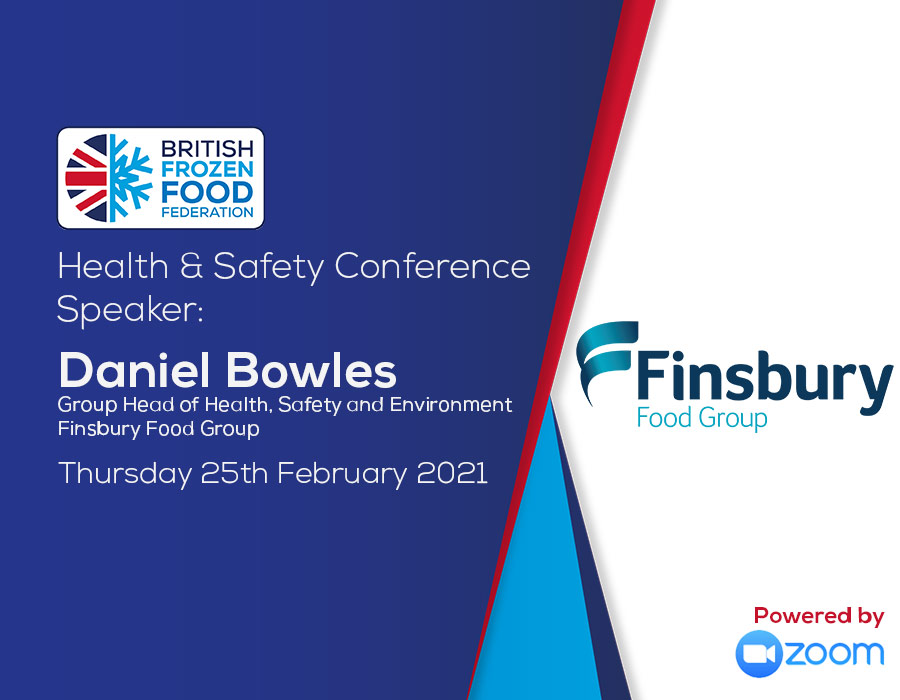
Daniel Bowles, Group Head of Health, Safety and Environment of Finsbury Food Group joins us for the BFFF Health and Safety online conference on Thursday 25th February 2021.

Dan is the Head of Health, Safety and Environment and is responsible for the strategic direction of the health, safety and environmental agenda within Finsbury Food Group. This includes sites within the UK and Poland.
He has worked in the health and safety field for 20 years and has been involved in numerous sectors including construction, utilities and food and drink. He is passionate about making health and safety accessible to everyone and has a belief that in order for health and safety to truly improve there is a need for all to have their say in how it is approached.

View the full programme and book your tickets here: https://bfff.co.uk/event/bfff-health-and-safety-conference/

With thanks to our conference sponsor Arco Limited

Member Benefits

Exclusive Partnership deals on key products and services:

  • BFFF energy deals and rates
  • Vypr member deals and introduction
  • Defib Plus deals
  • Company Shop – membership
  • Mentor – MHE training health check

Exclusive access to networking opportunities and events:

  • Meet the Buyer events (retail & foodservice)
  • Annual Business Conference with networking dinner
  • Specialist H&S and Technical Conferences
  • Special interest groups (packaging, frozen food temperatures)
  • Annual Lunch
  • Awards Night
Upcoming Events More Events
Sponsorship Packages

We offer a range of sponsorship opportunities to BFFF members across our events throughout the year, with flexible packages that can be tailored to suit your business objectives.

Contact Us
British Frozen Food Federation Members Logo
what our members say...
  • Wakefield Council

    “What an amazing piece of work and indicative of how BFFF respond to the concerns of their members and make an impact on the whole industry sector.”

    See Full Quote

  • Sysco

    “You guys really ‘Do The Right Thing’ for the good of the industry”

    See Full Quote

  • Darta

    “The BFFF awards night is becoming an “appointment not to miss” on our calendar and we again enjoyed it immensely together with lots of well-known people from our industry. The…

    See Full Quote

  • Kantar Worldpanel

    “The Business Conference was an excellent day that was very well organised and allowed so many likeminded individuals in the room to learn so much more around the Frozen industry….

    See Full Quote

  • Lakeside Food Group Ltd

    “This Not For EU labelling situation alarmed us and quickly became a major worry to our business. These are times when you really rely on some support and from previous…

    See Full Quote

  • Meadow Vale Foods Limited

    “We had a few questions with respect to the new EPR waste packaging legislative changes. I know some of my colleagues have been assisted by BFFF in the past so…

    See Full Quote

  • Newberry International Produce Ltd

    “I am writing to express my heartfelt gratitude for the outstanding event you organised. I have only worked in this sector for the past nineteen months coming from twenty-five years…

    See Full Quote

  • Place UK Ltd

    “The BFFF 2024 Conference was compelling and thought provoking, with a many relevant and interesting topics covered at great pace and some depth by excellent speakers – will certainly attend…

    See Full Quote

  • Roswel Spedition GMBH

    “Thank you and the team for rushing around so brilliantly before, during and after the conference. It was pleasure to be part of the conference.”

    See Full Quote

  • Seara

    “The event was great, in my opinion. Not only it was very well organised, but the venue and the catering were excellent too. Furthermore, the content of the presentations was…

    See Full Quote

Website Designed & Built by we are CODA